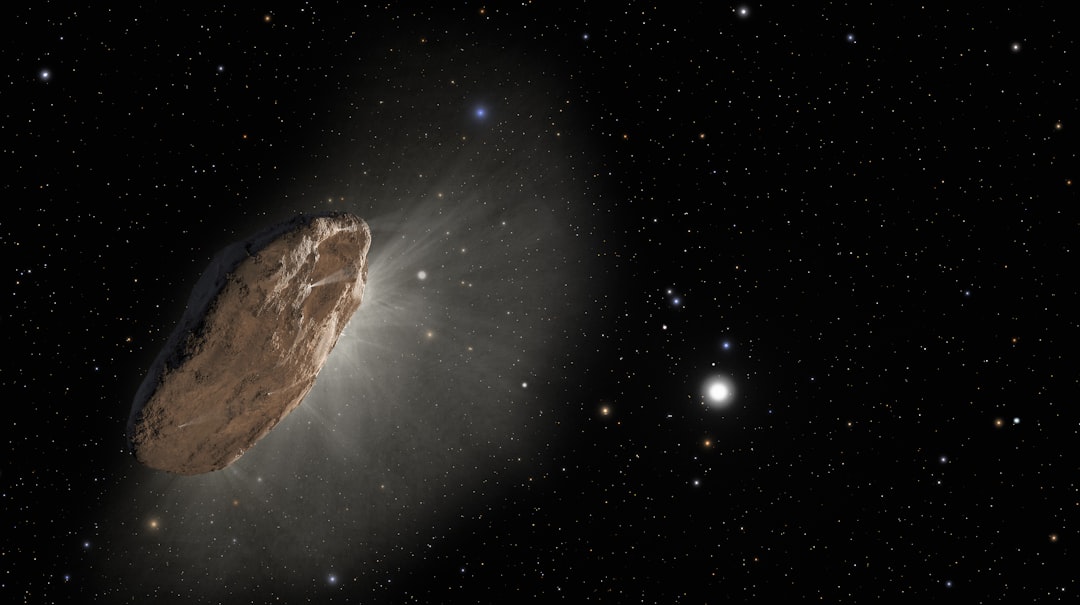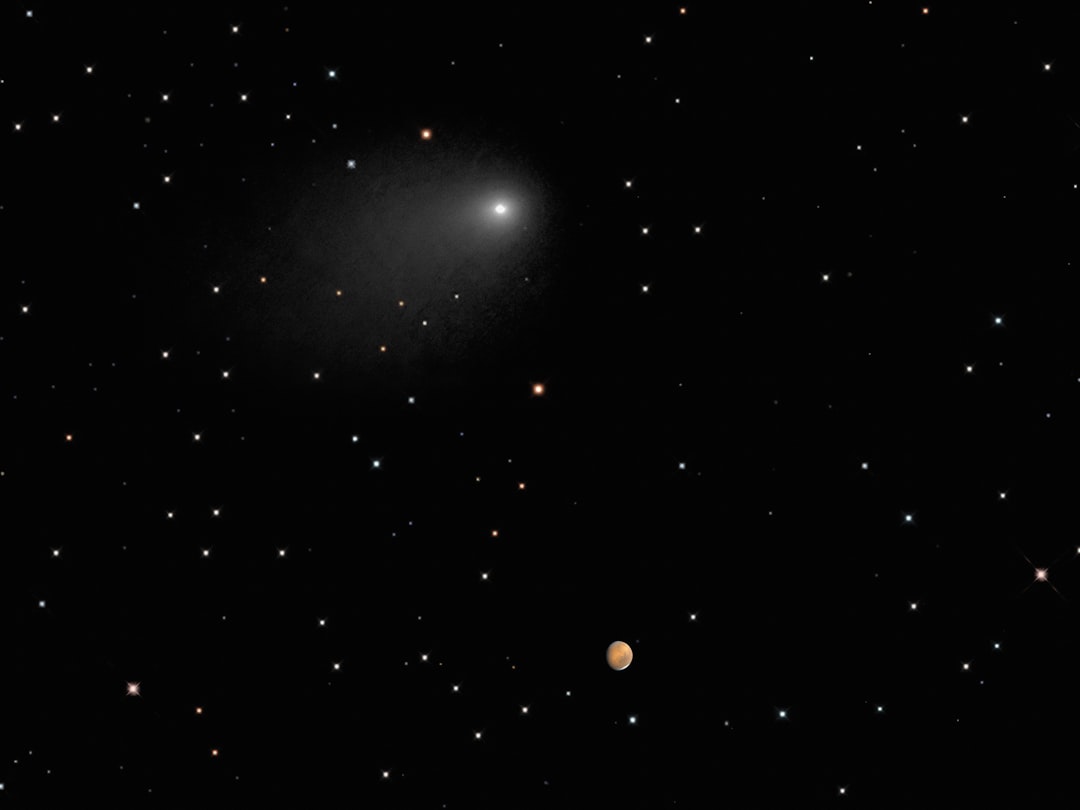
Japan's space exploration agency, JAXA, continues to cement its reputation as the world's premier authority on small celestial body missions. Following the groundbreaking achievements of the Hayabusa and Hayabusa2 missions, which successfully returned samples from asteroids Itokawa and Ryugu respectively, the agency is now setting its sights on an even more ambitious target: retrieving pristine material from the frozen depths of a comet. The Next Generation Small-Body Sample Return (NGSR) mission, recently detailed at the Lunar and Planetary Science Conference, represents a quantum leap in sample return complexity and scientific potential.
Unlike the rocky asteroids that have been the focus of previous missions, comets represent frozen time capsules from the solar system's infancy, preserving materials that have remained largely unaltered for over 4.6 billion years. The mission, currently under assessment as a large-class project for the 2030s, aims to excavate and return samples from beneath a comet's surface—material that has never been exposed to solar radiation or the degrading effects of space weathering. If successful, NGSR could provide humanity with its first direct glimpse into the primordial building blocks that formed our cosmic neighborhood, potentially revealing the chemical precursors to life itself.
Why Comet 289P/Blanpain Makes the Perfect Target
The mission's designated target, comet 289P/Blanpain, has a fascinating and unusual history that makes it uniquely suited for this ambitious endeavor. First observed in 1819 by French astronomer Jean-Jacques Blanpain, the comet subsequently vanished from astronomical records for nearly two centuries, earning it the designation of a "lost comet." Its rediscovery in 2003 came with a twist—astronomers initially misidentified it as a near-Earth asteroid due to its remarkably subdued activity compared to typical comets.
The comet's true nature became apparent in 2013 when it experienced an unexpected outburst of activity, confirming its cometary composition. According to research published by the NASA Center for Near-Earth Object Studies, 289P/Blanpain is extraordinarily small, with an estimated radius of just 160 meters—making it one of the smallest known comets in our solar system. This diminutive size, combined with its relatively low rate of gas and dust production, creates a much safer operational environment for spacecraft proximity operations compared to larger, more active comets that can eject material unpredictably.
The comet's minimal outgassing activity is crucial for mission success. Active comets create hazardous environments filled with jets of gas and dust that can damage spacecraft instruments and make close approaches extremely dangerous. The subdued nature of 289P/Blanpain will allow NGSR to conduct extended proximity operations, deploy surface instruments, and execute the delicate sample collection procedures without the constant threat of debris impacts or navigation complications from outgassing plumes.
The Scientific Case: Unlocking Solar System Origins
The fundamental question driving NGSR centers on understanding the presolar materials that existed before our Sun ignited. Asteroids like Ryugu, while scientifically valuable, have endured billions of years of thermal processing, impact bombardment, and space weathering that have altered their original composition. Even asteroid samples returned by NASA's OSIRIS-REx mission from asteroid Bennu, while ancient, have been modified by their proximity to the Sun and exposure to cosmic radiation.
Comets offer something fundamentally different. These icy wanderers spend the vast majority of their existence in the frigid outer reaches of the solar system, where temperatures hover just above absolute zero. This deep-freeze preservation means that materials incorporated into comets during the solar system's formation have remained largely pristine, locked away beneath insulating layers of ice and dust. While the surface of a comet undergoes cyclic heating during its periodic approaches to the Sun, the subsurface material remains untouched—a genuine archive of our cosmic origins.
"Cometary subsurface material represents the most pristine samples of the early solar system we can hope to obtain without traveling to the outer solar system's distant reservoirs. These samples could tell us which stars forged the elements that eventually became our Earth, and potentially reveal the cosmic origins of life's building blocks," explains Dr. N. Sakatani, lead investigator for the NGSR concept study.
The Search for Life's Cosmic Precursors
One of NGSR's most compelling objectives involves the search for pristine organic compounds and potential prebiotic molecules. Scientists have already discovered that certain carbonaceous meteorites contain amino acids—the fundamental building blocks of proteins and life as we know it. Research published in the journal Science has confirmed the presence of complex organic molecules in samples from asteroid Ryugu, but these materials have been thermally altered over billions of years.
If NGSR successfully retrieves unaltered organic materials from beneath 289P/Blanpain's surface, it would provide direct evidence that the chemical ingredients necessary for life were delivered to the early Earth from interstellar space. This would support the hypothesis that life's origins may have cosmic roots, with essential organic compounds synthesized in the molecular clouds between stars and preserved in cometary ice throughout the solar system's formation.
Decoding Planet Formation Through Cometary Architecture
Beyond its astrobiological implications, NGSR addresses one of planetary science's most persistent mysteries: how microscopic dust grains managed to overcome significant physical barriers to aggregate into kilometer-sized planetesimals—the building blocks of planets. Current models of planet formation struggle to explain how dust particles, which should be swept away by gas drag in the protoplanetary disk, instead clumped together to form larger bodies.
Asteroids cannot answer this question because they have been repeatedly destroyed and gravitationally reassembled through countless collisions over billions of years, erasing any evidence of their original internal structure. Comets, however, may preserve primordial structural features that record the earliest stages of planetary accretion. NGSR will deploy sophisticated instruments to peer inside 289P/Blanpain without destroying it, including:
- Seismometers: These sensitive instruments will detect vibrations traveling through the comet's interior, revealing its density structure and identifying potential voids or boundaries between different material layers
- Bistatic radar systems: By transmitting radio signals through the comet and analyzing how they're reflected and refracted, scientists can create three-dimensional maps of its internal architecture
- Thermal imaging: Infrared cameras will track how heat propagates through the comet, providing clues about its composition and porosity
According to models developed by researchers at the European Space Agency's Rosetta mission, comets may contain meter-sized voids and structural discontinuities that represent boundaries between the original "cometesimals" that merged to form the final body. Detecting and characterizing these features could revolutionize our understanding of how planets form from cosmic dust.
Mission Architecture and Timeline: A 14-Year Journey
The NGSR mission represents an engineering tour de force, with a comprehensive timeline spanning from its planned 2034 launch to the anticipated 2048 sample return. The spacecraft design incorporates two primary components optimized for different mission phases:
The Deep Space Orbital Transfer Vehicle (DSOTV) will handle the seven-year cruise phase between Earth and comet 289P/Blanpain, providing propulsion, power, and communications for the journey. This component draws on JAXA's extensive experience with deep-space navigation, incorporating advanced ion propulsion systems similar to those successfully employed on Hayabusa2.
Upon arrival at the comet in 2041, the mission enters its most critical phase: 1.5 years of proximity operations. During this extended observation period, the spacecraft will employ a sophisticated suite of instruments to comprehensively characterize the comet's surface and select optimal landing sites:
- Optical Navigation Camera (ONC): High-resolution imaging systems will map the comet's surface topography, identify potential hazards, and locate scientifically interesting features
- Laser Altimeter (LIDAR): Precise distance measurements will create detailed three-dimensional terrain models crucial for safe landing operations
- Thermal Infrared Camera (TIRI): Temperature mapping will reveal surface composition variations and identify areas where subsurface ice may be accessible
The Impact and Sample Collection Strategy
Following the comprehensive reconnaissance phase, NGSR will employ the proven Small Carry-on Impactor (SCI) technology successfully demonstrated during the Hayabusa2 mission. This ingenious device will be deployed to blast a crater into the comet's surface, excavating pristine subsurface material that has never been exposed to solar radiation or space weathering.
The impactor creates a controlled explosion that ejects material from depths of several meters, exposing the truly pristine ices and organics that represent the mission's primary scientific targets. The dedicated lander will then descend to this freshly created crater, using specialized sampling mechanisms to collect the excavated material while it remains exposed.
This approach represents a significant advancement over simple surface sampling techniques. While surface material provides valuable data, it has been altered by solar heating cycles, micrometeorite bombardment, and cosmic ray exposure. The subsurface samples accessed through impact excavation offer an unaltered record of the solar system's primordial composition.
Preserving Volatile Treasures: The Cryogenic Sample Return Challenge
Perhaps the most technically demanding aspect of NGSR involves preserving the collected samples during the seven-year return journey to Earth. Unlike rocky asteroid samples that remain stable at room temperature, cometary materials contain highly volatile organic compounds and ices that will sublimate or chemically degrade if not maintained at cryogenic temperatures throughout the return journey.
To address this unprecedented challenge, NGSR incorporates several innovative solutions. The lander carries an ultra-small multi-turn time-of-flight mass spectrometer (MULTUM-sp), allowing critical analysis of the most volatile compounds directly at the comet before they can be lost. This in-situ analysis ensures that even if some materials cannot survive the return journey, their composition will be documented in real-time.
For the samples that do return to Earth, JAXA is developing specialized freeze-drying and cryogenic storage systems that will maintain the materials at temperatures below -150°C throughout the journey. The Sample Return Capsule will incorporate active cooling systems and vacuum-sealed containers designed to prevent any contamination or alteration of the precious cargo.
Upon landing in 2048, the sample capsule will be immediately transported to a purpose-built cryogenic clean room facility, where scientists can begin analyzing these frozen time capsules under rigorously controlled conditions. This infrastructure represents a significant investment in sample curation technology that will benefit future missions and ensure the scientific value of the returned material is fully realized.
JAXA's Legacy and the Future of Small-Body Exploration
The NGSR mission builds upon JAXA's unparalleled track record in small-body science. The original Hayabusa mission, despite numerous technical challenges, successfully returned the first samples from an asteroid in 2010. Hayabusa2 exceeded all expectations, returning over 5 grams of pristine material from asteroid Ryugu in 2020—samples that continue to revolutionize our understanding of asteroid composition and early solar system chemistry.
The upcoming Martian Moons eXploration (MMX) mission, scheduled for launch in 2024, will continue this legacy by visiting Mars' enigmatic moons Phobos and Deimos, returning samples that could resolve the long-standing debate about their origin. Each successive mission incorporates lessons learned and technological advances from its predecessors, creating a virtuous cycle of innovation and discovery.
If NGSR receives final approval and successfully executes its ambitious mission profile, it will solidify JAXA's position as the world's foremost authority on sample return missions and small-body exploration. The mission's scientific returns could be transformative, potentially revealing:
- The isotopic signatures of the stars that contributed material to our solar system's formation
- The inventory of organic compounds delivered to the early Earth by cometary impacts
- The mechanisms by which microscopic dust grains aggregated into planets
- The pristine composition of the solar nebula before planetary formation began
As we look toward the 2030s and beyond, missions like NGSR represent humanity's expanding capability to explore and understand our cosmic origins. By retrieving and analyzing pristine samples from the solar system's most ancient archives, we move closer to answering fundamental questions about where we came from and whether the ingredients for life are common throughout the universe. The Japan Aerospace Exploration Agency continues to demonstrate that ambitious scientific goals, combined with innovative engineering and patient, methodical execution, can unlock secrets that have remained hidden since the dawn of our solar system.