In a groundbreaking revelation that challenges decades of planetary science assumptions, researchers have discovered that Earth may be composed almost entirely of material from the inner Solar System, with potentially zero contribution from the icy outer regions beyond Jupiter. This surprising finding, published in Nature Astronomy, fundamentally reshapes our understanding of how our planet acquired its mass and raises profound questions about the origin of Earth's abundant water.
The study, led by Dr. Paolo Sossie from the Institute of Geochemistry and Petrology at ETH Zürich in Switzerland, employed sophisticated statistical analysis of ten different isotopic systems across meteorites, asteroids, and planetary bodies. Their conclusion stands in stark contrast to previous estimates suggesting that between 6% to 40% of Earth's composition originated from the outer Solar System, forcing scientists to reconsider fundamental theories about planetary formation and water delivery.
This research represents a significant leap forward in our ability to trace the chemical fingerprints of Solar System materials back to their origins, utilizing advanced data science techniques rarely applied in geochemistry. The implications extend far beyond Earth itself, potentially revolutionizing our understanding of how rocky planets form throughout the universe.
Decoding Earth's Origins Through Meteorite Chemistry
Understanding how Earth formed 4.5 billion years ago requires detective work on a cosmic scale. Since we cannot directly observe the planet's formation, scientists rely heavily on meteorites—ancient fragments of asteroids that have remained largely unchanged since the Solar System's birth. These space rocks serve as time capsules, preserving the chemical signatures of the primordial materials that coalesced to form the rocky planets.
The vast majority of meteorites originate from asteroids in the main asteroid belt between Mars and Jupiter, making them representatives of inner Solar System composition. Together, asteroids and meteorites constitute the debris field left behind after the terrestrial planets completed their formation, offering crucial insights into the building blocks that assembled into worlds like Earth, Mars, Venus, and Mercury.
Scientists classify meteorites into two fundamental categories based on their carbon content and isotopic signatures: non-carbonaceous (NC) meteorites that formed in the warm inner Solar System, and carbonaceous (CC) meteorites that originated in the cold outer Solar System beyond Jupiter's orbit. This distinction is critical because conditions in these two regions differ dramatically—the inner Solar System is warm and dry, while the outer Solar System beyond the frost line is cold enough for water ice and volatile compounds to persist.
The Isotopic Detective Work Behind the Discovery
The key to unlocking Earth's compositional history lies in isotopic analysis—examining the ratios of different isotopes within chemical elements. Isotopes are variants of the same element with identical numbers of protons but different numbers of neutrons. For example, oxygen exists in three stable isotopic forms: 16O, 17O, and 18O. These isotopes occur in specific ratios that vary depending on where and when the material formed in the early Solar System.
By measuring isotope ratios across multiple bodies, scientists can establish familial relationships between objects that share common origins. Previous research in this field was limited primarily to oxygen isotopes, but approximately 15 years ago, geochemists discovered that isotopes of other elements like chromium, titanium, and molybdenum could also serve as powerful tracers of Solar System materials.
What sets this new research apart is its comprehensive approach. Rather than examining just one or two isotopic systems—which had led to ambiguous and sometimes contradictory conclusions—Sossie and his team analyzed ten different nucleosynthetic isotope anomalies simultaneously. This multi-isotope approach, combined with advanced statistical methods borrowed from data science, provided unprecedented clarity about Earth's compositional heritage.
"Our calculations make it clear: the building material of the Earth originates from a single material reservoir. We were truly astonished to find that the Earth is composed entirely of material from the inner Solar System distinct from any combination of existing meteorites," said co-author Dr. Dan Bower from ETH Zürich.
The Jupiter Barrier: Guardian of the Inner Solar System
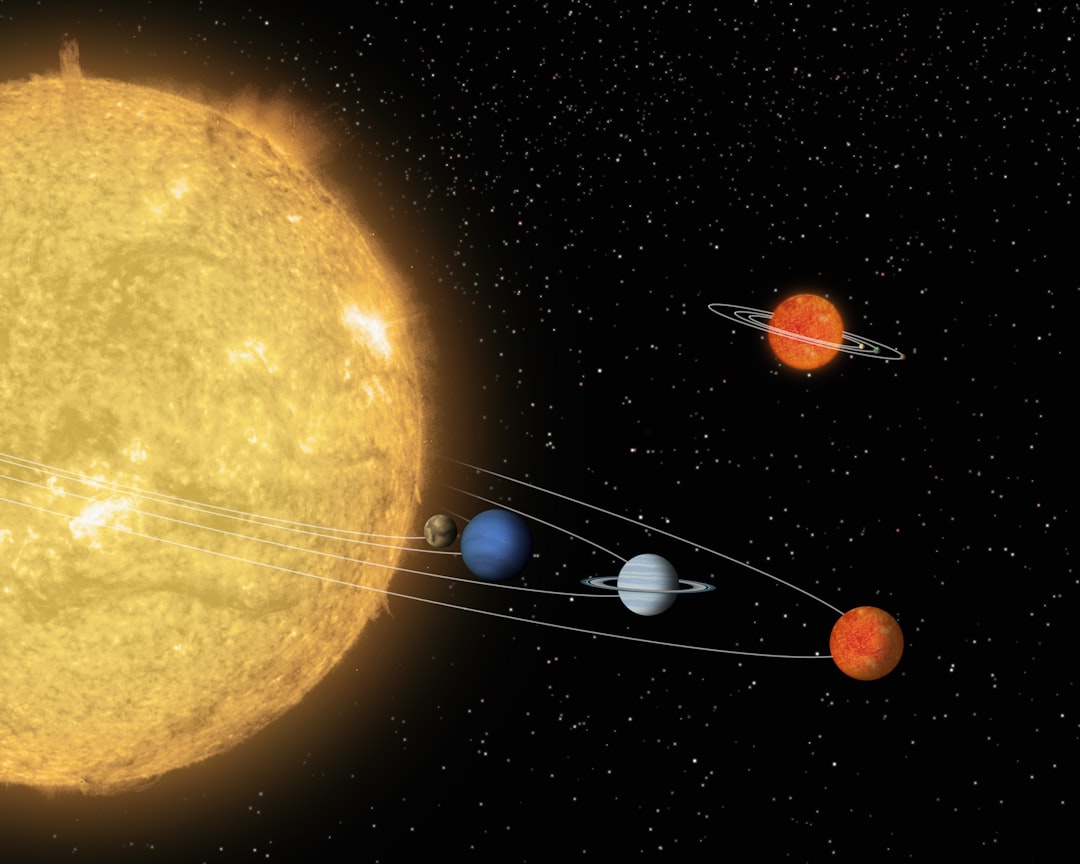
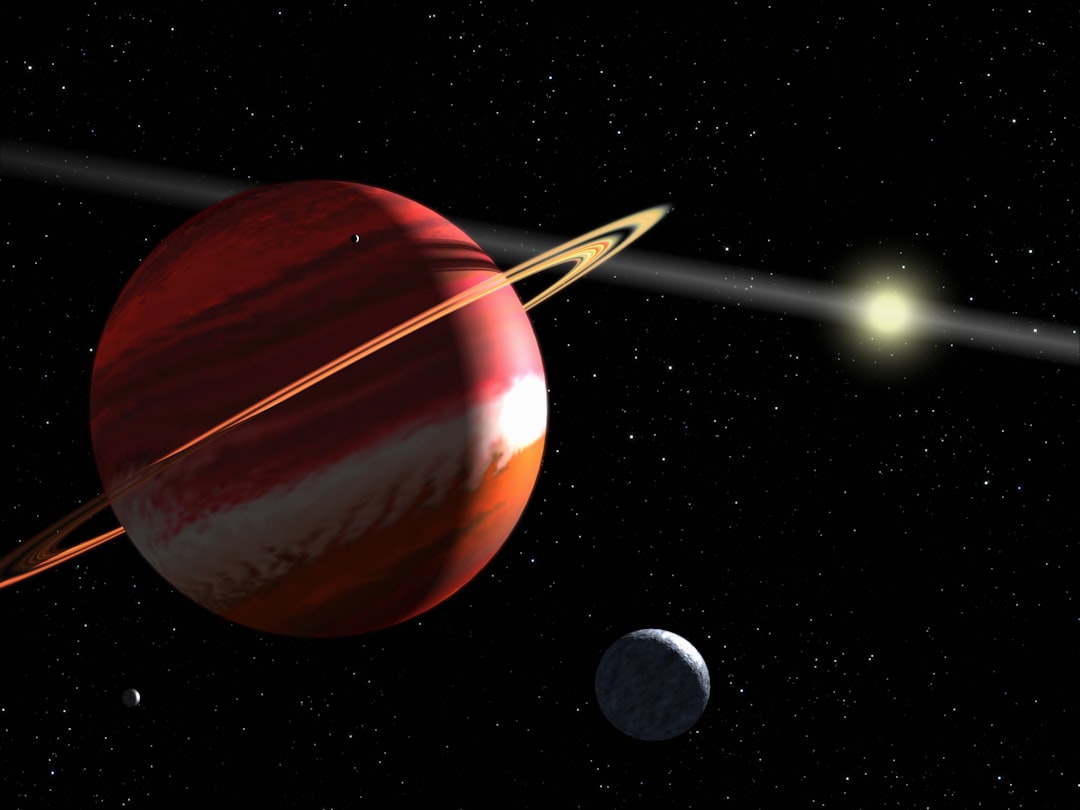
The research reveals that Jupiter played a pivotal role in determining Earth's composition by acting as a cosmic barrier in the early Solar System. Jupiter formed rapidly, becoming massive enough within the first few million years to carve a substantial gap in the protoplanetary disk—the rotating disk of gas and dust surrounding the young Sun from which all planets formed.
This "Jupiter barrier" effectively segregated the Solar System into two distinct reservoirs of material. The inner Solar System, inside Jupiter's orbit, contained predominantly rocky, dry materials, while the outer Solar System beyond Jupiter was rich in volatile compounds and water ice. Prior to this research, scientists understood that this barrier existed but weren't certain how effective it was at preventing material exchange between the two regions.
The new findings suggest the barrier was remarkably efficient, allowing at most 2% of Earth's mass—and potentially 0%—to originate from beyond Jupiter. This has profound implications for understanding not only Earth but also the formation of Mars and large asteroids like Vesta, which the study shows share this predominantly inner Solar System heritage.
Implications for Mercury and Venus
While we possess physical samples from Earth, Mars (via meteorites), and asteroids, we have no returned samples from Mercury or Venus to directly analyze. However, the robust statistical framework developed in this study allows researchers to make theoretical predictions about these planets' compositions based on their positions in the inner Solar System.
"Based on our analysis, we can theoretically predict the composition of these two planets," explained Sossie. The research suggests that Mercury and Venus should exhibit even more extreme isotopic compositions than Earth, being composed almost exclusively of the driest, most refractory materials from the innermost regions of the protoplanetary disk. Future missions, such as ESA's BepiColombo to Mercury, may eventually test these predictions.
The Water Paradox: Rethinking Earth's Ocean Origins
Perhaps the most intriguing consequence of this research concerns the origin of Earth's oceans. Our planet is unique among the inner Solar System worlds in possessing vast quantities of surface water—enough to cover 71% of its surface. For decades, a leading hypothesis suggested that much of this water arrived via comets or icy asteroids from the outer Solar System during a period of heavy bombardment after Earth's initial formation.
This "late veneer" hypothesis seemed logical: the inner Solar System was too hot for water ice to survive during planet formation, so Earth must have acquired its water from icy bodies that formed beyond the frost line and subsequently migrated inward. However, if Earth contains little to no material from the outer Solar System, this explanation becomes problematic.
The new findings support an alternative hypothesis: that Earth's water was produced internally through chemical reactions in the planet's early mantle. In this scenario, hydrogen and oxygen present in the rocky materials that formed Earth combined through geochemical processes to create water. Some of this water eventually migrated to the surface through volcanic outgassing, gradually filling the ocean basins over hundreds of millions of years.
Key Findings and Their Significance
- Homogeneous Composition: Earth's bulk silicate composition (the primitive mantle) shows remarkable isotopic homogeneity, indicating formation from a single, well-mixed reservoir of inner Solar System material
- No Chondrite Match: Surprisingly, Earth's composition doesn't match that of any known chondrite meteorite type, despite chondrites being the most common meteorite class and long considered representative of planetary building blocks
- Minimal Outer Solar System Contribution: The outer Solar System contributed at most 2% of Earth's mass, and possibly 0%, challenging previous estimates of 6-40%
- Jupiter's Barrier Effect: The rapid formation of Jupiter created an effective barrier preventing significant material exchange between inner and outer Solar System reservoirs
- Water Origin Questions: The findings necessitate reconsideration of how Earth acquired its water, favoring internal production over external delivery
Advanced Methodology: Data Science Meets Geochemistry
The research team's approach represents a methodological innovation in planetary science. "Our studies are actually data science experiments," said Sossie. "We carried out statistical calculations that are rarely used in geochemistry, even though they are a powerful tool." Rather than relying on physical models with inherent assumptions about Solar System dynamics, the researchers let the isotopic data speak for itself through robust statistical analysis.
The team specifically examined the Bulk Silicate Earth (BSE), also known as Earth's primitive mantle—the portion of our planet that has retained signatures of the original materials from which Earth formed. Analyzing the BSE directly is impossible because the mantle has been extensively modified by billions of years of geological activity. Instead, scientists use chondritic meteorites as proxies, comparing their compositions to what we can infer about the primitive mantle from volcanic rocks and other geological samples.
By incorporating data from multiple isotopic systems—including chromium, titanium, molybdenum, and others—across numerous meteorite samples and planetary bodies, the researchers achieved unprecedented statistical power. Their analysis revealed that "all elements, irrespective of their geochemical character or nucleosynthetic origin, record the same isotopic provenance in the BSE; that of an endmember among the NC (non-carbonaceous) group."
Broader Implications for Planetary Science and Exoplanet Research
These findings extend beyond our Solar System, offering insights into planet formation processes that may be universal. Observations from facilities like the Atacama Large Millimeter/submillimeter Array (ALMA) have revealed numerous protoplanetary disks around young stars featuring gaps and rings—structures carved out by forming planets, much like Jupiter carved gaps in our own Solar System's early disk.
If giant planets commonly form quickly and create effective barriers in protoplanetary disks, this could have profound implications for the composition and habitability of rocky planets in other solar systems. Planets forming interior to such barriers might consistently be dry and require internal water production mechanisms, while those forming in systems without massive planet barriers might more easily acquire water-rich material from their outer regions.
The research also raises new questions that future investigations will need to address. If Earth's water wasn't delivered from the outer Solar System in significant quantities, and if the inner Solar System was too warm for abundant water ice, what was the exact mechanism of water production? How much hydrogen was available in the rocky materials of the inner Solar System, and under what conditions did it combine with oxygen to form water?
Future Research Directions
As Sossie noted with characteristic scientific humility, "Dan and I will have to engage in many heated debates about the material composition of Earth and its neighbouring planets, because the scientific discourse over the building blocks of Earth is far from over, despite the new findings." The research opens several promising avenues for future investigation:
First, upcoming sample return missions, including NASA's OSIRIS-REx (which has already returned samples from asteroid Bennu) and Japan's Hayabusa2 mission, will provide pristine asteroid material for detailed isotopic analysis, potentially confirming or refining these findings. Second, improved models of water production in planetary mantles will help test whether internal mechanisms can account for Earth's ocean volume. Third, observations of exoplanetary systems at various stages of formation will reveal whether Jupiter-like barriers are common and how they influence planetary compositions.
This research exemplifies how scientific understanding advances through incremental steps, each building upon previous work while sometimes overturning long-held assumptions. While a single study cannot definitively resolve debates about planetary formation and Earth's water origin, it provides a robust new framework for thinking about these fundamental questions. As our analytical techniques improve and our data sets expand, we move closer to understanding not just how Earth formed, but how rocky, potentially habitable planets arise throughout the cosmos.
The story of Earth's formation, written in the isotopic signatures of ancient meteorites and preserved in our planet's deep mantle, continues to reveal its secrets—reminding us that even our home world still holds mysteries waiting to be uncovered through careful scientific investigation.