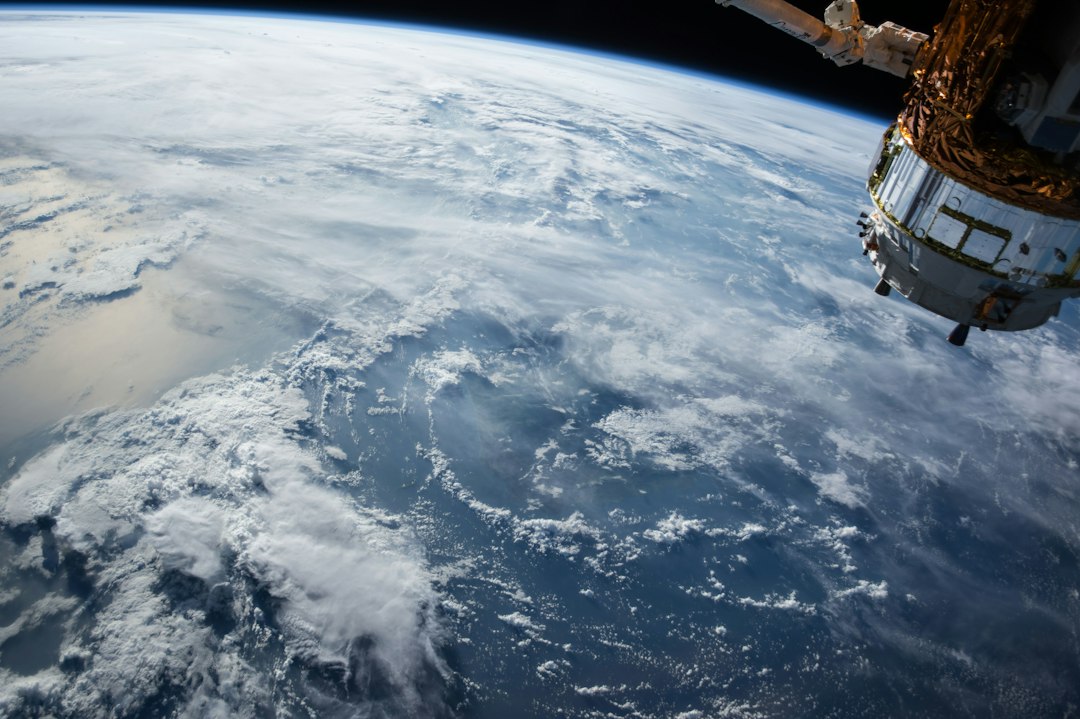
JUICE Mission to Swing by Earth on September 28: A Critical Step Toward Jupiter's Icy Moons
The JUpiter ICy moons Explorer (JUICE) mission, launched by the European Space Agency (ESA) on April 23, 2023, is preparing for a pivotal moment in its long journey to the outer solar system. On Monday, September 28, the spacecraft will execute a carefully choreographed Earth gravity assist maneuver (GAM), making its closest approach — just 8,640 kilometers (5,370 miles) above Earth's surface — at 13:45 CEST (07:45 a.m. EST / 04:45 a.m. PST). This elegant celestial ballet is not merely a waypoint; it is a masterclass in orbital mechanics and a testament to the ingenuity of modern space navigation.
The Art and Science of Gravity Assists
Gravity assist maneuvers, sometimes called "gravitational slingshots," are among the most powerful tools in a mission planner's arsenal. By carefully threading a spacecraft past a massive body such as a planet or moon, engineers can dramatically alter its speed and trajectory — essentially borrowing energy from the planet's own orbital momentum around the Sun — without expending a single drop of precious propellant. The technique was famously employed by the Voyager missions in the 1970s to tour the outer solar system, and more recently by missions such as NASA's Cassini spacecraft, which used multiple gravity assists to reach Saturn.
For JUICE, the challenge is exceptional. Jupiter sits more than 600 million kilometers from Earth at closest approach, and delivering a spacecraft of JUICE's mass — approximately 6,070 kilograms fully fueled — to such a distant destination requires an intricate series of gravitational nudges from multiple planets. A direct trajectory would demand far more fuel than any current launch vehicle could reasonably carry, making the multi-flyby approach not just practical but essential.
An Unprecedented Flight Path: The Planetary Grand Tour of JUICE
JUICE's journey to Jupiter is one of the most complex interplanetary trajectories ever designed. The mission's flight path includes the following key maneuvers:
- Lunar-Earth flyby (August 19, 2024): JUICE accomplished a historic first — the first-ever combined lunar-Earth flyby — using the Moon's gravity to set up an immediate subsequent encounter with Earth. This back-to-back double flyby demonstrated unprecedented precision in spacecraft navigation.
- Venus gravity assist (August 31, 2025): Swinging past Venus will provide JUICE with an additional velocity boost while redirecting its trajectory back toward the inner solar system and then outward to Jupiter.
- Earth flyby #2 (September 28, 2025): The upcoming encounter, which will fine-tune the spacecraft's speed and heading for the next leg of its journey.
- Final Earth flyby (January 2029): A concluding gravitational boost that will place JUICE on its optimal long-range trajectory toward Jupiter.
- Jupiter orbit insertion (July 2031): After nearly eight years of travel, JUICE will finally enter orbit around Jupiter.
- Ganymede orbit (2034): JUICE will become the first spacecraft ever to orbit a moon other than Earth's own Moon, settling into orbit around Ganymede for an extended scientific campaign.
This elaborate choreography is designed not just to get JUICE to Jupiter, but to ensure it arrives with enough residual propellant to carry out years of scientific operations in the Jovian system. Each flyby trades time for fuel efficiency — a fundamental compromise in deep-space mission design.
Six Windows, One Perfect Approach
Arranging the September 28 Earth flyby has been a demanding exercise in precision engineering. Mission controllers identified six discrete time slots during which small trajectory correction maneuvers (TCMs) could be executed to fine-tune the spacecraft's approach angle and velocity. The margin for error in such an encounter is extraordinarily slim; arriving even slightly off-course could alter the spacecraft's subsequent trajectory in ways that would be difficult or impossible to correct.
"Until now, only one maneuver at minus four weeks was needed. It was of relatively small size, but extremely effective. It put Juice in the right spot for the flyby. Our Flight Dynamics Team did an amazing job to prepare it!" — Angela Dietz, JUICE Spacecraft Operations Manager
The fact that only a single corrective burn was ultimately required speaks volumes about the accuracy of the initial trajectory design and the extraordinary skill of the ESA's European Space Operations Centre (ESOC) flight dynamics team in Darmstadt, Germany.
Into Earth's Shadow: A Temporary Eclipse
One of the more dramatic aspects of this flyby is that JUICE will pass through Earth's shadow — entering a region of space where our planet blocks direct sunlight — beginning at 03:29 p.m. EST (12:29 p.m. PST) on September 27 and emerging again by 12:29 p.m. EST (09:29 a.m. PST) on September 28. For a solar-powered spacecraft, this represents a significant operational challenge.
During this eclipse period, JUICE's large solar arrays — spanning nearly 27 meters tip to tip and capable of generating approximately 850 watts at Jupiter's distance from the Sun — will be effectively useless. The spacecraft will rely entirely on its onboard battery reserves, necessitating the temporary shutdown of certain power-hungry instruments to conserve energy. Mission controllers will have pre-programmed the spacecraft's behavior during this period, as the communication delay and the eclipse itself demand that JUICE operate autonomously through this critical phase.
Scientific Objectives: Not Just a Pit Stop
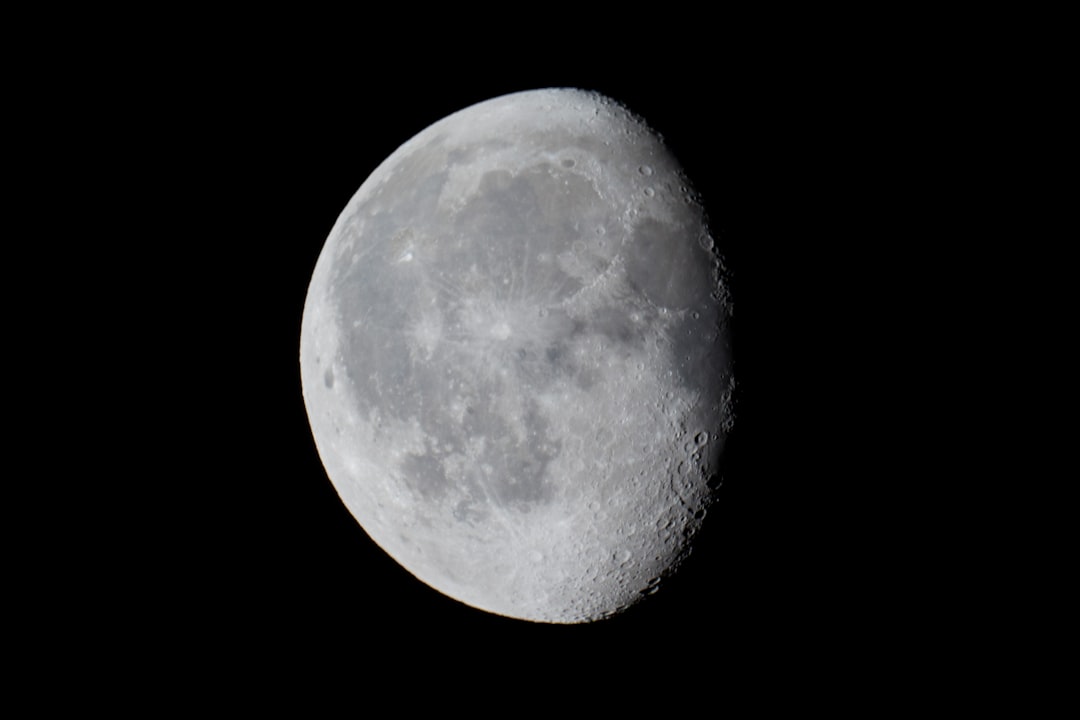
Far from being a purely navigational event, the Earth flyby serves as a rich scientific opportunity in its own right. Between September 23 and October 3, JUICE will train its suite of sophisticated instruments on Earth and the Moon, mirroring the data collection it performed during the historic 2024 lunar-Earth flyby.
Instrument Calibration
The flyby provides an invaluable opportunity to calibrate JUICE's scientific instruments against well-characterized targets. Earth and the Moon are among the most studied objects in the solar system, meaning scientists can cross-check JUICE's readings against a vast body of existing data. This calibration is critical for ensuring that when JUICE finally reaches the Jovian system, its measurements of Europa's potential subsurface ocean signatures or Ganymede's intrinsic magnetic field will be as accurate as possible.
Investigating Earth's Magnetotail
One of the most scientifically compelling aspects of the September flyby is the opportunity to study Earth's magnetotail — the elongated, comet-like extension of our planet's magnetosphere that is sculpted by the constant pressure of the solar wind. Earth's magnetotail can extend for hundreds of Earth radii on the night side of the planet, creating a dynamic and complex plasma environment. JUICE's instruments, particularly its magnetometer (J-MAG) and plasma environment package (PEP), will gather detailed measurements of this structure — data that will also help scientists better understand the analogous but far more dramatic magnetic environment around Jupiter, the largest magnetosphere in the solar system.
Testing Navigation Techniques
JUICE's navigation camera team will take advantage of the Moon's presence to test a novel technique: using the lunar horizon as a navigational reference to improve the spacecraft's pointing accuracy. This autonomous optical navigation capability could prove invaluable when JUICE is maneuvering through the complex gravitational environment of the Jovian moon system, far from easy communication with Earth.
Imagery for the Public
JUICE's two onboard monitoring cameras will capture images throughout the flyby, offering the public a spacecraft's-eye view of our home planet and its Moon. These images will be shared via ESA's official website and social media channels, providing a powerful reminder of Earth's fragile beauty as seen from the perspective of a spacecraft bound for the outer reaches of the solar system.
A Simpler Flyby, but Greater Scientific Reward
"All flybys are risky, requiring very careful planning and continuous monitoring. But the upcoming Earth flyby is much simpler from an operational perspective than the 2024 lunar-Earth flyby, where a flyby of the Moon set Juice up for a flyby of Earth the next day. This is great news for science, because it means we will be able to turn Juice in all different directions to point its science instruments at different parts of Earth and the Moon." — Claire Vallat, JUICE Project Scientist
The relative simplicity of this flyby compared to the 2024 lunar-Earth double encounter translates directly into greater scientific flexibility. When a spacecraft is executing back-to-back planetary encounters in rapid succession, operational constraints severely limit how freely instruments can be pointed. With a single-body flyby, the science team has considerably more freedom to maneuver the spacecraft and optimize data collection across multiple targets and phenomena.
Looking Ahead: The Prize at Journey's End
All of this extraordinary complexity — the years of interplanetary travel, the planetary billiards, the eclipses and calibrations — is in service of one of the most compelling scientific questions of our era: Does liquid water exist beneath the icy surfaces of Jupiter's moons, and could those subsurface oceans harbor life?
Jupiter's icy moons — particularly Europa, Ganymede, and Callisto — are thought to harbor vast liquid water oceans beneath their frozen crusts, kept liquid by the intense tidal heating generated by Jupiter's immense gravitational field. JUICE carries 10 state-of-the-art scientific instruments specifically designed to probe these hidden oceans, characterize the surface geology of these moons, and investigate their potential habitability.
When JUICE eventually settles into orbit around Ganymede in 2034 — becoming the first spacecraft ever to orbit a body in the outer solar system other than a planet — it will mark the culmination of a journey that began with this very flyby. For now, as JUICE skims past our blue planet one more time, it carries with it the hopes and curiosity of a species reaching ever further into the cosmos.
For more information on the JUICE mission and to follow the Earth flyby in real time, visit the ESA JUICE mission page.