Mercury's Weak Magnetic Field Periodically Traps Solar Wind, Forming Fleeting Radiation Belts
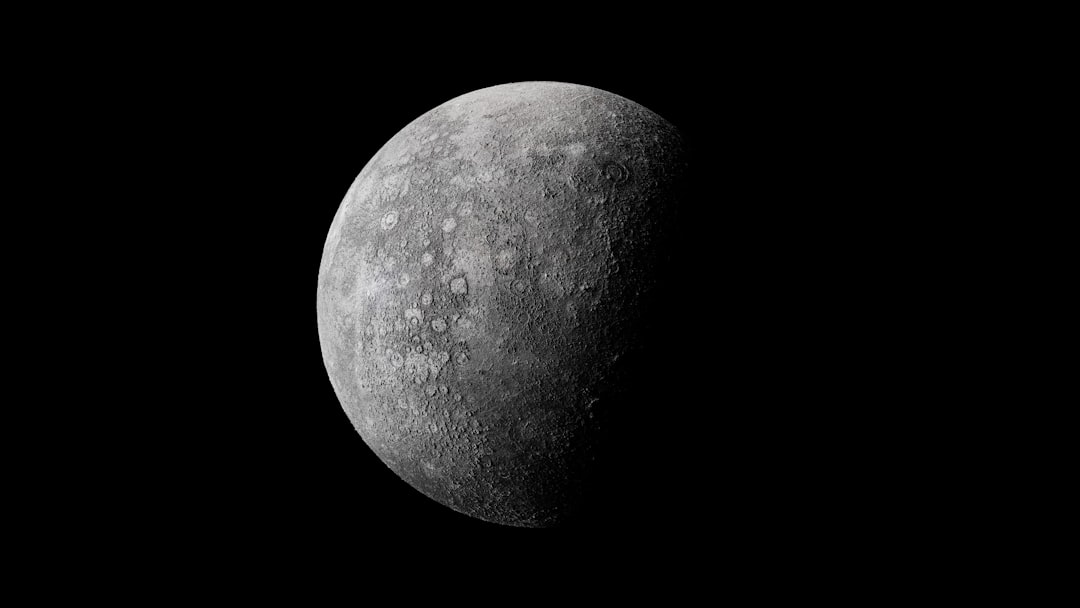
Of all the planets in our solar system, Mercury remains one of the most enigmatic. As the innermost planet, it endures a punishing bombardment of solar radiation and charged particles, yet its extreme proximity to the Sun has made it extraordinarily difficult to study. Only two spacecraft missions have ever visited Mercury — a testament to the immense navigational and engineering challenges involved in reaching a world so deep within the Sun's gravitational well. Despite this scarcity of data, every close encounter with the tiny planet has yielded remarkable and often unexpected scientific discoveries.
Now, more than half a century after Mercury's magnetic field was first detected, a new study is rewriting what scientists thought they knew about this planetary oddity. Research recently published in Nature Astronomy reveals that Mercury's surprisingly weak magnetic field is capable of something long considered beyond its means: periodically capturing solar wind particles and generating radiation belts reminiscent — though far more transient — of Earth's own Van Allen Belts.
A Magnetic Mystery Decades in the Making
Mercury's magnetic field was first detected in March 1974, when NASA's Mariner 10 spacecraft made its historic flyby of the planet. The discovery stunned the scientific community. At roughly half the width of the continental United States, Mercury is a small, geologically ancient world that was not expected to harbor an active, global magnetic field. Planetary magnetic fields are generally generated by the motion of electrically conducting fluid within a planet's interior — a process known as a magnetohydrodynamic dynamo. For such a small, seemingly cold body, this seemed implausible.
Yet there it was: a global dipolar magnetic field, albeit one measuring only about 1 percent the strength of Earth's own magnetosphere. This feeble field raises profound questions — chief among them being whether it is strong enough to meaningfully interact with the relentless stream of charged particles flowing from the Sun known as the solar wind.
The debate intensified when NASA's MESSENGER spacecraft (MErcury Surface, Space ENvironment, GEochemistry, and Ranging) entered Mercury's orbit in 2011 and spent four years conducting detailed measurements of the planet's magnetic environment. While Mariner 10's data hinted at the possible existence of trapped charged particles, MESSENGER's findings appeared to challenge that interpretation, fueling a decades-long scientific controversy that the new study now seeks to resolve.
New Study: Harnessing Data, Models, and Modern Techniques
A team of scientists from the United States and France tackled this debate head-on by combining three powerful methodological tools: archived data from NASA's MESSENGER mission, cutting-edge data analysis techniques, and sophisticated computer simulations designed to model Mercury's complex plasma environment. Their goal was to determine, once and for all, whether Mercury's modest magnetosphere could sustain radiation belts — and under what specific orbital conditions they might form.
The results were definitive and striking. The researchers confirmed that Mercury's magnetic field does, in fact, capture solar wind particles, generating radiation belts at various points throughout the planet's highly elliptical orbit around the Sun. These are not permanent, stable structures like Earth's Van Allen Belts, but rather dynamic, short-lived phenomena shaped by Mercury's ever-changing distance from the Sun.
You can learn more about NASA's pioneering MESSENGER mission and its discoveries at the NASA MESSENGER Mission Page.
Orbital Eccentricity: The Key to Radiation Belt Formation
Unlike Earth, which follows a nearly circular path around the Sun with an orbital eccentricity of just 0.0167, Mercury travels along a pronouncedly elliptical orbit with an eccentricity of 0.2056 — one of the highest of any planet in the solar system. This means Mercury's distance from the Sun varies dramatically throughout its 88-Earth-day year, swinging between its closest approach (perihelion) at roughly 46 million kilometers and its farthest point (aphelion) at approximately 70 million kilometers.
This orbital variability is crucial. At aphelion, Mercury is far enough from the Sun that the solar wind pressure eases slightly, giving Mercury's weak magnetosphere a better chance of holding its shape and trapping particles. The study found that a radiation belt exists approximately 50 percent of the time when Mercury is near aphelion. At perihelion, by contrast, the solar wind is far more intense, overwhelming the magnetosphere more frequently — yet radiation belts still form roughly 20 percent of the time even under these extreme conditions.
Critically, these radiation belts are ephemeral structures. Each one has a lifespan of just 8 to 12 hours before the dynamic interplay of solar wind pressure and Mercury's magnetic field disrupts and destroys it. This fleeting nature explains why previous missions struggled to detect them consistently — catching a radiation belt requires being in the right place at precisely the right time.
Mercury as a Natural Laboratory
"Extreme space weather events at Earth are actually normal on Mercury. Mercury provides a natural laboratory to infer what the radiation could look like at other planets that orbit close to their stars, as well as distant planets during extreme space weather."
Dr. Sun's insight cuts to the heart of why this discovery matters far beyond the borders of our own solar system. Mercury exists at the frontier of planetary habitability and magnetic resilience, enduring conditions that most planets never experience. By studying how its weak magnetosphere responds to the Sun's ferocity, scientists gain an invaluable reference point for understanding planetary magnetic environments throughout the galaxy.
The implications are particularly significant in the context of space weather — the broad term for the Sun's variable output of charged particles, magnetic fields, and radiation. What constitutes an extraordinary, potentially civilization-threatening geomagnetic storm at Earth is, by Mercury's standards, a routine Tuesday. Understanding how planetary magnetic fields respond to such extremes could help scientists better predict and model space weather risks for both Earth and future crewed deep-space missions.
Van Allen Belts: Earth's Protective but Hazardous Shields
To appreciate the significance of Mercury's newly confirmed radiation belts, it helps to understand their terrestrial counterpart. Earth's Van Allen Belts — named after physicist James Van Allen, who discovered them in 1958 using data from the Explorer 1 satellite — are two concentric, donut-shaped regions of energetic charged particles encircling our planet and held in place by Earth's powerful magnetic field.
These belts play a dual role in Earth's magnetospheric ecosystem:
- Protective function: They capture and contain high-energy particles from the solar wind and cosmic rays, preventing them from reaching Earth's surface and contributing to the planet's habitability.
- Hazardous function: The intense radiation within these belts poses a significant threat to satellites, space stations, and astronauts passing through them, requiring careful mission planning and shielding design.
- Dynamic behavior: During strong solar storms, the Van Allen Belts can swell dramatically, increasing the radiation hazard to spacecraft in geosynchronous and low Earth orbits.
- Particle composition: They contain primarily high-energy electrons and protons, accelerated to near-relativistic speeds by complex electromagnetic interactions within the magnetosphere.
Mercury's radiation belts, while far more transient and less energetically intense than Earth's, appear to operate on fundamentally similar physical principles — a remarkable finding given the vast difference in magnetic field strength between the two planets. You can explore more about Earth's Van Allen Belts through NASA's Van Allen Probes mission page.
Implications for Exoplanet Science
Perhaps the most far-reaching consequence of this discovery lies in what it tells us about worlds beyond our solar system. Of the more than 6,300 confirmed exoplanets catalogued to date, an estimated 4,500 to 5,000 orbit closer to their host stars than Mercury orbits the Sun. These are the so-called hot planets — scorched, irradiated worlds whose potential for harboring magnetic fields and, by extension, radiation belts has been poorly understood.
Mercury now serves as a ground-truth analog for such worlds. If a planet with only 1 percent of Earth's magnetic field strength can generate meaningful radiation belts, then even weakly magnetized exoplanets in close stellar orbits may possess structured magnetospheres capable of influencing their space weather environments. This has profound implications for the search for planetary habitability, since a planet's magnetic field is widely considered one of the key factors in whether it can retain an atmosphere and shield surface life from harmful radiation.
For a deeper understanding of ongoing exoplanet research and how scientists are characterizing distant planetary environments, visit the NASA Exoplanet Exploration Program and the ESA Exoplanet Science Portal.
What Comes Next: BepiColombo and the Future of Mercury Science
The timing of this discovery is particularly exciting given that a new mission is already en route to Mercury. BepiColombo, a joint mission by the European Space Agency (ESA) and the Japan Aerospace Exploration Agency (JAXA), is scheduled to enter Mercury's orbit in 2026 after a complex, multi-year journey through the inner solar system. Equipped with a sophisticated suite of instruments designed specifically to study Mercury's magnetic field, magnetosphere, and particle environment, BepiColombo will be perfectly positioned to directly observe and characterize the radiation belts described in this new study.
The mission carries two orbiters — the Mercury Planetary Orbiter (MPO) and the Mercury Magnetospheric Orbiter (MMO, also known as Mio) — that will conduct simultaneous, multi-point measurements of Mercury's magnetic and plasma environment. Such dual-spacecraft observations will provide an unprecedented level of detail about how Mercury's magnetosphere forms, evolves, and responds to the solar wind.
Key questions that future research and BepiColombo observations may help answer include:
- What is the precise energy spectrum of particles trapped within Mercury's radiation belts?
- How do the radiation belts influence Mercury's tenuous exosphere — the planet's thin, surface-bounded atmosphere?
- Can the physical mechanisms identified at Mercury be directly applied to model the magnetospheres of close-orbiting exoplanets?
- Are there seasonal or solar-cycle-dependent variations in how frequently and robustly the radiation belts form?
- What role, if any, do Mercury's radiation belts play in the ongoing erosion and resupply of its exospheric material?
Conclusion: A Small Planet with an Outsized Scientific Legacy
Mercury has long been the overlooked underdog of planetary science — too close to the Sun for easy observation, too small to be considered a world of great consequence. Yet time and again, this diminutive planet has surprised scientists with phenomena that challenge established models and expand our understanding of how planets work. The confirmation that even Mercury's whisper-thin magnetic field can periodically capture solar wind and form radiation belts is yet another reminder that the universe rarely obeys our assumptions.
As the scientific community looks ahead to BepiColombo's arrival and the next generation of exoplanet characterization missions, Mercury's newly revealed radiation belts offer a timely and compelling case study in planetary magnetospheric physics. In the grand tapestry of space science, the smallest planets sometimes cast the longest scientific shadows.