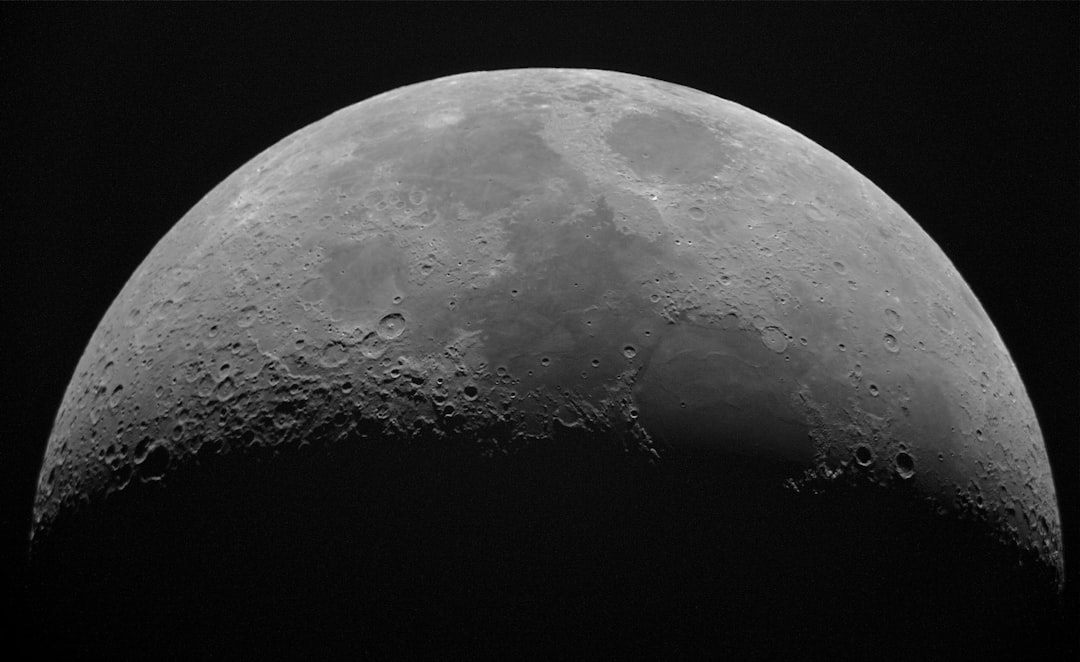
In a historic achievement that pushes the boundaries of human space exploration, the Artemis II mission has successfully completed its unprecedented journey around the far side of the Moon, venturing farther from Earth than any crewed spacecraft in history. The four-person crew reached a staggering distance of more than 400,000 kilometers (250,000 miles) from our home planet, surpassing all previous records for human spaceflight. During their remarkable seven-hour transit across the lunar far side on April 6th, the astronauts captured thousands of extraordinary images of terrain that no human eyes had witnessed before, providing scientists with an invaluable treasure trove of data about our celestial neighbor's mysterious hidden hemisphere.
The mission crew—comprising NASA astronauts Reid Wiseman, Victor Glover, Christina Koch, and Canadian Space Agency astronaut Jeremy Hansen—operated what NASA describes as a comprehensive "fleet" of sophisticated imaging systems to document their historic flyby. The resulting photographs, which began being released on Tuesday, reveal stunning details of the Moon's geological history, including ancient impact craters, solidified lava flows from billions of years ago, and intricate surface fractures that serve as a chronological record of lunar evolution. These images represent not just a technological triumph, but a scientific goldmine that will inform lunar research for decades to come.
Breaking Distance Records and Capturing Unprecedented Lunar Vistas
The Artemis II mission's record-breaking distance represents a significant milestone in NASA's ambitious program to return humans to the Moon and eventually establish a permanent presence there. By traveling more than 400,000 kilometers from Earth, the crew exceeded the previous distance record set during the Apollo 13 mission in 1970, when that crew reached approximately 400,171 kilometers from Earth during their emergency return trajectory. However, unlike Apollo 13's unplanned distance record, Artemis II's achievement was a carefully orchestrated demonstration of the Orion spacecraft's capabilities and a crucial test of systems that will support future lunar landing missions.
The imaging campaign conducted during the far side flyby utilized multiple camera systems with varying capabilities, from high-resolution still cameras to specialized equipment designed to capture specific wavelengths of light. This multi-spectral approach allows scientists to analyze the lunar surface composition in unprecedented detail. The photographs reveal features ranging from microscopic surface textures to massive geological formations spanning hundreds of kilometers, providing insights into the Moon's 4.5-billion-year history.
Scientific Treasures from the Lunar Far Side
The lunar far side, often incorrectly called the "dark side," remains one of the least understood regions of our natural satellite. Unlike the near side, which has been extensively photographed and studied since the dawn of the space age, the far side was completely unknown to humanity until the Soviet Luna 3 spacecraft captured the first grainy images in 1959. The Artemis II crew's high-resolution photographs now provide an unprecedented human perspective on this enigmatic hemisphere, revealing details that robotic missions simply cannot capture with the same intuitive geological understanding that trained astronaut observers bring to the task.
"Our four Artemis II astronauts — Reid, Victor, Christina, and Jeremy — took humanity on an incredible journey around the Moon and brought back images so exquisite and brimming with science, they will inspire generations to come," said Dr. Nicky Fox, associate administrator for NASA's Science Mission Directorate at the agency's headquarters in Washington.
The images showcase several categories of lunar features that are of particular interest to planetary scientists. The impact craters visible in the photographs range from relatively fresh formations with sharp, well-defined rims to heavily degraded ancient structures that have been worn down by billions of years of micrometeorite bombardment. Each crater tells a story about the solar system's violent past and the ongoing process of impact gardening that continuously reshapes the lunar surface.
Ancient Volcanic History Revealed
Perhaps even more intriguing are the extensive lava flow formations captured in the imagery. These solidified rivers of molten rock provide evidence of the Moon's volcanic past, when its interior was still hot enough to generate magma that erupted onto the surface. Unlike the familiar dark maria (lunar seas) visible from Earth, many of the far side's volcanic features are older and more degraded, offering scientists a window into the Moon's earliest geological epochs. By studying the composition and structure of these ancient flows, researchers can better understand the Moon's thermal evolution and the processes that shaped its crust during the first billion years of its existence.
Rare Celestial Phenomena Documented
Beyond the lunar surface itself, the Artemis II crew captured several extraordinary celestial events that occur only in the unique environment of cislunar space. The astronauts photographed both earthrise and earthset sequences, echoing the iconic images captured during the Apollo missions but with modern high-resolution equipment that reveals our home planet in breathtaking detail. These images show Earth as a brilliant blue-and-white marble suspended in the cosmic void, providing a powerful reminder of our planet's fragility and uniqueness.
In a particularly rare scientific opportunity, the crew also documented six meteoroid impact flashes on the lunar surface—brief bursts of light created when space rocks slam into the Moon at velocities exceeding 20 kilometers per second. These impacts, which occur constantly but are rarely observed and documented, provide valuable data about the flux of small bodies in the Earth-Moon system. NASA scientists are now collaborating with amateur astronomers who may have simultaneously observed these same impacts from Earth, allowing for precise triangulation of the impact locations and refinement of impact timing.
Perhaps most spectacular were the crew's observations of solar eclipse phenomena visible only from their unique vantage point behind the Moon. As the lunar disk passed between the spacecraft and the Sun, the astronauts were able to photograph the Sun's corona—the superheated outer atmosphere normally invisible except during total solar eclipses. These observations, conducted from a perspective impossible to achieve from Earth, provide solar physicists with new data about coronal structure and dynamics.
Processing and Analyzing the Data Deluge
The volume of data being transmitted from Artemis II is staggering. The crew captured thousands of individual images during their lunar flyby, and mission controllers are working methodically to downlink these files as bandwidth allows. Initial releases have focused on the most scientifically significant and visually striking images, but researchers anticipate that the complete dataset will take weeks to fully transmit and process.
"It was remarkable listening to the crew describe the stunning views during the flyby. At first, their descriptions didn't quite match what we were seeing on our screens. Now that higher resolution images are coming down, we can finally experience the moments they were trying to share and truly appreciate the scientific return provided by these images and our other research on this mission," explained Jacob Bleacher, NASA's chief exploration scientist at the agency's headquarters.
This discrepancy between the crew's real-time descriptions and the initial low-resolution imagery highlights an important aspect of human spaceflight: the irreplaceable value of trained human observers who can recognize scientifically significant features and prioritize imaging targets in real-time. While robotic missions follow pre-programmed sequences, human explorers can adapt their observational strategies based on what they see, ensuring that unexpected discoveries are not missed.
Advanced Image Processing Techniques
NASA's image processing teams are employing sophisticated techniques to extract maximum scientific value from the Artemis II photographs. These methods include photogrammetric analysis to create three-dimensional terrain models, spectral analysis to identify surface composition, and temporal comparison with previous lunar imagery to detect changes over time. The Lunar Reconnaissance Orbiter Camera team at Arizona State University is particularly interested in comparing the new Artemis II images with their extensive orbital database to identify features of interest for future exploration.
Implications for Future Lunar Exploration
The scientific return from Artemis II extends far beyond the immediate value of the images themselves. This mission serves as a critical pathfinder for Artemis III, which will land the first humans near the lunar South Pole in the coming years. The operational experience gained during Artemis II—from navigation and communication systems to crew procedures and imaging protocols—directly informs the planning and execution of subsequent missions.
The imagery and data collected will play a crucial role in site selection for future lunar surface operations. NASA and its international partners are working toward establishing a permanent presence on the Moon through the Artemis Gateway lunar space station and surface habitats near the South Pole-Aitken Basin—the largest and oldest impact structure on the Moon. Understanding the geological context of potential landing sites, resource distribution, and terrain characteristics is essential for ensuring the safety and scientific productivity of these future missions.
Key Scientific Objectives Achieved
- Geological Mapping: High-resolution imagery of previously unobserved lunar terrain provides crucial data for understanding the Moon's crustal evolution and impact history, particularly in regions that may harbor ancient volcanic deposits or unusual mineralogy.
- Impact Flux Measurement: Documentation of six meteoroid impacts during the flyby, combined with ground-based observations, enables precise calibration of current impact rates and improves models of the near-Earth space environment.
- Crew Performance Validation: The successful execution of a complex imaging campaign under challenging conditions demonstrates that future astronauts will be capable of conducting sophisticated scientific observations during lunar missions.
- Systems Testing: The Orion spacecraft's communication, navigation, and life support systems all performed flawlessly at record distances from Earth, validating the vehicle's readiness for future deep space missions.
- Public Engagement: The stunning imagery captured by the crew serves to inspire public interest in space exploration and demonstrates the tangible benefits of human spaceflight for scientific discovery.
Looking Toward Humanity's Lunar Future
As the Artemis II crew makes its way back to Earth, the scientific community is already planning how to build upon the mission's achievements. The European Space Agency and other international partners are developing complementary lunar missions that will expand upon the reconnaissance work begun by Artemis II. Future missions will carry more sophisticated scientific instruments, including ground-penetrating radar to probe beneath the lunar surface and spectrometers to analyze the composition of rocks and regolith in detail.
The ultimate goal of the Artemis program extends beyond scientific discovery to the establishment of a sustainable human presence on the Moon. The knowledge gained from missions like Artemis II—about lunar geology, the space environment, and the capabilities of human explorers—forms the foundation upon which this ambitious vision will be built. As humanity prepares to return to the Moon after more than half a century, these images serve as both a reminder of how far we have come and a tantalizing preview of the discoveries that await.
The coming days will bring additional image releases as the crew continues their journey home, and each new photograph promises to reveal more secrets about our enigmatic celestial companion. For scientists, educators, and space enthusiasts around the world, the Artemis II mission represents not an ending, but the beginning of a new era of lunar exploration—one in which humans will walk among the craters and mountains captured in these historic photographs, conducting research that will expand our understanding of the solar system and our place within it.