NASA's First Selection for a New Class of Mission: The PRIMA Far-Infrared Telescope
On September 23rd, NASA announced a landmark decision in the evolution of its astrophysics program — the first selection in a brand-new class of space observatories called Probe Explorers. The chosen mission, the PRobe far-Infrared Mission for Astrophysics (PRIMA), represents a bold step forward in humanity's quest to understand the origins and evolution of the Universe. Operating under the agency's storied Explorers Program — NASA's oldest continuous program dedicated to astrophysics and heliophysics — PRIMA signals a new era of mid-scale, high-impact science missions designed to fill critical observational gaps in our cosmic toolkit.
The announcement has been met with widespread enthusiasm from the scientific community, as the far-infrared window into the Universe has long been one of the most scientifically rich yet observationally underserved regions of the electromagnetic spectrum. With PRIMA, astronomers hope to finally unlock the secrets hidden behind cosmic dust clouds that obscure some of the most transformative processes in the Universe — from the birth of planets and stars to the co-evolution of galaxies and their central supermassive black holes.
A Mission Born from the Decadal Survey
PRIMA's selection did not emerge in a vacuum. The mission was directly inspired by the recommendations of the National Academies of Sciences, Engineering, and Medicine (NASEM) 2020 Decadal Survey, formally titled "Pathways to Discovery in Astronomy and Astrophysics for the 2020s" (commonly referred to as Astro2020). This landmark document, produced once per decade by the broader astronomical community, serves as the strategic roadmap for U.S. astronomy and astrophysics priorities. Among its key recommendations was the establishment of a new intermediate mission class — the Probe Explorers — to bridge the gap between the smaller Explorer missions and the flagship-class observatories like the James Webb Space Telescope (JWST).
NASA selected PRIMA for development following a rigorous and detailed evaluation of multiple concept studies. The selection criteria were demanding, encompassing alignment with the Decadal Survey's core science goals, cost and schedule feasibility, and the potential of the mission's technologies to inform and support future, even larger observatories. PRIMA rose above the competition on all fronts, demonstrating that it could deliver transformative science within a fiscally responsible framework.
"A single mission alone can't probe all the universe's mysteries. But by extending the survey capabilities of our fleet into far-infrared wavelengths with PRIMA, we're enabling an incredibly comprehensive look at the cosmos. With our Webb and Roman space telescopes, we set a cadence of launching premiere-class missions in both halves of the decade. We're going to keep that up and kick off the next decade with PRIMA, as part of a pipeline that will consistently have missions of this caliber ready to go." — Shawn Domagal-Goldman, Director of the Astrophysics Division, NASA Headquarters
Why the Far-Infrared? Peering Through the Cosmic Veil
To appreciate PRIMA's scientific significance, it is essential to understand why the far-infrared (FIR) wavelength regime is so profoundly important to astrophysics. The electromagnetic spectrum stretches from high-energy gamma rays at one end to long-wavelength radio waves at the other. Visible light — what our eyes detect — occupies only a tiny sliver of this vast range. Many of the most consequential astrophysical processes in the Universe, however, do not announce themselves in visible light. Instead, they radiate most of their energy in the far-infrared, at wavelengths roughly between 25 and 500 microns.
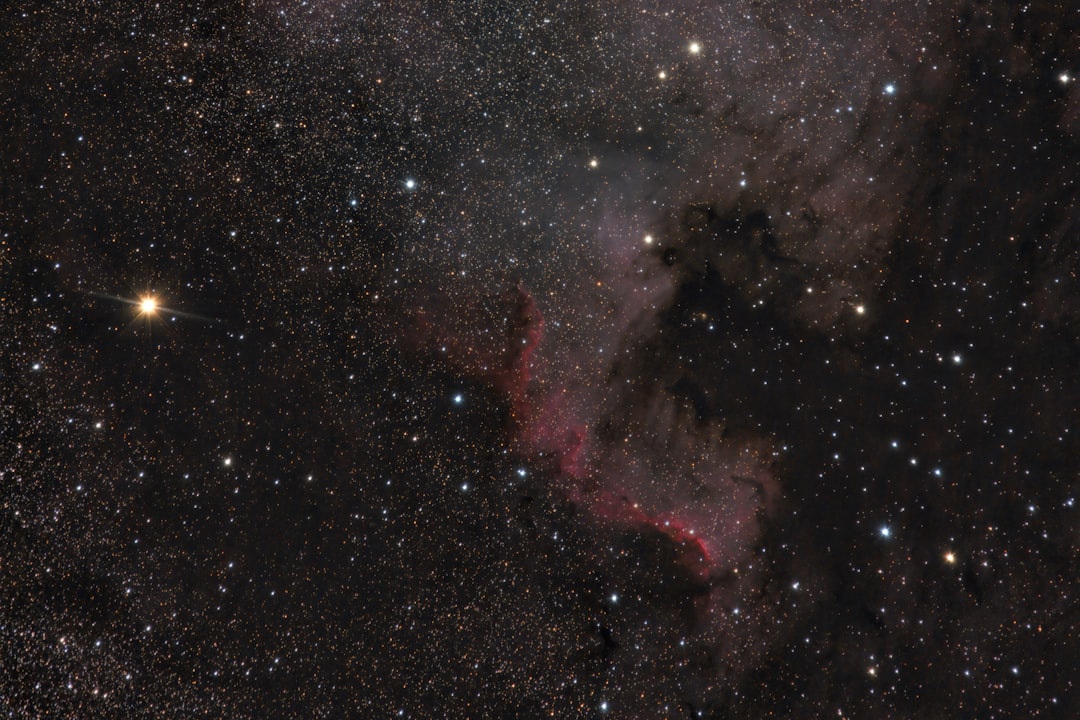
This is primarily because vast quantities of cosmic dust — microscopic grains of silicates, carbon compounds, and ice — pervade galaxies. This dust absorbs ultraviolet and optical light from young stars, active galactic nuclei, and other energetic sources, and re-radiates that energy at far-infrared wavelengths. The result is that some of the most active star-forming galaxies in the early Universe are virtually invisible in optical light yet blaze brilliantly in the far-infrared. Without the ability to observe in this wavelength range, our picture of cosmic history is fundamentally incomplete.
Furthermore, the far-infrared is rich in spectral signatures of key molecules and atomic species — including water, carbon monoxide, and ionized carbon — that are directly relevant to questions of habitability and chemical enrichment across cosmic time. PRIMA's spectroscopic and photometric capabilities will allow astronomers to probe these signatures with unprecedented sensitivity across a wide range of cosmic distances and epochs.
Standing on the Shoulders of Herschel
PRIMA is explicitly designed to build upon the revolutionary legacy of the ESA's Herschel Space Observatory, which operated from 2009 to 2013 and remains the largest infrared space telescope ever flown, with a 3.5-meter primary mirror. Herschel transformed our understanding of star formation, galaxy evolution, and the interstellar medium, producing a rich archive of far-infrared data that scientists continue to mine to this day.
However, Herschel had limitations. Its relatively small field of view made wide-area surveys time-consuming, and its detectors, while pioneering, lacked the sensitivity needed to probe the faintest and most distant sources in the Universe. PRIMA is designed to address these shortcomings head-on. Equipped with a 1.8-meter (5.9-foot) cryogenically cooled telescope, it will conduct deep, wide-area surveys with a sensitivity dramatically superior to Herschel, leveraging decades of advances in detector technology, particularly in the form of kinetic inductance detectors (KIDs) and transition edge sensor (TES) bolometer arrays that can detect extraordinarily faint infrared signals.
Critically, PRIMA will also serve as a vital observational bridge between the near- and mid-infrared capabilities of JWST and the Nancy Grace Roman Space Telescope, and the millimeter and radio wavelengths accessible to facilities like the Atacama Large Millimeter/submillimeter Array (ALMA). This spectral coverage gap has long been a frustrating blind spot for astronomers, and PRIMA is poised to fill it decisively.
The Science: Addressing the Universe's Greatest Mysteries
PRIMA's scientific program is structured around three interconnected themes, each addressing some of the most profound open questions in modern astrophysics:
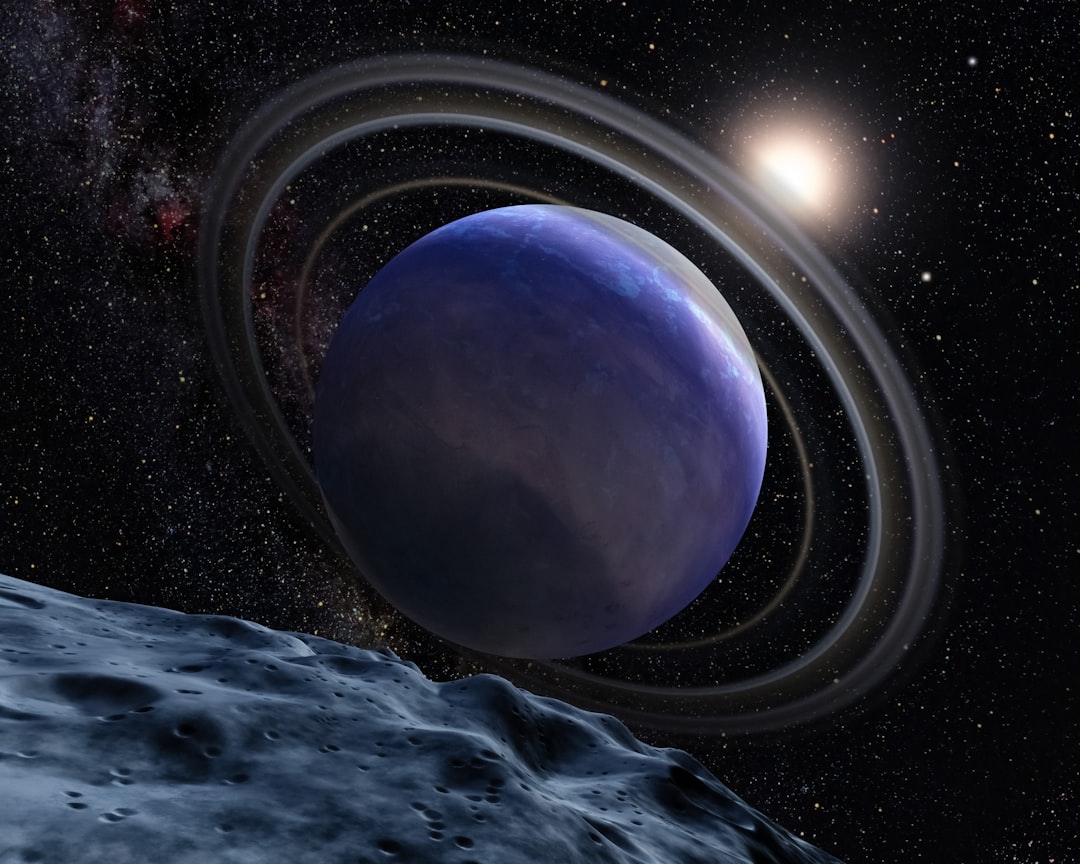
- Planet Formation Beyond the Solar System: The far-infrared is an ideal window for studying protoplanetary disks — the swirling reservoirs of gas and dust around young stars from which planets coalesce. PRIMA will probe the chemical composition and physical structure of these disks in unprecedented detail, tracing the distribution of water ice and organic molecules, providing direct insight into how planetary systems like our own Solar System form. Remarkably, these observations may also shed light on how Earth's oceans came to be, by tracing the delivery of water-rich material during planet formation.
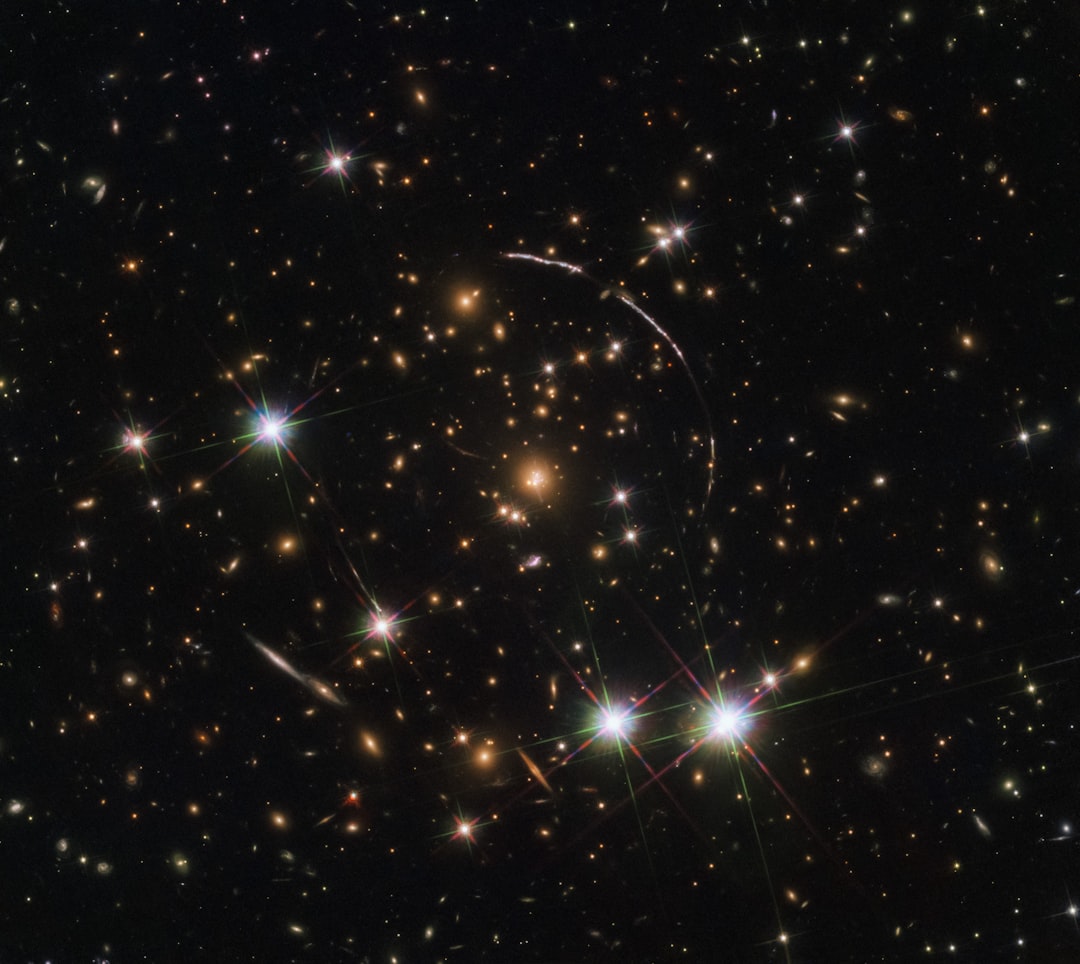
- Co-evolution of Galaxies and Supermassive Black Holes: One of the most fascinating and poorly understood phenomena in cosmology is the apparent synchrony between the growth of galaxies and the supermassive black holes (SMBHs) lurking at their centers. PRIMA will conduct deep surveys of galaxies across cosmic time, measuring their star formation rates, dust masses, and the energy output of their active galactic nuclei, helping astronomers understand the feedback mechanisms by which SMBHs regulate — and are regulated by — their host galaxies.
- Cosmic Chemical Enrichment: The Universe began with only hydrogen, helium, and trace amounts of lithium. Every heavier element — carbon, oxygen, iron, and beyond — was forged in the cores of stars and dispersed through stellar winds and supernova explosions. PRIMA will track the build-up of heavy elements (metals) and dust across cosmic time, illuminating the progressive chemical enrichment of the Universe from the first galaxies to the present day.
"The PRIMA mission is humanity's next window into the deep universe. It will unveil the obscure across cosmic time to better understand the formation of planets, stars, black holes, and even how water on Earth came to be." — Nicky Fox, Associate Administrator of NASA's Science Mission Directorate
Mission Design and Development Roadmap
PRIMA has now entered Phase B of its development lifecycle, which focuses on advancing the spacecraft's preliminary design and continuing the maturation of its key technologies. This phase is a critical proving ground, where engineering concepts are stress-tested and refined before commitment to full-scale development. Following a confirmation review that will rigorously assess the mission's scientific readiness, technical maturity, and cost-effectiveness, PRIMA will advance to Phase C, at which point the mission's cost will be formally capped at $1.2 billion — not including launch vehicle and other mission-enabling costs. This cost cap is a defining feature of the Probe Explorer class, ensuring high-value science at a scale that does not crowd out other priorities in NASA's science budget.
The observatory is currently targeting a launch date of 2033, giving the mission team approximately a decade to bring this complex and ambitious project to fruition. NASA's Jet Propulsion Laboratory (JPL) will lead the management of PRIMA, working in close partnership with the Goddard Space Flight Center and the Marshall Space Flight Center — three of NASA's most experienced centers for space observatory development.
A Truly Global Endeavor
Reflecting both the scale of PRIMA's scientific ambitions and the increasingly collaborative nature of modern big science, the mission will involve a broad coalition of international partners. This global consortium brings complementary expertise, hardware contributions, and shared investment to the project, ensuring that PRIMA will be a mission owned by the entire international astrophysics community. Partners include:
- UK Space Agency
- Centre National D'Etudes Spatiales (CNES) — France's national space agency
- Agenzia Spaziale Italiana (ASI) — Italian Space Agency
- Deutsches Zentrum für Luft- und Raumfahrt (DLR) — German Aerospace Center
- Canadian Space Agency (CSA)
- Korea Astronomy and Space Science Institute (KASI)
- Korea AeroSpace Administration (KASA)
- Japan Aerospace Exploration Agency (JAXA)
The involvement of agencies spanning Europe, North America, and Asia underscores the universal appeal of PRIMA's science program and the recognition among spacefaring nations that the questions PRIMA will tackle are among the most important humanity has ever asked.
A New Era for NASA Astrophysics
The selection of PRIMA is more than just the greenlight for a single telescope. It represents the inauguration of a new programmatic architecture for NASA astrophysics — one that creates a regular cadence of high-impact, mid-scale missions capable of delivering flagship-quality science without the decade-long timescales and multi-billion-dollar price tags of traditional flagship observatories. By launching PRIMA in 2033, NASA aims to ensure that as JWST's operational life matures, a powerful new observatory will be ready to continue the scientific journey, pushing deeper into the far-infrared Universe and answering questions that JWST itself will help formulate.
The story of PRIMA is, in many ways, the story of modern astrophysics: a discipline that has learned to ask ever more ambitious questions, to collaborate on an ever more global scale, and to engineer instruments of breathtaking sophistication. When PRIMA opens its infrared eyes on the Universe in 2033, it will peer through the cosmic veil of dust and time to reveal the hidden machinery of galaxy formation, stellar birth, planetary genesis, and chemical evolution — writing the next great chapter in our understanding of how the Universe, and ultimately we ourselves, came to be.