New Research Reveals Europa's Sodium Cloud Originated from its Interior Ocean
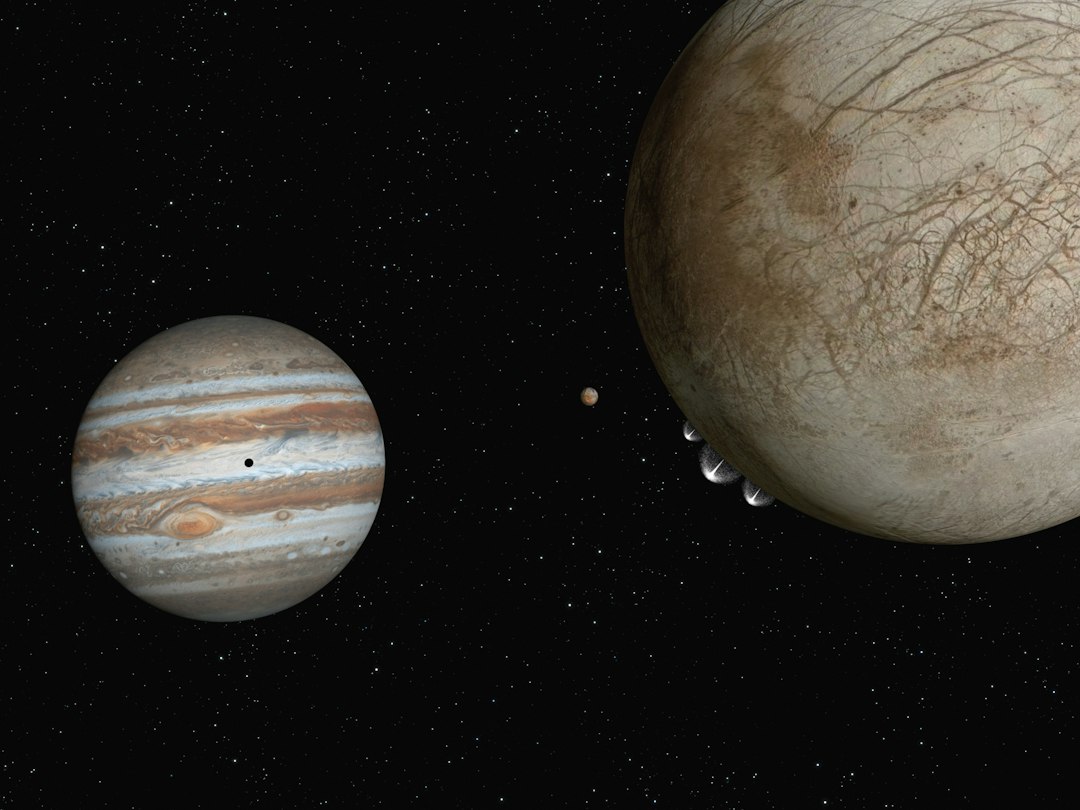
Jupiter's moon Europa has captivated astronomers and astrobiologists for decades, standing as one of the most compelling candidates for extraterrestrial life in our solar system. Ever since the Voyager probes swept through the Jovian system in 1979, scientists have theorized that a vast, liquid water ocean lies concealed beneath the moon's gleaming icy crust — a hypothesis that has only grown stronger with each passing year of observation and analysis. Subsequent missions and ground-based studies have further bolstered this theory, revealing surface plumes driven by warm water pushed upward through cracks and vents in the crust via a process known as cryovolcanism. Researchers have also documented remarkable chemistry playing out on Europa's surface, alongside the detection of an enormous, diffuse cloud of sodium enveloping the moon in a ghostly chemical halo.
Now, a landmark new study has shed fresh light on this intriguing sodium cloud, revealing something both surprising and scientifically significant. Observations by the W.M. Keck Observatory in Hawai'i have demonstrated that this sodium cloud has remained remarkably stable across more than two decades of continuous observation — a striking finding given the violent, dynamic forces that characterize Jupiter's immediate environment. In a recent study led by Boston University, an interdisciplinary team of researchers compared sodium measurements detected high above Europa with observations of sodium clouds located much closer to the moon's surface, weaving together a more holistic picture of the moon's chemical environment than had ever previously been possible.
Connecting the Dots: A More Complete View of Europa's Environment
The team's results, reported in the Journal of Geophysical Research: Space Physics, provide the first observational connection between the extended sodium cloud and the near-surface sodium population. This linkage gives scientists a significantly more complete view of the moon's atmospheric and chemical environment, and in turn, offers a tantalizing indirect window into the ocean concealed beneath Europa's icy shell. The research relied upon an impressive two decades of observational data collected with Keck's High Resolution Echelle Spectrometer (HIRES) instrument, enabling the team to meticulously map the sodium cloud's spatial distribution and monitor how it responds to the constantly shifting conditions within the Jovian system.
Europa's sodium cloud is a remarkable structure in its own right. It is characteristically oblong-shaped, elongated in the east-west direction, and spans more than 46,800 km (29,095 miles) in diameter — roughly 30 times the radius of Europa itself. To put this in perspective, this cloud is large enough to dwarf many planetary bodies in our solar system. Sodium is of particular scientific interest to planetary scientists because it is a primary constituent of sodium chloride — common table salt — which is a key ingredient in Earth's oceans and a potential marker of oceanic chemistry elsewhere in the solar system.
Why Sodium Matters: A Chemical Fingerprint of Habitability
The significance of sodium extends well beyond its chemical simplicity. Based on the latest fossil and geochemical evidence, scientists theorize that life first emerged on Earth approximately 4 billion years ago, likely in primordial oceans surrounding hydrothermal vents — deep-sea geological features where superheated, chemically rich water seeps through the seafloor. These environments provided the energy gradients and molecular building blocks that early life may have exploited to gain its first foothold. Crucially, astrogeologists believe that analogous hydrothermal vent systems may exist within Europa, situated at the boundary between the moon's rocky mantle and its overlying ocean — a region sometimes referred to as the core-mantle boundary. If confirmed, this would make Europa's ocean a compelling analog to Earth's early life-supporting environments.
- Europa's subsurface ocean is estimated to contain twice as much liquid water as all of Earth's oceans combined.
- The ocean is thought to be in direct contact with a rocky seafloor, enabling water-rock chemical interactions crucial for life.
- Tidal heating from Jupiter's immense gravitational pull keeps the ocean liquid despite Europa's distance from the Sun.
- Surface observations have revealed the presence of hydrated salts and sulfates, consistent with a salty, briny ocean below.
- Radiation from Jupiter bombards Europa's surface, potentially driving chemical reactions that produce oxidants capable of percolating into the subsurface ocean.
Understanding the origin and spatial distribution of sodium around Europa, therefore, can help researchers learn a great deal more about both the materials present on the moon's surface and the potential chemistry of its interior. Emma Lovett, a graduate student at Boston University and the study's lead author, articulated the broader significance of these findings:
"We don't know a lot about Europa's hidden ocean and icy surface, but its atmosphere offers a window into this potentially habitable world. The whereabouts of life beyond Earth might be closer than we ever imagined."
Overcoming Observational Challenges
Studying the sodium population in close proximity to Europa's surface is a technically demanding endeavor. The foremost challenge is the highly reflective nature of Europa's surface ice, which scatters sunlight so intensely that it can completely overwhelm the faint spectral signal emitted by nearby gas. The moon's geometric albedo — a measure of its reflectivity — is among the highest of any body in the solar system, making it simultaneously one of the brightest and one of the most observationally challenging moons to study at close range.
To overcome this fundamental problem, the research team employed the HIRES instrument's high-resolution, long-slit spectroscopic configuration, which allowed them to spatially separate the light coming from the moon's surface from the faint emission signatures of nearby gas. The team also strategically observed Europa as it passed through Jupiter's shadow — a naturally occurring eclipse that temporarily removes direct sunlight from the equation, dramatically reducing the contaminating glare from the icy surface. This clever observational strategy allowed the team to isolate sodium's distinctive spectral fingerprint without interference from solar reflections.
By systematically changing the instrument's orientation across multiple positions, the team was able to construct a comprehensive spatial map of the sodium cloud, rather than simply measuring its spectral properties at a single point. They then combined their new observational data with archival Keck data dating back to 1999, enabling them to track changes — or the remarkable absence of changes — in the cloud's properties over more than two decades.
A Cloud Immune to Io's Volcanic Fury
Perhaps the most striking finding of the study is the extraordinary stability of Europa's sodium cloud over time. Despite the turbulent and ever-changing nature of Jupiter's plasma environment, and despite the incessant volcanic activity of the neighboring moon Io — the most volcanically active body in the entire solar system — Europa's sodium cloud has remained essentially unchanged across the full span of observations. This was not what many scientists expected to find.
Io is a prolific exporter of material into the Jovian system. Its volcanic eruptions inject enormous quantities of sulfur, oxygen, and sodium directly into space, seeding Jupiter's vast plasma torus — a donut-shaped ring of ionized gas that encircles the giant planet at Io's orbital radius. For years, planetary scientists have wondered whether Io's sodium output significantly contaminates or even dominates the sodium observed near Europa. The new study firmly answers this question. Carl Schmidt, a researcher at Queen's University Belfast and Boston University, explained the implications:
"The neighboring volcanic moon Io sprays sodium around the Jupiter system, and we've often wondered if Io paints Europa's surface. The stable sodium abundance in these Keck data shows that Europa is indifferent to Io's volcanic activity. What we observe originates in Europa's saltwater and not in Io's volcanoes."
This conclusion has profound implications. It strongly suggests that the sodium observed in Europa's extended cloud is endogenous — originating from within Europa itself, most plausibly from its interior saltwater ocean — rather than being exogenously deposited by Io's volcanic plumes or Jupiter's plasma environment. In other words, the sodium cloud is essentially a chemical exhaust trail from Europa's hidden ocean, leaked to the surface and ultimately into space through a combination of radiation-driven sputtering, cryovolcanic activity, and atmospheric escape processes.
Juno's Fortuitous Flyby: A Multi-Messenger Opportunity
A particularly valuable observational opportunity arose on September 29th, 2022, when NASA's Juno spacecraft passed behind Europa from the perspective of the ground-based observing team. Juno, which has spent the better part of a decade scrutinizing Jupiter's atmosphere, magnetosphere, and plasma environment in unprecedented detail, provided an invaluable simultaneous measurement of the local plasma conditions during the same period that the team was observing the sodium cloud. This rare alignment allowed the researchers to study Europa's sodium cloud across a range of plasma conditions, and to rigorously test the effects of Jupiter's powerful magnetosphere and Io's ever-present volcanic contributions on the cloud's behavior. The combined dataset represents a rare example of coordinated space-based and ground-based observations delivering insights that neither approach could have achieved alone.
The Broader Context: Europa in the Search for Life Beyond Earth
While much of the current scientific and public attention in astrobiology is focused on the search for evidence of past life on Mars — driven by missions such as NASA's Perseverance rover and the Mars Sample Return campaign — Europa represents the next great frontier in the search for life beyond our planet. Critically, unlike Mars, which is now a cold, arid world where liquid water is only transiently stable under very specific conditions, Europa may harbor a vast, present-day liquid ocean that has persisted for billions of years. This distinction makes Europa not merely a site of historical interest, but potentially a world where life might exist right now.
Recognizing this enormous scientific potential, two major dedicated missions are currently en route to the Jovian system. NASA's Europa Clipper mission, launched in October 2024, will perform dozens of close flybys of Europa, using a sophisticated suite of scientific instruments to characterize the moon's ice shell, ocean, geology, and chemical environment in extraordinary detail. Simultaneously, the JUpiter ICy Moons Explorer (JUICE), operated by the European Space Agency, is traveling to the Jovian system to study Europa, Ganymede, and Callisto, with a particular focus on the potential habitability of these icy ocean worlds.
Because Europa is classified as an "Ocean World" rather than a terrestrial planet, it offers a qualitatively different type of potentially habitable environment — one where liquid water, chemical energy, and geological activity may combine to create conditions favorable for life in a manner that is distinct from anything we see on the rocky inner planets. Scientists are particularly eager to understand how water and chemical species are transferred between Europa's surface and its interior, since this exchange may be the primary mechanism by which oxidants produced by Jupiter's radiation at the surface are delivered to the ocean below, where they could power metabolic reactions for microbial life.
Looking Ahead: Hunting for Magnesium and Refining the Models
While no direct evidence of organic molecules has yet been detected on Europa's surface, multiple independent lines of evidence strongly indicate that the moon possesses the key chemical ingredients and viable pathways necessary for their formation. The confirmed presence of water, salts, and energy sources — combined with geological activity and a long-lived stable environment — satisfies many of the fundamental criteria that astrobiologists consider prerequisites for life as we know it.
Building on the momentum of their sodium cloud study, the research team is currently leveraging the capabilities of the Hubble Space Telescope to search for magnesium in Europa's atmosphere. Magnesium is another element that would be expected to be present in Europa's ocean salts, and its detection in the atmosphere would provide an independent and complementary chemical tracer of the ocean's composition. As lead author Emma Lovett summarized the team's future ambitions:
"These observations help us refine our models of Europa's atmosphere, testing what releases sodium and how radiation pressure shapes its distribution. We're also looking for magnesium, which has been tentatively detected on Europa's surface but not yet in its atmosphere. Finding it could provide another important clue to the salts present on this intriguing ocean world."
Each new piece of chemical evidence gathered from Europa's atmosphere brings scientists one step closer to characterizing the composition of the hidden ocean below — and to answering one of the most profound questions in all of science: Are we alone in the universe? The sodium cloud, once regarded as a curious peripheral feature of Europa's environment, has now emerged as a vital diagnostic tool in humanity's quest to understand one of the most promising habitable worlds beyond Earth.
Key Takeaways from the Study
- Europa's sodium cloud spans over 46,800 km in diameter, roughly 30 times the moon's own radius.
- The cloud has remained remarkably stable across more than two decades of observation, despite Jupiter's dynamic plasma environment.
- The sodium is endogenous to Europa, originating from its interior saltwater ocean rather than from Io's volcanic activity.
- Coordinated observations with NASA's Juno spacecraft enabled the team to study the cloud under varying plasma conditions.
- Future observations with the Hubble Space Telescope aim to detect magnesium in Europa's atmosphere as an additional ocean-composition tracer.
- Results will directly inform and complement upcoming investigations by Europa Clipper and JUICE in the late 2020s and 2030s.