The search for life beyond Earth has long captivated the human imagination, and few places have garnered as much scientific interest as Enceladus, one of Saturn's enigmatic moons. Shrouded in a thick layer of ice, Enceladus has long been suspected of harboring a vast subsurface ocean, and new research published in Science Advances provides compelling evidence that this ocean may indeed be capable of supporting life. The study, led by Dr. Georgina Miles from the Southwest Research Institute, sheds light on the delicate balance of heat flow that has allowed Enceladus' ocean to remain liquid for potentially billions of years - a key prerequisite for the emergence and evolution of life as we know it.
The groundbreaking discovery of hydrothermal activity and organic compounds in the plumes of water vapor and ice erupting from Enceladus' south pole by NASA's Cassini mission marked a turning point in our understanding of this icy world's potential habitability. As Dr. Miles explains, "The long-term survival of Enceladus' ocean depends on the balance between heat production and heat loss." While Cassini had previously measured significant heat flux from the moon's south pole region, the energy budget of the north pole remained largely unknown, leaving scientists with an incomplete picture of Enceladus' global heat flow dynamics.
Unveiling the Secrets of Enceladus' North Pole
Using data collected by Cassini's Composite InfraRed Spectrometer (CIRS) instrument during flybys in 2005 and 2015, the research team made a startling discovery: Enceladus' north pole was emitting heat at a rate 7 degrees Kelvin higher than predicted by passive models. This finding suggests that, much like the south pole, the north pole is also geologically active and contributing to the moon's overall heat budget.
"The similarity of the estimated heating and heat loss rates suggests the ocean in its current epoch is long-lived, making it far more likely to be an environment hospitable to the development of life." - Dr. Georgina Miles, Southwest Research Institute
By combining the heat flow measurements from both poles, the researchers were able to establish the first observational constraint on Enceladus' global conductive heat flow, estimated at less than 54 gigawatts (GW). Remarkably, this value aligns closely with the moon's estimated energy input of 50 to 55 GW from tidal heating, which is generated by Enceladus' gravitational interaction with Saturn and its neighboring moon, Dione. This delicate balance between energy input and output has significant implications for the longevity and habitability of Enceladus' subsurface ocean.
Implications for Enceladus' Ice Shell Thickness and Future Exploration
In addition to shedding light on Enceladus' heat budget, the study also demonstrates the utility of thermal data in estimating the thickness of ice shells on frozen moons. Assuming a conductive ice shell, the researchers calculated that Enceladus' north polar region likely has an ice thickness of 20 to 23 km, with a global mean of 25 to 28 km. These estimates fall within the range predicted by previous ice shell structure models and provide valuable insights for planning future missions to explore this intriguing moon.
As Dr. Miles notes, "Eking out the subtle surface temperature variations caused by Enceladus' conductive heat flow from its daily and seasonal temperature changes was a challenge, and was only made possible by Cassini's extended missions." This highlights the critical importance of long-term missions to ocean worlds that may harbor life, as the data collected may continue to reveal new insights decades after its initial acquisition.
The Search for Life Beyond Earth
The implications of this research extend far beyond Enceladus, as it contributes to our growing understanding of the conditions necessary for life to emerge and thrive beyond Earth. With mounting evidence suggesting that subsurface oceans may be common on icy moons throughout the solar system, the study of Enceladus' heat flow and habitability serves as a valuable template for future exploration efforts.
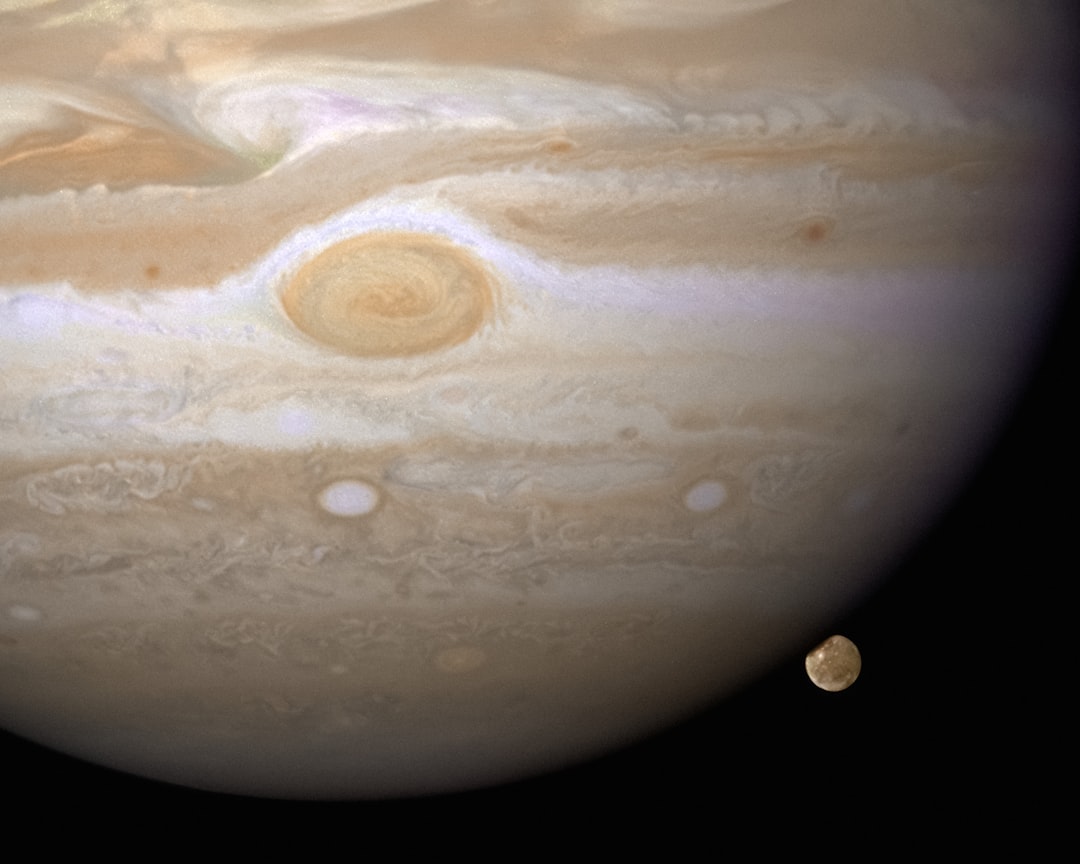
While missions to Enceladus remain in the conceptual stage, the European Space Agency's JUICE mission and NASA's Europa Clipper are set to investigate Jupiter's moon Europa, another world suspected of harboring a habitable subsurface ocean. The insights gained from these missions, combined with the groundbreaking findings from Enceladus, will undoubtedly shape our understanding of the potential for life in the outer solar system and beyond.
As we continue to unravel the mysteries of Enceladus and other ocean worlds, it becomes increasingly clear that the search for life beyond Earth is not a question of if, but rather a question of where and when. With each new discovery, we inch closer to answering one of humanity's most profound questions: Are we alone in the universe? The evidence from Enceladus suggests that the answer may be closer than we ever imagined.