Quantum Physics Could Help Us Find Earth 2.0
When astronomers talk about directly imaging an exoplanet orbiting a distant star, the analogy they most commonly reach for is trying to spot a firefly hovering next to a massive searchlight. It is an apt comparison. An Earth-like exoplanet is incredibly dim — typically somewhere between 100 million and 10 billion times fainter than its host star. That staggering contrast ratio makes direct imaging one of the most formidable technical challenges in all of modern astronomy. Yet a compelling new paper from Hyunsoo Choi of Hanyang University in South Korea and his co-authors, available as a pre-print on arXiv, describes a theoretical solution that blends cutting-edge computer algorithms with the counterintuitive power of quantum physics.
Why Direct Imaging Is So Extraordinarily Difficult
To appreciate the magnitude of the challenge, it helps to understand what astronomers are actually up against. The vast majority of the roughly 5,700 confirmed exoplanets discovered to date have been found through indirect methods — most notably the transit method, which detects the tiny dimming of a star's light as a planet passes in front of it, and radial velocity measurements, which track the subtle wobble a planet induces in its star. Both methods are powerful, but they provide limited information about a planet's atmosphere, surface conditions, or potential habitability.
Direct imaging — actually capturing photons that have bounced off or been emitted by the planet itself — would be transformative. It would allow scientists to perform spectroscopic analysis of a planet's atmosphere, searching for biosignatures such as oxygen, methane, and water vapor. It is, in essence, the method that would most directly answer the question of whether a planet could support life. The problem, of course, is that the star's blinding glare overwhelms the faint planetary signal almost completely. Existing technologies such as coronagraphs and starshades — physical or optical devices designed to block starlight — have achieved impressive results with large, young, gas-giant exoplanets, but they remain insufficient for detecting small, rocky, Earth-like worlds around Sun-like stars. This is precisely where quantum physics enters the picture.
"The fundamental challenge of direct exoplanet imaging is not merely one of telescope size or optical precision — it is a problem of information. Quantum measurement theory offers a new framework for extracting that information from light itself."
Understanding the Rayleigh Limit — and Why Quantum Physics Can Beat It
Quantum physics is probably not the first thing that springs to mind when thinking about imaging something as large as a planet. But the key insight here operates at the level of individual photons — the fundamental particles of light. To understand how this works, it is essential to grasp the concept of the Rayleigh limit.
When two objects are extremely close together in the sky, each emitting or reflecting photons, their light inevitably blurs together into a single, indistinct blob if their angular separation is smaller than a distance known as the Rayleigh limit — a fundamental boundary set by the wave nature of light and the physical aperture of the telescope being used. In the context of exoplanets, this means the planet's faint light is almost entirely subsumed within the overwhelming glare of the star. A conventional photodetector in this scenario simply registers the arrival of a photon; it has no way of determining whether that photon originated from the planet or from the star. The information is, for all practical purposes, lost.
This is where quantum mechanics offers a profound advantage. In the quantum description of light, photons carry far more information than just their energy level — what we perceive as brightness or color. One critically important property is the photon's spatial mode, which describes the geometric shape of the photon's wave function as it propagates through space. Different sources of light — a star versus a nearby planet, for instance — will produce photons with subtly different spatial modes, even when those sources are closer together than the Rayleigh limit. A technique known as spatial-mode demultiplexing (SPADE) exploits this property by sorting incoming photons according to their wave patterns before they reach a conventional detector. This allows the system to recover information that a standard camera simply discards, effectively allowing it to "see" beyond the classical resolution limit.
- Classical imaging measures only the intensity of light at each point — how many photons arrive.
- Spatial-mode measurement additionally interrogates the wave structure of each photon, unlocking a richer layer of information.
- This approach is rooted in the mathematical framework of quantum Fisher information, which quantifies the maximum amount of information that can theoretically be extracted from a quantum system.
- Prior work has demonstrated SPADE-like techniques in laboratory settings, but applying them to the extreme contrast ratios encountered in exoplanet imaging is a new and ambitious frontier.
The Algorithm: Adaptive, Bayesian, and Quantum-Optimal
The theoretical framework of spatial-mode measurement is elegant, but making it work in a dynamic, real-world astronomical context requires sophisticated computational machinery. Choi and his colleagues addressed this challenge by constructing an adaptive quantum-optimal measurement framework — a continuously self-correcting feedback loop that optimizes the quantum measurement process in real time.
The system operates in several interlocking stages. First, the team introduced a logarithmic scaling scheme into the core of the algorithm to ensure it can reliably handle the extreme differences in brightness between a star and its planets — differences that can span ten orders of magnitude. Without this adjustment, standard numerical approaches would struggle to remain stable across such vast dynamic ranges.
As the algorithm begins building a model of the star system — estimating how many stars and planets are present and where they are located — it continuously calculates a mathematical quantity called the Symmetric Logarithmic Derivative (SLD). The SLD is a tool from quantum estimation theory that identifies the measurement strategy most likely to extract the maximum possible quantum information from the incoming photons. Critically, the SLD calculation feeds directly back into the photon-sorting hardware, instructing it how to adjust and recalibrate on the fly so that no information is wasted.
Perhaps the most practically significant innovation in the paper is the replacement of a human-supplied guess about the number of planets with a rigorous statistical tool: the Bayesian Information Criterion (BIC). In earlier approaches to this problem, a human operator would need to specify in advance how many planets the algorithm should search for — a significant limitation, since the whole point of the exercise is to discover unknown planets. The BIC automatically penalizes overly complex models to prevent the algorithm from "over-fitting" the data and hallucinating planets that do not exist. This makes the system genuinely autonomous and scientifically objective.
Testing the System: Simulation Results
After assembling this adaptive feedback framework, the research team stress-tested it against a simulated star system containing one star and two planets. The simulation was deliberately designed to be challenging: one planet was 10,000 times dimmer than the host star, while the other was a staggering 100 million times dimmer — and both were positioned well within the Rayleigh limit, meaning conventional imaging would be essentially blind to them.
Using Monte Carlo simulations — a computational technique that runs the algorithm thousands of times with slightly varied starting conditions to assess statistical robustness — the results were striking:
- The algorithm correctly identified the total number of objects in the system (three: one star and two planets) 72.5% of the time.
- When the object count was correctly identified, the algorithm could pinpoint the exact pixel-level location of each planet in the simulated image.
- It successfully estimated the true brightness of the ultra-dim planet — the one 100 million times fainter than its star — within a factor of two in 99.7% of cases, given a correct object count estimate.
- When artificial misalignment noise was introduced to simulate imperfect telescope pointing, the success rate dropped only marginally, to 71.3%, demonstrating the algorithm's robustness.
These numbers represent a dramatic improvement over the current state of the art in quantum imaging systems, which can typically manage contrast ratios of only around 1:1,000 between a target planet and its host star — far short of what would be needed to detect an Earth analog. The new framework theoretically extends this capability to contrasts of 1:100,000,000 or beyond.
From Simulation to Hardware: The Road Ahead
As with any theoretical advance in instrumentation science, the crucial next step is physical implementation. The authors are candid about the gap between simulation and reality. Real telescopes contend with a host of noise sources that are difficult to model comprehensively: atmospheric turbulence (for ground-based observatories), thermal noise in detector electronics, pointing jitter, mirror surface imperfections, and the complex, time-varying nature of actual starlight. How well the adaptive algorithm performs against this full spectrum of real-world noise remains an open question that will only be answered through experimental work.
Nevertheless, the paper makes a vital contribution by providing a clear theoretical proof of concept and, crucially, a detailed roadmap for hardware developers. Institutions already working on next-generation quantum optical systems — including research groups connected to NASA's Exoplanet Exploration Program and the European Space Agency's exoplanet science division — now have a concrete theoretical target to build toward. The James Webb Space Telescope has already demonstrated the extraordinary power of capturing exoplanet atmospheric spectra; a quantum-enhanced direct imaging system could complement JWST's capabilities in profound ways.
It is also worth noting that the underlying physics is not speculative. The principles of quantum Fisher information and spatial-mode demultiplexing have been demonstrated experimentally in laboratory settings, and early quantum photon-counting detector technology from institutions like NIST is maturing rapidly. The engineering challenges are real but not insurmountable.
The Bigger Picture: A New Paradigm for Exoplanet Science
The implications of successfully implementing a system like this would extend far beyond the technical achievement itself. The ability to directly image Earth-sized planets in the habitable zones of nearby stars would represent one of the most consequential milestones in the history of science. It would transform the search for biosignatures — chemical fingerprints of life in a planetary atmosphere — from an aspirational goal into a practical research program.
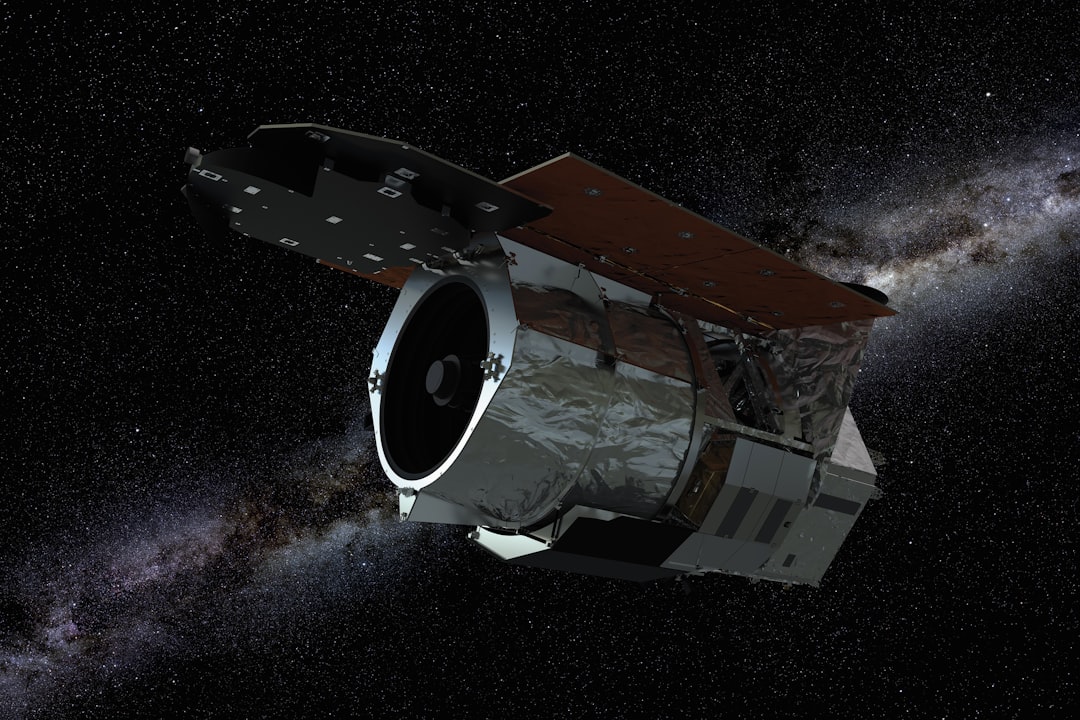
Missions currently on the drawing board, such as NASA's proposed Habitable Worlds Observatory (HWO), are designed with direct imaging of Earth analogs as a core scientific objective. The quantum-enhanced measurement techniques described in Choi et al.'s paper could prove to be a pivotal enabling technology for such missions, allowing a telescope of a given mirror size to achieve far greater effective contrast than classical optics alone would permit. In essence, quantum physics may allow us to build a smarter telescope, not just a bigger one.
The paper is currently a pre-print and has not yet undergone formal peer review, so some caution is warranted. But even at this stage, it represents a genuinely novel synthesis of ideas — drawing from quantum information theory, Bayesian statistics, and observational astronomy to attack one of science's most enduring questions. Whether the universe harbors another world like our own is a question humanity has pondered for millennia. It is remarkable, and more than a little thrilling, that the answer may ultimately come down to the quantum mechanical properties of individual particles of starlight.
Key Takeaways
- A new theoretical framework combines quantum spatial-mode measurement with adaptive algorithms to image exoplanets far beyond the classical Rayleigh resolution limit.
- The system demonstrated the ability to detect planets up to 100 million times dimmer than their host star in simulation — a 100,000-fold improvement over current quantum imaging contrast ratios.
- The Bayesian Information Criterion replaces human guesswork in determining the number of planets, making the algorithm autonomous and more scientifically rigorous.
- The algorithm showed robust performance even under artificially introduced noise, with success rates dropping only slightly from 72.5% to 71.3%.
- Physical implementation remains the next major challenge, but the paper provides a clear and actionable roadmap for hardware developers working on next-generation quantum telescopes.
- Success could be transformative for missions like the Habitable Worlds Observatory, bringing the direct detection of Earth-like biosignatures within realistic reach.