The quest to discover a true Earth-like exoplanet faces an unexpected cosmic obstacle: microscopic dust particles surrounding distant stars that could effectively blind our most sophisticated telescopes. As astronomers prepare for the next generation of planet-hunting missions, new research reveals how this exozodiacal dust creates a veil of interference that threatens our ability to detect potentially habitable worlds orbiting other stars.
After cataloging more than 6,000 confirmed exoplanets through missions like NASA's Kepler and TESS, the astronomical community has shifted from quantity to quality—focusing on identifying worlds that could harbor life as we know it. This transition marks a pivotal moment in humanity's search for cosmic companionship, but it also brings unprecedented technical challenges that require innovative solutions.
A groundbreaking study of Kappa Tucanae, a complex quintuple star system located approximately 68 light-years from Earth, is providing crucial insights into how coronagraphic leakage from hot dust could compromise future missions designed to image Earth-like planets. The research, titled "Interferometric Detection and Orbit Modeling of the Subcomponent in the Hot-dust System κ Tuc A: A Low-mass Star on an Eccentric Orbit in a Hierarchical-quintuple System," led by Thomas Stuber from the University of Arizona's Steward Observatory, reveals unexpected connections between stellar companions and dust production that could reshape our understanding of planetary system dynamics.
The Challenge of Detecting Earth's Cosmic Twins
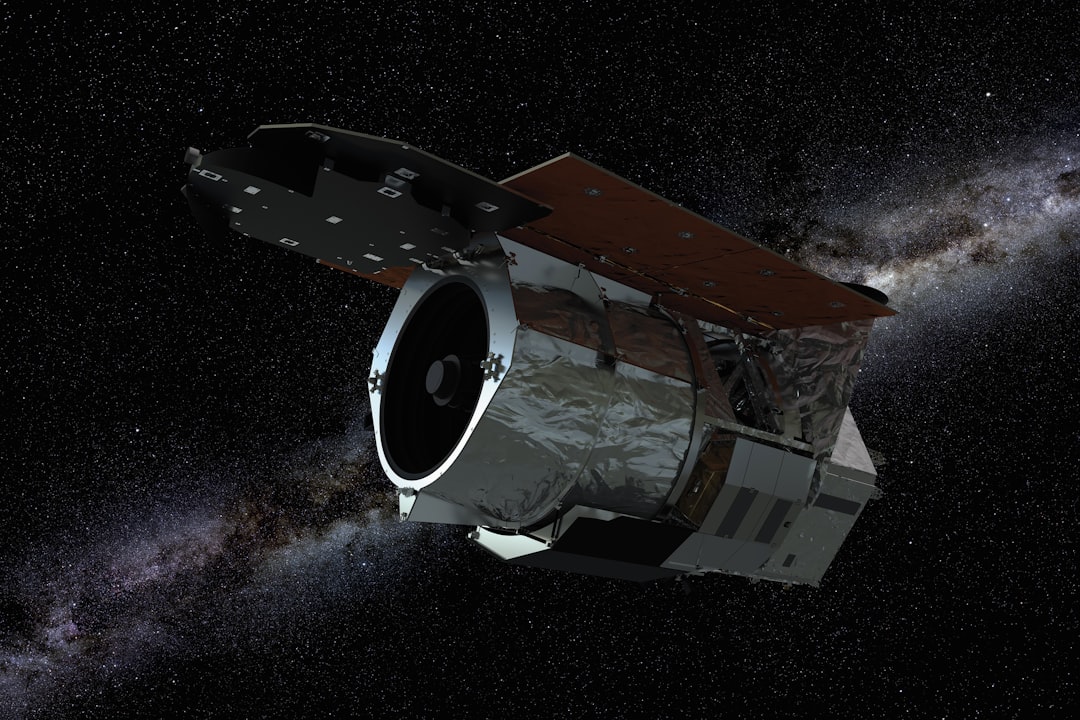
The proposed Habitable Worlds Observatory (HWO) represents humanity's most ambitious attempt yet to answer the fundamental question of whether we are alone in the universe. Designed to identify and characterize at least 25 potentially habitable exoplanets, this next-generation space telescope will employ advanced light-blocking technology—either a coronagraph or starshade—to suppress the overwhelming glare from host stars and reveal the faint reflected light from orbiting planets.
However, the mission faces a formidable adversary in the form of exozodiacal dust—ultra-fine carbon and silicate particles that inhabit the ecliptic planes of planetary systems. This cosmic dust, analogous to the zodiacal light visible in Earth's night sky, produces a diffuse glow that can leak into coronagraphic instruments. The resulting scattered light contamination creates what astronomers call "coronagraphic leakage," which can completely mask the already-faint signatures of Earth-sized planets.
According to researchers at the Space Telescope Science Institute, understanding and mitigating this dust interference represents one of the most critical technical challenges facing the HWO mission. Without solutions to this problem, even the most sophisticated telescope could miss Earth 2.0 hiding in plain sight.
Kappa Tucanae: A Natural Laboratory for Cosmic Dust
The Kappa Tucanae system has emerged as an exceptional testbed for studying hot exozodiacal dust because of its unusually high dust content and puzzling variability. Under normal circumstances, fine dust particles in stellar systems have short lifespans—radiation pressure and stellar heat cause them to dissipate relatively quickly. The persistence of substantial dust quantities around Kappa Tucanae Aa suggests either rapid replenishment mechanisms or processes that extend dust particle lifetimes far beyond typical expectations.
"If we see dust in such large amounts, it needs to be replaced rapidly, or there needs to be some sort of mechanism that extends the lifetime of the dust," explained Stuber. "The system κ Tuc A is part of a hierarchical-quintuple system and is a prime target for studies of hot-exozodiacal dust."
What makes this system particularly intriguing is its variable infrared excess—a signature that appeared in observations from 2012, vanished in 2013, reappeared in 2014, and was detected again in 2019. This on-again, off-again pattern suggested dynamic processes at work, but the mechanism remained mysterious. Systems exhibiting such variability are typically assumed to harbor close stellar companions, yet earlier observations had failed to detect one.
The Hidden Companion Revealed
Using sophisticated instruments at the Very Large Telescope Interferometer (VLTI) in Chile, including the Multi Aperture mid-Infrared Spectroscopic Experiment (MATISSE) and GRAVITY, Stuber's team conducted observations between 2022 and 2024 that finally solved the mystery. They confirmed the existence of Kappa Tuc Ab, a previously inferred companion star that had been suggested by ESA's Gaia mission astrometry measurements but never directly detected.
The newly confirmed companion is a cool red dwarf with approximately 0.33 solar masses—roughly one-third the mass of our Sun. What makes this discovery particularly significant is the star's orbital characteristics: it follows an extremely eccentric orbit with a period of about 8.14 years, bringing it dramatically closer to the primary star during periastron (closest approach) before swinging back out to much greater distances.
The Dust-Companion Connection
The correlation between Kappa Tuc Ab's orbital characteristics and the system's dust variability is too strong to be coincidental. Co-author Steve Ertel emphasized this connection in a statement, noting that the companion must be dynamically interacting with the dust in some fundamental way. The research team has proposed several mechanisms that could explain how this stellar companion maintains the system's unusually high dust content:
- Direct Gravitational Stirring: During periastron passages, when Kappa Tuc Ab sweeps closest to the primary star, its gravitational influence could directly perturb existing dust particles, redistributing them and potentially generating the observed infrared variability
- Planetesimal Excitation: The companion's gravity may disturb the orbits of countless small bodies—planetesimals and comets below current detection thresholds—sending them on collision courses that generate fresh dust through impacts and sublimation
- Resonance Effects: The eccentric orbit could create gravitational resonances that shepherd dust into specific regions or maintain dust populations that would otherwise dissipate
- Tidal Interactions: Close approaches might trigger tidal forces on larger bodies in the system, leading to increased cometary activity and dust production
As the authors note in their conclusion, "This coexistence of hot dust and the stellar companion motivates dynamical studies of this intriguing planetary system, governing, for instance, how κ Tuc Ab interacts with the hot-dust distribution during its periastron passage or how it might excite unseen planetesimals onto cometary orbits that can replenish the dust in situ."
Implications for the Hunt for Habitable Worlds
The Kappa Tucanae findings have profound implications for the Habitable Worlds Observatory and future exoplanet characterization missions. Understanding which stellar systems harbor problematic levels of exozodiacal dust—and why—will be essential for target selection and observation planning. Systems with close stellar companions on eccentric orbits may need to be deprioritized or observed with specialized techniques to account for enhanced dust contamination.
Moreover, this research suggests that many other systems previously studied for hot exozodiacal dust may harbor undetected companions. Stuber expressed surprise at finding the companion despite numerous previous observations of the system, noting that this discovery "opens up new pathways to explore the enigmatic hot exozodiacal dust." The research team plans to revisit other dust-rich systems with similar scrutiny, potentially uncovering a population of hidden stellar companions that have been influencing dust dynamics undetected.
Technical Advances Enabling Discovery
The successful detection of Kappa Tuc Ab showcases the power of interferometric techniques that combine light from multiple telescopes to achieve angular resolution far exceeding what any single telescope could accomplish. The VLTI's instruments were able to resolve the faint companion despite its proximity to the much brighter primary star—a technical feat that would have been impossible just a decade ago.
These same techniques, refined and enhanced, will be crucial for the HWO mission. By understanding the limitations imposed by exozodiacal dust through studies like this one, engineers can optimize coronagraph designs and develop post-processing algorithms that better distinguish between dust-scattered light and genuine planetary signals.
Looking Forward: The Path to Earth 2.0
As we stand on the threshold of potentially discovering life beyond Earth, the Kappa Tucanae research serves as a reminder that cosmic dust—the very material from which planets form—can also obscure our view of those worlds. The work by Stuber and colleagues represents a critical step in cataloging and understanding the obstacles that lie between current capabilities and the ultimate goal of imaging and characterizing truly Earth-like exoplanets.
Future research will need to address several key questions: How common are dust-producing companions in systems that might harbor habitable planets? Can we develop predictive models to identify problematic systems before investing precious observation time? What post-processing techniques can best separate dust signals from planetary signatures?
The answers to these questions will help determine whether the next generation of exoplanet missions can successfully detect biosignatures in the atmospheres of distant worlds—or whether cosmic dust will continue to keep Earth 2.0 hidden from view. As Stuber's research demonstrates, sometimes the most significant discoveries come not from finding what we expected, but from understanding what stands in our way.
The search for habitable worlds continues, armed with new knowledge about the cosmic dust that could blind our telescopes—or, with proper understanding and mitigation, be overcome in humanity's quest to answer whether we are truly alone in the universe.