The universe harbors countless supermassive black holes, each a cosmic enigma waiting to be unveiled. Yet humanity has only managed to capture direct images of two: the behemoth at the heart of galaxy M87 and our own galactic center's Sagittarius A*. While these achievements represent monumental milestones in radio astronomy, they may also represent the limit of what Earth-based observations can achieve—unless we dare to extend our astronomical reach beyond our planet's surface and establish radio telescope arrays on the Moon.
A groundbreaking study published on arXiv proposes an ambitious solution that could revolutionize our ability to observe black hole shadows across the cosmos. By deploying radio telescopes on multiple lunar locations and combining their observations with Earth-based arrays, astronomers could create an Earth-Moon interferometric baseline capable of resolving nearly 30 additional supermassive black holes with unprecedented clarity. This technological leap would transform our understanding of these cosmic giants and their role in galactic evolution.
The Challenge of Capturing Black Hole Shadows
The fundamental challenge in radio astronomy stems from the physics of electromagnetic radiation itself. Radio waves operate at wavelengths measured in millimeters to meters, vastly larger than the nanometer-scale wavelengths of visible light. According to the principles of diffraction, a telescope's resolving power is directly proportional to its aperture size divided by the observing wavelength. This means that to achieve the same resolution as a modest optical telescope, a radio dish would need to span nearly 10 kilometers in diameter—an engineering impossibility with current technology.
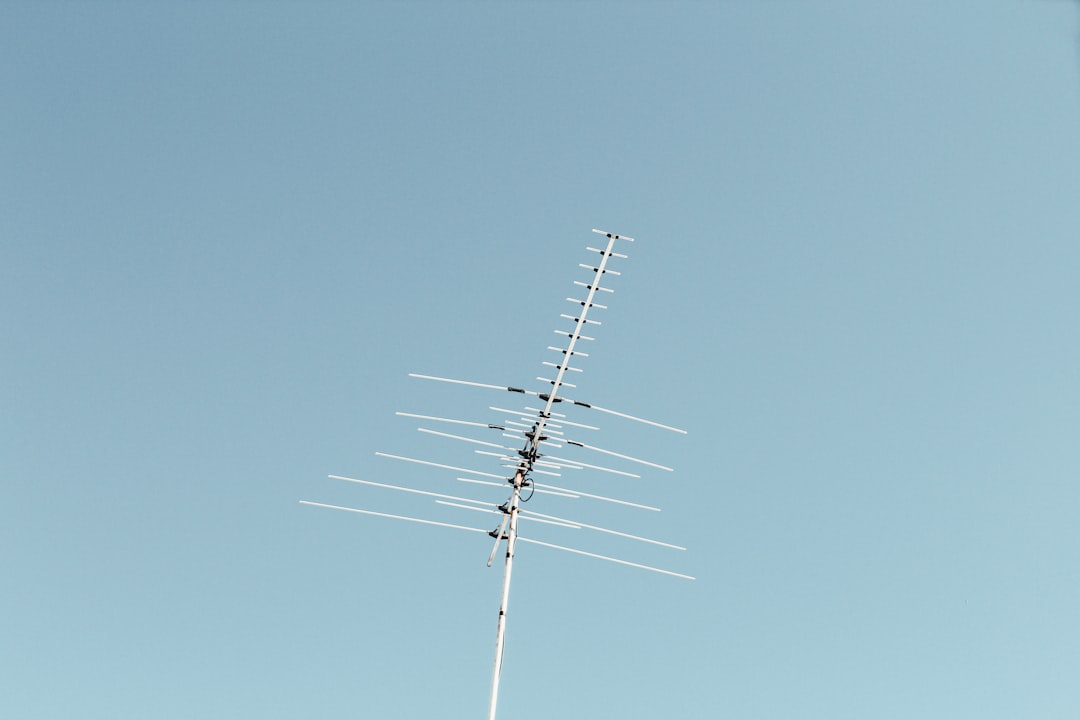
To overcome this limitation, radio astronomers developed very long baseline interferometry (VLBI), a technique that combines signals from multiple telescopes separated by vast distances. By precisely synchronizing observations and correlating the received signals, astronomers can create a "virtual telescope" with an effective aperture equal to the maximum separation between dishes. The Event Horizon Telescope (EHT) represents the pinnacle of this approach, linking radio observatories across the entire globe to achieve an Earth-sized baseline.
Both M87* and Sagittarius A* present apparent angular sizes of approximately 40 microarcseconds—equivalent to observing a baseball sitting on the lunar surface from Earth. To put this in perspective, this angular scale is roughly 3,000 times smaller than what the Hubble Space Telescope can resolve in visible light. Even with the EHT's planetary baseline, the collaboration achieved a resolution of only about 20 microarcseconds, which explains the somewhat blurry appearance of the historic images released in 2019 and 2022.
Why M87* and Sagittarius A* Are Special Cases
The selection of these two targets was far from arbitrary. M87* boasts the largest apparent size of any supermassive black hole observable from Earth, thanks to its enormous mass of 6.5 billion solar masses combined with its relatively close distance of 55 million light-years. Additionally, M87* exhibits exceptional brightness in radio wavelengths due to its powerful relativistic jet, making it an ideal target for pioneering observations.
Sagittarius A*, while significantly smaller at 4 million solar masses, benefits from its proximity—a mere 26,000 light-years from Earth. However, observing our galactic center's black hole presented unique challenges, including rapid variability in its accretion disk and the need to peer through dense clouds of interstellar gas and dust. The successful imaging of both objects required years of data collection, sophisticated algorithms, and international collaboration on an unprecedented scale.
"The Event Horizon Telescope has pushed Earth-based radio astronomy to its absolute limits. To go further and observe additional black hole shadows, we must literally reach for the Moon," explains the research team led by Shan-Shan Zhao in their recent study.
Lunar Radio Astronomy: A New Frontier
The concept of placing radio telescopes on the Moon is not entirely new. Scientists have long recognized the unique advantages that our natural satellite offers for radio observations. The lunar far side, permanently shielded from Earth's cacophony of radio transmissions, represents one of the quietest radio environments in the inner solar system. This electromagnetic silence would enable observations of faint cosmic signals that are completely drowned out on Earth by everything from cell phone towers to microwave ovens.
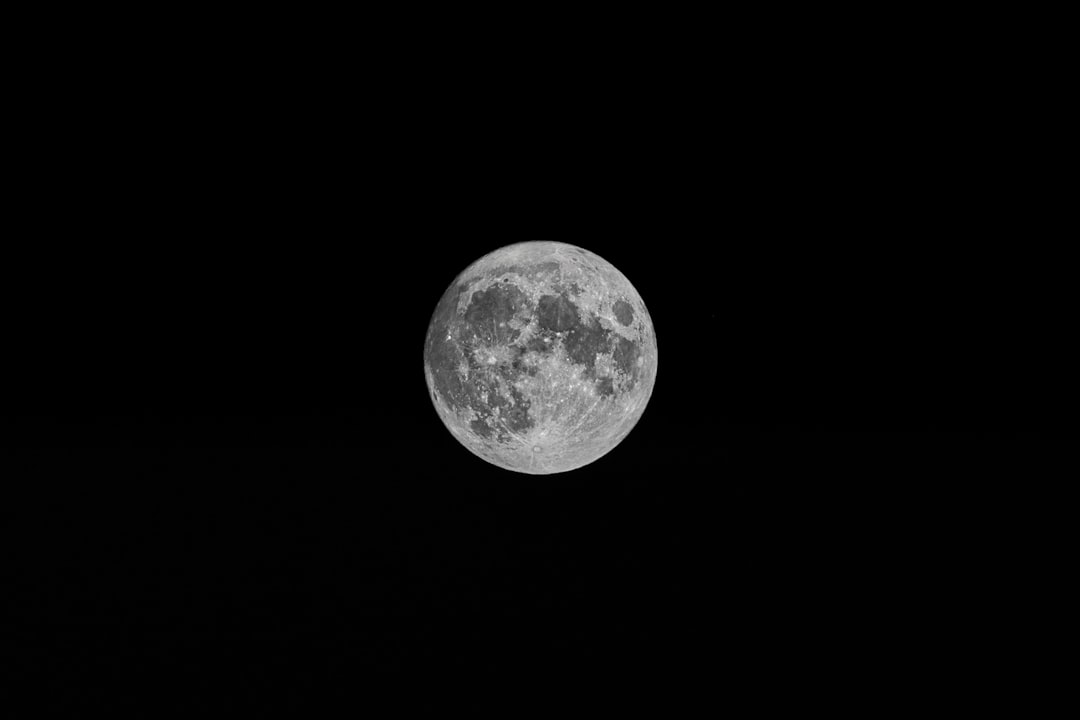
The new study, however, takes a more comprehensive approach by proposing five strategic locations for lunar radio telescopes: two sites on the far side, two on the near side, and one at the lunar south pole. This distributed network would serve multiple purposes beyond simply escaping terrestrial radio interference. As the Moon orbits Earth and both bodies orbit the Sun, different telescopes would maintain optimal viewing angles to various celestial targets throughout the lunar month.
Organizations like NASA's Artemis program and international space agencies are already planning sustained lunar presence, making the deployment of scientific instruments increasingly feasible. The proposed telescope network could leverage this infrastructure, utilizing power systems, communication networks, and potentially even robotic maintenance capabilities being developed for lunar exploration.
Revolutionary Resolution Capabilities
The true power of an Earth-Moon interferometric array lies in its dramatically extended baseline. When Earth-based telescopes and lunar instruments observe the same target with the maximum possible separation—up to 384,400 kilometers—the resulting virtual telescope could achieve resolutions of less than 1 microarcsecond. This represents a 20-fold improvement over current EHT capabilities and would open an entirely new window onto the universe's most extreme environments.
The actual resolution achieved would vary depending on the geometric configuration of the Earth-Moon system relative to the target. When the Moon lies along the same line of sight as the target, the baseline extension is minimal. However, when the Moon is positioned perpendicular to the line of sight, the full lunar orbital radius contributes to the baseline, maximizing resolving power. The researchers' analysis accounts for these orbital dynamics, calculating optimal observation windows for each potential target.
A Catalog of Observable Black Holes
By analyzing the positions and characteristics of known supermassive black holes throughout our cosmic neighborhood, the research team identified approximately 30 black holes that could be successfully imaged with an Earth-Moon array. This catalog spans an impressive range of distances and environments:
- M31* (Andromeda Galaxy): The supermassive black hole at the heart of our nearest large galactic neighbor, located 2.5 million light-years away with an estimated mass of 100-200 million solar masses
- Centaurus A*: A highly active black hole in one of the closest radio galaxies, known for its dramatic dust lane and powerful jets extending hundreds of thousands of light-years
- Cygnus A*: Residing in a radio galaxy 760 million light-years distant, this black hole powers one of the most luminous radio sources in the sky
- NGC 1275: The central black hole of the Perseus cluster, surrounded by a complex web of gas filaments and exhibiting remarkable AGN activity
- Multiple Virgo Cluster members: Several supermassive black holes within this rich galaxy cluster could be resolved, enabling comparative studies of black hole properties across different galactic environments
According to research from the European Southern Observatory, understanding the diversity of supermassive black holes is crucial for unraveling the co-evolution of galaxies and their central engines. Each new black hole shadow we can observe provides critical data about mass, spin, and the extreme physics occurring at the event horizon.
Scientific Returns Beyond Black Hole Imaging
While black hole shadows represent the headline science case, an Earth-Moon interferometric array would enable numerous other breakthrough observations. The extraordinary resolution would allow detailed studies of active galactic nuclei (AGN), revealing the structure of relativistic jets at scales never before accessible. Scientists could map the magnetic field structures around black holes, test general relativity in the strong-field regime, and observe the dynamics of matter spiraling toward the event horizon.
Additionally, such an array could observe stellar-mass black holes in X-ray binary systems within our own galaxy, potentially resolving features in their accretion disks. Pulsars, magnetars, and other exotic compact objects would become accessible to unprecedented scrutiny. The array might even detect gravitational lensing effects from intermediate-mass black holes, helping to solve the mystery of these elusive objects.
Engineering Challenges and Future Prospects
Despite the compelling scientific case, establishing operational radio telescopes on the Moon presents formidable technical challenges that will require decades to overcome. The lunar environment is harsh, with temperature swings from -173°C during the two-week lunar night to 127°C in direct sunlight. Micrometeorite impacts, electrostatic dust accumulation, and the absence of atmospheric protection all threaten delicate electronic equipment.
Power generation poses another significant hurdle. Solar panels could provide energy during the lunar day, but nuclear power systems would likely be necessary to maintain operations during the long lunar night. Data transmission from the Moon to Earth requires robust communication infrastructure, and the precise timing synchronization essential for interferometry demands atomic clocks and sophisticated signal processing capabilities that must function reliably in the lunar environment.
Organizations like the European Space Agency are actively developing technologies for lunar surface operations, including rovers, landers, and habitat modules. These developments will gradually build the foundation necessary for deploying scientific instruments. Initial steps might involve small-scale technology demonstrations, perhaps deploying a single modest radio antenna to test concepts and validate operational procedures.
"We are not suggesting that lunar radio telescopes will be operational next year or even next decade. However, as we establish permanent human presence on the Moon, incorporating cutting-edge scientific instruments into that infrastructure becomes increasingly practical and cost-effective," the researchers note in their study.
Transforming Our Understanding of the Cosmos
The implications of successfully implementing an Earth-Moon interferometric array extend far beyond simply adding more black holes to our observational catalog. Each new black hole shadow provides a unique laboratory for testing general relativity under extreme conditions. By comparing shadows across different masses, spins, and accretion rates, astronomers can constrain alternative theories of gravity and search for deviations from Einstein's predictions.
Furthermore, detailed observations of multiple black holes would illuminate the relationship between supermassive black holes and galaxy evolution. Current theories suggest that black holes and their host galaxies grow together through cosmic time, with the black hole's mass correlating with properties of the galactic bulge. High-resolution observations across diverse galactic environments would test these models and reveal how black holes influence star formation, gas dynamics, and the overall structure of galaxies.
The study also highlights how lunar observatories would complement other next-generation astronomical facilities. The James Webb Space Telescope observes the universe in infrared wavelengths, while future extremely large optical telescopes will push visible-light astronomy to new limits. An Earth-Moon radio array would complete this multi-wavelength approach, ensuring that humanity can study cosmic phenomena across the entire electromagnetic spectrum with unprecedented resolution.
A Vision for the 2040s and Beyond
While current timelines suggest that operational lunar radio telescopes remain several decades away, the trajectory of space exploration makes this vision increasingly plausible. As commercial space companies reduce launch costs, as international cooperation on lunar exploration deepens, and as robotic technologies advance, the barriers to establishing lunar infrastructure continue to diminish. Studies like this one serve a crucial purpose: they define the scientific objectives that will justify and guide these ambitious engineering endeavors.
The researchers conclude that lunar radio astronomy represents not merely an incremental improvement over existing capabilities, but a transformational leap that would reshape our understanding of the universe's most extreme objects. By capturing the faint whispers of radiation from black hole event horizons across cosmic distances, we would illuminate the darkest corners of the cosmos and answer fundamental questions about gravity, spacetime, and the nature of reality itself.
As humanity stands on the threshold of becoming a multi-planetary species, projects like lunar radio telescopes remind us that exploration and scientific discovery remain inseparably linked. The same infrastructure that enables human presence on the Moon will also unlock cosmic mysteries that have remained beyond our reach since the dawn of astronomy. In reaching for the Moon, we simultaneously reach deeper into the universe, bringing distant black holes into focus and advancing our cosmic perspective in ways that would have seemed like pure science fiction just a generation ago.