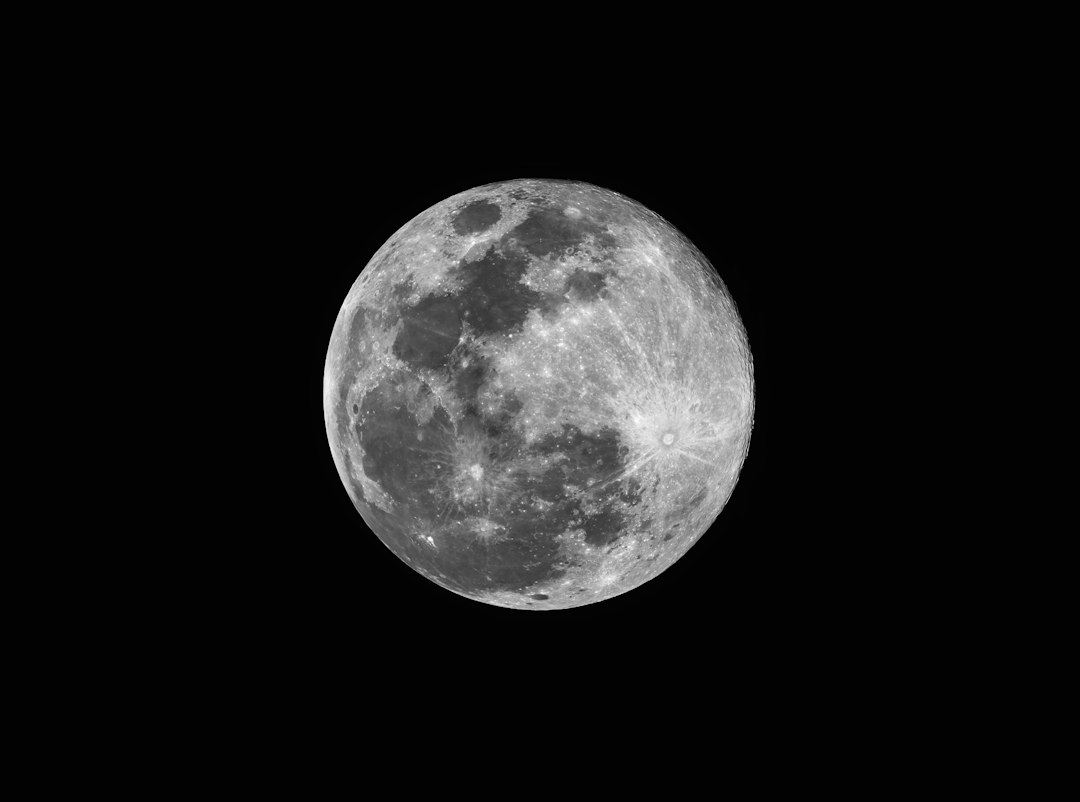
Rare Lunar Meteorites Could Fill Critical Gaps in Our Understanding of the Moon's Evolution
They arrive largely unheralded, indistinguishable at first glance from ordinary terrestrial rock. Yet scattered across the frozen plains of Antarctica, the sunbaked desert floors of Northwest Africa, and the remote wastes of Oman lie some of the most scientifically valuable objects on Earth: lunar meteorites — literally fragments of the Moon itself, blasted from the lunar surface by ancient asteroid impacts and eventually captured by Earth's gravity. These rare interplanetary travelers carry within them a record of the Moon's earliest geological history, one that in some respects rivals — and may even surpass — the iconic rock samples hand-collected by Apollo astronauts more than half a century ago.
According to a landmark 2025 paper published in the journal Elements, only 835 lunar meteorites have ever been formally verified, representing a mere 0.7% of all meteorites that fall to Earth each year. Despite their rarity, these rocks offer something that no carefully planned crewed or robotic mission can guarantee: a geographically representative cross-section of the entire lunar surface, including regions that have never been directly sampled by any spacecraft — most notably, the enigmatic far side of the Moon.
What Are Lunar Meteorites and How Do They Reach Earth?
The journey of a lunar meteorite from the Moon's surface to an Earth laboratory is an extraordinary one. The process begins when a large meteoroid or asteroid strikes the Moon with sufficient force to accelerate surface rocks beyond the Moon's escape velocity of approximately 2.38 km/s. Unlike Earth, the Moon lacks a substantial atmosphere to slow or vaporize incoming projectiles, meaning impacts routinely eject material into space. Some of this ejected debris enters Earth's orbit, while other fragments enter solar orbit, potentially circling the Sun for tens of millions of years before eventually intersecting Earth's path.
The Vernadsky Institute in Moscow has estimated that "several tens or a few hundred kilograms" of lunar material strike Earth's surface every single year — an astonishing figure that underscores just how dynamic the inner solar system remains. Those rocks that enter Earth orbit typically take anywhere from a few years to tens of thousands of years to eventually spiral down to the surface, while those in solar orbit may not arrive for up to tens of millions of years after departing the Moon, according to researchers at Washington University in St. Louis (WUSTL).
Upon entering Earth's atmosphere, these rocky fragments experience intense heating, forming the characteristic fusion crust that distinguishes meteorites from ordinary Earth rocks. Those that survive the fiery descent land across the globe, but the vast majority go unnoticed — lost in forests, buried under soil, or sunk in the ocean. Only in barren, geologically stable environments do they become detectable.
"Each stone tells this amazing picture of the Moon's past, but not knowing exactly where the rock came from is like missing the center pieces of a puzzle." — Katherine Joy, Professor of Lunar and Planetary Science, University of Manchester
Where Are Lunar Meteorites Found?
The global distribution of confirmed lunar meteorite finds is far from random. The overwhelming majority have been recovered from three principal environments: Antarctica, Oman, and the deserts of Northwest Africa, with smaller numbers discovered in the Australian outback and Botswana. The reason is straightforward geology: both polar ice sheets and arid desert playas — flat, dry lakebeds — provide stark, light-colored backgrounds against which the typically dark, fusion-crusted surfaces of meteorites stand out prominently. In Antarctica in particular, the slow movement of glacial ice acts as a natural conveyor belt, concentrating meteorites in specific blue-ice zones where they accumulate over thousands of years.
The very first lunar meteorites to be formally identified were Yamato-791197 and Yamato-793169, both collected from Antarctica in 1979 by the Japanese Antarctic Research Expedition's dedicated meteorite-hunting program — a systematic effort that has since transformed our meteorite collections worldwide. As noted in a widely cited 2013 paper in the journal Astronomy & Geophysics, this discovery opened an entirely new chapter in lunar science, one that continues to unfold with every new find.
A More Representative View of the Moon
Perhaps the most compelling scientific argument for the value of lunar meteorites lies in their geographical provenance. Unlike the Apollo samples — collected from just six carefully selected landing sites — lunar meteorites are thought to originate from nearly random locations distributed across the entire lunar surface, including the geologically distinct and still largely unexplored far side.
Randy Korotev, Research Professor Emeritus in the Department of Earth, Environmental, and Planetary Science at Washington University in St. Louis, has spent decades studying these samples and is emphatic about their scientific importance. "Lunar meteorites in contrast come from almost randomly distributed locations on the Moon's surface," Korotev explains. This geographic diversity makes them an invaluable complement to spacecraft-returned samples — and in certain analytical contexts, a superior one.
The limitations of the Apollo program's sample set are now well understood. As Korotev notes pointedly:
"From the point of view of a scientific study, Apollo was done wrong; we had no orbital data, except gray-scale photography by which to choose the landing sites. We did not have mineralogical or compositional data obtained from orbit." — Randy Korotev, Washington University in St. Louis
This is not merely academic criticism. We now know, thanks to decades of subsequent orbital mapping by missions such as NASA's Lunar Reconnaissance Orbiter and Japan's Kaguya spacecraft, that five of the six Apollo landing sites — along with China's Chang'e 5 mission — were located within or immediately adjacent to a geochemically extraordinary region of the lunar near side known as the Procellarum KREEP Terrane (PKT). KREEP is an acronym for potassium (K), Rare Earth Elements, and Phosphorous — a geochemical signature that betrays the presence of a highly evolved, heat-producing lithology that is decidedly atypical of the Moon as a whole.
Missions 14 through 17 of the Apollo program collected samples from the vicinity of the Imbrium Basin — a vast, dark lava plain covering the Moon's northwestern quadrant — further concentrating the sample record in a geochemically anomalous region. "Apollo was a political, not a scientific program," Korotev observes. "Some forward-looking scientists had to argue with NASA to have the astronauts collect samples at all." The political imperative to land safely and return quickly inevitably constrained the scientific ambition of site selection.
The Lunar Sample Record: Spacecraft vs. Meteorites
To place the meteorite record in proper context, it is worth reviewing the full scope of Moon samples returned to Earth by spacecraft:
- Apollo Program (NASA, 1969–1972): Six crewed landings returned approximately 382 kilograms of lunar material — by far the largest collection from any single source.
- Luna Program (Soviet Union, 1970–1976): Three robotic sample-return missions — Luna 16, 20, and 24 — collectively returned approximately 300 grams of material.
- Chang'e 5 (China, 2020): Returned approximately 1.73 kg of samples from the Mons Rümker volcanic region, the youngest lunar samples yet returned.
- Chang'e 6 (China, 2024): In a historic first, returned approximately 1.9 kg of samples from the far side of the Moon — from the South Pole–Aitken Basin — providing an unprecedented geological window onto the lunar far side.
- Verified Lunar Meteorites (ongoing): A cumulative collection of 835 verified specimens of indeterminate origin, representing the broadest geographic sampling of the lunar surface yet available.
While the sheer mass of Apollo samples dwarfs all other sources combined, the geographic and geochemical diversity offered by lunar meteorites makes them an essential and irreplaceable scientific dataset.
Unlocking the Mystery of the Lunar Magma Ocean
Among the most significant scientific questions that lunar meteorites may help resolve is the nature and extent of the Lunar Magma Ocean (LMO) — a hypothetical global ocean of molten rock theorized to have enveloped the Moon to depths of several hundred kilometers during the first few hundred million years of its existence, approximately 4.5 billion years ago. According to the LMO hypothesis, as this vast magma ocean slowly cooled and crystallized, it differentiated into distinct layers: denser minerals sank to form the mantle, while lighter, aluminum-rich minerals floated upward to solidify as the ancient lunar highlands crust.
This hypothesis elegantly explains the dominance of anorthosite — a calcium-rich feldspar rock — across much of the lunar highlands, as well as the compositional layering inferred from orbital geochemistry. However, fundamental questions remain unresolved. Most critically: did the LMO operate globally and uniformly, or were there regional differences in its crystallization that might explain the striking compositional asymmetry between the lunar near side and far side?
Katherine Joy, Professor of Lunar and Planetary Science at the University of Manchester, is at the forefront of research using lunar meteorites to address precisely these questions. "Lunar meteorites are key to this story as they potentially provide us with pieces of the Moon's ancient crust and some of these must have come from the far side," Joy explains. "We can use the chemistry and age of these types of lunar meteorites to test the lunar magma ocean hypothesis."
By measuring the precise radiometric ages and trace element abundances of highland-type lunar meteorites, researchers can potentially determine whether the crust on both hemispheres formed at the same time and from the same processes — or whether the far side's crust has a fundamentally different origin story. This has profound implications not only for lunar science, but for our understanding of planetary differentiation across the solar system.
The Tantalizing Samples We Haven't Found Yet
For scientists like Joy, the real excitement lies not just in the meteorites we have, but in those we have yet to identify. Certain regions of the Moon remain spectacularly underrepresented — or entirely absent — from our current meteorite collections, and the potential scientific payoff of finding samples from these areas would be immense.
"It would be incredible to be able to identify a sample from somewhere really geochemically unique on the Moon, like a highly evolved magmatic region like Aristarchus, or to have a sample that contains large pieces of the Moon's mantle," says Joy. "These sorts of samples would tell us incredibly interesting things about the Moon's interior and thermal history."
The Aristarchus Plateau, for example, is one of the most geochemically and volcanically complex regions on the lunar near side, featuring the largest known lunar volcanic complex and elevated concentrations of thorium that suggest a deeply anomalous thermal history. A meteorite definitively sourced from this region would be an extraordinary scientific prize. Similarly, samples containing mantle material — rocks excavated from deep beneath the crust by the most powerful ancient impacts — would provide direct evidence of the Moon's deep interior composition, complementing and constraining current models based entirely on seismic data from the Apollo-era instruments and more recent landers.
The Challenge of Provenance
A fundamental limitation of lunar meteorites, and one that distinguishes them sharply from spacecraft-returned samples, is the near-total uncertainty about their point of origin on the Moon. While sophisticated geochemical analysis can sometimes narrow down which broad geological terrain a meteorite likely came from — highlands versus mare basalts, for example — pinpointing a specific crater or region remains, for now, essentially impossible. This is what Joy means when she invokes the image of missing puzzle pieces: the rocks themselves are eloquent, but they arrive without a return address.
Researchers are working on several approaches to improve this situation. Orbital remote sensing data from missions like NASA's Lunar Reconnaissance Orbiter and ESA's SMART-1 are generating increasingly detailed geochemical maps of the lunar surface. By carefully matching the mineralogical and isotopic fingerprints of lunar meteorites against these orbital datasets, scientists hope to statistically associate specific meteorites with probable source regions — not with certainty, but with enough confidence to meaningfully enhance their scientific interpretation.
The Road Ahead
The future of lunar science is rich with possibility. NASA's Artemis program aims to return astronauts to the lunar surface for the first time since 1972, with planned landing sites near the South Pole — a region rich in permanently shadowed craters that may harbor ancient water ice and some of the oldest, least-altered geological materials on the Moon. China's ambitious lunar exploration roadmap envisions additional far-side sample return missions in the coming decades. And the global community of meteorite hunters continues to scour the world's deserts and ice fields for new specimens.
Each new lunar meteorite recovered, catalogued, and subjected to laboratory analysis adds another data point to our understanding of a world that has shaped Earth's own history — from the stabilization of our planet's axial tilt to the bombardment history of the inner solar system. These fragments of the Moon, which have traveled hundreds of thousands of kilometers through the void of space over millions of years, ultimately find their greatest purpose not in a museum display case, but under a mass spectrometer's beam in a university laboratory, quietly rewriting the story of our nearest celestial neighbor.
Key Takeaways
- Only 835 verified lunar meteorites are known, representing just 0.7% of all meteorites that fall to Earth.
- Lunar meteorites originate from randomly distributed locations across the entire Moon, including the unsampled far side — giving them a unique representational advantage over Apollo samples.
- All six Apollo landing sites and China's Chang'e 5 mission visited the geochemically anomalous Procellarum KREEP Terrane, skewing our sample-based understanding of the Moon.
- The Lunar Magma Ocean hypothesis — a foundational model of early lunar evolution — could be directly tested using the chemistry and ages of highland-type lunar meteorites.
- The Vernadsky Institute estimates that several tens to a few hundred kilograms of lunar material reach Earth's surface annually.
- Identifying meteorites from geochemically unique regions such as Aristarchus, or those containing deep mantle material, would transform our understanding of the Moon's interior and thermal evolution.
- The primary scientific limitation of lunar meteorites remains the
Frequently Asked Questions
Quick answers to common questions about this article
1 What exactly are lunar meteorites?
Lunar meteorites are genuine pieces of the Moon that landed on Earth after being knocked loose by asteroid strikes. They form a fusion crust during atmospheric entry, helping scientists distinguish them from ordinary rocks. To date, only 835 have been officially confirmed, making them extraordinarily rare among all known meteorites.2 How does a rock from the Moon end up on Earth?
When an asteroid slams into the Moon hard enough, surface rocks get launched beyond the Moon's escape velocity of 2.38 km/s. Because the Moon has no atmosphere to block impacts, ejected debris can reach Earth orbit or even solar orbit, sometimes traveling for tens of millions of years before landing here.3 How much Moon rock falls to Earth every year?
Researchers at Moscow's Vernadsky Institute estimate that several tens to a few hundred kilograms of lunar material reach Earth's surface annually. That sounds significant, but most pieces are tiny, and locating them among ordinary terrestrial rocks is enormously challenging without systematic searches in places like Antarctica.4 Why are lunar meteorites scientifically more valuable than Apollo samples?
Apollo astronauts only sampled a handful of nearside locations, but lunar meteorites arrive from random impact sites across the entire Moon, including the never-sampled far side. This makes them a naturally representative collection of lunar geology, potentially revealing planetary formation secrets no targeted mission could uncover on its own.5 Where are lunar meteorites most commonly found?
Antarctica and the deserts of Northwest Africa and Oman are the prime hunting grounds. These environments preserve meteorites exceptionally well and provide stark contrasting backdrops that make dark fusion-crusted rocks easier to spot. Antarctica alone has yielded thousands of meteorites from across our solar system, including Moon and Mars fragments.6 How long does it take a lunar meteorite to reach Earth after leaving the Moon?
It varies dramatically. Rocks captured directly into Earth orbit can arrive within a few years to tens of thousands of years. Fragments that enter solar orbit take far longer, with Washington University in St. Louis researchers suggesting some travel up to tens of millions of years before finally crossing Earth's path.Related Articles