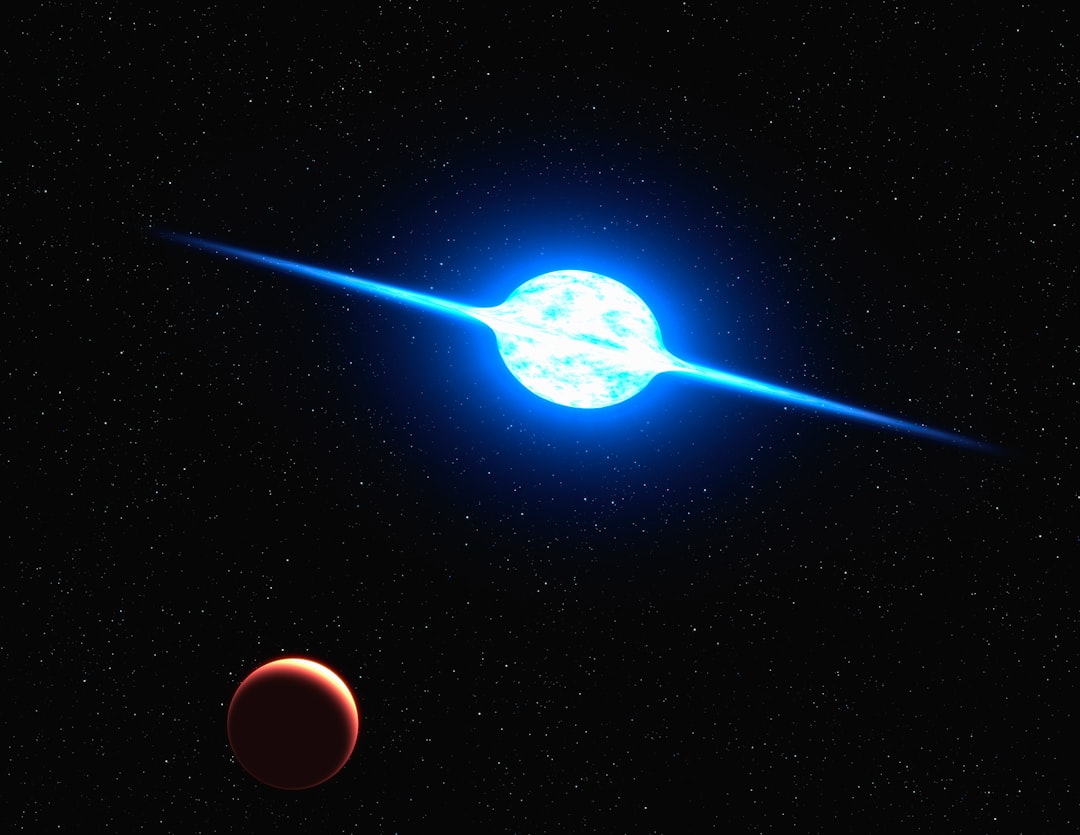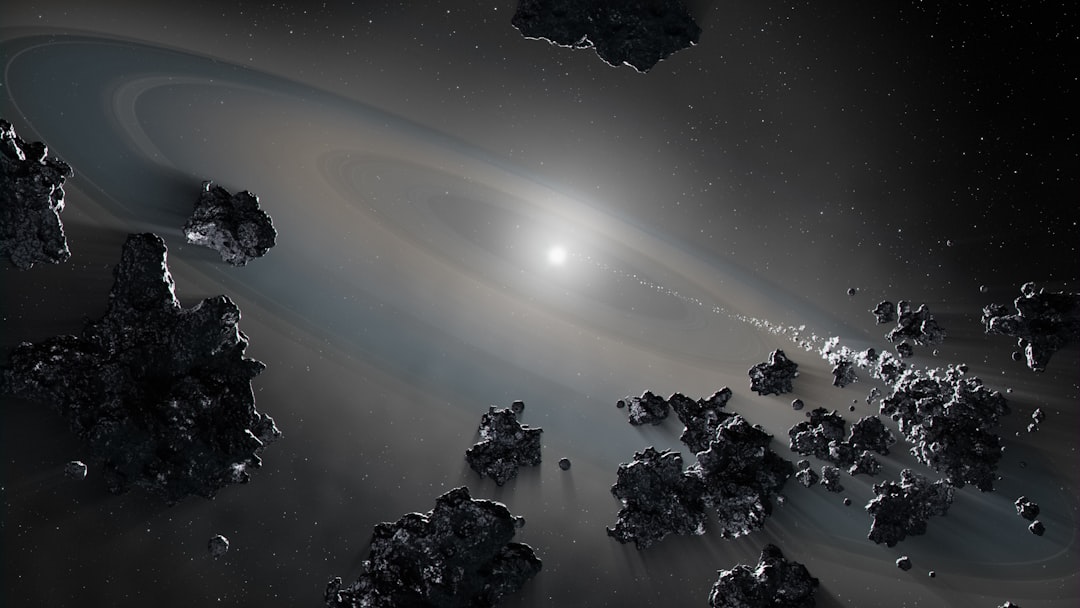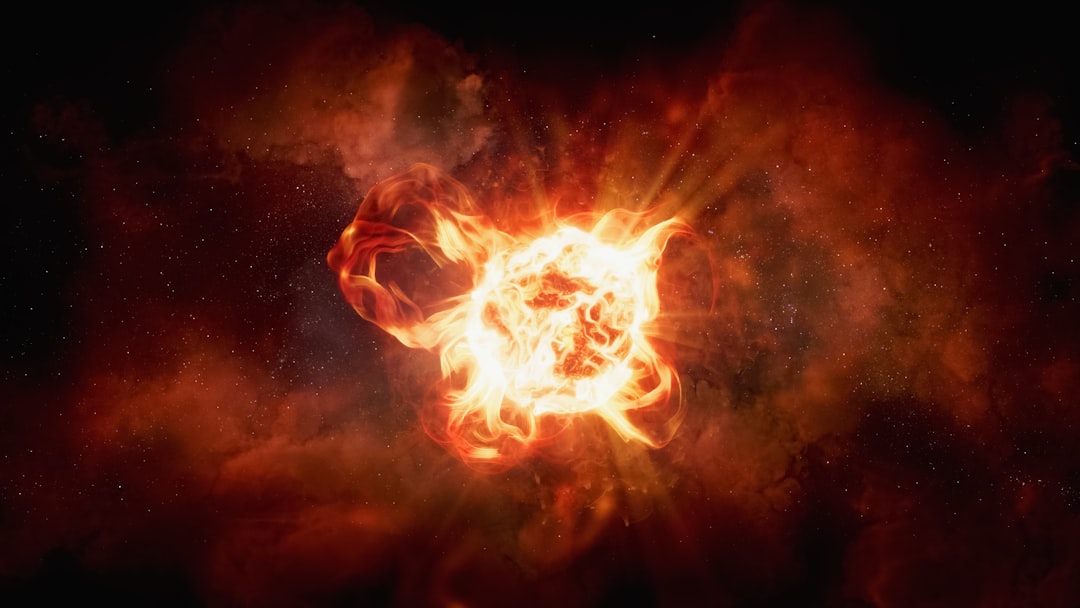
For over six decades, astronomers have been captivated by a peculiar class of celestial objects racing through our galaxy at extraordinary velocities. These runaway stars—massive stellar bodies traveling fast enough to eventually escape the Milky Way's gravitational embrace—have puzzled scientists since their initial discovery in the early 1960s. Now, an international team of researchers has completed the most comprehensive observational study of these cosmic speedsters to date, analyzing 214 O-type stars and revealing surprising insights about their origins and the mechanisms that propel them through space at velocities exceeding 700 kilometers per second.
The groundbreaking research, conducted by astronomers from multiple Spanish research institutions and published in Astronomy & Astrophysics, combines data from the European Space Agency's Gaia Observatory with high-resolution spectroscopic observations to paint the most detailed picture yet of these stellar wanderers. What makes this study particularly significant is its revelation that most runaway stars did not originate in binary systems—a finding that challenges long-held assumptions about stellar ejection mechanisms and forces astronomers to reconsider their models of galactic evolution.
The Discovery and Evolution of Runaway Star Research
The story of runaway stars begins in the early 1960s when Dutch astronomer Adriaan Blaauw first observed stars moving through the Milky Way at unusually high velocities. These weren't merely fast-moving objects passing through our galaxy—they were unbound stellar bodies that had been violently ejected from their birthplaces, now periodically looping back and forth through the galactic disk in elongated orbits. Blaauw's pioneering work proposed that these stars originated in binary star systems, where the catastrophic collapse and supernova explosion of a companion star provided the necessary kick to send its partner careening through space.
The field took a dramatic turn in 2005 when astronomers discovered even faster stellar escapees, leading to the designation of "hypervelocity stars"—objects moving so rapidly that they would inevitably escape the Milky Way's gravitational pull entirely. These discoveries raised fundamental questions: What mechanisms could impart such enormous energies to massive stars? Were supernovae the only explanation, or were other processes at work? According to research from NASA's Chandra X-ray Observatory, these questions have profound implications for understanding stellar evolution and galactic dynamics.
Advanced Observational Techniques Unlock New Insights
The Spanish research team's study represents a quantum leap in runaway star research, made possible by the convergence of two exceptional astronomical resources. The Gaia space observatory, operating between 2013 and 2025, has measured the proper motion, luminosity, temperature, and chemical composition of over 2 billion stars in the Milky Way through a process called astrometry. This unprecedented dataset is enabling astronomers to create the most precise three-dimensional map of our galaxy ever attempted, addressing fundamental questions about galactic structure, formation, and evolution.
Complementing Gaia's broad survey, the IACOB Spectroscopic Database provides high-quality spectra specifically focused on massive OB-type stars—the most luminous and massive stellar objects in our galaxy. This long-term observational campaign has been systematically cataloging the physical properties and evolutionary characteristics of these stellar giants, creating an invaluable resource for understanding the most extreme stellar populations in the Milky Way.
By synthesizing these two data sources, lead author Mar Carretero-Castrillo and her colleagues could measure not only the velocities and trajectories of runaway stars but also their rotation speeds and probable points of origin—critical information for distinguishing between different ejection mechanisms. The team focused specifically on O-type stars, the hottest and most massive class of stars, which burn through their nuclear fuel rapidly and have profound effects on their galactic environments.
Dual Mechanisms: Supernovae Versus Gravitational Slingshots
Since the discovery of runaway stars, astronomers have debated two primary scenarios for how these objects acquire their remarkable velocities. The first mechanism, known as the binary supernova scenario, occurs when a massive star in a binary system undergoes core collapse and explodes as a supernova. The sudden loss of mass disrupts the gravitational balance of the system, and the surviving companion star—no longer bound by its partner's gravity—is flung into space at high velocity, carrying with it the orbital momentum it previously possessed.
The second mechanism involves dynamical ejection from stellar clusters. In the dense cores of young star clusters, where massive stars form in close proximity, gravitational interactions can become chaotic. When multiple massive stars engage in close encounters—sometimes forming temporary triple or quadruple systems—one star can be ejected at high velocity through a gravitational slingshot effect, similar to how spacecraft use planetary flybys to gain speed.
"This is the most comprehensive observational study of its kind in the Milky Way. By combining information on rotation and binarity, we provide the community with unprecedented constraints on how these runaway stars are formed," said Mar Carretero-Castrillo, lead author and member of the Institute of Cosmos Sciences of the University of Barcelona (ICCUB) and the Institute of Space Studies of Catalonia (IEEC), currently working at the European Southern Observatory.
The new study reveals that both mechanisms are actively at work, but in different proportions and under different circumstances than previously assumed. The research team discovered a striking pattern: slowly rotating runaway stars are far more common than rapidly rotating ones, and those stars that do rotate quickly show clear associations with binary systems and supernova events. This suggests that the binary supernova scenario preferentially produces fast-rotating runaways, as these stars inherit angular momentum from their former orbital motion.
Groundbreaking Findings and Unexpected Patterns
Among the study's most significant discoveries is the identification of 12 runaway binary systems, including three X-ray binary sources that contain either neutron stars or black holes—the ultra-dense remnants of supernova explosions. Additionally, the team found three more systems that are strong candidates for hosting black holes based on their observational characteristics. These exotic systems provide direct evidence of the binary supernova scenario in action, offering astronomers rare opportunities to study the aftermath of stellar explosions.
Perhaps most surprisingly, the researchers found that the highest-velocity stars tend to be single objects rather than members of binary systems. This observation strongly suggests that these extreme runaways were ejected through gravitational interactions in dense stellar clusters rather than supernova kicks. The team also noted a conspicuous absence of stars exhibiting both high velocities and rapid rotation—a finding that provides the strongest evidence yet that multiple distinct mechanisms are responsible for creating runaway stars, each leaving its own characteristic signature on the ejected objects.
The implications extend beyond stellar dynamics. Research from NASA's Hubble Space Telescope has shown that some runaway stars may retain planetary systems even after their violent ejections, raising intriguing questions about the fate of any worlds orbiting these cosmic wanderers.
Key Research Outcomes
- Sample Size: Analysis of 214 O-type runaway stars, representing the largest systematic study of galactic massive runaways to date
- Rotation Patterns: Most runaway stars exhibit slow rotation, while fast rotators show strong correlations with binary system origins and supernova events
- Velocity Distribution: The highest-velocity objects (exceeding 700 km/s) are predominantly single stars, suggesting cluster ejection mechanisms
- Binary Systems: Identification of 12 runaway binary systems, including 3 confirmed X-ray binaries containing compact objects and 3 additional black hole candidates
- Mechanism Diversity: Virtual absence of high-velocity, fast-rotating stars provides conclusive evidence for multiple ejection mechanisms operating in the Milky Way
Galactic Evolution and the Cosmic Impact of Stellar Runaways
The significance of runaway stars extends far beyond their individual trajectories. These massive objects play a crucial role in galactic chemical evolution and the cycling of matter through the interstellar medium (ISM). As they race through space, O-type stars emit intense ultraviolet radiation that ionizes surrounding gas and dust, creating bubbles of hot plasma in the ISM. This radiation pressure can trigger the collapse of nearby molecular clouds, potentially initiating new waves of star formation far from traditional stellar nurseries.
When these massive runaways eventually exhaust their nuclear fuel and explode as supernovae—which they inevitably will, given their extreme masses—they deposit heavy elements throughout the galaxy. These elements, forged in the intense heat and pressure of stellar cores and supernova explosions, include the carbon, oxygen, nitrogen, and iron essential for planet formation and, potentially, life itself. By distributing these materials far from their points of origin, runaway stars may play an unrecognized role in seeding habitable environments throughout the Milky Way.
Understanding the origins and mechanisms of runaway star ejection allows astronomers to refine their models of stellar evolution, binary system dynamics, and star cluster evolution. These improved models, in turn, enhance our understanding of how galaxies like the Milky Way evolve over cosmic time, from their earliest star-forming epochs to the present day.
Future Directions and Unanswered Questions
The Spanish team's comprehensive study opens numerous avenues for future research. Upcoming data releases from the Gaia mission, combined with ongoing spectroscopic surveys, will enable astronomers to trace individual runaway stars back to their birthplaces within the Milky Way with unprecedented precision. By identifying the specific star clusters or stellar associations from which these objects originated, researchers can definitively confirm which ejection mechanism was responsible in each case and test theoretical predictions about cluster dynamics and supernova physics.
The discovery of runaway binary systems containing compact objects—neutron stars and black holes—presents exciting opportunities for studying extreme physics. These systems, accessible to observation through X-ray telescopes like NASA's Chandra Observatory, offer windows into the behavior of matter under the most extreme conditions of density and gravity found anywhere in the universe.
Perhaps most intriguingly, the possibility that some runaway stars retain gravitationally bound planetary systems raises profound questions about planetary survival and evolution. Could planets orbiting runaway stars develop differently than those in more stable environments? Might these wandering worlds, exposed to different radiation environments and galactic neighborhoods, harbor unique forms of life? Future observations with next-generation telescopes may provide answers to these speculative but fascinating questions.
As our observational capabilities continue to advance and our theoretical understanding deepens, the study of runaway stars promises to reveal ever more about the dynamic, violent, and beautiful processes that shape our galactic home. These cosmic speedsters, racing through the Milky Way at velocities that would carry them from Earth to the Moon in mere minutes, serve as both laboratories for extreme physics and agents of galactic change—stellar wanderers whose journeys illuminate the complex tapestry of galactic evolution.