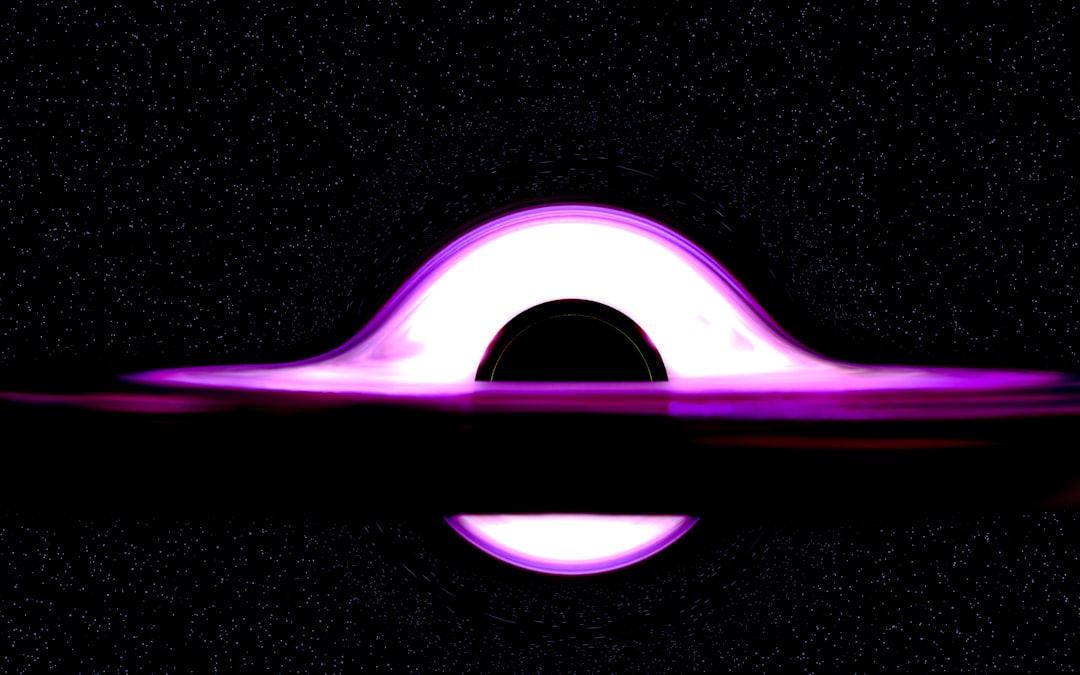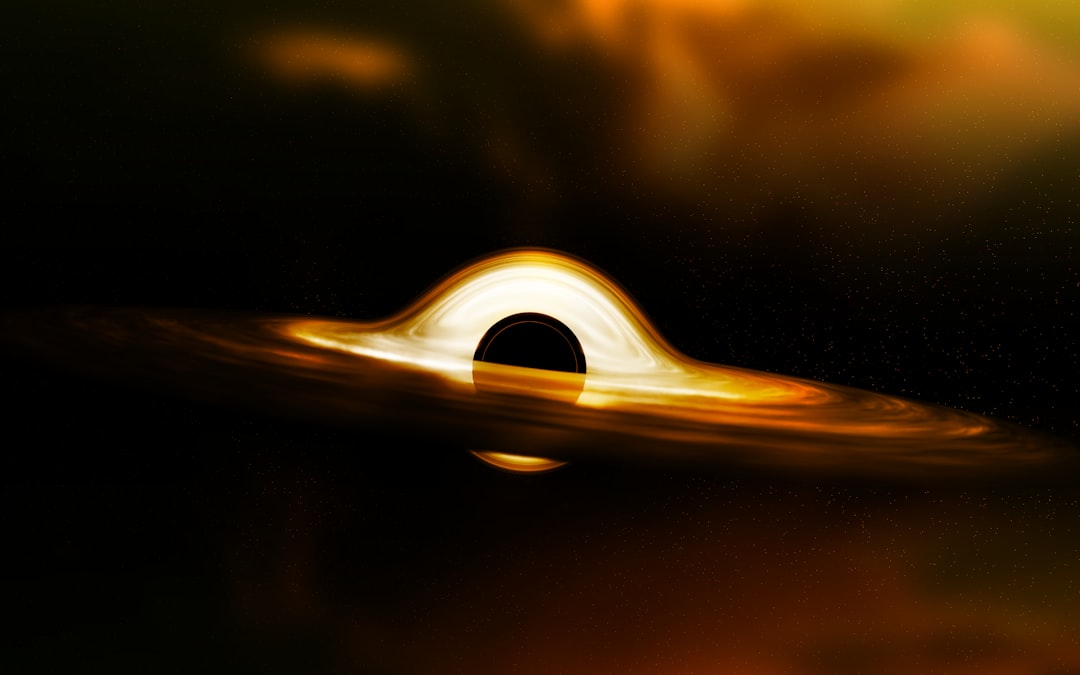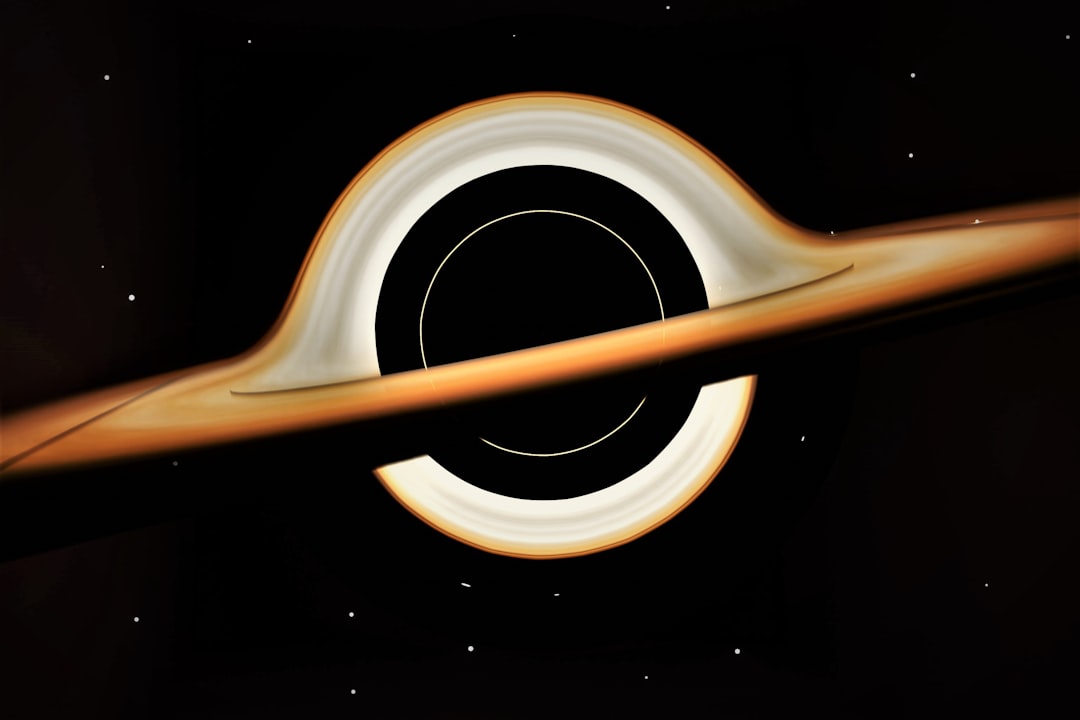
In one of the most extraordinary confirmations in modern astrophysics, scientists have verified the existence of the first runaway supermassive black hole hurtling through intergalactic space at supersonic speeds. This cosmic behemoth, potentially containing hundreds of millions of solar masses, has been violently ejected from its home galaxy, leaving behind a spectacular 200,000-light-year trail of compressed gas and newborn stars. The discovery, made possible by the James Webb Space Telescope's unprecedented observational capabilities, confirms theoretical predictions that astronomers have pondered for half a century.
The rogue black hole resides within a peculiar system known as the Cosmic Owl, located approximately 8.8 billion light-years from Earth. This unusual structure consists of two ring galaxies in the process of merging, creating a formation that remarkably resembles an owl's face when viewed through powerful telescopes. Each luminous "eye" represents an active galactic nucleus powered by supermassive black holes consuming surrounding matter, while what appears as a "beak" is actually a vibrant stellar nursery where thousands of new stars are being born.
Led by Dr. Pieter van Dokkum from Yale University's Astronomy Department, the research team has published their findings in a paper titled "JWST Confirmation of a Runaway Supermassive Black Hole via its Supersonic Bow Shock," submitted to The Astrophysical Journal Letters. This groundbreaking work represents the culmination of extensive observations combining data from both the Hubble Space Telescope and JWST's advanced instruments, finally providing the definitive evidence needed to confirm this extraordinary cosmic phenomenon.
The Violent Mechanics of Black Hole Ejection
The question of what could possibly dislodge a supermassive black hole from its galactic home has intrigued astrophysicists for decades. These gravitational titans, some containing billions of times the mass of our Sun, typically occupy the centers of galaxies where they exert tremendous gravitational influence over millions of stars. Yet theoretical models have long predicted that under certain extreme conditions, even these cosmic anchors could be torn loose and sent careening through space.
The answer lies in the catastrophic events that unfold during galaxy mergers. When two galaxies collide and eventually merge—a process that unfolds over hundreds of millions of years—their central supermassive black holes inevitably sink toward the center of the newly formed galaxy. According to research published by the NASA Astrophysics Division, these cosmic encounters create conditions where supermassive black holes can achieve escape velocity through two distinct mechanisms.
The first mechanism involves a three-body gravitational interaction. When three supermassive black holes end up in close proximity—a scenario that can occur when multiple galaxies merge—their complex gravitational dance can result in one black hole being violently ejected while the other two form a bound binary system. This gravitational slingshot effect can impart velocities exceeding 1,000 kilometers per second to the ejected black hole.
The second mechanism involves gravitational wave recoil, a phenomenon predicted by Einstein's general relativity. When two supermassive black holes merge, they emit powerful gravitational waves that carry momentum. If the black holes have unequal masses or are spinning in particular orientations, the asymmetric emission of these waves can kick the merged black hole in a specific direction, potentially providing enough energy to overcome the galaxy's gravitational pull entirely.
"The occasional escape of supermassive black holes from their host galaxies is a long-standing prediction of theoretical studies. Finding the first confirmed example validates decades of theoretical work and opens a new window into understanding the most energetic processes in the universe," the research team explains in their paper.
Decoding the Cosmic Trail: Advanced Observational Techniques
The breakthrough in confirming this runaway black hole, designated RBH-1, came through the sophisticated capabilities of JWST's NIRSpec Integrated Field Unit. This remarkable instrument observes small patches of sky in three-dimensional cubes, simultaneously capturing both images and spectra across a 3-arcsecond by 3-arcsecond field of view. This allows astronomers to not only see celestial objects but also analyze the composition, temperature, and velocity of the gas and stars within them—all in a single observation.
The research team focused their attention on two critical features that serve as the smoking gun evidence for a runaway supermassive black hole. The first is an extraordinary stellar wake extending approximately 62 kiloparsecs, or roughly 200,000 light-years, behind the black hole's current position. This luminous trail consists of compressed gas that has collapsed to form new stars, creating a cosmic breadcrumb trail marking the black hole's violent passage through space.
The second crucial feature is the supersonic bow shock at the leading edge of the structure. As the supermassive black hole plows through the intergalactic medium at velocities approaching 1,600 kilometers per second, it compresses the gas ahead of it, creating a shock wave similar to the sonic boom produced by a supersonic aircraft. This compression heats the gas to extreme temperatures, causing it to emit characteristic radiation that JWST's instruments can detect and analyze.
Using spectroscopic analysis of redshifted oxygen III and hydrogen-alpha emission lines, the researchers identified a striking velocity gradient of approximately 600 kilometers per second over a distance of about 1 kiloparsec. This kinematic signature provides unambiguous evidence of the supersonic shock wave predicted by theoretical models. As van Dokkum and his colleagues note in their paper, "The evidence for a supersonic bow shock at the head of RBH-1 is very strong, bordering on overwhelming."
The Role of Multi-Wavelength Observations
The confirmation of RBH-1 required a sophisticated combination of observations across multiple wavelengths and instruments. Initial detection came from ground-based telescopes, followed by detailed imaging from the Hubble Space Telescope's UVIS camera, which revealed the extended linear structure. However, it was JWST's infrared capabilities and spectroscopic precision that provided the definitive proof needed to confirm the runaway black hole hypothesis.
The research team's analysis revealed that the pressure in the stellar wake is significantly lower than at the bow shock, creating a pressure differential that drives gas accumulation in the tail region. This compressed gas cools and collapses under its own gravity, triggering star formation along the entire length of the wake. The resulting stellar populations provide a fossil record of the black hole's passage, with the youngest stars located nearest to the black hole and progressively older stellar populations marking earlier stages of its journey.
Implications for Galaxy Evolution and Cosmic Structure
The confirmation of the first runaway supermassive black hole carries profound implications for our understanding of galaxy evolution and the distribution of matter throughout the universe. These rogue black holes represent a previously unconfirmed mechanism for redistributing the most massive objects in the cosmos, potentially affecting the formation and evolution of galaxies across cosmic time.
According to simulations conducted by researchers at the European Space Agency, runaway supermassive black holes could be more common than previously thought, particularly in regions of the universe where galaxy mergers are frequent. Each ejection event not only removes a significant gravitational anchor from the host galaxy but also disrupts star formation patterns and alters the distribution of gas and dark matter in the surrounding environment.
The discovery also provides crucial observational confirmation of gravitational wave recoil effects, a phenomenon that has been predicted by general relativity but never directly observed in supermassive black hole systems. As gravitational wave observatories like LIGO and the upcoming LISA space-based detector become more sensitive, the combination of gravitational wave detections and electromagnetic observations of runaway black holes could provide unprecedented insights into the dynamics of black hole mergers.
The Cosmic Census: Searching for More Runaways
With the first confirmed runaway supermassive black hole now documented, astronomers are eager to conduct systematic searches for additional examples. The research team suggests that wide-field surveys planned for the Euclid space telescope and NASA's Nancy Grace Roman Space Telescope will be ideal for identifying these rare objects across vast swaths of the universe.
The distinctive signatures of runaway black holes—extended linear features with bow shocks and stellar wakes—should be detectable in large-scale surveys, allowing astronomers to build a statistical sample of these objects. Understanding their frequency and distribution will help constrain models of galaxy merger rates and the dynamics of supermassive black hole interactions throughout cosmic history.
A Universe More Dynamic Than Imagined
The discovery of RBH-1 serves as a powerful reminder that the universe is far more dynamic and violent than our everyday experience might suggest. While Earth and our solar system orbit peacefully around the Milky Way's central black hole, elsewhere in the cosmos, supermassive black holes containing tens or hundreds of millions of solar masses are being hurled through space at velocities that would traverse the distance from Earth to the Sun in less than a minute.
These cosmic behemoths leave behind spectacular trails of compressed gas and newborn stars, creating structures hundreds of thousands of light-years long that serve as monuments to the most energetic gravitational interactions in the universe. The bow shocks they generate compress and heat the intergalactic medium, potentially triggering star formation in regions that would otherwise remain quiescent for billions of years.
As Dr. van Dokkum and his colleagues note in their conclusion, this discovery validates five decades of theoretical predictions and opens new avenues for understanding the most extreme phenomena in astrophysics. The combination of advanced space telescopes, sophisticated spectroscopic techniques, and detailed theoretical modeling has finally allowed astronomers to confirm what was once considered a purely theoretical possibility—that even the most massive objects in the universe can become cosmic nomads, wandering through the vast expanses of intergalactic space.
While we can rest assured that no runaway supermassive black holes threaten our corner of the universe, the existence of RBH-1 and its likely companions across the cosmos reminds us that the universe continues to surprise us with phenomena that challenge our understanding and expand our appreciation for the dynamic, ever-changing nature of cosmic evolution. As next-generation telescopes come online and observational techniques continue to advance, astronomers anticipate discovering many more of these extraordinary objects, each one providing new insights into the violent processes that shape galaxies and drive the evolution of cosmic structure across billions of years.