Rubin Observatory Peers Deep Into the Famous COSMOS Field
One of the most celebrated and scientifically productive patches of sky in all of observational astronomy has a powerful new observer. The Vera C. Rubin Observatory has turned its formidable eye toward the COSMOS field — the Cosmic Evolution Survey Deep Field — delivering what scientists are calling the most detailed wide-field view of this region ever obtained. The result is a breathtaking portrait of cosmic history, teeming with more than half a million galaxies and over 50,000 stars, captured with unprecedented depth and clarity.
What Is the COSMOS Field?
Located in the constellation Sextans, the COSMOS field is a carefully chosen 2-square-degree region of sky that has been deliberately selected for its relative emptiness of foreground stars and dust — a cosmic "window" that allows telescopes to peer billions of light-years into the Universe with minimal interference. This makes it an extraordinary laboratory for studying the large-scale structure of the cosmos, galaxy formation and evolution, dark matter distribution, and the nature of dark energy.
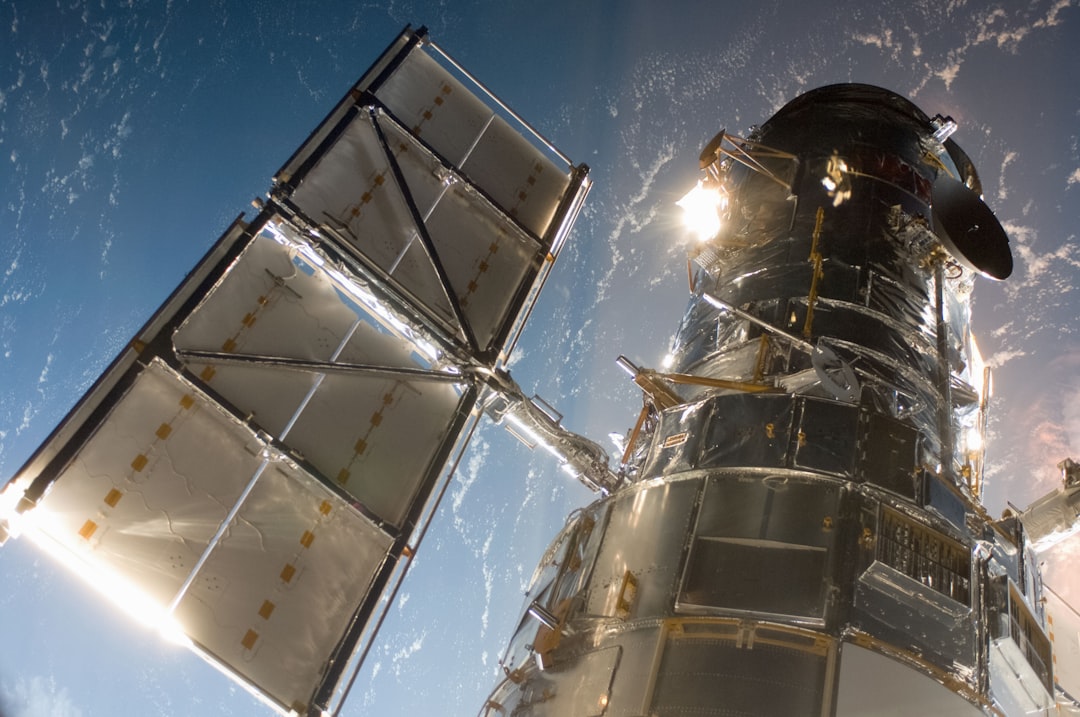
The field first rose to prominence when the Hubble Space Telescope (HST) photographed it in segments between 2003 and 2005 using its Advanced Camera for Surveys (ACS), in what became known as the COSMOS Treasury Program. The resulting mosaic — covering an area of sky roughly nine times the size of the full Moon — became the largest contiguous image ever taken by Hubble at the time. Ground-based and space-based observatories operating across the electromagnetic spectrum soon joined the effort, transforming the COSMOS field into one of the most comprehensively observed regions of the Universe.
Over the ensuing two decades, telescopes including the Spitzer Space Telescope, XMM-Newton, Chandra X-ray Observatory, the Very Large Array (VLA), and the Subaru Telescope have observed the COSMOS field in optical, ultraviolet, infrared, radio, and X-ray wavelengths. This multi-wavelength treasury of data has made it an indispensable reference point for calibrating instruments, cross-validating measurements, and studying phenomena ranging from supermassive black holes to the cosmic web of dark matter. It is estimated that more than 1,000 peer-reviewed papers have used COSMOS data to date.
The Rubin Observatory and the LSST Camera
Now, a new chapter in the COSMOS story has begun. The Vera C. Rubin Observatory, perched atop Cerro Pachón in the Chilean Andes at an elevation of approximately 2,682 meters, has observed the COSMOS field using its revolutionary Legacy Survey of Space and Time (LSST) Camera — the most powerful digital camera ever constructed for astronomical use. With a staggering 3.2-gigapixel resolution, a primary mirror spanning 8.4 meters, and a field of view covering 9.6 square degrees of sky in a single exposure, the LSST Camera is engineered to survey the entire visible southern sky every few nights over a planned ten-year mission.
This new Rubin image of the COSMOS field represents a landmark moment: it is the first time the LSST Camera has produced an image and catalog intended for scientific research. Created by stacking hundreds of individual exposures, the resulting image reveals a stunning diversity of cosmic objects — from barred spiral galaxies with sweeping stellar arms, to smooth, ancient elliptical galaxies, faint red galaxies at the edge of the observable Universe, and dramatically distorted merging galaxy pairs locked in gravitational embrace. The stars visible in the image are located within our own Milky Way and simply fall along the line of sight toward the COSMOS field.
"The COSMOS field is a very important one for LSST science. Its wealth of prior observations, and its repeated targeting both during commissioning and as one of the LSST's deep fields, will make it very valuable as a testing ground for scientists as they get ready to take on the survey data."
— Phil Marshall, Deputy Director of Rubin Observatory, SLAC National Accelerator Laboratory
Why Avoid the Galactic Plane?
The choice of the COSMOS field's location in Sextans is no accident. By deliberately observing a region far from the crowded plane of the Milky Way, astronomers sidestep a major observational obstacle: the dense clouds of interstellar gas and dust that inhabit the galactic disk. This interstellar medium (ISM) can scatter, absorb, and redden light, dramatically limiting how far and how clearly telescopes can see. The stars catalogued in Rubin's new image represent only a tiny fraction of those in our galaxy — the vast majority of the LSST Camera's field of view is dominated not by nearby stars but by galaxies billions of light-years away.
By looking through this clean cosmic window, Rubin can effectively look back in time. Because light travels at a finite speed — approximately 299,792 kilometers per second — observing galaxies billions of light-years away means seeing them as they existed billions of years ago. Some of the faintest red smudges in the new Rubin image are galaxies seen as they appeared when the Universe was only a fraction of its current age, providing direct snapshots of galaxy formation during the epoch of peak star formation, roughly 10 billion years ago.
Early Data Preview 2: The Dawn of LSST Science
The new Rubin COSMOS image was released to coincide with Early Data Preview 2 (EDP2) — the first phase of the observatory's Data Preview 2 release. EDP2 consolidates Rubin observations acquired between April 2025 and January 2026 as part of the observatory's science validation program, giving astronomers their first structured opportunity to interact with real Rubin data products, test analysis pipelines, and prepare for the full LSST survey ahead. Though still a preview, EDP2 already carries genuine scientific value independent of its commissioning purpose.
One of the most exciting scientific frontiers that Rubin will open in the COSMOS field — and across the whole sky — is the systematic discovery of transient and variable astronomical objects. By repeatedly imaging the same region of sky, Rubin can detect changes in brightness over time that reveal phenomena invisible in any single snapshot. These include:
- Type Ia supernovae — catastrophic stellar explosions used as "standard candles" to measure cosmic distances and probe the nature of dark energy
- Core-collapse supernovae — the deaths of massive stars that enrich the interstellar medium with heavy elements
- Active Galactic Nuclei (AGN) and quasars — supermassive black holes caught in episodes of dramatic brightening as they consume surrounding material
- Gravitational microlensing events — temporary brightenings caused by an unseen massive object passing in front of a background star or galaxy
- Kilonovae and gamma-ray burst afterglows — the electromagnetic signatures of neutron star mergers
"The COSMOS deep image is just the beginning for Rubin in this region. Repeated visits to the field over the next few years will demonstrate the power of our survey design for discovery by providing our science community with a huge number of transient and variable objects like supernovae and other explosive transients for follow-up and detailed study."
— Bob Blum, Director of the Rubin Observatory at NSF NOIRLab
The Broader Scientific Legacy of the LSST Survey
While the COSMOS field observation is a milestone in its own right, it offers a tantalizing preview of what Rubin's ten-year Legacy Survey of Space and Time will achieve across the entire southern sky. Over its operational lifetime, the LSST is expected to catalog approximately 20 billion galaxies and a similar number of stars, generate around 15 terabytes of raw data per night, and identify millions of transient events. This will produce the most comprehensive time-domain map of the Universe ever assembled.
The survey's four primary science pillars are: probing the nature of dark energy and dark matter; cataloguing the solar system including near-Earth asteroids; exploring the Milky Way's structure and stellar populations; and conducting a systematic census of the transient and variable sky. The richly observed COSMOS field, with its deep multi-wavelength heritage, will serve as an invaluable calibration anchor and science validation resource throughout this ambitious decade-long endeavor.
A Dedication to the Community of Coquimbo
The release of this first scientific image from Rubin Observatory was accompanied by a deeply human acknowledgment. Director Bob Blum noted that even as the observatory celebrates the dawn of LSST science, thoughts remain with the staff and communities of the Coquimbo region of Chile, who were impacted by devastating storms around the time of the announcement. The observatory's location in northern Chile has been made possible by decades of cooperation with and support from Chilean communities, and this milestone was formally dedicated to the people of the Coquimbo region in recognition of that enduring partnership.
The Vera C. Rubin Observatory and its LSST survey represent one of the most ambitious astronomical undertakings in history. As the observatory moves from its commissioning phase into full science operations, its observations of the COSMOS field — and countless other corners of the sky — promise to reshape our understanding of the Universe in ways that scientists are only beginning to imagine.