Quiet Black Holes With a Stellar Companion Raise Questions About How They Form
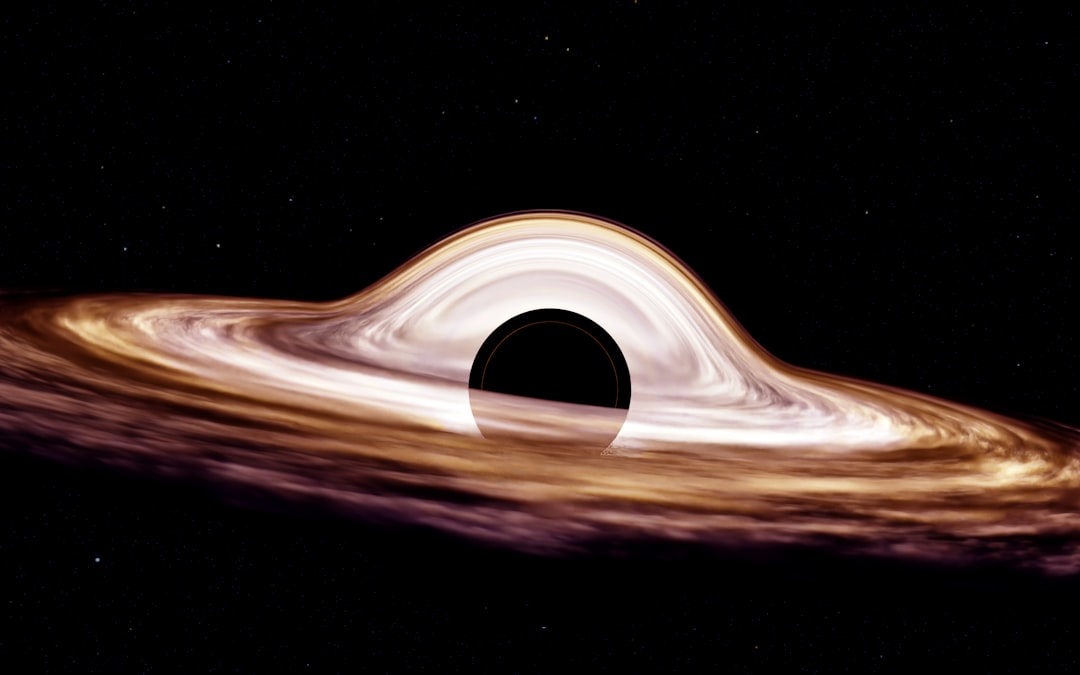
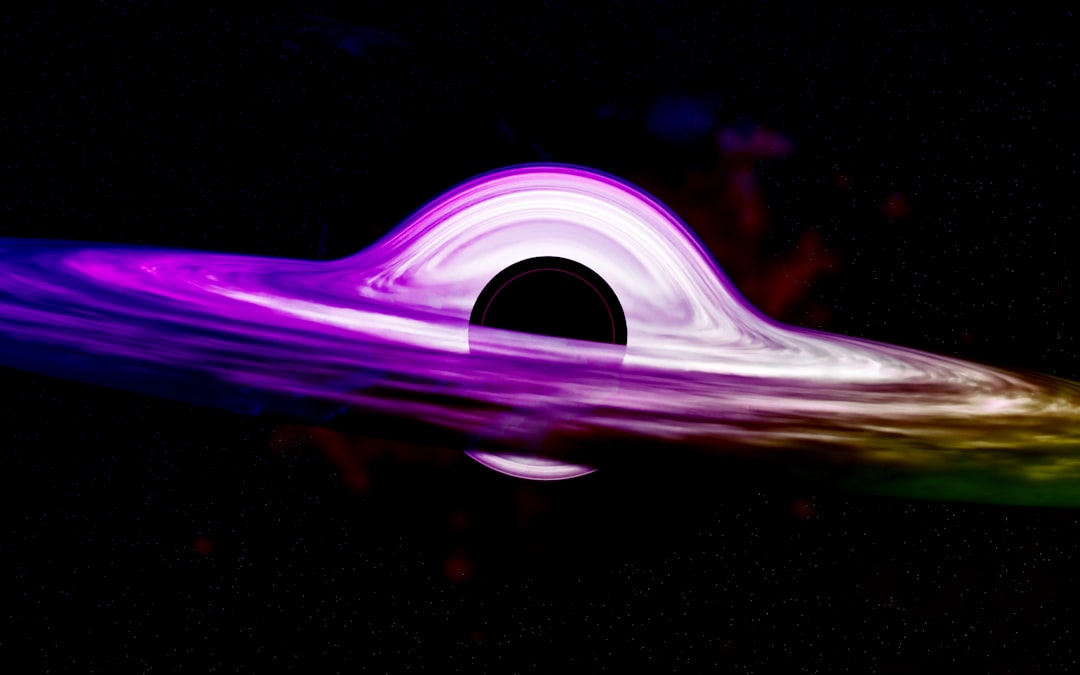
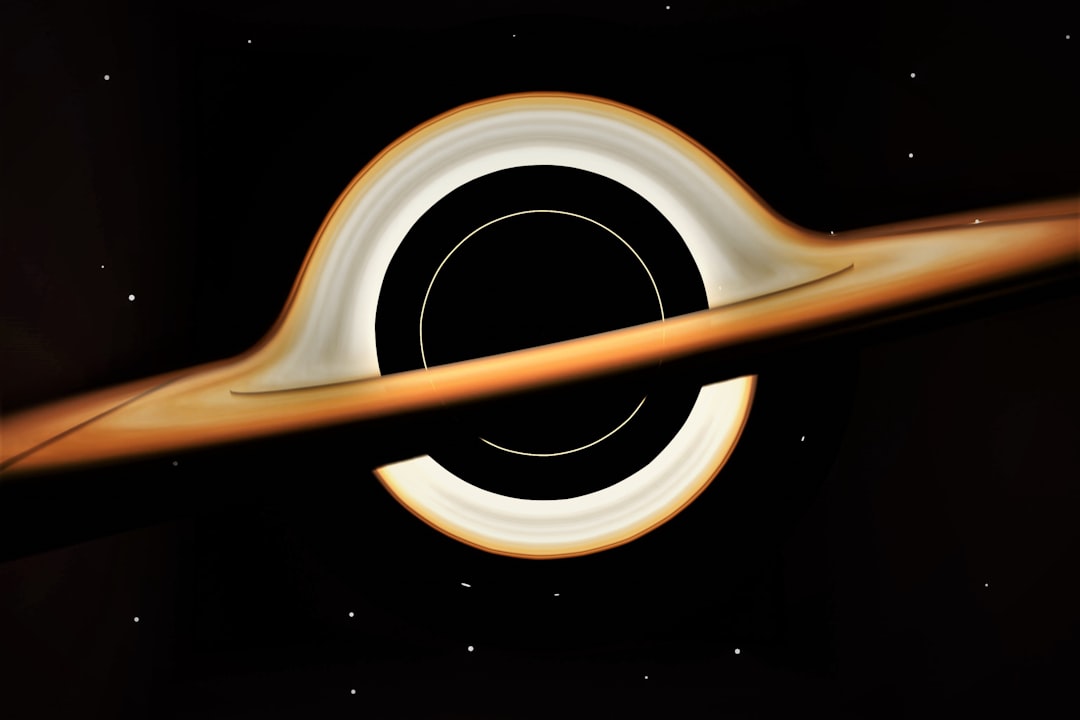
Black holes have long captured the imagination of scientists and the public alike, yet the vast majority of them remain frustratingly hidden from our instruments. Active black holes — those voraciously consuming surrounding material — are relatively straightforward to detect. Their superheated accretion disks blaze with intense X-ray radiation, and the powerful relativistic jets streaming from their poles are readily visible across visible and radio wavelengths. These cosmic beacons announce themselves loudly across the universe.
But most stellar-mass black holes are far quieter. They either drift silently through the galaxy in isolation or orbit a companion star without drawing material from it. With no infalling matter to energize, no accretion disk forms, no jets are launched, and no telltale radiation reaches our telescopes. These dormant black holes are, by their very nature, invisible. We can only infer their existence through their gravitational influence on nearby objects — a detective's approach to one of astronomy's most elusive quarry.
Gaia: A Stellar Census With a Hidden Talent
This is precisely where the European Space Agency's Gaia spacecraft has proven to be a revolutionary tool. Originally designed as the most ambitious stellar cartography mission in history, Gaia's primary mission is to precisely map the positions, distances, and motions of more than one billion stars in our region of the Milky Way. The spacecraft measures stellar positions with extraordinary accuracy — down to microarcseconds — effectively constructing a three-dimensional map of our galactic neighborhood in unprecedented detail.
This extreme precision carries a remarkable bonus capability: the ability to detect minute astrometric wobbles in a star's path across the sky. When a star does not travel in a perfectly straight line, but instead traces a subtle, periodic zigzag through space, it is being gravitationally tugged by an unseen companion. In most cases, this wobble betrays the presence of an orbiting exoplanet — too faint and too small to see directly, but massive enough to tug its host star perceptibly. However, in at least three extraordinary cases uncovered by Gaia, the gravitational tug is far too powerful to be explained by any planet. The companion must have a stellar mass.
Here lies the critical insight: if the companion were a normal star of such mass, Gaia would see it. The spacecraft is sensitive enough to detect the light of a stellar companion alongside its host. Since Gaia observes only one star in these systems, the massive, invisible companion can only be one thing — a stellar-mass black hole.
Meet the Three Silent Companions
The three dormant black holes uncovered through Gaia's astrometric surveys have been designated Gaia BH1, Gaia BH2, and Gaia BH3. Each represents an extraordinary find — a black hole caught in the act of doing almost nothing, quietly orbiting a companion star with gravitational patience. Their discovery fundamentally expands our census of stellar-mass black holes, most of which have historically been found only when actively feeding. You can explore some of Gaia's landmark discoveries through ESA's Gaia Science pages.
- Gaia BH1: Located approximately 1,560 light-years away in the constellation Ophiuchus, it is the nearest known black hole to Earth and orbits a Sun-like companion star in a remarkably close orbit.
- Gaia BH2: Situated roughly 3,800 light-years away, this system features a red giant companion star in a similarly tight orbital configuration, raising significant questions about the system's formation history.
- Gaia BH3: The most massive of the trio, with an estimated mass of approximately 33 solar masses, making it the most massive stellar-mass black hole ever found in the Milky Way. It resides in a wide, well-separated binary — a configuration far easier to explain through conventional stellar evolution models.
"The discovery of these dormant black holes challenges our theoretical models of binary stellar evolution and forces us to reconsider the pathways through which stellar-mass black holes form in binary systems." — Summarized from Olejak et al., The Astrophysical Journal, 2026
A Cosmic Inheritance: How These Systems Formed
Each of these quiet black holes shares a common history: they all possess a small stellar companion, suggesting that these were once asymmetric binary star systems — pairs of stars where one member was dramatically more massive than the other. In such systems, the heavier star burns through its nuclear fuel far more rapidly, reaching the end of its life first and ultimately collapsing into a black hole, leaving the smaller companion orbiting the newly formed remnant.
For Gaia BH3, the picture is relatively clean. The two objects are in a wide binary orbit, meaning the companion star was always safely distant from the dying massive star. Standard stellar evolution models can accommodate this configuration without too much difficulty. But BH1 and BH2 present a far thornier puzzle.
The companion stars in these systems orbit their black holes at surprisingly close distances. This creates a severe theoretical problem: when a massive star nears the end of its life, it does not simply collapse quietly. It first expands enormously into a giant or supergiant phase, swelling to hundreds of times its original radius. If a companion star is orbiting too closely, it would be physically engulfed within this expanding envelope — an event known as a common envelope phase. During this phase, gravitational drag causes the two stellar cores to spiral inward toward each other, often resulting in a catastrophic merger rather than a surviving binary system.
Given this well-established picture of stellar evolution, the existence of BH1 and BH2 — with their close-orbiting companions intact — demands an explanation. How did those companions survive?
The Roche Lobe Overflow Model: A Possible Escape Route
One compelling theoretical framework that may hold the answer is a process known as Roche Lobe Overflow. To understand this mechanism, we must first understand the concept of the Roche lobe itself — a concept fundamental to the study of close binary star systems and named after the 19th-century French astronomer Édouard Roche.
In a binary system, each star has a surrounding region of space — its Roche lobe — within which its own gravity dominates over that of its companion. Beyond the boundary of this teardrop-shaped gravitational territory, the companion star's gravity becomes the stronger force. Critically, the two Roche lobes meet at a specific point between the stars called the inner Lagrange point (L1). Any material that drifts across this boundary naturally flows toward the companion star rather than remaining bound to its original host. You can learn more about black hole formation and binary systems at HubbleSite.
In the Roche Lobe Overflow model applied to black hole formation, the sequence of events would unfold as follows: as the massive primary star expands toward the end of its life, its outermost, most diffuse layers begin to spill across the inner Lagrange point. Crucially, if these overflowing layers are sufficiently diffuse and loosely bound, they can be transferred to or dispersed around the companion star without dramatically tightening the binary orbit. The key distinction here is between conservative mass transfer — where all overflowing material is retained by the companion — and nonconservative mass transfer — where much of the material is expelled from the system entirely, carrying away angular momentum in the process.
It is this nonconservative mass transfer scenario, explored in detail in a new study by Aleksandra Olejak and colleagues, that may be the critical formation channel for systems like BH1 and BH2. By ejecting material and angular momentum from the system before a full common envelope engulfment occurs, the binary can avoid the fatal inspiral. The smaller companion then maintains a stable, if close, orbit long enough for the primary's core to collapse into a black hole — producing exactly the kind of system Gaia has now observed. The full study is published in The Astrophysical Journal.
An Illustration of Complexity: What These Findings Mean
With only three observed dormant black hole binary systems currently known, the statistical sample remains too small to definitively confirm the Roche Lobe Overflow model as the dominant formation channel. Science demands reproducibility and statistical confidence, and three data points — however fascinating — cannot yet settle the theoretical debate. Alternative models, including various flavors of common envelope evolution and stellar wind-driven mass loss scenarios, remain in contention.
Nevertheless, this initial study by Olejak et al. illuminates several important truths about the universe we inhabit:
- The formation of stellar-mass black holes in binary systems is far more complex and varied than standard models have historically assumed.
- Nonconservative mass transfer — the expulsion of material from the system — may be a critical and underappreciated factor in determining the fate of close binary systems.
- Gaia's astrometric database is proving to be a treasure trove for black hole science, with future data releases likely to uncover additional dormant black hole companions.
- The full population of stellar-mass black holes in the Milky Way may be far larger and more diverse than our current detections — biased toward active, feeding systems — suggest.
- Understanding these quiet binary systems has broader implications for gravitational wave science, as merging black hole binaries detected by LIGO and Virgo may have passed through similar evolutionary stages billions of years ago.
Looking Ahead: A Growing Census of Hidden Black Holes
As Gaia continues its mission and future data releases further refine the astrometric measurements of hundreds of millions of stars, astronomers anticipate the discovery of additional dormant black holes hidden within the galaxy. Each new system discovered will add a crucial data point to our understanding of how these extreme objects form, evolve, and interact with their stellar neighbors.
The three Gaia black holes have already reshaped our thinking, demonstrating that nature has found ways to build black hole binary systems that our theoretical models had not fully anticipated. These quiet, patient gravitational anchors — invisible yet unmistakably real — are reminding us that the Milky Way harbors far more complexity and far more dark mystery than we have yet managed to illuminate.
Reference: Olejak, Aleksandra, et al. "Nonconservative Mass Transfer as a Formation Channel for Gaia Black Hole Systems." The Astrophysical Journal 1006.1 (2026): 13.