Scientists Release Details About the Moon's New Massive Crater: A Once-in-a-Century Discovery
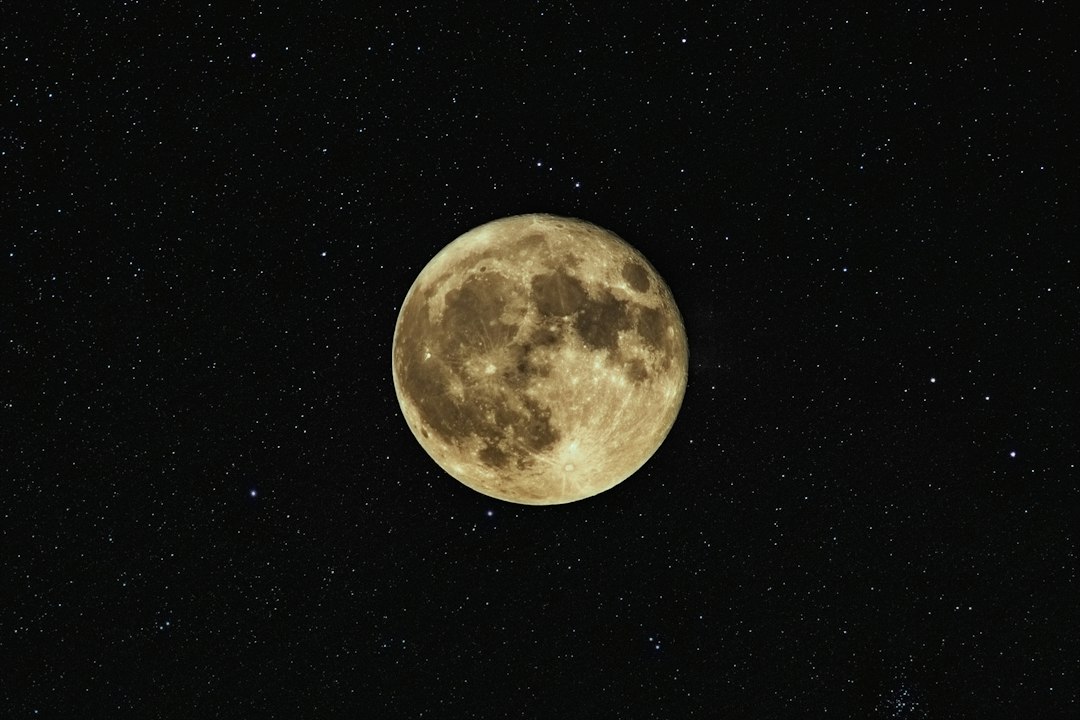
It is easy to think of the Moon as the static, eternal companion in our night sky. Its familiar face has remained visibly unchanged for millennia, perpetually locked in the same orientation toward Earth through a gravitational phenomenon known as tidal locking. But looks can be profoundly deceiving. Our closest celestial neighbor is, in reality, a dynamic world under constant siege — relentlessly bombarded by asteroids, comets, and meteoroids that steadily etch new scars across its ancient landscape. While individual impacts are rarely dramatic enough to be detected by the naked eye, dedicated lunar monitoring programs and professional Moon watchers have the tools to catch them. And a landmark paper recently published in Science Advances describes the largest new impact crater ever documented on any body in the solar system in the modern era.
A New Scar on an Ancient Face
That crater, now formally named McGetchin — in honor of Tom McGetchin, a celebrated and pioneering lunar scientist who made foundational contributions to our understanding of volcanic and impact processes on the Moon — was formed somewhere between April 11th and May 22nd, 2024. Yet it remained hidden in plain sight for more than a year, going undetected until October 2025, when Robert Wagner, an image-processing specialist with Intuitive Machines, happened upon a startling anomaly while stitching together a global lunar difference map.
The process of generating a difference map involves methodically comparing before and after images of the lunar surface to identify any changes. Features that remained static are rendered in a dull, unremarkable grey, while alterations — whether from fresh impacts, rockslides, or other surface disturbances — appear as strikingly light or dark patches that immediately draw the eye. When Wagner encountered the signature left by McGetchin, the reaction was instinctive and immediate.
"I just stopped, dropped everything, and started looking into what that spot was. It was by far the most obvious impact debris pattern I've ever seen in one of those images." — Robert Wagner, Intuitive Machines
That reaction alone speaks volumes. Wagner is a seasoned professional who has spent years examining thousands of such difference maps; for something to stop him cold and demand his full attention is a testament to just how extraordinary this discovery truly was.
The Lunar Reconnaissance Orbiter: The Eyes That Found the Crater
The images at the heart of this discovery were captured by NASA's Lunar Reconnaissance Orbiter (LRO), a spacecraft that has been faithfully orbiting the Moon since 2009 and represents one of humanity's most powerful tools for studying the lunar surface in granular detail. Equipped with both wide-angle cameras capable of sweeping global views and a Narrow Angle Camera (NAC) capable of resolving features as small as half a meter across, the LRO routinely acquires the imagery necessary to construct these global difference maps — a kind of ongoing "change detection" system for the Moon.
Learn more about the LRO and its ongoing mission at the NASA Lunar Reconnaissance Orbiter mission page.
Once Wagner flagged the anomaly, a broader scientific effort was rapidly mobilized to characterize the newly discovered feature. Close-up imaging of the impact site revealed a crater measuring a remarkable 222 meters in diameter and approximately 43 meters deep — dimensions that place it firmly in the category of a significant geological event. To put that in perspective, the crater is roughly as wide as two football fields placed end to end, and deep enough to swallow a ten-story building.
What Caused McGetchin?
Based on the crater's dimensions and the mechanics of hypervelocity impact physics, researchers estimated that the impacting body was likely an asteroid or comet fragment roughly the size of a three-to-six story building — perhaps 10 to 20 meters in diameter. Objects of this size are classified as near-Earth objects (NEOs) and represent a population that is notoriously difficult to track comprehensively, particularly at the smaller end of the size spectrum where dedicated sky surveys struggle to maintain complete coverage.
Crucially, the research team estimated that an impact of this magnitude on the lunar surface occurs only approximately once every 132 years — making McGetchin a genuinely once-in-a-century event. This statistical rarity underscores both the scientific significance of the discovery and the extraordinary good fortune that the LRO was in position, with sufficient imaging coverage, to capture the before-and-after record needed to characterize the impact fully.
- Crater diameter: 222 meters — the largest newly formed crater ever detected in the modern solar system
- Crater depth: approximately 43 meters
- Estimated impactor size: equivalent to a 3–6 story building (roughly 10–20 meters)
- Impact timeframe: between April 11 and May 22, 2024
- Discovery date: October 2025, by Robert Wagner of Intuitive Machines
- Estimated frequency: an impact of this scale occurs on the Moon roughly once every 132 years
A Thermal Fingerprint: The Diviner Revelation
The scientific team did not stop at optical imaging. Researchers turned LRO's Diviner Lunar Radiometer Experiment — the spacecraft's sophisticated thermal imaging system — toward the McGetchin crater, and what they found extended the story far beyond the visible impact site itself. Diviner detected a striking thermal anomaly spanning 6.4 kilometers in diameter surrounding the crater — a thermal "halo" nearly 29 times wider than the crater itself.
During the lunar night, when surface temperatures plunge to brutally cold extremes (the Moon lacks an atmosphere to retain heat, causing nighttime temperatures to drop as low as -173°C or -280°F), this broad halo around the newly formed crater registered approximately 9°C colder than the surrounding terrain. That may seem counterintuitive at first — why would ground near a fresh impact be colder rather than warmer? — but the explanation lies in the nature of the lunar regolith itself.
You can explore the science behind the Diviner instrument and its findings through the NASA LRO mission overview.
The Science of "Fluffed" Regolith
The lunar regolith — the layer of fragmented rock, dust, and debris that blankets the Moon's surface — is far from uniform in its physical properties. Over billions of years, undisturbed regolith becomes increasingly compacted and develops a complex microstructure that allows it to retain heat efficiently through the long lunar night. When a significant impact occurs, however, it violently excavates and redistributes this material, blasting it outward across a wide area in a process known as ejecta deposition.
The ejected material, now essentially pulverized and "fluffed" — dramatically reduced in bulk density compared to its original compacted state — behaves very differently from the surrounding terrain when it comes to thermal retention. Low-density, loosely packed regolith has a much lower thermal inertia, meaning it loses heat far more rapidly when solar radiation disappears at the onset of lunar night. The result is the cold thermal halo that Diviner detected: a broad zone of anomalously rapid heat loss that maps directly onto the distribution of the impact's ejecta blanket.
This finding has significant scientific implications. By measuring the size, shape, and thermal signature of the ejecta blanket and comparing it to theoretical models of impact physics, researchers can extract detailed information about the mechanical properties of the lunar regolith — its density, porosity, grain size distribution, and compaction state — without ever setting foot on the surface.
Why McGetchin Matters: Implications for Lunar Exploration
The discovery and detailed characterization of McGetchin arrives at a pivotal moment in the history of lunar exploration. Under NASA's Artemis program and parallel efforts by space agencies including ESA, China's CNSA, and commercial partners, humanity is preparing to return humans to the Moon and eventually establish a sustained presence there. That ambition brings with it a host of engineering and safety challenges that a crater like McGetchin speaks to directly.
Understanding how impacts shape the lunar terrain, redistribute regolith, and alter the mechanical properties of the surface has immediate practical consequences for mission design:
- Rover wheel design: Fluffed, low-density ejecta material behaves very differently from compacted regolith, presenting potential mobility challenges for surface vehicles that must traverse varied terrain.
- Habitat structural engineering: Understanding the frequency and force of large impacts is essential for designing habitats and infrastructure capable of withstanding direct meteorite strikes or the seismic effects of nearby impacts.
- Landing site selection: Ejecta blankets from both ancient and newly formed craters can dramatically alter the surface texture and slope stability in ways that affect the safety of landing zones.
- Regolith utilization (ISRU): Plans to use lunar regolith as a raw material for in-situ resource utilization — producing construction materials, radiation shielding, and even water through processing — depend critically on accurate models of regolith physical properties.
- Impact hazard assessment: Statistical data from newly observed impacts like McGetchin help refine probabilistic models of the lunar impact rate, informing long-term safety planning for crewed surface operations.
Explore ongoing lunar science and future exploration planning at the Lunar and Planetary Institute (LPI).
A Window Into Planetary History
Beyond its immediate engineering relevance, McGetchin offers something rarer still: a pristine, precisely dated example of an impact event that scientists can study from the very beginning. The vast majority of craters on the Moon — and indeed throughout the solar system — are ancient features whose formation ages are known only approximately, often inferred through indirect radiometric dating of returned samples or through statistical crater-counting methods. McGetchin, by contrast, comes with a known formation window, a detailed thermal record from immediately after its formation, and high-resolution imagery of its ejecta field in its freshest state.
This makes it an invaluable calibration point for the broader scientific community — a ground truth against which theoretical models of impact cratering, regolith dynamics, and ejecta distribution can be tested and refined. The insights gained here will ripple outward, improving our understanding not just of the Moon, but of impact processes on Mars, Mercury, and the myriad smaller bodies throughout the solar system that bear the accumulated scars of billions of years of cosmic bombardment.
As we stand on the threshold of a new era of human lunar exploration, the serendipitous discovery of McGetchin serves as a powerful reminder that even in a world we have studied for decades, the Moon still holds the capacity to surprise us — and that the scientific infrastructure we have already put in place, like the tireless Lunar Reconnaissance Orbiter, continues to pay dividends beyond what its designers could have imagined. It is, in every sense, a remarkably lucky find — a once-in-a-century event caught, analyzed, and understood before the engineers designing our future lunar homes had to finalize their blueprints.