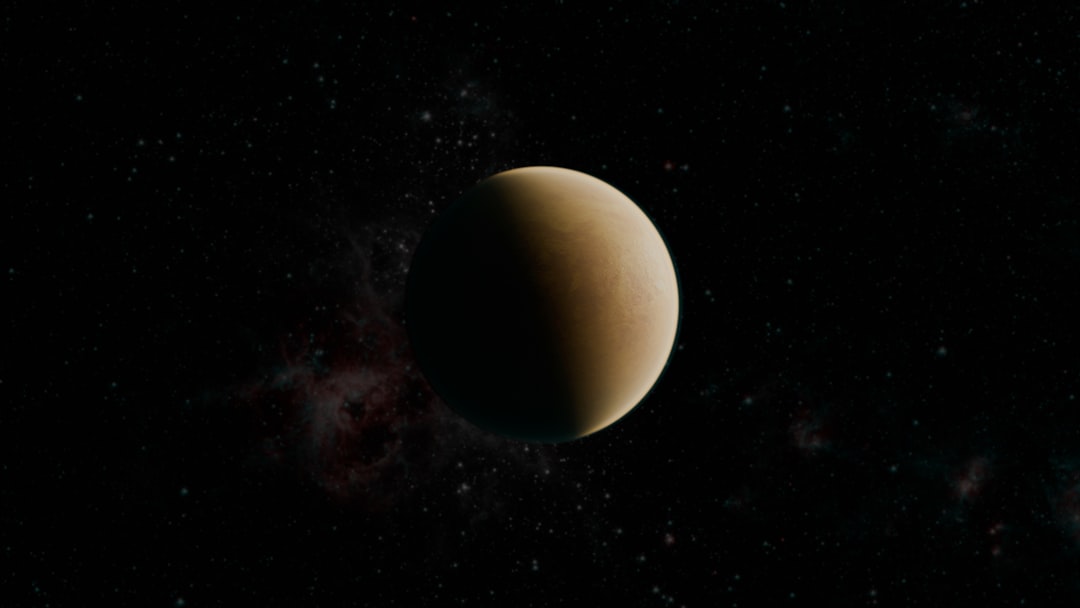
Beneath the scorching, cloud-shrouded surface of Venus—where temperatures soar to 465 degrees Celsius and atmospheric pressure crushes down with a force 92 times greater than Earth's—an extraordinary possibility emerges from recent scientific research. A groundbreaking international study suggests that massive underground lava tube networks may exist within our sister planet, potentially offering protected environments that could one day shelter human explorers from Venus's hellish surface conditions. This research, scheduled for publication in the prestigious journal Icarus in May 2026, represents a paradigm shift in how we conceptualize future human presence beyond Earth.
The implications of this discovery extend far beyond theoretical planetary science. These subsurface volcanic caverns, formed millions of years ago when molten lava flowed beneath solidified crusts, could provide natural radiation shielding, stable temperatures, and protection from the planet's crushing atmospheric pressure. According to the research team's calculations, Venusian lava tubes could rival or even exceed the dimensions of terrestrial lava tubes, with some potentially stretching several hundred meters in width—large enough to accommodate entire research stations or habitation modules.
The study's findings arrive at a pivotal moment in Venus exploration, as NASA prepares multiple missions to investigate Earth's enigmatic neighbor. With renewed scientific interest in Venus's geological activity and potential habitability, understanding these subsurface structures has become crucial for both planetary science and long-term exploration strategies.
Engineering Analysis: Calculating Structural Stability on an Alien World
To determine whether substantial lava tubes could exist beneath Venus's surface, researchers employed Finite Element Limit Analysis (FELA), a sophisticated computational method commonly used in civil engineering and structural mechanics. This numerical technique allows scientists to calculate the maximum load-bearing capacity of geological structures before catastrophic failure occurs—essentially answering the critical question: how large can these tubes grow before their roofs collapse under the immense weight of overlying rock?
The FELA methodology divides complex geological structures into thousands of smaller elements, then calculates stress distributions, potential failure points, and stability thresholds across the entire system. For Venusian lava tubes, researchers had to account for multiple variables including rock composition, gravitational forces, thermal stresses, and atmospheric pressure differentials. Venus's surface gravity—approximately 91 percent of Earth's—plays a crucial role in these calculations, as it directly influences how much weight the tube ceilings can support.
"Our results suggest that lava tubes with widths of a few hundred meters may remain stable, and these dimensions are consistent with observed Venusian channel sizes. Future missions with higher-resolution imaging and geophysical investigation capacities should be able to detect possible surface expressions of lava tubes, such as pit chains, skylights, subsurface voids and gravity anomalies."
The research team's models indicate a remarkably wide range of potential tube dimensions, with some stable configurations potentially exceeding anything found on Earth. These findings align with existing observations of Venusian surface channels, suggesting that the subsurface volcanic plumbing system may be far more extensive than previously imagined.
Venus's Volcanic Renaissance: Evidence for Active Geological Processes
This lava tube research emerges against a backdrop of mounting evidence suggesting that Venus remains volcanically active today. Far from being a geologically dead world frozen in time, our neighboring planet may host ongoing volcanic eruptions that continuously reshape its surface and atmosphere. A comprehensive 2025 study published in the Journal of Geophysical Research: Planets developed sophisticated models of explosive volcanism on Venus, demonstrating how atmospheric chemical signatures could reveal active eruptions to orbiting spacecraft.
Additional research published in Geochemistry in 2025 reanalyzed decades-old data from NASA's Magellan mission, which orbited Venus from 1990 to 1994. Using modern analytical techniques, scientists identified surface features that appear to have changed between observation periods—potential evidence of recent lava flows or volcanic resurfacing events. These findings suggest that Venus's volcanic activity may be comparable in scale to Earth's, fundamentally altering our understanding of planetary evolution.
The connection between active volcanism and lava tube formation is direct and significant. On Earth, lava tubes form when surface lava cools and solidifies while molten material continues flowing beneath, eventually draining away to leave hollow tunnels. If Venus experiences ongoing volcanic activity, new lava tubes may be forming even now, adding to networks that could extend for hundreds of kilometers beneath the planet's surface.
The Magellan Legacy and Radar Mapping Challenges
Understanding why researchers continue relying on Magellan mission data from three decades ago requires appreciating Venus's unique observational challenges. Unlike Mars or the Moon, Venus is perpetually shrouded in thick clouds of sulfuric acid that completely obscure the surface at optical wavelengths. Only radar imaging can penetrate these clouds, using radio waves that reflect off the surface and return information about topography, roughness, and composition.
Magellan remains the last spacecraft to conduct comprehensive, high-resolution radar mapping of Venus's entire surface. Its synthetic aperture radar system revealed a world dominated by volcanic features: vast lava plains, enormous shield volcanoes, complex channel networks, and mysterious circular structures called coronae. However, Magellan's resolution—approximately 100-250 meters per pixel—wasn't sufficient to detect smaller features like lava tube skylights or collapsed sections that would definitively prove the existence of subsurface caverns.
Next-Generation Missions: DAVINCI and VERITAS Transform Venus Science
The scientific community's ability to test the lava tube hypothesis will dramatically improve with NASA's upcoming Venus missions. DAVINCI (Deep Atmosphere Venus Investigation of Noble gases, Chemistry, and Imaging) represents a bold approach to planetary exploration: a titanium-shelled probe designed to survive the harrowing descent through Venus's atmosphere while collecting unprecedented data about atmospheric composition, chemistry, and structure.
During its approximately one-hour plunge to the surface, DAVINCI will measure noble gas isotopes that reveal Venus's formation history, analyze sulfur and water chemistry that indicates volcanic activity, and capture the first high-resolution images of Venus's mountainous Alpha Regio terrain. While DAVINCI won't directly detect lava tubes, its atmospheric measurements could identify volcanic gas emissions that suggest active subsurface magma movement—the very process that creates lava tubes.
The VERITAS (Venus Emissivity, Radio Science, InSAR, Topography, and Spectroscopy) mission, however, will directly search for evidence of lava tubes and active volcanism. As an advanced radar-mapping orbiter, VERITAS will create global topographic maps with resolution far exceeding Magellan's capabilities. Its instrument suite includes:
- Synthetic Aperture Radar: Capable of detecting surface features as small as 15-30 meters, potentially revealing lava tube skylights and collapsed sections
- Infrared Mapping: Identifying thermal anomalies that could indicate active volcanic vents or recent lava flows
- Gravity Mapping: Detecting subsurface voids and density variations consistent with hollow lava tubes
- Deformation Monitoring: Measuring surface changes over time that would confirm ongoing volcanic activity
Both missions are currently scheduled for launch windows between 2030-2032, with VERITAS launching no earlier than 2031. Together, they will provide complementary datasets that could revolutionize our understanding of Venus's geology, atmosphere, and potential for harboring protected subsurface environments.
Human Exploration: From Science Fiction to Engineering Possibility
The concept of humans living inside Venusian lava tubes might sound like pure science fiction, but it represents a serious engineering possibility being explored by planetary scientists and aerospace engineers. Unlike Venus's surface—where conditions are literally hellish—the interior of a large lava tube could offer surprisingly benign conditions. The thick rock overhead would provide natural radiation shielding, protection from surface temperature extremes, and structural support against atmospheric pressure.
Temperature modeling suggests that just a few meters beneath Venus's surface, temperatures could drop to levels manageable with existing thermal control systems. A lava tube habitat wouldn't need to withstand the full 92 atmospheres of surface pressure; instead, it could be pressurized to comfortable Earth-like conditions with the tube walls bearing the structural load. This is analogous to how submarines operate deep underwater—the pressure hull needs only to resist the differential pressure between inside and outside.
Several key advantages make lava tube habitats attractive for Venus exploration:
- Radiation Protection: Meters of solid rock provide better shielding than any spacecraft hull
- Thermal Stability: Subsurface temperatures remain relatively constant, simplifying life support systems
- Structural Integrity: Natural geological formations proven stable over millions of years
- Volume Availability: Tubes hundreds of meters wide could accommodate extensive facilities
- Resource Access: Potential proximity to water-bearing minerals and useful geological materials
Research into lava tube habitats for space exploration has accelerated in recent years, with studies examining similar concepts for the Moon and Mars. Venus's lava tubes could prove even more valuable given the planet's extreme surface conditions, potentially making them the only viable option for long-term human presence.
Broader Implications for Planetary Science and Astrobiology
Beyond their potential value for human exploration, Venusian lava tubes hold profound scientific importance. These structures serve as time capsules, preserving geological records from different epochs of Venus's history. Studying the mineralogy, chemistry, and structure of lava tube walls could reveal how Venus's volcanic activity has evolved over billions of years, potentially explaining how a planet that may once have been Earth-like transformed into today's inferno.
The discovery and characterization of extensive lava tube networks would also inform our understanding of volcanic processes throughout the solar system. Lava tubes have been identified on the Moon, Mars, and possibly other bodies, but Venus's high gravity and extreme conditions make it a unique laboratory for studying how these structures form and evolve under different planetary conditions.
From an astrobiological perspective, while Venus's surface is undeniably hostile to life as we know it, subsurface environments could theoretically offer more clement conditions. Some researchers have speculated that if Venus ever hosted liquid water on its surface billions of years ago, microbial life might have retreated to subsurface refugia as surface conditions deteriorated. While highly speculative, this possibility underscores the importance of exploring Venus's subsurface geology.
The Path Forward: Technology Development and Mission Planning
Confirming the existence of Venusian lava tubes and eventually exploring them will require substantial technological advances. Current priorities include developing improved radar systems capable of detecting subsurface voids, creating surface rovers that can survive Venus's extreme environment long enough to explore potential tube entrances, and designing drilling or excavation systems that could access subsurface caverns.
The Long-Lived In-situ Solar System Explorer (LLISSE) concept, currently in development at NASA, aims to create sensors that can operate on Venus's surface for months rather than the hours achieved by Soviet Venera landers. Such technology would be essential for conducting detailed surveys of potential lava tube entrances and monitoring volcanic activity.
International collaboration will prove crucial for Venus exploration. The European Space Agency's EnVision mission, planned for launch in the early 2030s, will complement NASA's efforts with additional radar mapping and subsurface sounding capabilities. Together, these missions will create a comprehensive picture of Venus's geology and help identify the most promising locations for future exploration.
Conclusion: Reimagining Our Relationship with Venus
The possibility of massive lava tube networks beneath Venus's surface fundamentally changes how we think about our nearest planetary neighbor. Rather than viewing Venus as an utterly hostile world forever beyond human reach, we can now envision it as a planet with protected subsurface environments that could support scientific outposts and perhaps eventually permanent settlements.
As DAVINCI, VERITAS, and other missions return data over the coming decade, our understanding of Venusian geology will undergo a revolution comparable to what Mars exploration has achieved. The question is no longer whether Venus has lava tubes, but how extensive they are, where they're located, and how we can access them safely.
The vision of scientists working inside a Venusian lava tube habitat, protected from the hellish surface conditions while studying one of the solar system's most enigmatic worlds, may seem distant. But with each new discovery and technological advance, that future moves closer to reality. As we continue unraveling Venus's mysteries, we may find that humanity's future among the stars includes not just Mars and the Moon, but the hidden depths of our sister planet as well.
The coming years promise unprecedented revelations about Venus's volcanic activity, subsurface structure, and potential for exploration. As always, the most exciting discoveries often come from asking bold questions and following the evidence wherever it leads—even into the depths of the solar system's most formidable planet.