Space Outposts Beyond the Moon May Rely on Planetary AI
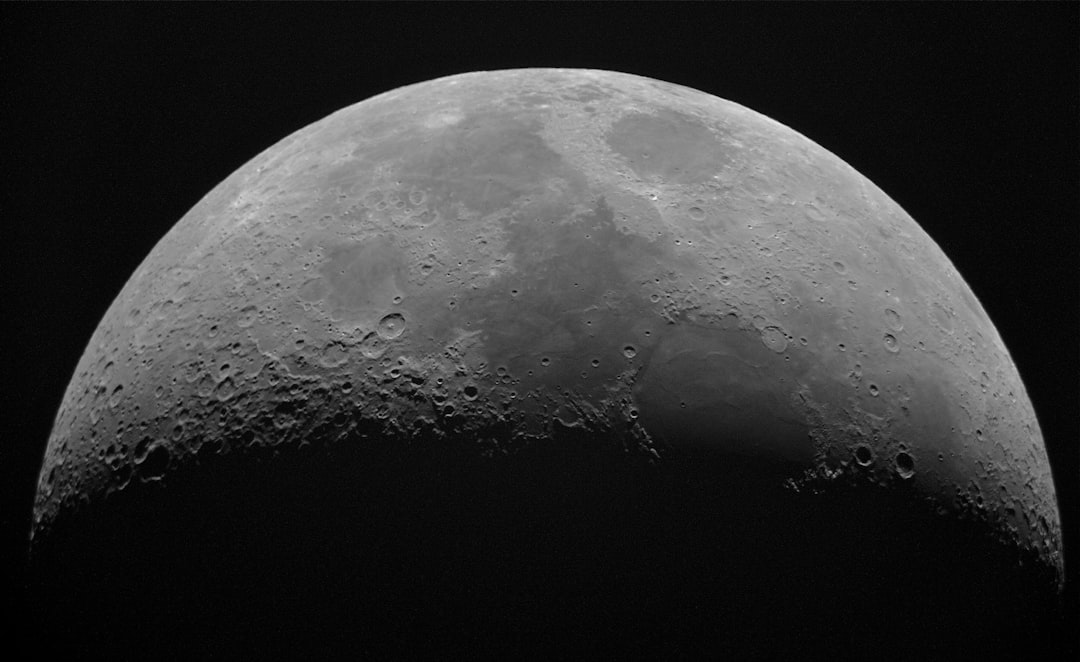
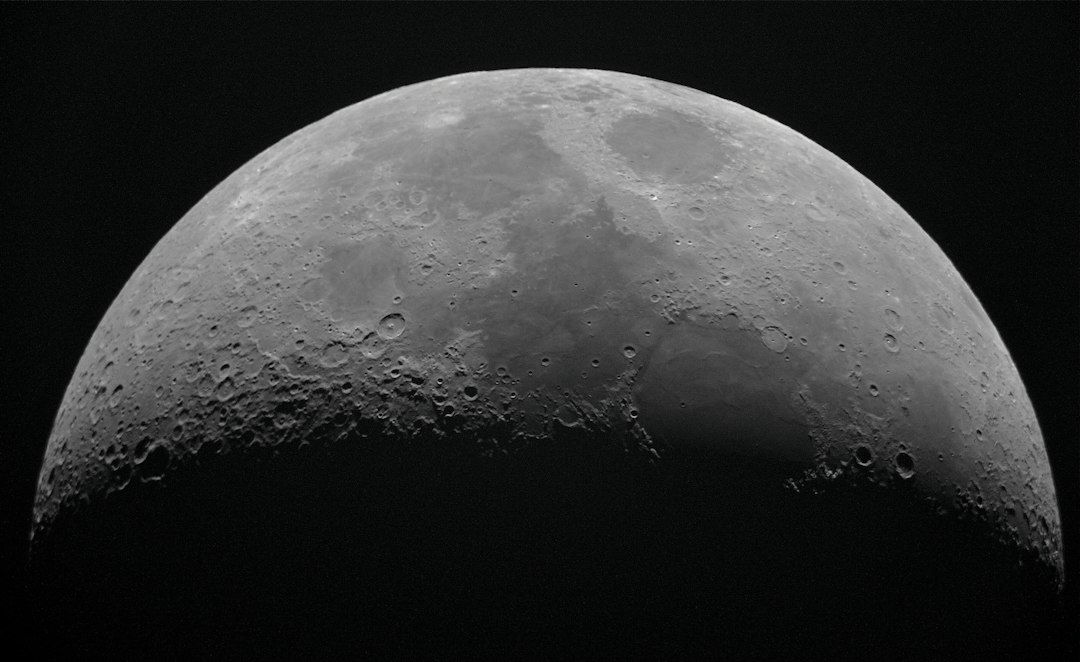
NASA plans to return astronauts to the lunar surface in 2028 — for the first time since Apollo 17 splashed down on December 19, 1972, closing humanity's first era of lunar exploration. But the famed agency has no intention of stopping there. Through its Moon to Mars Architecture, NASA envisions a slow and meticulous process of establishing a permanent human presence on the Moon, leveraging breakthroughs in power systems, resource extraction, and habitat technologies before pushing farther into the solar system. Now, with artificial intelligence reshaping nearly every facet of modern life, scientists are asking a compelling question: how could this rapidly maturing technology be used to identify new landing sites for future outposts on the Moon — and possibly Mars?
The challenge is immense. The lunar surface spans more than 37 million square kilometers, and identifying the optimal locations for human habitation requires synthesizing enormous volumes of orbital imagery, topographic data, geological surveys, and resource maps simultaneously. Traditional mission planning methods, while rigorous, are time-consuming and inherently limited by human bandwidth. As future missions generate ever-larger datasets, the need for intelligent, automated analysis tools becomes not just convenient, but essential.
Introducing LUMINA: An Agentic AI Framework for Lunar and Planetary Exploration
A team of researchers from The Ohio State University may have taken a decisive step toward solving this problem. As detailed in a recent study presented at the 58th Annual Meeting of the Division for Planetary Sciences (DPS 58) of the American Astronomical Society, the researchers introduced a novel AI model capable of both identifying safe landing sites and developing a comprehensive human outpost strategy at those locations. The model is called LUMINA — an agentic AI framework specifically designed to help mission planners evaluate candidate landing sites on the lunar surface.
Unlike conventional automated analysis tools, LUMINA operates as an agentic system — meaning it can reason through multi-step planning tasks, weigh competing priorities, and arrive at actionable recommendations with a degree of autonomy that mirrors human expert judgment. At its core, LUMINA focuses on identifying locations that maximize two complementary goals: mission safety and scientific return.
What Data Does LUMINA Use?
To identify prime landing sites, LUMINA doesn't just rely on orbital images. It incorporates a rich, multi-layered mosaic of lunar surface data, including:
- Topography and terrain hazard mapping — identifying slopes, craters, and boulders that could endanger landing vehicles or surface crews
- Water ice distribution — a critical resource concentrated in permanently shadowed regions (PSRs) near the lunar poles, confirmed by instruments like NASA's Lunar Reconnaissance Orbiter (LRO)
- Geological context — rock types, regolith composition, and volcanic history that inform both science objectives and construction potential
- Surface thermal properties — temperatures in PSRs can plunge below -230°C, posing severe engineering challenges
- Comparative site evaluation — systematically ranking candidate locations against each other using weighted scientific and operational criteria
The result is a system that demonstrates a sophisticated ability to identify landing sites across the lunar surface that could maximize mission success and effectiveness for both human habitation and scientific discovery. Critically, the researchers do not envision LUMINA as a Moon-only tool — they see it as a foundation for evaluating candidate outpost locations on Mars and other planetary bodies as well.
"AI systems are going to become critical tools for space exploration that will help humans analyze the millions of images and datasets that future missions will require. This work is meant to serve as a bridge between those two worlds, AI and planetary science." — Gokce Inal, PhD candidate in Civil, Environmental and Geodetic Engineering, The Ohio State University, and lead author of the study.
Building on Prior Work: LLaVA-LE and the Rise of Vision-Language Models in Space Science
LUMINA does not emerge from a vacuum. It is built upon a foundational model developed by the same Ohio State research group: the Large Language-and-Vision Assistant for Lunar Exploration (LLaVA-LE). This predecessor model demonstrated a remarkable ability to analyze and describe orbital images of the lunar surface using a combination of computer vision and large language model capabilities — a class of AI architecture that has revolutionized natural language processing and image understanding in recent years.
The LLaVA-LE model is currently available on arXiv for the scientific community to review, was recently presented at the CVPR 2026 AI4Space Workshop in June 2026, and its codebase is openly accessible on GitHub, reflecting a commitment to open science and collaborative development. LUMINA represents the next evolution — moving from passive image description to active, multi-criteria mission planning intelligence.
This progression mirrors a broader trend in astroinformatics, the emerging discipline at the intersection of astronomy, planetary science, and data science. As missions like Europa Clipper, the Mars Sample Return campaign, and the Artemis lunar program generate petabytes of observational data, AI-driven analysis tools are rapidly transitioning from research curiosities to mission-critical infrastructure.
The Broader Context: NASA's Moon to Mars Architecture
To fully appreciate LUMINA's potential impact, it is essential to understand the ambition of the program it supports. NASA's Moon to Mars Architecture is a constantly evolving strategic framework designed to develop and test the technologies that will allow humans to live and work on the Moon — and to eventually carry those hard-won capabilities to the Red Planet. The key technology domains within this architecture include:
- Power systems — including fission surface power reactors and advanced solar arrays capable of operating through the 14-Earth-day lunar night
- Transportation — from the Space Launch System (SLS) and Orion spacecraft to commercial lunar landers
- Habitation and life support — closed-loop life support systems capable of recycling air and water with minimal resupply
- Robotics and construction — autonomous systems for site preparation, infrastructure assembly, and maintenance
- In-Situ Resource Utilization (ISRU) — extracting and processing local materials to reduce dependence on Earth-launched supplies
- Communications and navigation — including the planned Lunar Communication and Navigation System (LCNS) for reliable connectivity across the Moon's surface
"NASA's Artemis program creates important opportunities for our research. As new lunar data becomes available, their results can improve systems like ours and better support future mission planning." — Gokce Inal
The Critical Role of ISRU: Learning to Live Off the Land
Of all the technology domains listed above, In-Situ Resource Utilization (ISRU) may be the most transformative — and the one where LUMINA's site-selection intelligence could have the most immediate impact. The concept is elegantly simple in principle, even if it is enormously complex in execution: rather than shipping every kilogram of crew supplies from Earth at extraordinary cost, future astronauts will use the resources already present on the Moon and Mars to sustain themselves.
On the Moon, the most prized resource is water ice, detected in significant quantities within the permanently shadowed regions (PSRs) of the lunar south pole by instruments including NASA's LCROSS mission and the Lunar Prospector. This water ice is not merely a source of drinking water — it is a versatile industrial feedstock. Through electrolysis, it can be split into hydrogen and oxygen to produce rocket propellant, enabling a lunar "gas station" that dramatically reduces the cost of deep-space missions. It can also provide breathable oxygen for crew habitats and serve as a radiation shield against galactic cosmic rays.
Beyond water, ISRU encompasses the use of lunar regolith — the fine, abrasive soil blanketing the Moon's surface — for construction through processes like sintering and 3D printing, as feedstock for growing plants in controlled environments, and as raw material for manufacturing tools and components. The long-term vision is what researchers poetically call "living off the land": a self-sustaining human presence that no longer depends on a lifeline of resupply missions from Earth, mirroring the ecological balance that sustains life on our home planet.
LUMINA's ability to precisely identify locations that combine accessible water ice, favorable terrain, adequate solar power access for energy generation, and strong scientific interest is therefore not merely academically interesting — it is a direct prerequisite for making ISRU-based outposts a practical reality.
From the Moon to Mars — and Beyond
The researchers' ambition for LUMINA extends well past the lunar surface. Mars presents a similar — though in many ways even more complex — site-selection challenge. Candidate outpost locations on the Red Planet must be evaluated for proximity to subsurface water ice, protection from intense radiation (Mars lacks a global magnetic field), dust storm frequency, solar power viability, and access to geological resources. These are precisely the kinds of multi-variable trade-off analyses at which agentic AI systems like LUMINA are designed to excel.
Looking further still, the framework underlying LUMINA could theoretically be adapted for site evaluation on icy moons such as Europa or Enceladus, on near-Earth asteroids targeted by resource extraction missions, or even on the surface of Titan, Saturn's haze-shrouded moon with its methane lakes and dense atmosphere. The architecture of agentic, multi-data AI reasoning is domain-agnostic — its power lies in its adaptability.
As humanity stands on the threshold of becoming a multiplanetary species, the tools we build to navigate the vast complexity of alien worlds will be as important as the rockets that carry us there. LUMINA represents a glimpse of the intelligent, data-driven mission planning infrastructure that will underpin every step of that journey — from the first permanent lunar outpost to humanity's first footprints on Martian soil.
Key Takeaways
- LUMINA is an agentic AI framework developed at The Ohio State University for evaluating lunar (and eventually Martian) landing sites
- It synthesizes topographic, geological, thermal, and resource data — including water ice distribution — to rank candidate outpost locations
- The model is built upon the LLaVA-LE vision-language model, expanding its capabilities from image analysis to full mission planning intelligence
- ISRU — using local resources like water ice and regolith — is central to NASA's long-term strategy for sustainable human presence beyond Earth
- The research was presented at DPS 58, the premier annual gathering of planetary scientists in North America
- As datasets from the Artemis program and future missions grow, AI systems like LUMINA are expected to become indispensable tools for deep space mission planning