The debate over where humanity should establish its first extraterrestrial propellant production facilities has intensified, with new research challenging conventional wisdom about lunar fuel manufacturing. A comprehensive analysis by Dr. Donald Rapp, former Division Chief Technologist at NASA's Jet Propulsion Laboratory and Co-Investigator on the groundbreaking MOXIE experiment, suggests that despite decades of enthusiasm for lunar resource utilization, the technical and logistical hurdles may be insurmountable in the near term. Meanwhile, Mars presents a surprisingly more viable pathway for in-situ resource utilization (ISRU), potentially reshaping humanity's strategic approach to deep space exploration.
The fundamental premise behind in-situ propellant production has long captivated mission planners and space architects: why haul massive quantities of rocket fuel from Earth's deep gravity well when we could manufacture it at our destination? The economic and engineering logic appears compelling—every kilogram of propellant we don't launch from Earth represents exponential savings in mission costs and complexity. However, as Dr. Rapp's recent paper published through the American Association for the Advancement of Science demonstrates, the devil lurks in the technical details, and those details paint a sobering picture for lunar ambitions.
This analysis arrives at a critical juncture for space exploration policy. NASA's Artemis program aims to establish a sustained human presence on the Moon, while multiple space agencies worldwide have announced ambitious lunar exploration initiatives. Yet the recent cancellation of the VIPER (Volatiles Investigating Polar Exploration Rover) mission last year exposed fundamental gaps in our understanding of lunar resources—gaps that must be filled before billions of dollars flow into infrastructure that may prove impractical or impossible to operate.
The Lunar Challenge: Two Paths, Both Fraught With Obstacles
Engineers and scientists have proposed two primary methodologies for extracting oxygen propellant from lunar resources, each presenting formidable technical challenges that remain largely unproven in actual lunar conditions. The first approach, known as carbothermal reduction, involves processing lunar regolith—the dusty, rocky surface material covering the Moon—through an energy-intensive chemical process that liberates oxygen molecules locked within metal oxides.
The carbothermal reduction process requires heating lunar soil to temperatures exceeding 1,650 degrees Celsius (3,000 degrees Fahrenheit)—hot enough to melt most metals and create a molten pool of regolith. At these extreme temperatures, methane gas introduced into the reactor chemically reduces the metal oxides, releasing oxygen that can be captured and liquefied for use as rocket propellant. However, this seemingly straightforward chemistry masks extraordinary practical complications.
First and foremost, methane itself doesn't exist on the Moon. Every molecule of this reducing agent must be transported from Earth, immediately undermining one of the core advantages of in-situ production. The process also demands enormous power inputs—maintaining temperatures above 1,650°C in the harsh lunar environment requires either massive solar arrays or nuclear reactors, both of which present their own deployment challenges. According to NASA's Glenn Research Center, which has conducted preliminary studies on lunar ISRU, the power requirements alone could necessitate megawatt-scale energy systems.
Dr. Rapp's analysis reveals an even more daunting reality: the complete carbothermal reduction system requires a 14-step production cycle involving autonomous excavation equipment, material transport systems, vibratory sorting mechanisms, high-temperature reactors, gas separation units, and waste disposal infrastructure. None of these integrated systems have been tested in actual lunar conditions, where temperature extremes swing from -173°C in shadow to 127°C in sunlight, where abrasive lunar dust infiltrates every mechanism, and where the complete absence of atmosphere eliminates convective cooling.
The Ice Mining Conundrum: Known Unknowns in Permanent Shadow
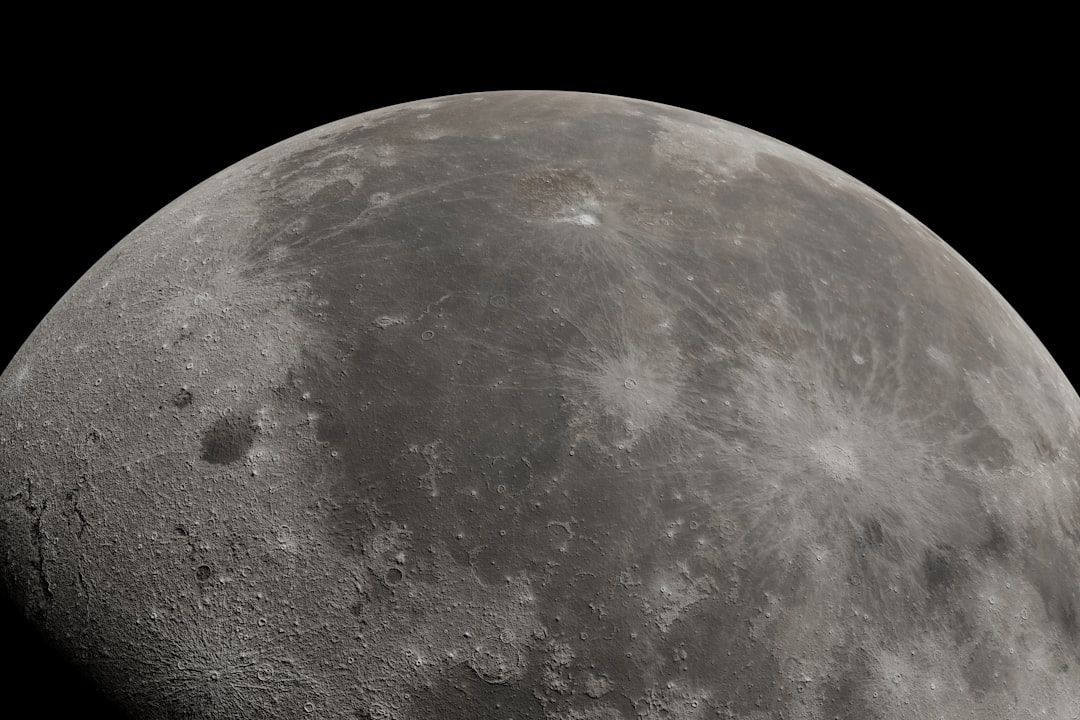
The alternative approach focuses on extracting water ice from the Moon's permanently shadowed regions (PSRs), particularly in deep craters near the lunar south pole. Spectroscopic observations from orbiting spacecraft, including data from NASA's Lunar Reconnaissance Orbiter, have confirmed the presence of water ice in these perpetually dark areas. Once extracted and processed, this water could be electrolyzed into hydrogen and oxygen—both excellent rocket propellants.
Yet our understanding of these ice deposits remains frustratingly superficial. Critical questions remain unanswered: Is the ice distributed as fine frost particles mixed with regolith, or does it exist as solid permafrost requiring excavation techniques similar to mining frozen ground on Earth? What is the concentration of ice versus dry regolith? How deep do the deposits extend? These aren't academic questions—they fundamentally determine the mining and processing architecture required.
"The cancellation of VIPER left a critical gap in our ground-truth knowledge of lunar polar ice," Dr. Rapp notes in his analysis. "Without understanding the physical form and distribution of these resources, we're essentially designing extraction systems in the dark—quite literally, given that these regions receive no sunlight."
The absence of sunlight in PSRs creates a paradoxical challenge: the very conditions that preserve ice deposits also eliminate the most straightforward power source for extraction operations. Solar panels are useless in permanent shadow, necessitating either nuclear power systems or elaborate arrangements to beam power into craters from sunlit ridges—adding layers of complexity and potential failure points to an already intricate operation.
Logistical Nightmares in the Lunar Environment
Beyond the fundamental technical challenges, lunar propellant production faces logistical obstacles that compound with each additional system requirement. Autonomous excavation equipment must operate reliably for months or years without maintenance in an environment where every moving part is exposed to temperature extremes and corrosive lunar dust. Material transport systems must function in one-sixth Earth gravity while navigating rugged terrain. Processing facilities must maintain precise operating conditions despite wild temperature fluctuations.
The waste disposal challenge alone presents significant engineering hurdles. For every kilogram of oxygen extracted through carbothermal reduction, several kilograms of processed regolith must be removed from the reactor and disposed of without contaminating the surrounding area or interfering with ongoing operations. In the confined environment of a lunar base, managing these waste streams becomes a critical operational concern.
The Martian Advantage: Simplicity Through Atmospheric Chemistry
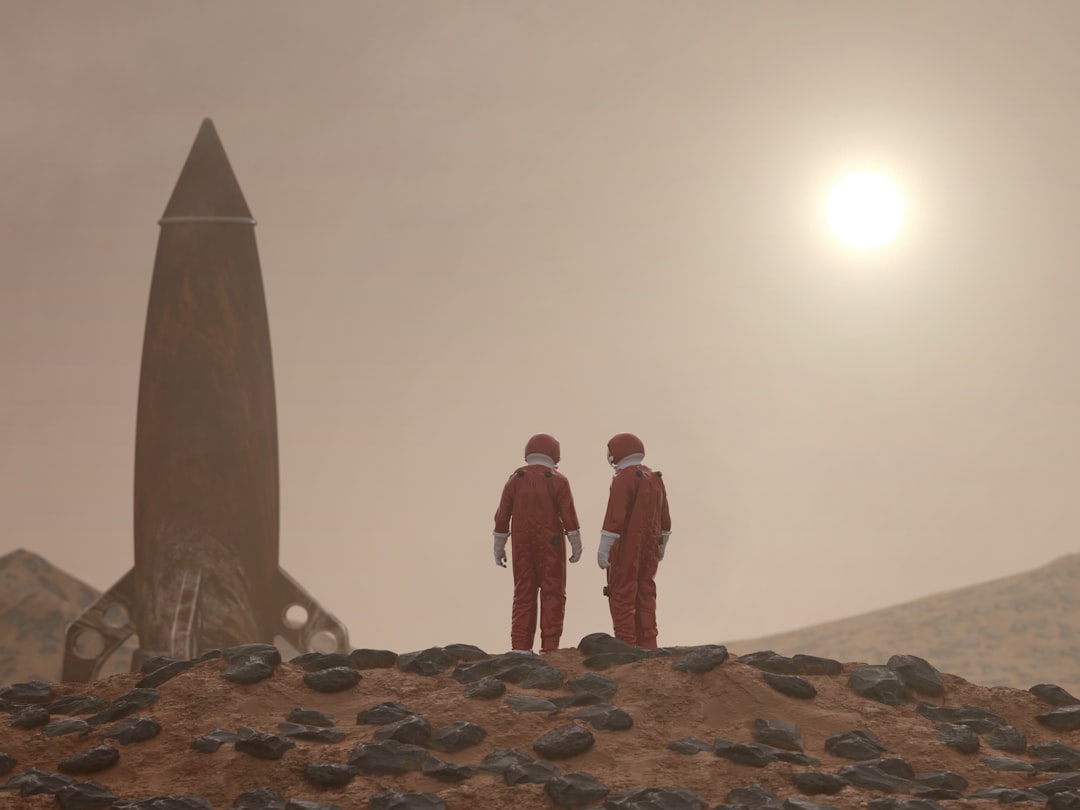
In stark contrast to the lunar situation, Mars offers a remarkably elegant solution to propellant production through its greatest asset: a substantial atmosphere, albeit thin by Earth standards. The Mars Oxygen In-Situ Resource Utilization Experiment (MOXIE), which successfully operated aboard NASA's Perseverance rover, has already demonstrated the viability of extracting oxygen directly from the Martian atmosphere—a proof-of-concept that fundamentally changes the equation for Mars exploration.
MOXIE's operation principle is elegantly simple: pump in Martian atmosphere (which is 96% carbon dioxide), heat it to approximately 800°C, and use solid oxide electrolysis to split CO₂ molecules into oxygen and carbon monoxide. The oxygen is captured for use as propellant or life support, while the carbon monoxide is vented back to the atmosphere. This process, demonstrated successfully over multiple Martian seasons, requires no mining, no excavation, no material transport, and no waste disposal infrastructure.
The implications are profound. A scaled-up version of MOXIE could begin producing propellant the moment it arrives on Mars, without waiting for complex mining operations to commence. The atmosphere provides an effectively unlimited feedstock that requires only pumping—a mature, reliable technology. The system's relative simplicity translates directly into higher reliability and lower mass, both critical factors for interplanetary missions.
Michael Hecht, MOXIE's principal investigator at the Massachusetts Institute of Technology, has emphasized that scaling the technology presents primarily engineering challenges rather than fundamental scientific uncertainties. "We've proven the chemistry works in actual Martian conditions," Hecht explained in interviews following MOXIE's successful operations. "Scaling up is a matter of building bigger units and optimizing power systems—challenging, certainly, but following well-understood engineering principles."
The Mathematics of Propellant Economics
Dr. Rapp's analysis includes a crucial economic calculation that further tilts the balance toward Mars: the propellant mass ratio required to deliver fuel from Low Earth Orbit to each destination. This ratio represents how much propellant must be expended to deliver one kilogram of useful propellant to the surface of another world—a fundamental metric for assessing the value of in-situ production.
The numbers are striking. Delivering one kilogram of propellant to the lunar surface requires expending approximately 2.5 kilograms of propellant during the journey from LEO. While this represents a savings compared to launching everything from Earth's surface, it's modest. In contrast, delivering that same kilogram to Mars requires burning between 8 and 10 kilograms of propellant—a four-fold difference that dramatically amplifies the economic benefit of Martian propellant production.
This mathematical reality means that every kilogram of oxygen produced on Mars saves roughly four times as much launch mass as the same production on the Moon. For missions requiring return journeys or sustained operations, these savings compound exponentially. A Mars sample return mission, for instance, could reduce its Earth-launched mass by tens of metric tons if it could refuel using locally-produced propellant—potentially transforming an impossibly expensive mission into a feasible one.
The Technology Readiness Gap
Technology readiness levels (TRLs) provide a standardized framework for assessing how close a technology is to operational deployment, ranging from TRL 1 (basic principles observed) to TRL 9 (actual system proven in operational environment). MOXIE's successful operation on Mars elevated atmospheric oxygen production to TRL 6 or 7—demonstrated in a relevant environment with clear pathways to full-scale implementation.
Lunar propellant production technologies, by contrast, remain largely at TRL 3 or 4—analytical and experimental proof of concept in laboratory settings, but without demonstration in actual lunar conditions. The gap between these readiness levels represents billions of dollars in development costs and decades of testing and refinement. For space agencies operating under constrained budgets and political pressure to show results, this difference in technological maturity weighs heavily in strategic planning.
Strategic Implications and the Resource Allocation Dilemma
The tension between lunar and Martian propellant production reflects a broader strategic challenge facing space exploration: how to allocate limited resources across competing priorities when both scientific merit and political considerations influence decision-making. The Moon offers proximity and the possibility of more frequent missions, while Mars presents clearer technical pathways but requires longer-term commitment.
NASA's current predicament with the Mars Sample Return mission exemplifies these competing pressures. Originally conceived as a flagship mission that would bring pristine Martian samples to Earth for detailed analysis, the program has ballooned to an estimated cost exceeding $11 billion—threatening its viability and consuming resources that might otherwise fund technology development. A scaled-up MOXIE system could potentially reduce Mars Sample Return costs by enabling the ascent vehicle to refuel on Mars, but only if resources are available to develop that capability.
Meanwhile, the Artemis program's focus on lunar exploration continues despite the technical challenges outlined in Dr. Rapp's analysis. Political considerations, international partnerships, and the symbolic importance of returning humans to the Moon all factor into these decisions alongside purely technical assessments. The question becomes: should limited development funding pursue the politically prioritized but technically challenging lunar systems, or the technically mature but longer-term Martian capabilities?
Future Pathways and Technological Wildcards
Despite the current technical and economic arguments favoring Martian propellant production, several factors could alter this calculus in coming years. Advances in nuclear power systems for space applications, for instance, could dramatically reduce the power constraints that plague lunar processing concepts. Compact, high-output reactors currently under development by NASA and the Department of Energy might provide the megawatt-scale power needed for carbothermal reduction while operating in permanently shadowed regions.
Similarly, breakthroughs in autonomous robotics and artificial intelligence could address some of the logistical challenges facing lunar mining operations. Systems capable of self-repair, adaptive problem-solving, and coordinated multi-robot operations might overcome the maintenance and reliability concerns that currently plague concepts for lunar resource extraction.
The discovery of more accessible ice deposits or alternative resource locations could also change the equation. Some researchers have proposed that ice might exist in more favorable locations than the permanently shadowed craters currently targeted—perhaps in shallow subsurface deposits at higher latitudes where solar power remains available. Future orbital missions equipped with advanced radar and neutron spectrometers might reveal such deposits, potentially reopening the lunar propellant production case.
Lessons for Space Exploration Strategy
Dr. Rapp's analysis ultimately highlights a fundamental principle that should guide space exploration planning: technical feasibility must inform strategic priorities, not merely follow them. The allure of establishing propellant production facilities on the Moon is undeniable—it's closer, more accessible for testing and refinement, and politically aligned with current exploration goals. But these advantages evaporate if the underlying technology cannot be made to work reliably and economically.
The comparison between lunar complexity and Martian simplicity offers broader lessons about technology development in extreme environments. Sometimes the more distant goal proves more achievable because it aligns better with physical realities and available resources. Mars's atmosphere, while thin and hostile by Earth standards, provides exactly what propellant production needs: a carbon dioxide feedstock that requires no mining, processing, or waste management infrastructure.
"We must be willing to follow the technology where it leads us, rather than forcing technology to conform to predetermined destinations," Dr. Rapp's paper concludes. "The Moon may be closer, but Mars may be easier—and in resource-constrained space exploration, easier often means possible."
As space agencies worldwide refine their exploration roadmaps for the coming decades, these considerations will shape not just where we go, but whether we can afford to stay. The choice between lunar and Martian propellant production isn't merely technical—it's a decision about which future we're capable of building with the resources available today. Dr. Rapp's analysis suggests that future may lie not on our nearest neighbor, but on the red planet that has captured human imagination for centuries, waiting with an atmosphere ready to fuel our next giant leap.