As humanity stands on the precipice of becoming a truly spacefaring civilization, scientists are confronting an uncomfortable truth: the cosmos may not be as hospitable to human reproduction as we once hoped. A groundbreaking study from Australian researchers has revealed that microgravity environments could significantly impair the fundamental biological processes required for conception, raising profound questions about our ability to establish permanent settlements beyond Earth. This research, recently published in Communications Biology, represents one of the most comprehensive investigations to date into how the near-weightless conditions of space affect the intricate dance between sperm and egg.
The implications extend far beyond academic curiosity. With NASA's Artemis program targeting a permanent lunar base and SpaceX's ambitions for Mars colonization gaining momentum, understanding reproductive viability in space has transformed from a theoretical concern into an urgent practical necessity. If humans cannot successfully reproduce beyond Earth's protective embrace, our dreams of becoming a multi-planetary species may require fundamentally different approaches than currently envisioned.
The Hidden Challenges of Microgravity on Human Physiology
Space travel has already taught us harsh lessons about how the human body responds to extended periods in microgravity conditions—a more accurate term than the commonly misused "zero gravity." Astronauts aboard the International Space Station experience a cascade of physiological changes that begin almost immediately upon reaching orbit. These include muscle atrophy, with astronauts losing up to 20% of muscle mass during extended missions, and bone density reduction occurring at rates 10 times faster than osteoporosis on Earth.
The cardiovascular system undergoes equally dramatic transformations. Without gravity's constant pull, bodily fluids shift upward, causing the characteristic puffy-faced appearance of space travelers while simultaneously reducing lower body fluid volume. Heart rate decreases, the immune system becomes compromised, and astronauts face elevated exposure to cosmic radiation—a particularly insidious threat that damages DNA and increases cancer risk. Yet until recently, one critical aspect of human physiology remained largely unexplored: our ability to create the next generation in the hostile environment of space.
Groundbreaking Laboratory Experiments Reveal Fertility Concerns
The Australian research team, led by scientists at the University of Adelaide's Andy Thomas Centre for Space Resources, designed an ingenious series of experiments to simulate microgravity conditions in their laboratory. Rather than waiting for expensive and limited opportunities to conduct experiments in actual space, the researchers utilized specialized equipment that could replicate the weightless environment astronauts experience in orbit. Over a carefully controlled four-hour period, they examined sperm samples from three different mammalian species: humans, pigs, and mice.
This multi-species approach was deliberate and scientifically rigorous. By comparing how different mammals' reproductive cells respond to simulated microgravity, the researchers could identify universal biological principles while also highlighting species-specific variations. The experiments focused on two critical aspects of fertilization: the sperm's ability to swim effectively through fluid channels, and their capacity to navigate toward an egg using chemical and physical cues—a process called chemotaxis.
Understanding Sperm Navigation: A Complex Biological Dance
Under normal Earth conditions, sperm cells employ a sophisticated arsenal of tactics to locate and fertilize an egg. They swim against fluid flow using a whip-like tail called a flagellum, respond to chemical signals released by the egg (particularly progesterone, which acts as a molecular beacon), and can even detect temperature gradients. This remarkable navigation system has evolved over millions of years in Earth's gravitational field, raising the question: what happens when gravity is effectively removed from the equation?
The results were both fascinating and concerning. Human sperm exhibited altered navigational capabilities under simulated microgravity, though their basic swimming ability remained intact. This distinction is crucial: while the sperm could still move, their ability to orient themselves correctly and follow chemical cues toward the egg was compromised. Fortunately, the researchers discovered that supplementing the environment with progesterone could partially compensate for these navigational deficits, offering a potential therapeutic approach for future space-based reproduction.
Species-Specific Responses and Fertilization Success Rates
The findings varied significantly across species, revealing the complexity of reproductive biology under space conditions. Mouse sperm showed the most dramatic impairment, with a 30 percent decrease in successful fertilization rates compared to normal gravity conditions. This substantial reduction suggests that some mammalian species may face severe reproductive challenges in space environments, with potentially devastating implications for using animals as food sources in long-term space settlements.
Pig sperm also demonstrated decreased fertilization success, though the specific percentage reduction varied in the experimental trials. These results are particularly relevant because pigs are physiologically similar to humans in many respects and are often used as models for human medical research. The consistency of impairment across multiple mammalian species suggests that the challenges identified may represent fundamental biological constraints rather than species-specific quirks.
"As we progress toward becoming a spacefaring or multi-planetary species, understanding how microgravity affects the earliest stages of reproduction is critical. With the recent advancements in space travel and international interest in deep space exploration, Mars settlement and Moon mining, it is essential to investigate the effect of microgravity on early fertilization events not only for creating viable food sources, but also maintaining human space settlements, without the need to continually re-populate from Earth," explained Associate Professor John Culton, Director of the Andy Thomas Centre for Space Resources at the University of Adelaide.
Building on Decades of Space Reproduction Research
This study represents the latest chapter in a research saga that began during the height of the Cold War space race. Soviet scientists in the 1980s conducted pioneering experiments exploring animal mating and pregnancy in space, though many of these early studies were limited by the technology and scientific understanding of the era. These initial investigations revealed that reproduction in space was possible for some species, but raised more questions than they answered about the underlying mechanisms and potential complications.
More recently, experiments aboard the International Space Station have examined human sperm function in actual microgravity conditions, providing valuable data about how these cells behave in space. However, the current Australian study may represent the first to specifically identify the navigational mechanisms that become impaired under microgravity and, crucially, to propose potential solutions. This combination of problem identification and solution development marks a significant advancement in our understanding of space reproduction.
The Artemis Program and Humanity's Return to the Moon
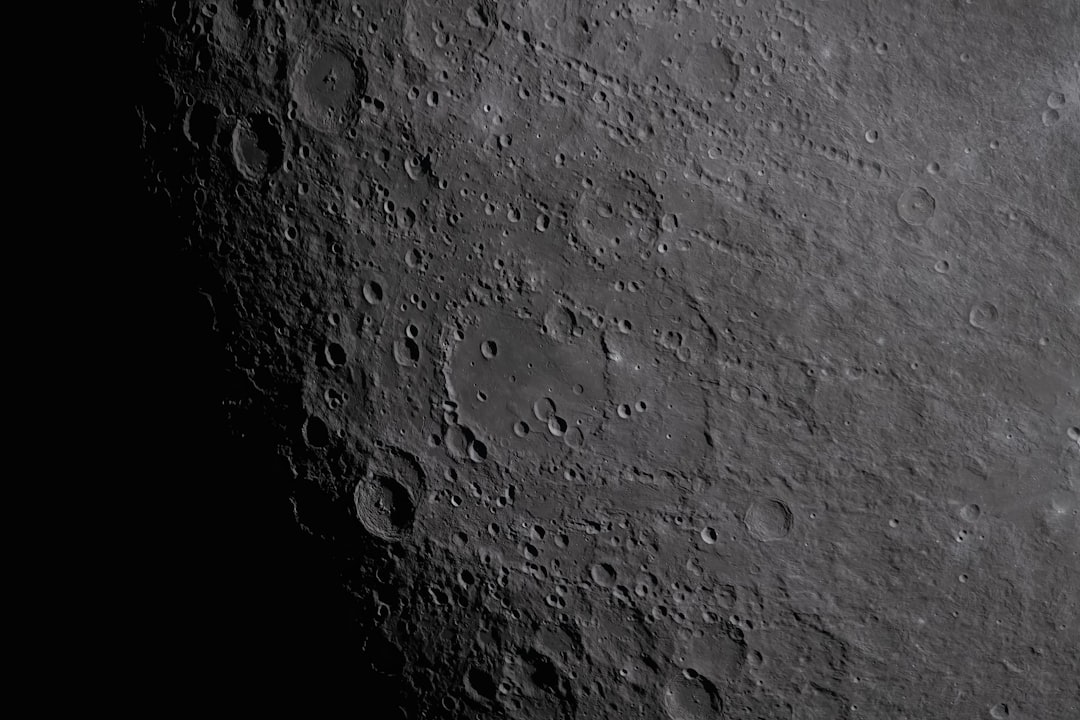
The urgency of this research is underscored by NASA's ambitious timeline for lunar exploration and settlement. The Artemis program aims to establish a permanent base near the lunar south pole, a region chosen for its potential water ice deposits and areas of near-constant sunlight for solar power generation. NASA Administrator Jared Isaacman has articulated a clear vision: establishing a permanent human presence on the Moon that serves as a stepping stone to Mars.
The Artemis mission sequence illustrates the rapid pace of these developments:
- Artemis II (Recently Completed): Successfully sent four astronauts on a lunar flyby mission, marking humanity's return to lunar vicinity for the first time since the Apollo 17 mission in 1972
- Artemis III (Scheduled 2027): Will focus on testing critical docking maneuvers and systems integration in lunar orbit
- Artemis IV and V (Both Scheduled 2028): Planned as landing missions to the lunar south pole, where astronauts will begin establishing infrastructure for long-term habitation
Through NASA's Moon to Mars Architecture program, technologies and procedures tested on the lunar surface will be refined for eventual application on Mars. This includes everything from life support systems and radiation shielding to, potentially, assisted reproductive technologies adapted for microgravity environments.
Implications for Long-Term Space Settlement
The fertility challenges identified in this research force us to confront difficult questions about the nature of human space settlement. If natural conception proves significantly impaired or impossible in microgravity, several scenarios emerge. First, space settlements might require artificial gravity generated through rotating habitats—a technology that remains largely theoretical and would be extraordinarily expensive to implement on a large scale.
Alternatively, reproductive processes might need to occur in specialized facilities with artificial gravity, or rely heavily on assisted reproductive technologies such as in vitro fertilization with modifications to compensate for microgravity effects. The progesterone supplementation identified in this study could be one component of such an approach, but likely represents only a partial solution to a complex problem.
There's also the question of fetal development and childhood growth in reduced gravity. Even if conception can be achieved, we have virtually no data on how pregnancy proceeds in space or how children develop without the constant pull of Earth's gravity on their growing bones and muscles. The European Space Agency and other organizations have identified this as a critical research priority, but ethical considerations make direct human experimentation extremely challenging.
Future Research Directions and Unanswered Questions
The Australian study opens numerous avenues for future investigation. Researchers need to examine the long-term effects of microgravity exposure on reproductive cells, not just the four-hour window studied in this experiment. Do sperm cells adapt to microgravity conditions over time, or does the impairment worsen? How does cosmic radiation exposure interact with microgravity to affect fertility—a particularly important question given that space travelers face radiation levels hundreds of times higher than on Earth's surface?
Female reproductive biology in space remains even less understood than male fertility. The menstrual cycle, egg maturation, hormonal regulation, and the complex physiological changes of pregnancy all evolved in Earth's gravitational field. Preliminary research suggests that some of these processes may be disrupted in microgravity, but comprehensive studies are desperately needed.
Furthermore, the psychological and social dimensions of reproduction in space settlements cannot be ignored. The stress of living in isolated, confined environments with constant life-threatening dangers may affect reproductive behavior and success rates in ways that laboratory experiments cannot capture. Research on analog environments such as Antarctic research stations and submarine crews provides some insights, but the unique challenges of space require dedicated study.
The Path Forward for Humanity Among the Stars
As we stand at the threshold of becoming a multi-planetary species, studies like this Australian research serve as crucial reality checks on our ambitions. The dream of humans living permanently on the Moon, Mars, or in orbital habitats cannot be fully realized if we cannot reproduce successfully in these environments. Yet rather than viewing these challenges as insurmountable obstacles, they represent opportunities for scientific innovation and technological development.
The identification of progesterone supplementation as a potential mitigation strategy demonstrates that solutions may be within reach. Combined with advances in artificial gravity technology, genetic medicine, and assisted reproduction, humanity may yet find ways to overcome the biological barriers that microgravity presents. The key is continued investment in this research area, despite its sensitive nature and the technical challenges involved in conducting experiments in space.
The coming decades will likely see increasingly sophisticated studies of reproduction in space, potentially including experiments with mammalian embryos aboard the International Space Station or future commercial space stations. As uncomfortable as some may find these investigations, they are essential if we are serious about establishing permanent human presence beyond Earth. The question is not whether we should pursue this research, but how quickly we can advance our understanding to match the pace of our space exploration ambitions.
What new insights into space travel and human fertility will researchers uncover in the years ahead? Only time and dedicated scientific investigation will tell. As we push the boundaries of human exploration ever outward, understanding the fundamental biology of reproduction in space may prove just as important as developing faster rockets or more efficient life support systems. After all, a truly sustainable space civilization requires not just the ability to survive among the stars, but to thrive and grow across generations—a goal that depends on solving the fertility challenges this research has begun to illuminate.