In a stunning reversal that has sent shockwaves through the aerospace industry and space exploration community, Elon Musk has announced a fundamental strategic shift for SpaceX, redirecting the company's primary focus from establishing a Martian colony to constructing a self-sustaining lunar settlement. This dramatic pivot, announced via social media platform X on February 8th during the Super Bowl—when approximately 135 million viewers worldwide were tuned in—marks the end of a two-decade-long singular vision that has defined SpaceX since its founding in 2002.
The announcement represents far more than a simple change in destination; it signals a pragmatic recalibration of humanity's near-term spacefaring ambitions. Musk's rationale centers on accelerated development timelines, with lunar settlement potentially achievable within ten years compared to the twenty-plus years required for Martian colonization. The decision also leverages the Moon's proximity advantages: launch windows occurring every ten days rather than Mars's restrictive 26-month alignment cycles, and transit times of merely two days compared to the grueling six-to-nine-month journey to the Red Planet.
This strategic transformation arrives at a critical juncture for both SpaceX and the broader commercial space industry, raising questions about technological readiness, competitive pressures, and the evolving economics of cislunar space development. According to NASA's Artemis Program, which aims to return humans to the lunar surface, the Moon serves as an essential proving ground for the technologies and operational capabilities required for eventual Mars missions.
The Evolution of SpaceX's Martian Vision
To fully appreciate the magnitude of this pivot, one must understand the depth of SpaceX's historical commitment to Mars exploration. The company's Martian ambitions trace back to early 2001, when Musk first encountered Robert Zubrin, founder of the Mars Society, and subsequently delivered a plenary presentation at the organization's fourth convention. There, he unveiled the Mars Oasis project—an ambitious concept to deploy a small robotic greenhouse on the Martian surface, demonstrating the viability of sustaining plant life while capturing compelling imagery of verdant growth against the planet's russet landscape.
By 2012, during an address at the Royal Aeronautical Society in London, Musk had crystallized his vision into concrete parameters: a self-sustaining Martian city capable of supporting 80,000 inhabitants. This presentation, delivered while accepting the Society's gold medal for contributions to commercial spaceflight, marked a pivotal moment in making Mars colonization seem not merely aspirational but potentially achievable within a human lifetime.
The technological manifestation of these ambitions emerged as the Mars Colonial Transporter (MCT), later redesignated as the BFR (Big Falcon Rocket), and subsequently renamed the Interplanetary Transport System (ITS) during the 2016 International Astronautical Congress in Guadalajara, Mexico. By 2019, the system had evolved into its current configuration: Starship and Super Heavy, the fully reusable launch architecture that has dominated SpaceX's engineering efforts for the past half-decade. This system represents the culmination of advances in methane-fueled rocket engines, advanced manufacturing techniques, and novel materials science applications.
Musk's vision extended beyond mere transportation, encompassing an entire operational architecture. He proposed a fleet of 1,000 Starship launches annually, each delivering either 100 passengers or 100 metric tons of cargo to Mars. The system would rely on orbital refueling capabilities—multiple tanker launches filling a single Mars-bound Starship in Earth orbit—a technology that remains undemonstrated despite its critical importance to the mission architecture.
Strategic Advantages of Lunar Development
The Moon presents compelling advantages that extend far beyond the obvious benefits of proximity and accessibility. The operational tempo enabled by frequent launch windows fundamentally transforms the economics and risk profile of space settlement. Rather than waiting 26 months between Mars transfer opportunities, SpaceX could maintain a continuous cadence of lunar missions, enabling rapid iteration of technologies, systems, and operational procedures.
"The mission of SpaceX remains the same: extend consciousness and life as we know it to the stars. SpaceX will also strive to build a Mars city and begin doing so in about 5 to 7 years, but the overriding priority is securing the future of civilization and the Moon is faster."
This accelerated development cycle addresses one of the fundamental challenges of Mars colonization: the inability to rapidly respond to failures or incorporate lessons learned. With the Moon, engineering teams can design, test, fail, redesign, and retest within months rather than years. This iterative approach mirrors the development philosophy that has made SpaceX successful in terrestrial aerospace applications, particularly with the Falcon 9's rapid evolution from frequent failures to industry-leading reliability.
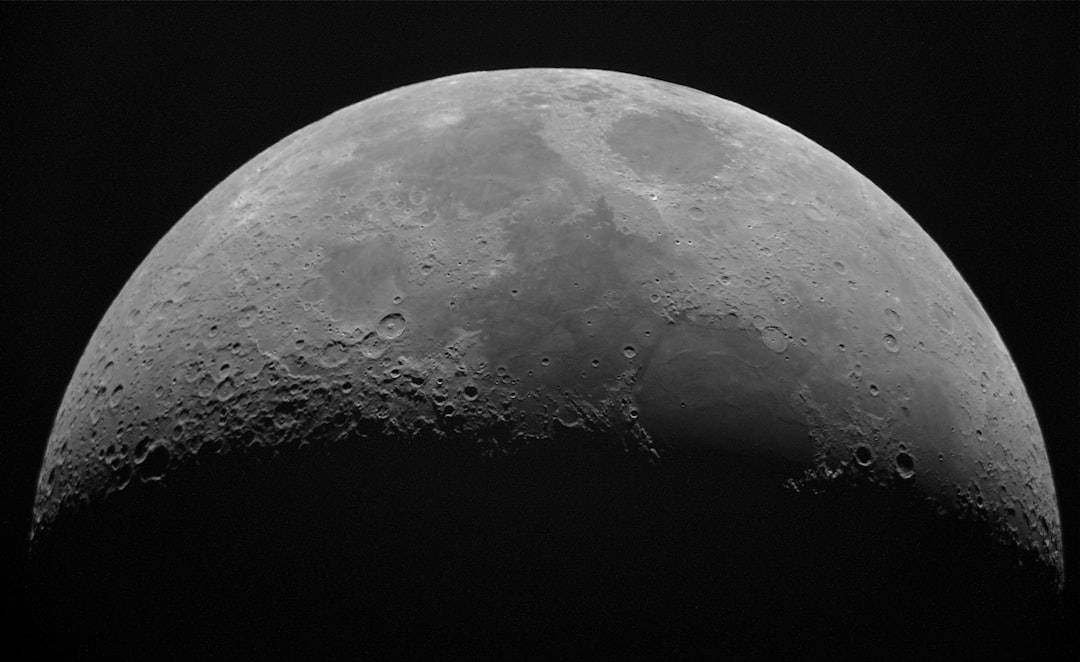
The lunar environment also offers unique resource advantages. Recent discoveries by NASA's Lunar Reconnaissance Orbiter have confirmed substantial water ice deposits in permanently shadowed craters near the lunar poles. These resources could be processed into rocket propellant, life support consumables, and radiation shielding materials, dramatically reducing the mass that must be launched from Earth and enabling true in-situ resource utilization (ISRU).
Competitive Pressures and Market Dynamics
The timing of Musk's announcement cannot be divorced from the increasingly competitive landscape of commercial spaceflight. SpaceX's dominance in the satellite launch market, while still substantial at approximately 80% market share representing $22 billion of a $27.43 billion industry in 2025, faces mounting challenges from emerging competitors.
Blue Origin's New Glenn rocket achieved its inaugural orbital flight in 2025, marking Jeff Bezos's company as a formidable competitor in the heavy-lift launch market. Blue Origin has already secured contracts for Blue Moon lunar lander missions supporting NASA's Artemis V and VI missions, directly competing with SpaceX's Starship Human Landing System (HLS) variant. Meanwhile, Rocket Lab has carved out a profitable niche in the small satellite launch market, demonstrating that specialized capabilities can successfully compete against larger, more versatile systems.
The Starship HLS development challenges have proven particularly vexing. Through eleven flight tests, five have resulted in vehicle loss, and the critical orbital refueling demonstration—essential to NASA's Artemis architecture—remains unaccomplished. These setbacks prompted acting NASA Administrator Sean Duffy to reopen the HLS contract to competition in October, potentially threatening SpaceX's position in the lunar economy before it fully materializes.
The Artificial Intelligence Integration Strategy
Perhaps the most intriguing aspect of this strategic pivot involves the recent merger of SpaceX with xAI, Musk's artificial intelligence venture. The combined entity has announced plans to deploy a constellation of up to one million satellites in Low Earth Orbit, functioning as orbital data centers that harness continuous solar power while avoiding the terrestrial constraints of electricity costs and water-cooling requirements that plague ground-based AI processing facilities.
This ambitious vision explicitly references the Kardashev Scale, a theoretical framework for classifying civilizations based on their energy utilization capabilities. Musk's statement suggests these orbital data centers represent "a first step towards becoming a Kardashev II-level civilization, one that can harness the sun's full power." While this characterization involves considerable hyperbole—a true Type II civilization would capture the entire energy output of its star—it signals SpaceX's intention to fundamentally transform humanity's relationship with space-based infrastructure.
A lunar base would serve as an ideal logistics and maintenance hub for this orbital constellation, providing a platform for satellite servicing, component manufacturing using lunar resources, and command-and-control operations outside Earth's regulatory and environmental constraints. This integration of lunar settlement with orbital infrastructure development represents a more comprehensive vision of cislunar economic development than Mars colonization alone could provide.
Technical and Scientific Validation
The lunar-first approach aligns with decades of scientific and engineering consensus within the space exploration community. Renowned Canadian astronaut Chris Hadfield has long advocated this position, arguing that "our efforts should be focused on renewed exploration of the Moon and the creation of a lunar settlement before we do the same for Mars." This perspective reflects practical considerations about technology validation, operational experience, and risk mitigation.
NASA's own "Moon to Mars" mission architecture explicitly treats lunar operations as a necessary precursor to Martian exploration. The Artemis Program aims to establish a sustained human presence on and around the Moon, testing life support systems, surface habitats, power generation, resource extraction, and long-duration spaceflight capabilities in an environment where assistance remains only days away rather than months.
The radiation environment presents another compelling argument for lunar development. While both the Moon and Mars lack Earth's protective magnetosphere, the Moon's proximity allows for relatively rapid evacuation during severe solar particle events. Mars missions, by contrast, commit crews to months-long transits through interplanetary space with no possibility of abort or emergency return, demanding far more robust radiation shielding and medical countermeasures.
Implications for Space Exploration's Future
This strategic redirection carries profound implications for humanity's expansion into space. Rather than representing an abandonment of Mars ambitions, it may constitute a more realistic pathway toward eventual Martian settlement. The technologies, operational procedures, and economic models developed through lunar colonization would directly transfer to Mars missions, while the shorter feedback loops would accelerate innovation and reduce development costs.
The commercialization of cislunar space could generate revenue streams that help fund more ambitious deep-space ventures. Lunar tourism, resource extraction, manufacturing in reduced gravity, scientific research facilities, and telecommunications infrastructure all represent potential business cases that could mature within the ten-year timeframe Musk has outlined. These commercial activities would help defray the enormous costs of space settlement while building the industrial base necessary for sustained interplanetary expansion.
However, significant challenges remain. The lunar surface environment, while more accessible than Mars, presents formidable obstacles including extreme temperature variations (ranging from -173°C to 127°C), abrasive lunar regolith that damages equipment and poses health risks, and the physiological effects of one-sixth Earth gravity on human health during extended stays. Solutions to these challenges will require sustained investment, international cooperation, and technological breakthroughs that may prove more difficult to achieve than optimistic timelines suggest.
Reading the Trajectory of Human Spaceflight
Musk's announcement may ultimately represent a pragmatic recognition of near-term realities rather than a fundamental shift in long-term vision. The benefits he cited—accelerated timelines, frequent launch opportunities, rapid transit—have been apparent to space planners for decades. What has changed is perhaps Musk's willingness to acknowledge these factors and adapt SpaceX's strategy accordingly, rather than maintaining an unwavering focus on Mars regardless of practical obstacles.
The competitive landscape, technological challenges with Starship development, and emerging opportunities in the lunar economy have converged to make this pivot both strategically sound and potentially necessary for SpaceX's continued dominance in commercial spaceflight. Whether this shift proves temporary or permanent will depend on the success of lunar development efforts and the evolution of technologies enabling more efficient Mars transportation.
For space enthusiasts and the broader public, this announcement signals that lunar settlement—long discussed but never seriously pursued since the Apollo era—may finally be approaching realization. The prospect of witnessing the establishment of a permanent human presence on another world within the next decade represents an extraordinary opportunity, even if that world is our familiar celestial companion rather than the distant Red Planet that has captured imaginations for generations.
As humanity stands at this crossroads, the path forward remains uncertain but undeniably exciting. Whether through lunar settlement leading to eventual Mars colonization, or through entirely new approaches yet to be conceived, the extension of human civilization beyond Earth appears increasingly inevitable. SpaceX's strategic pivot may one day be recognized as the moment when space settlement transitioned from aspiration to actionable plan, from distant dream to achievable reality.