Spiral Arms and Bars Are Galactic Fuel Pumps for Star Formation
One of the most profound mysteries in modern astrophysics concerns the Cosmic Noon — a pivotal epoch in the Universe's history occurring roughly two to three billion years after the Big Bang (corresponding to redshifts of approximately z~1.5 to z~3). During this extraordinary period, the cosmos was ablaze with stellar birth at a rate up to 100 times greater than what we observe in the Universe today. Understanding how galaxies sustained such prodigious star-forming activity has long challenged astronomers, but two landmark new studies are now rewriting the textbook on early galaxy evolution.
The prevailing assumption had been that galaxies at Cosmic Noon were turbulent, irregular, and chaotic — their structures shaped by violent mergers and gravitational instabilities rather than the elegant, organized architectures we see in nearby galaxies today. New observations, however, are dismantling that assumption. Cutting-edge data from the James Webb Space Telescope (JWST) and the NOrthern Extended Millimeter Array (NOEMA) reveal that massive disk galaxies in this era already possessed well-ordered spiral arms and central bars — and that these structures were actively pumping cold gas into galactic centers, directly fueling star formation on a cosmic scale.
The Physics of Star Formation: Why Cold Gas Is Everything
To appreciate the significance of these findings, it helps to understand what makes stars form in the first place. Star formation is an intrinsically cold process. Only cold, dense molecular gas — primarily molecular hydrogen (H₂) — can gravitationally collapse under its own weight to birth new stars. When gas is heated, whether by the intense radiation of an active galactic nucleus (AGN), by supernova-driven winds, or by the shocks accompanying galaxy mergers, it becomes thermally supported against collapse. Star formation effectively shuts down.
Inside a galaxy, this means that cold molecular gas must continuously flow from the relatively diffuse outer disk inward toward the denser, more active central regions where stars are most vigorously forming. Without an efficient transport mechanism, cold gas reservoirs stagnate at large radii, and star formation rates (SFRs) remain modest. The central puzzle of Cosmic Noon, therefore, becomes: what mechanism could possibly drive gas transport at rates sufficient to sustain SFRs 100 times higher than those seen today?
"A fundamental question in galaxy evolution is how early star-forming galaxies assembled the well-ordered structures seen in the present-day Universe." — Espejo Salcedo et al., Astronomy & Astrophysics, 2026
Two New Studies Reshape Our Understanding
The answers emerge from two complementary papers, both rooted in the NOEMA3D survey — a state-of-the-art program designed specifically to map how cold molecular gas moves within star-forming galaxies during the Cosmic Noon.
The first paper, "Galaxy morphologies at cosmic noon with JWST: A foundation for exploring gas transport with bars and spiral arms," is published in Astronomy & Astrophysics. It is led by Dr. Juan Manuel Espejo Salcedo of the Max Planck Institute for Extraterrestrial Physics (MPE) and focuses on a subset of 10 massive, main-sequence star-forming galaxies drawn from the NOEMA3D sample. The paper uses deep JWST imaging to characterize the morphologies of these galaxies in unprecedented detail.
The second paper, "NOEMA3D: Resolving radial gas flows in disk galaxies at z~1.1–1.6 with high-resolution CO observations," available on arXiv.org, is led by Jean-Baptiste Jolly, also from MPE, and draws on a significantly larger sample. It uses high-resolution observations of carbon monoxide (CO) emission — the standard tracer for cold molecular hydrogen — to map the kinematic structure of gas throughout these galaxies, detecting the subtle but critical signatures of non-circular, radial gas flows.
The NOEMA3D Survey: A New Lens on Cosmic Noon
The NOEMA3D survey represents a major observational investment, combining the infrared sensitivity of NASA's James Webb Space Telescope with the millimeter-wave precision of NOEMA, the most powerful millimeter radio telescope in the Northern Hemisphere. NOEMA is operated by the Institut de Radioastronomie Millimétrique (IRAM) and consists of twelve 15-meter antennas working in concert on the Plateau de Bure in the French Alps, capable of resolving fine structural details in distant galaxies that were previously blurred beyond recognition.
By pairing JWST's exquisite near-infrared imaging — which traces the stellar mass distribution and reveals morphological structures like bars and arms at rest-frame optical wavelengths — with NOEMA's high-resolution CO kinematics, the NOEMA3D team achieved something genuinely unprecedented: a direct, spatially resolved view of how cold gas moves through the internal architecture of galaxies more than 10 billion light-years away.
Ordered Galaxies Where Chaos Was Expected
Among the most striking revelations of the first paper is the discovery that all 10 of the studied galaxies display clear spiral arm structures, and that four of them host prominent central bars. This finding carries enormous implications. Previous generations of observations — conducted with the Hubble Space Telescope's Wide Field Camera 3 (WFC3) — had suggested that high-redshift galaxies were predominantly clumpy, irregular, and dynamically unstable. Bars and grand-design spirals, it was thought, could only emerge later in cosmic history once galaxies had had billions of years to settle into ordered rotation.
The JWST, with its superior infrared sensitivity and angular resolution, is telling a radically different story. At the redshifts of Cosmic Noon (z~1.1–1.6), starlight is significantly redshifted into the near-infrared part of the spectrum. Previous visible-light instruments like Hubble's WFC3 were sensitive to the rest-frame ultraviolet, which preferentially traces young, hot stars in clumpy star-forming regions — making galaxies look messier than they actually are. JWST, operating at longer wavelengths, sees the underlying stellar mass distribution, revealing the smooth, organized disk structures that were always there but hidden from earlier instruments.
"While early morphological studies suggested that high-redshift galaxies were highly irregular and dynamically unstable, kinematic surveys have since revealed that disk-like rotation is widespread at cosmic noon." — Espejo Salcedo et al., 2026
This is not the first time the JWST has overturned conventional wisdom about early galaxies. Since its first science observations in 2022, Webb has repeatedly revealed that the early Universe contained more massive, more organized, and more luminous galaxies than standard cosmological models predicted — a pattern that continues to energize debate about the physics of galaxy formation.
Bars and Spirals as Molecular Gas Highways
The kinematic analysis at the heart of the second paper is where the physics becomes most compelling. By meticulously mapping CO emission line velocities across each galaxy, Jolly and colleagues were able to decompose the gas motions into two components: circular rotation, expected for any disk galaxy obeying simple gravitational dynamics, and non-circular (radial) flows, which represent gas moving inward or outward relative to the galactic center.
In almost every galaxy in the sample, circular rotation alone could not account for all observed gas motion. The residual velocities — the gas moving faster or slower than pure rotation would predict — were spatially coincident with the galaxies' bars and spiral arms. This is the smoking gun. It is precisely the signature expected if bars and spirals are acting as gravitational torques, removing angular momentum from gas and driving it on inward-spiraling trajectories toward the galactic nucleus.
- Galactic bars are elongated, roughly rectangular structures of stars and gas extending through a galaxy's center. Their asymmetric gravitational potential exerts torques on orbiting gas clouds, efficiently redirecting gas from the bar's ends toward the central region — a process sometimes called "bar-driven inflow."
- Spiral arms are density waves propagating through a galaxy's disk. As gas enters a spiral arm, it experiences compression and a net gravitational pull that can alter its angular momentum, nudging it onto tighter, more inward-bound orbits over time.
- The rate of inward gas flow measured in these Cosmic Noon galaxies is comparable in magnitude to their observed star formation rates — meaning the structural features are channeling gas inward at exactly the pace needed to sustain the vigorous stellar birth observed.
- These inflows may also be feeding the galaxies' central supermassive black holes (SMBHs), potentially connecting bar-driven gas transport to the AGN activity that was also elevated during Cosmic Noon.
- The results are consistent across the sample, suggesting this is not an anomaly but a widespread, systematic mechanism operating in massive disk galaxies throughout this epoch.
"For the first time, we can directly link spiral arms and bars to the motions of cold gas within galaxies. This provides compelling evidence that these structures were already driving gas transport when the Universe was at the peak of its star-forming activity." — Jean-Baptiste Jolly, MPE
A New Picture of the Early Universe
Taken together, these results demand a significant revision of how cosmologists think about early galaxy evolution. Rather than the chaotic, merger-driven narrative that has dominated the field, a new picture is emerging: at least some — and perhaps many — of the most actively star-forming galaxies at Cosmic Noon were already well-organized disk systems, structurally similar to the Milky Way, complete with bars and spiral arms that served as the engines of their extraordinary productivity.
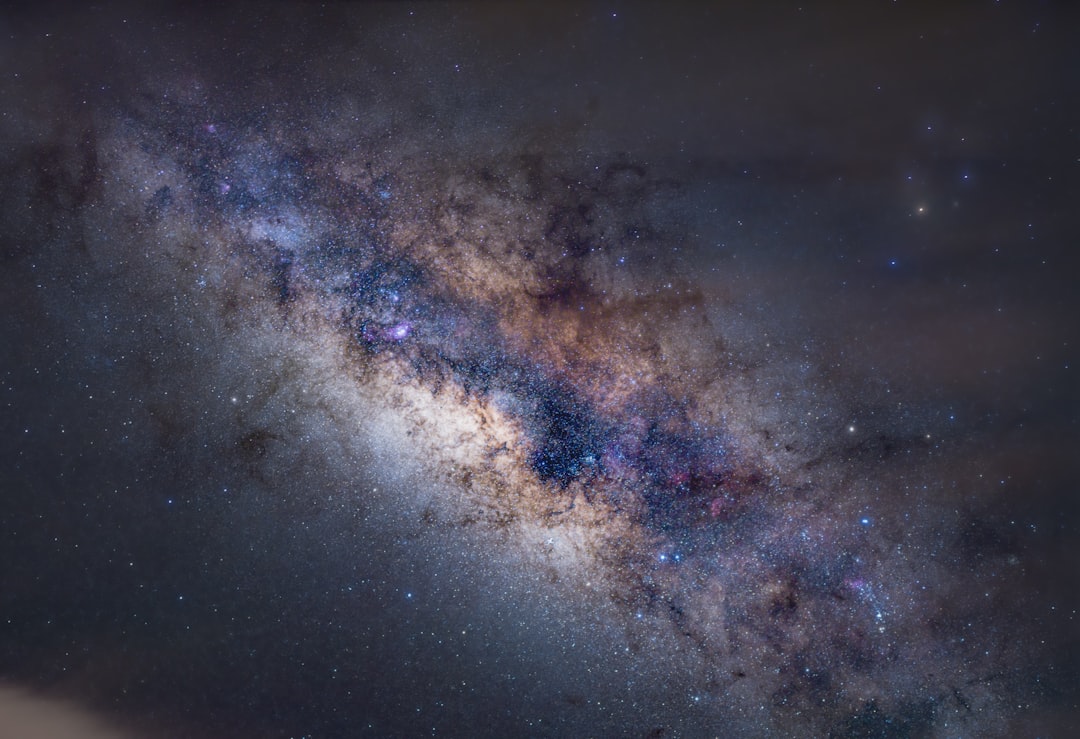
Our own galaxy hosts a prominent central bar approximately 27,000 light-years in length, along with a well-developed four-arm spiral structure. The suggestion that ancient, highly star-forming galaxies bore similar morphologies is not just scientifically surprising — it is philosophically profound. It implies that the ordered, elegant architecture of spiral galaxies like the Milky Way is not merely an endpoint of cosmic evolution, but potentially a driver of it.
One important nuance is scale. While these Cosmic Noon galaxies may look structurally familiar, the velocity and rate of gas transport through them was dramatically higher than in local galaxies. The same physical mechanisms — bar torques and spiral density waves — were operating with far greater intensity, driven by deeper gravitational potentials and far larger cold gas reservoirs than those available to present-day spirals.
Jianhang Chen, co-author on the first study, underscored the transformative quality of the observations:
"The depth of the NOEMA observations allows us to trace the cold-gas reservoirs that fueled galaxy growth during cosmic noon. We can now see, in unprecedented detail, how galaxies sustained star formation across their disks over billions of years." — Jianhang Chen, MPE
Implications for Bulge Formation and Black Hole Growth
Beyond star formation itself, the implications of bar- and spiral-driven gas inflows extend to some of the most important open questions in galaxy evolution. As cold gas accumulates in a galaxy's central regions, it does more than just birth new stars. It also builds the galaxy's central bulge — the dense, spheroidal stellar component that dominates the centers of most massive galaxies today, including the Milky Way. The concentration of gas at small radii elevates local stellar densities, producing exactly the kind of compact, bulge-like morphology observed in present-day galaxies.
Simultaneously, even a small fraction of the inflowing gas that escapes star formation and reaches the innermost parsecs of the galaxy can dramatically fuel the accretion disk of the central supermassive black hole. The Cosmic Noon was also a period of peak AGN activity, with quasars shining at their brightest across the observable Universe. It is tantalizing — though not yet proven — that the same bar- and spiral-driven transport mechanisms responsible for the elevated SFRs of Cosmic Noon may also be partially responsible for the concurrent peak in quasar luminosity.
As Jolly and his co-authors conclude:
"These flows would be sufficient to fuel the high SFR of galaxies at cosmic noon, promoting bulge formation and possibly the feeding of central SMBHs." — Jolly et al., 2026
Looking Ahead: What These Results Mean for Cosmology
The NOEMA3D survey is ongoing, and the current papers represent early results from what promises to be a transformative dataset. Future work will expand the sample to larger numbers of galaxies, enabling statistically robust comparisons across different masses, environments, and redshifts. Combining NOEMA3D data with simulations from state-of-the-art cosmological models — such as IllustrisTNG and EAGLE — will help theorists determine whether current models can reproduce the bar-driven inflow rates now being measured observationally.
These discoveries also carry a broader message about the power of next-generation observatories. The JWST, together with millimeter-wave interferometers like NOEMA and its Southern Hemisphere counterpart ALMA (Atacama Large Millimeter/submillimeter Array), is enabling a revolution in our understanding of when and how the Universe's grandest structures came to be. Each new observation reinforces the lesson that the cosmos, even in its earliest, most energetic epochs, was more ordered — and more familiar — than we dared to imagine.
For astronomers and cosmologists alike, the Cosmic Noon is no longer just a period of peak stellar activity. It is becoming a window into the very mechanisms by which the Universe built the galaxies — the bars, the spirals, the bulges, and the black holes — that define the cosmos we inhabit today.