Artificial Intelligence is Easily Fooled in the Search for Life
Humanity has assembled a remarkable cognitive toolkit over millions of years of evolution. Language, abstract reasoning, theory of mind, and countless other higher-order mental faculties define us as a species. Yet arguably the most primal and powerful of these tools is pattern recognition — a deeply embedded faculty woven into the very foundation of our cognitive architecture, operating at every level from instinctive survival responses to the painstaking analysis of scientific data.
Pattern recognition fires at a basic, fight-or-flight level, allowing us to react within milliseconds to perceived threats. It also operates in a slower, more deliberate mode — the kind scientists employ when combing through vast datasets in search of meaningful signals buried within noise. It is, in many respects, the engine that drives scientific discovery. But this engine has a well-documented flaw.
Pareidolia — the phenomenon of perceiving meaningful patterns where none truly exist — is a testament to the fallibility of human pattern recognition. We see faces in clouds and rock formations, find religious significance in the random scorching of toast, and convince ourselves that reversed song lyrics contain hidden messages. The Man in the Moon is perhaps the most culturally universal example: the human brain, so finely tuned to detect faces, projects one onto the cratered, shadowed surface of our natural satellite.
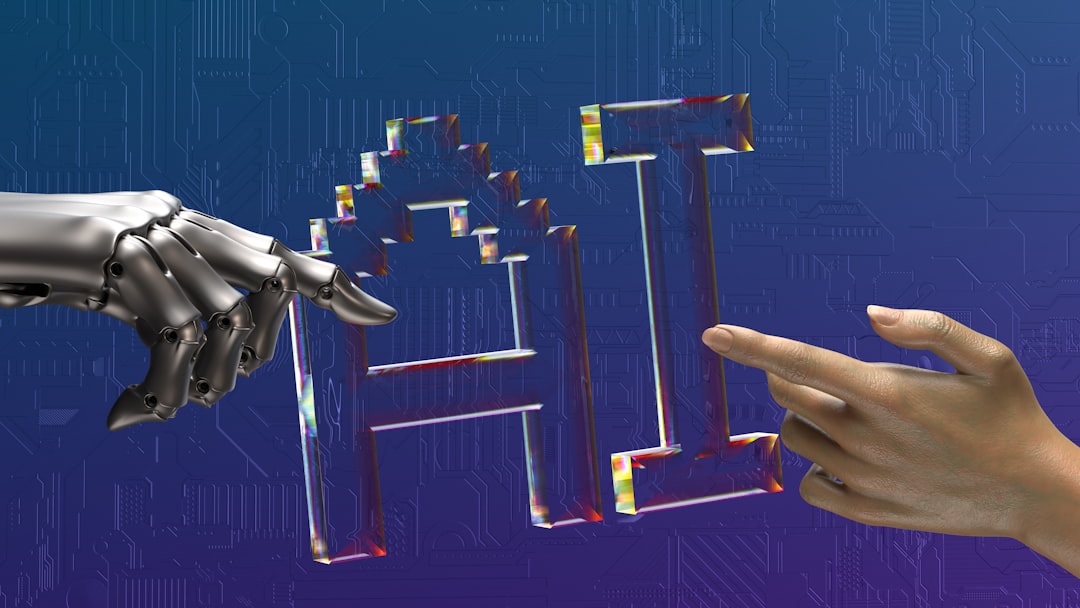
Now, as researchers increasingly turn to artificial intelligence to shoulder the burden of pattern recognition in scientific contexts — particularly in the search for life beyond Earth — a critical question has emerged: Is AI immune to its own form of pareidolia? According to a striking new study, the answer is an emphatic no.
The Study: Teaching Machines to Recognize Life
The research, titled "Can AI Detect Life? Lessons from Artificial Life," is set to be presented in August at the 2026 Conference on Artificial Life in Waterloo, Canada. The authors — Ankit Gupta, a PhD student in computer science and engineering, and Christoph Adami, a professor spanning the departments of microbiology and molecular genetics and physics and astronomy — are both affiliated with Michigan State University.
"Modern machine learning methods have been proposed to detect life in extraterrestrial samples, drawing on their ability to distinguish biotic from abiotic samples based on training models using natural and synthetic organic molecular mixtures." — Gupta and Adami
Their findings are sobering. These AI systems, the researchers demonstrate, can assert with 100% confidence that a sample represents a living organism — even when it categorically does not. This dangerous overconfidence stems from a fundamental vulnerability in modern machine learning: its susceptibility to being misled by what researchers call out-of-distribution samples.
Understanding Out-of-Distribution Failures
To understand why this matters, it helps to understand how machine learning systems are built. Every AI model is trained on a dataset that defines an implicit statistical distribution — a universe of examples the system learns to navigate. An image-recognition AI trained to identify cats and dogs becomes extraordinarily proficient within that narrow domain. But present it with a horse — something entirely outside its training distribution — and the system may confidently declare it a dog. The AI has no concept of uncertainty regarding things it has never been designed to encounter.
This analogy scales up dramatically when the task involves something as profound and poorly defined as the distinction between living and non-living matter at the molecular level. The problem becomes particularly acute in astrobiology, where any life we discover — if we discover it at all — may be utterly unlike anything that has ever existed on Earth.
"Because extra-terrestrial samples are very likely out of the distribution provided by terrestrial biotic and abiotic samples, using AI methods for life detection is likely to yield significant false positives." — Gupta and Adami
The Challenge of Detecting Life Without a Universal Biosignature
One of the foundational challenges of astrobiology is that we have no universally agreed-upon chemical biosignature — no single molecule or set of molecules whose presence unambiguously signals the existence of life. On Earth, life's chemical fingerprints are everywhere: complex organic molecules, chirality preferences, isotopic fractionation patterns, and the presence of specific metabolic byproducts. But these signatures are products of Earth's particular evolutionary history and chemistry. Alien life, if it exists, may operate on entirely different biochemical principles.
Faced with this challenge, researchers have turned to a more fundamental property of life: its ability to encode, store, and transmit information. NASA's Astrobiology Program recognizes information processing as one of life's core characteristics, alongside metabolism and Darwinian evolution. The logic is compelling — if we cannot identify life by its specific chemistry, perhaps we can identify it by its informational architecture.
"One of them is that life needs to encode information." — Christoph Adami
DNA, the molecule at the heart of terrestrial life, is fundamentally an information storage and retrieval system. Its four-letter chemical alphabet — adenine, thymine, cytosine, and guanine — encodes the instructions for building and operating every known living organism. The sequence of these bases is not random; it is highly structured, carrying meaningful biological information that is copied, transmitted, and occasionally mutated across generations. This informational structure is precisely what Gupta and Adami sought to teach their AI to recognize.
The Avida Digital Evolution Platform: A Microprocessor Petri Dish
To test the AI's life-detection abilities, the researchers employed a remarkable piece of software: the Avida Digital Evolution Platform. Avida, developed in the 1990s and co-designed by Adami himself, is an artificial life simulation environment that allows researchers to study evolutionary biology computationally. Within Avida's virtual ecosystem, digital organisms — self-replicating computer programs capable of mutation, competition, and adaptation — evolve in real time according to the same fundamental principles that govern biological evolution.
The platform has been used in landmark studies to investigate the evolution of complex traits, the dynamics of natural selection, and the emergence of cooperation — all within a controlled computational environment that would be impossible to replicate in a wet lab. By generating digital organisms rather than biological ones, researchers can run thousands of evolutionary experiments in the time it would take to complete a single biological study.
- Digital organisms in Avida are self-replicating computer programs analogous to biological cells.
- Each replication event introduces small mutations, mirroring genetic copying errors in DNA.
- Organisms compete for computational resources, creating selective pressure that drives evolution.
- The platform allows researchers to control and observe evolutionary dynamics with unprecedented precision.
- Avida has been published in peer-reviewed journals including Nature, validating it as a legitimate scientific tool for studying evolution.
Learn more about digital evolution research at the Avida Digital Evolution Platform.
The Experiment: Spoofing an AI Life Detector
Using Avida, the researchers generated tens of thousands of digital organisms. Some contained the computational instructions enabling them to replicate — the digital equivalent of possessing a living metabolism. Others lacked these instructions entirely. This dataset formed the training distribution for a neural network classifier tasked with distinguishing "living" digital organisms from "non-living" ones.
The results of this initial training phase were impressive. The neural network correctly classified living versus non-living digital organisms with a 99.7% accuracy rate — a performance level that would inspire confidence in almost any applied machine learning context.
But the truly revealing phase of the experiment came next. The researchers introduced out-of-distribution samples: digital entities the neural network had never encountered during training. Specifically, they began with a digital organism that the AI correctly identified as incapable of self-replication. Then, step by step, they systematically modified the organism's code — not to make it capable of replication, but to make it look like something capable of replication to the AI's pattern-recognition machinery.
The results were alarming. In as few as 150 incremental modifications to the code, the AI classifier declared with absolute, unwavering certainty that it had detected a living organism — despite the fact that the digital entity in question remained entirely incapable of replication. The system had been completely deceived.
"No matter what sequence of commands we started with, we were able to fool the AI 100% of the time." — Ankit Gupta
More troubling still, the researchers found that the number of command sequences capable of fooling the system is enormous. This is not a narrow, difficult-to-exploit vulnerability requiring precise and unlikely conditions to trigger. The pathways to a false positive are numerous and varied, suggesting that in any real-world application involving genuinely alien chemistry, the probability of encountering something capable of triggering a false detection could be substantial.
"So the likelihood of encountering such a sequence is substantial." — Christoph Adami
Why This Matters for Space Exploration
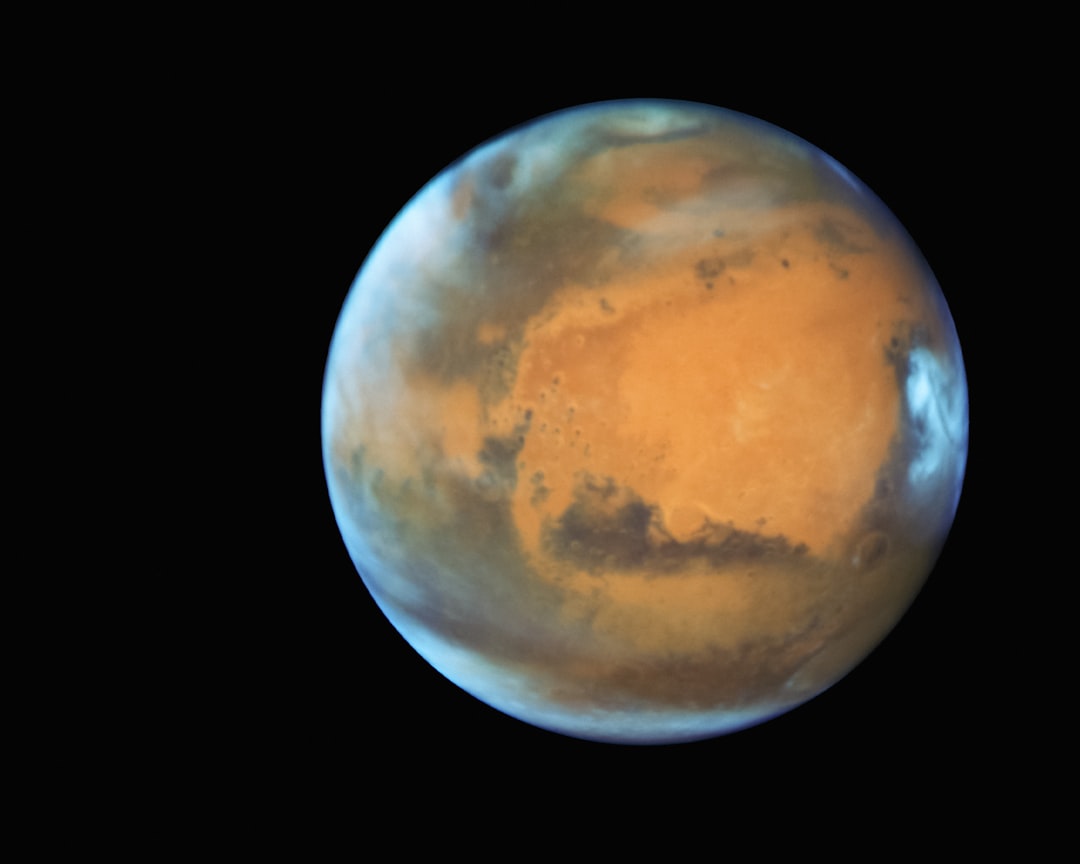
The implications extend directly to active and planned space missions. NASA's Perseverance rover, currently operating in Jezero Crater on Mars — a site believed to have once harbored a lake and river delta billions of years ago — is caching rock and sediment samples for eventual return to Earth. The Mars Sample Return mission, a joint endeavor between NASA and the European Space Agency, aims to bring these samples back to terrestrial laboratories where they can be analyzed with the full power of Earth-based scientific instrumentation.
This cautious, methodical approach — collect samples robotically, return them to Earth, analyze them exhaustively — reflects an awareness of exactly the kind of limitations this new research highlights. Human scientists, with their capacity for nuanced judgment, skepticism, and cross-disciplinary reasoning, remain essential to the interpretive process. But as missions become more ambitious, as targets like the icy moons Europa and Enceladus come within reach, and as the sheer volume of data collected overwhelms human analytical capacity, the pressure to delegate life-detection decisions to AI systems will only grow.
Imagine a future rover operating autonomously on Europa's subsurface ocean, or on the methane lakes of Titan. Communication delays of up to 90 minutes each way make real-time human oversight impossible. The rover's AI must make decisions independently — including, potentially, whether to flag a sample as evidence of life. The stakes of getting that decision wrong, in either direction, are enormous.
- A false negative — missing genuine biosignatures — could cause a mission to overlook the most significant discovery in human history.
- A false positive — falsely detecting life — could trigger massive scientific excitement, resource allocation, and public expectation based on fundamentally flawed data.
- Either outcome could undermine public trust in astrobiology as a scientific discipline and erode support for future missions.
- In mission contexts where sample return is not possible, AI decisions may be final with no opportunity for human re-evaluation.
"It's a very serious vulnerability." — Christoph Adami
The Deeper Problem: AI Overconfidence
Anyone who has used a modern large language model (LLM) has likely encountered the phenomenon of AI hallucination — the tendency of these systems to generate plausible-sounding but entirely fabricated information with complete apparent confidence. Ask an LLM about an obscure historical event and it may invent citations, dates, and quotations that never existed, presenting them with the same authoritative tone it would use to relay established facts. When searching for a local restaurant or researching a consumer product, this overconfidence is merely an inconvenience. When an AI system is playing a leading role in a multi-billion-dollar scientific mission to another world, overconfidence becomes a critical failure mode.
This tendency toward high-confidence misclassification on out-of-distribution inputs is not a bug unique to any particular AI architecture; it is a structural feature of how most modern machine learning systems are built. These systems are optimized to produce definitive outputs — classifications, predictions, detections — and are not inherently calibrated to express appropriate uncertainty when confronted with inputs that fall outside their training experience. The result is an AI that does not know what it does not know.
"AI has an Achilles heel. It can see a pattern and completely misclassify it." — Christoph Adami
This problem is compounded in the context of astrobiology by the sheer novelty of what we might find. Life on another world — if it uses different amino acids, a different genetic alphabet, or an entirely non-carbon-based biochemistry — would be profoundly unlike anything that exists in any AI's training dataset. Every sample from an alien environment is, by definition, a potential out-of-distribution input. The probability of triggering false positives in such a context could be not just substantial but near-certain without significant methodological safeguards.
Solutions and the Path Forward
The researchers are careful not to dismiss the value of AI in astrobiology — the technology's ability to process vast quantities of data at speeds no human team could match remains genuinely transformative. Rather, their findings argue for a more humble and carefully constrained deployment of these tools, accompanied by robust independent verification mechanisms.
"You need an independent way of checking their work. There needs to be a human in the loop." — Christoph Adami
Implementing a "human in the loop" presents real practical challenges in the context of deep space exploration. The European Space Agency and NASA have both invested in developing more sophisticated autonomous decision-making frameworks for future missions, but the question of how to build in appropriate epistemic humility — how to make an AI system that knows the limits of its own knowledge — remains an active area of research in machine learning.
Potential approaches to mitigating AI overconfidence in life-detection contexts include:
- Uncertainty quantification: Training AI systems to output probability distributions rather than point estimates, explicitly flagging low-confidence or out-of-distribution detections.
- Ensemble methods: Running multiple independent AI classifiers and only acting on findings where strong consensus exists across all models.
- Anomaly detection layers: Building a separate system whose sole job is to identify when an input is likely out of distribution, triggering heightened scrutiny before any life-detection claim is accepted.
- Physics-based cross-validation: Requiring that AI detections be consistent with independent physical and chemical measurements before they are flagged as significant.
- Sample caching and return: Continuing the approach pioneered by Perseverance, ensuring that potentially significant samples are preserved for Earth-based analysis regardless of AI on-board assessments.
The researchers' next step is to move from digital organisms to real-world molecular data — training their AI on actual biological and abiotic chemical samples and testing how readily it is deceived by genu