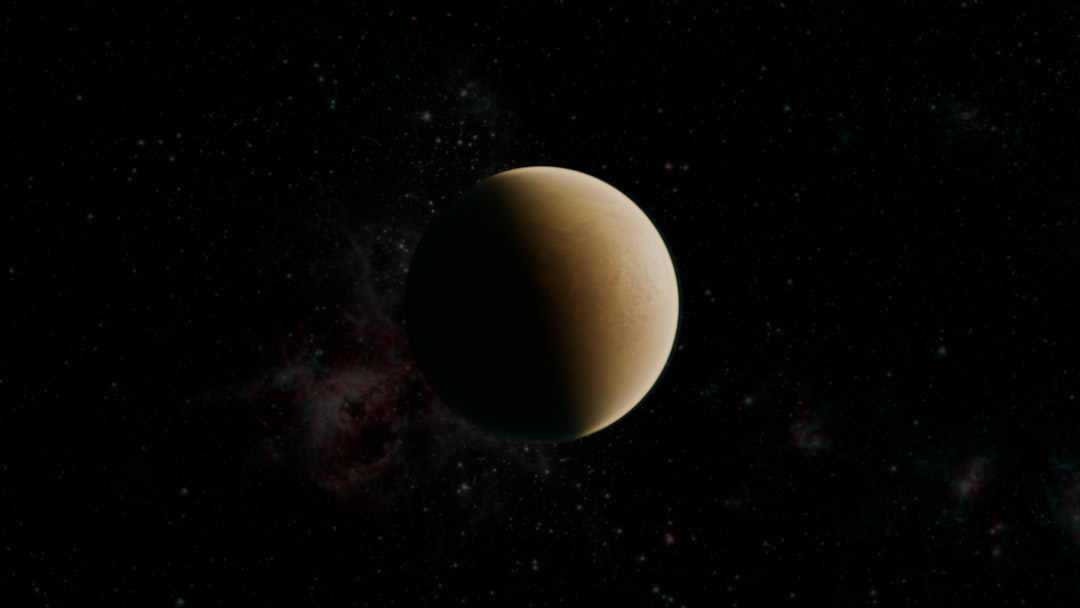
In the frozen reaches of the outer Solar System, Ganymede—Jupiter's largest moon—stands as one of the most enigmatic worlds awaiting exploration. This massive satellite, which surpasses even the planet Mercury in size, harbors secrets that could fundamentally reshape our understanding of where life might exist beyond Earth. Scientists have long theorized that beneath its icy crust lies an interior ocean containing more water than all of Earth's oceans combined, making it a prime target in humanity's search for habitable environments in space.
Now, as the European Space Agency's Jupiter Icy Moons Explorer (JUICE) makes its way toward the Jovian system, researchers have identified the most promising locations where this spacecraft might detect active geological processes. An international team led by Dr. Anezina Solomonidou of the Hellenic Space Center has pinpointed specific regions on Ganymede's surface where cryovolcanism—the eruption of water and volatile materials through ice—may be occurring or has occurred in the relatively recent past. This groundbreaking research, recently accepted for publication in the Planetary Science Journal, provides JUICE mission planners with a roadmap to some of the most scientifically valuable real estate in the Solar System.
What makes these potential cryovolcanic sites so compelling is their capacity to serve as natural windows into Ganymede's hidden ocean. If active venting is occurring, materials from the deep interior—including organic molecules and potential biosignatures—could be deposited on the surface where JUICE's sophisticated instruments can analyze them. This represents a rare opportunity to sample an alien ocean without the need for drilling through kilometers of ice.
Understanding Cryovolcanism on Ocean Worlds
Unlike the molten rock volcanism familiar on Earth, cryovolcanism involves the eruption of water, ammonia, methane, and other volatiles through the icy crusts of worlds in the outer Solar System. This phenomenon occurs on what planetary scientists call "Ocean Worlds"—celestial bodies that maintain liquid water oceans beneath frozen surfaces. The process is driven by tidal flexing, a mechanism whereby gravitational interactions between a moon and its parent planet generate internal heat through constant stretching and squeezing of the satellite's interior.
In Jupiter's case, the gas giant's immense gravitational pull creates powerful tidal forces on its major moons. As these satellites orbit in slightly elliptical paths, the strength of Jupiter's gravitational grip varies, causing the moons' interiors to flex and generate heat—much like a rubber ball warms up when repeatedly squeezed. This tidal heating mechanism is believed to keep subsurface oceans liquid despite the extreme cold of the outer Solar System, where sunlight provides virtually no warmth.
On Ganymede, this internal heating may be sufficient to drive cryovolcanic activity, pushing water and dissolved materials from the deep ocean through cracks and weaknesses in the overlying ice shell. The resulting surface features—including the paterae (irregular depressions) identified in the new study—could represent ancient or even currently active cryovolcanic vents.
"Ganymede is one of the most fascinating worlds in the Solar System. Understanding possible cryovolcanic activity can help us better understand how ocean worlds evolve and whether they may host conditions suitable for life," explained Dr. Solomonidou in a statement released by the Hellenic Space Center.
Mining Decades-Old Data for New Discoveries
The research team's identification of promising cryovolcanic regions relied on a sophisticated reanalysis of data collected by NASA's Galileo spacecraft, which orbited Jupiter from 1995 to 2003. Specifically, the scientists examined observations from the Near-Infrared Mapping Spectrometer (NIMS), an instrument that measured how Ganymede's surface reflects and absorbs different wavelengths of infrared light. This spectroscopic data provides crucial information about the chemical composition and physical properties of surface materials.
By applying modern data processing techniques to these archival observations, the team was able to identify spectral signatures associated with unusual surface features. The researchers focused on irregular depressions and distinctive geological structures that don't fit the patterns expected from impact cratering or other common surface-shaping processes. Instead, these features exhibit characteristics consistent with cryovolcanic activity—including evidence of material that may have originated from beneath the ice shell.
Among the most promising candidates identified were four distinct paterae—bowl-shaped depressions that may represent the surface expression of cryovolcanic vents. These features are particularly intriguing because they could mark locations where subsurface material has been deposited on the surface, potentially preserving chemical signatures from Ganymede's hidden ocean. The international collaboration brought together expertise from research institutions across Greece, France, Italy, Germany, the United States, and the Czech Republic, along with scientists from ESA and NASA's Jet Propulsion Laboratory.
What Makes Ganymede Uniquely Fascinating
Ganymede's status as a target for astrobiological investigation stems from several remarkable characteristics that set it apart even among the Solar System's diverse collection of moons. With a diameter of 5,268 kilometers, it is not only Jupiter's largest satellite but the biggest moon in the entire Solar System—larger than the planet Mercury and about three-quarters the diameter of Mars. Yet size is just the beginning of what makes this world scientifically compelling.
Ganymede is the only moon in the Solar System known to possess its own intrinsic magnetic field, a characteristic otherwise found only on planets and the gas giants. This magnetic field, though much weaker than Earth's, creates a miniature magnetosphere that interacts with Jupiter's powerful magnetic environment in complex ways. The existence of this field suggests that Ganymede has a partially molten, electrically conductive core—likely composed of iron—that generates the magnetic field through dynamo action.
The moon's surface displays a fascinating dichotomy between dark, heavily cratered terrain and bright, grooved regions that appear to be younger. These grooved terrains, which cover about 40% of Ganymede's surface, are thought to result from tectonic activity—possibly driven by the same internal processes that might power cryovolcanism. The presence of both ancient and relatively young surfaces suggests that Ganymede has remained geologically active throughout much of its history.
The JUICE Mission's Revolutionary Capabilities
The identification of these promising cryovolcanic regions comes at a perfect time, as JUICE continues its journey toward the Jovian system with an expected arrival in 2031. Once there, the spacecraft will spend approximately three years studying Jupiter and its major moons before settling into orbit around Ganymede in 2034—becoming the first spacecraft ever to orbit a moon other than Earth's.
JUICE carries a sophisticated suite of ten scientific instruments specifically designed to characterize the Jovian moons and assess their potential habitability. Two instruments are particularly relevant to investigating the newly identified cryovolcanic candidates:
- MAJIS (Moons And Jupiter Imaging Spectrometer): This advanced imaging spectrometer will map the surface composition of Ganymede in unprecedented detail, identifying the distribution of water ice, salts, organic molecules, and other materials. By comparing the spectral signatures of the identified paterae with surrounding terrain, MAJIS can determine whether these features have distinctive compositions consistent with cryovolcanic origin.
- JANUS (Jovis, Amorum ac Natorum Undique Scrutator): This optical camera system will provide high-resolution images of Ganymede's surface, revealing fine details of geological structures. JANUS observations will help determine the morphology of suspected cryovolcanic features and identify any signs of recent activity, such as fresh deposits or surface changes.
- RIME (Radar for Icy Moons Exploration): Though not mentioned in the original study, this ice-penetrating radar will be crucial for understanding subsurface structure beneath potential cryovolcanic sites, potentially revealing conduits that connect surface features to the deep ocean below.
- 3GM (Gravity and Geophysics of Jupiter and Galilean Moons): By precisely measuring Ganymede's gravitational field, this investigation will help constrain the thickness of the ice shell and the characteristics of the subsurface ocean—information essential for understanding how cryovolcanism might operate on this world.
The Astrobiological Significance of Cryovolcanic Vents
The potential detection of active or recent cryovolcanism on Ganymede would have profound implications for astrobiology—the study of life in the universe. If material from the subsurface ocean is indeed being transported to the surface through cryovolcanic processes, it could contain chemical evidence of biological activity occurring in the hidden ocean below.
On Earth, hydrothermal vents on the ocean floor support thriving ecosystems based on chemosynthesis rather than photosynthesis. Microorganisms harvest chemical energy from reactions between seawater and hot rock, forming the base of food webs that include exotic creatures like giant tube worms and eyeless shrimp. Similar chemosynthetic ecosystems could potentially exist in Ganymede's ocean, particularly if hydrothermal activity occurs where the ocean contacts the rocky mantle below.
If such life exists, cryovolcanic eruptions might transport organic molecules, metabolic byproducts, or even microbial cells to the surface. While the harsh radiation environment at Ganymede's surface would quickly destroy complex organic molecules, materials trapped within ice crystals or buried beneath thin surface layers might preserve chemical signatures of life. JUICE's instruments are designed to detect such biosignatures, including:
- Organic molecules: Complex carbon-containing compounds that could indicate biological processes
- Chemical disequilibrium: Unusual ratios of elements or molecules that might suggest metabolic activity
- Isotopic signatures: Distinctive ratios of atomic isotopes that biological processes can alter in characteristic ways
- Mineral deposits: Certain minerals that form preferentially in the presence of biological activity
A Coordinated Assault on Jupiter's Ocean Worlds
JUICE's investigation of Ganymede will be complemented by NASA's Europa Clipper mission, which launched in October 2024 and will arrive at Jupiter around the same time as JUICE. While JUICE focuses primarily on Ganymede with additional flybys of Callisto and Europa, Europa Clipper will conduct detailed reconnaissance of Europa—another moon with a subsurface ocean and strong evidence for potential habitability.
This coordinated, two-spacecraft campaign represents an unprecedented opportunity to study multiple ocean worlds simultaneously, comparing and contrasting their characteristics to understand the factors that influence habitability. Europa, smaller than Ganymede but with a thinner ice shell, shows strong evidence of recent or ongoing cryovolcanic activity in the form of plumes that may erupt from its south polar region. If Ganymede also proves to have active cryovolcanism, comparing the two systems could reveal fundamental principles about how ocean worlds function.
The missions will also study Callisto, Jupiter's second-largest moon, which likely harbors a subsurface ocean but shows little evidence of recent geological activity. Understanding why Callisto appears geologically dead while its siblings remain active could provide crucial insights into the long-term evolution of ocean worlds and the factors that sustain their potential habitability over billions of years.
Implications Beyond the Jovian System
The knowledge gained from studying Jupiter's ocean moons extends far beyond our Solar System. Astronomers have discovered thousands of exoplanets orbiting other stars, and many of these worlds likely have moons of their own. Some of these exomoons might be ocean worlds similar to Ganymede, Europa, and Callisto—potentially habitable environments that could be common throughout the galaxy.
By understanding the conditions that create and maintain subsurface oceans, the processes that drive cryovolcanism, and the potential for such environments to support life, scientists can better assess where to search for life beyond Earth. The techniques developed for analyzing cryovolcanic features on Ganymede could eventually be applied to studying exomoons, even though we cannot yet image such distant worlds in detail.
Furthermore, the discovery that life might exist in subsurface oceans—completely independent of sunlight—dramatically expands the cosmic real estate where biology might emerge. Rather than being limited to planets in the narrow "habitable zone" where surface water can remain liquid, life might thrive in ocean worlds throughout planetary systems, protected beneath ice shells that shield them from radiation and maintain stable conditions over geological timescales.
Looking Ahead to JUICE's Arrival
As JUICE continues its long journey to Jupiter—using gravity assists from Earth and Venus to build up the velocity needed to reach the outer Solar System—the scientific community is preparing for what promises to be one of the most exciting missions in planetary exploration history. The identification of specific cryovolcanic targets by Dr. Solomonidou's team provides mission planners with valuable information for optimizing JUICE's observation strategy once it arrives.
The spacecraft will need to carefully balance competing scientific objectives, allocating its limited observation time among Ganymede's many fascinating features. Having a prioritized list of the most promising cryovolcanic sites will help ensure that JUICE can make the most impactful observations possible, potentially revolutionizing our understanding of this enigmatic world and its capacity to harbor life.
The coming decade will bring unprecedented discoveries as both JUICE and Europa Clipper transform our understanding of ocean worlds. The potential detection of cryovolcanism on Ganymede—and the possibility of sampling material from its hidden ocean—represents one of the most exciting prospects in this new era of outer Solar System exploration. As Dr. Solomonidou's research demonstrates, the foundation for these discoveries is already being laid through careful analysis of existing data and strategic planning for future observations.