In the intricate dance of biochemistry that sustains life on Earth, a surprising protagonist has emerged from the depths of geological time. Molybdenum, a relatively rare metal in Earth's ancient oceans, played a critical role in early life's evolution despite its scarcity—a discovery that challenges long-held assumptions about how primitive organisms selected their biochemical building blocks. This groundbreaking research, published in Nature Communications, reveals that life's earliest forms were far more sophisticated in their "choices" than scientists previously imagined, selecting molybdenum for its exceptional catalytic properties even when other, more abundant metals were readily available.
The findings carry profound implications not only for understanding Earth's biological history but also for the search for life beyond our planet. As researchers piece together the puzzle of how primordial microorganisms assembled their molecular machinery, they're discovering that the story of life's emergence is far more nuanced than a simple progression from abundant to scarce elements. Instead, early life appears to have been remarkably discerning, choosing specific metals based on their functional advantages rather than their availability—a revelation that could reshape how astrobiologists approach the search for biosignatures on distant worlds.
The Molecular Foundation of Life: Beyond CHNOPS
While the six elements commonly known as CHNOPS—carbon, hydrogen, nitrogen, oxygen, phosphorus, and sulfur—constitute approximately 98% of all living matter, they represent only part of life's chemical story. The remaining 2% includes an array of trace metals that serve as essential cofactors in enzymes, the molecular machines that drive virtually every biochemical reaction within cells. These metals, including iron, zinc, manganese, copper, and molybdenum, act as catalytic centers that dramatically accelerate chemical reactions, making the complex biochemistry of life possible.
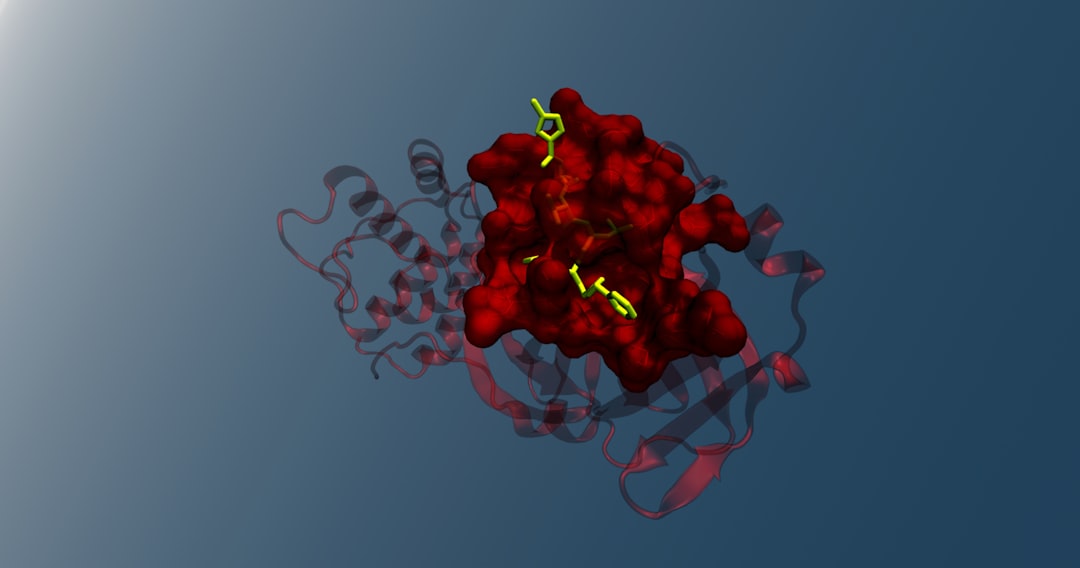
Among these metallic elements, molybdenum (Mo) occupies a particularly fascinating niche. This silvery-white metal sits at the catalytic heart of enzymes responsible for some of life's most fundamental processes, including nitrogen fixation, sulfur metabolism, and critical aspects of the carbon cycle. According to NASA's Astrobiology Program, understanding how and when life began incorporating these trace metals into its biochemical repertoire provides crucial insights into the conditions that enabled the emergence and evolution of life on our planet.
Tracing Ancient Metal Utilization Across Deep Time
The research team, led by Aya Klos from the Department of Bacteriology at the University of Wisconsin-Madison and senior author Betül Kaçar, head of the Kaçar Lab and leader of MUSE (a NASA Interdisciplinary Consortia for Astrobiology Research), employed an innovative approach to reconstruct the evolutionary history of metal utilization. By combining molecular dating techniques with geochemical evidence and phylogenetic analysis across all branches of the tree of life, they were able to trace the origins of molybdenum-dependent enzymes back through billions of years of evolutionary history.
"Molybdenum sits at the catalytic center of enzymes that run major carbon, nitrogen, and sulfur reactions. Asking when life began using molybdenum is really asking when some of the most consequential metabolic strategies became possible," explained Dr. Kaçar in a press release.
The researchers' analysis revealed something unexpected: despite molybdenum's scarcity in Earth's Archean oceans (roughly 4 to 2.5 billion years ago), ancient microbes were already utilizing this metal in their enzymes. The molecular clock data places molybdenum utilization back into the Eoarchean to Mesoarchean periods, approximately 3.7 to 3.1 billion years ago—well before the Great Oxidation Event that would dramatically increase the availability of dissolved molybdenum in seawater.
The Tungsten-Molybdenum Debate Resolved
For years, scientists had hypothesized that early life might have initially relied on tungsten (W), a metal chemically similar to molybdenum but potentially more available in ancient oceans, before transitioning to molybdenum-based enzymes as geological conditions changed. This "tungsten-world" hypothesis seemed logical: use what's available first, then switch to better alternatives as they become accessible. Some modern organisms living in extreme environments, such as hyperthermophilic archaea dwelling near hydrothermal vents, still use tungsten-containing enzymes, which appeared to support this evolutionary narrative.
However, the new research decisively challenges this linear progression model. The team's phylogenetic analysis demonstrates that both molybdenum-dependent and tungsten-dependent enzyme systems have roots extending back to the Archean eon, suggesting that early life worked with both metals simultaneously rather than following a simple sequential adoption pattern.
"Our work shows that both molybdenum and tungsten-using enzyme systems have Archean roots, which suggests that early life likely worked with both metals rather than following a simple 'tungsten first, molybdenum later' story," said Dr. Kaçar.
Hydrothermal Vents: Oases of Metallic Abundance
The key to understanding how early life accessed molybdenum lies in recognizing that Earth's ancient oceans were not chemically uniform. While dissolved molybdenum concentrations in open seawater were indeed extremely low during the Archean, localized environments told a very different story. Hydrothermal vent systems, where superheated, mineral-rich fluids surge up from Earth's crust into the cold ocean, created microenvironments where molybdenum and other essential metals accumulated in far higher concentrations.
These submarine hot springs served as chemical factories, delivering not only molybdenum but also iron, zinc, manganese, and tungsten to the surrounding waters. The presence of these vents in Earth's ancient oceans—and potentially on other ocean worlds in our solar system, such as Jupiter's moon Europa and Saturn's moon Enceladus—makes them prime targets for astrobiological investigation. If life emerged in association with these dynamic chemical systems on Earth, similar environments elsewhere might harbor their own unique forms of life.
The Catalytic Superiority of Molybdenum
The research reveals a crucial insight: early life didn't simply use whatever metals happened to be available. Instead, organisms appear to have evolved sophisticated mechanisms to acquire and utilize molybdenum specifically because of its exceptional catalytic properties. Molybdenum's unique electronic structure allows it to facilitate reactions across a remarkably broad range of chemical substrates and oxidation-reduction conditions—making it, in essence, the "Swiss Army knife" of biological metal cofactors.
This functional versatility meant that despite its scarcity, molybdenum was worth the evolutionary "investment" required to develop cellular machinery for its acquisition, incorporation, and utilization. The metal's ability to cycle through multiple oxidation states makes it particularly effective for catalyzing reactions involving the transfer of oxygen atoms, a capability essential for processing nitrogen, sulfur, and various carbon compounds.
The Great Oxidation Event and Metal Availability
A pivotal moment in both Earth's geochemical evolution and the history of molybdenum availability came with the Great Oxidation Event (GOE), which occurred approximately 2.4 billion years ago. This dramatic transformation saw atmospheric oxygen levels rise from near-zero to significant concentrations, fundamentally altering the chemistry of Earth's surface and oceans. The NASA-funded research on Earth's early atmosphere has shown how this oxygenation triggered a cascade of geochemical changes.
As oxygen became more abundant, oxidative weathering of continental rocks accelerated, releasing previously locked-up molybdenum into rivers that carried it to the oceans. This shift represented a fundamental change in molybdenum's biogeochemical cycle—from a primarily hydrothermal source to a dominant riverine input. The research team's analysis suggests that molybdenum-based biochemistry may have partly evolved in response to this changing supply pattern, with the diversification of molybdenum-containing enzymes tracking the increased availability of the metal.
The timing is particularly intriguing: the emergence and diversification of molybdoenzymes appears to have preceded and accompanied the GOE, suggesting that life was poised to take advantage of the increased molybdenum supply even before it became widely available. This pattern indicates a sophisticated evolutionary response to changing environmental conditions, with organisms developing the biochemical machinery to exploit resources as they became more accessible.
Implications for Astrobiology and Life Detection
Perhaps the most far-reaching implications of this research extend beyond Earth to the search for life on other worlds. Traditional approaches to biosignature detection have focused primarily on identifying specific atmospheric gases or molecular patterns associated with Earth-like life as it exists today. However, this new understanding of how life utilized scarce but catalytically superior elements suggests that extraterrestrial biochemistry might follow very different pathways depending on the specific geochemical inventory available on a given world.
Dr. Kaçar emphasizes this point: "Our NASA ICAR shows that mapping the evolutionary history of bio-essential elements on Earth can help us predict what life on other worlds might use, and that different abiotic inventories could lead to different biological element choices. Life detection should be metal-aware, redox-aware, and evolution-aware."
Key Takeaways for Future Research
- Functional superiority over abundance: Early life selected metals based on catalytic efficiency rather than availability, suggesting that extraterrestrial life might similarly prioritize functional advantages
- Localized resource utilization: Even globally scarce elements can support life if concentrated in specific environments like hydrothermal vents, expanding the range of potentially habitable niches
- Parallel metal utilization: The simultaneous use of multiple metals (molybdenum and tungsten) rather than sequential adoption suggests more complex evolutionary pathways than previously assumed
- Supply-responsive evolution: The diversification of metal-dependent enzymes in response to changing availability demonstrates life's capacity to adapt its biochemical strategies to environmental shifts
- Context-dependent biosignatures: Life detection strategies should account for the specific geochemical and redox history of target worlds rather than assuming Earth-like biochemical patterns
Rethinking the Search for Extraterrestrial Life
This research fundamentally challenges the assumption that we should look exclusively for "Earth-like life now" when searching for biosignatures on exoplanets or other bodies in our solar system. Instead, astrobiologists must consider what biochemical strategies would make sense on worlds with different histories of oxygenation, different suites of available metals, and different environmental conditions. A planet with abundant tungsten but scarce molybdenum might support life that relies primarily on tungsten-based enzymes, producing different metabolic byproducts and potentially different atmospheric signatures than Earth life.
The James Webb Space Telescope and future missions designed to characterize exoplanet atmospheres will need to incorporate this more nuanced understanding of biochemical possibilities. Rather than searching only for exact Earth analogs, these missions should look for signs of complex chemistry that might indicate life adapted to very different geochemical contexts.
The Continuing Story of Life's Chemical Evolution
As researchers continue to unravel the intricate history of how life assembled its molecular toolkit, each discovery adds new dimensions to our understanding of biology's flexibility and ingenuity. The revelation that ancient microbes sought out and utilized scarce molybdenum because of its superior catalytic properties demonstrates a level of biochemical sophistication that existed far earlier than many scientists had assumed. This wasn't random selection or simple opportunism—it was the result of evolutionary processes that could "recognize" and exploit the functional advantages of specific elements even when those elements were difficult to obtain.
The journey from Earth's primordial chemical soup to the diverse biosphere we see today involved countless such "decisions"—evolutionary experiments that tested different solutions to biochemical challenges. Some of these experiments succeeded and became fixed in the universal biochemical toolkit shared by all life; others were abandoned or remain preserved only in specialized organisms adapted to extreme environments. By studying the evolutionary history of metal utilization, scientists are essentially reading the chemical autobiography of life itself, written in the structure of enzymes and the distribution of elements across the tree of life.
This research, supported by NASA's Astrobiology Program, exemplifies the power of combining multiple scientific disciplines—geochemistry, evolutionary biology, molecular phylogenetics, and planetary science—to address fundamental questions about life's origins and evolution. As we extend our search for life beyond Earth, these integrated approaches will prove increasingly valuable, helping us recognize life even when it differs substantially from the familiar forms we know.
The story of molybdenum's role in early life reminds us that the path to biological complexity involves not just the availability of resources but the capacity to recognize and exploit the unique advantages different resources offer. It's a lesson that applies not only to understanding Earth's past but to imagining the myriad ways life might arise and evolve throughout the cosmos.