The Dead Stars That Won't Fade Quietly
What should the aftermath of an exploding star look like? Conventional astrophysics paints a fairly straightforward picture: a vast cloud of shattered debris and superheated gas, blazing brilliantly at first and then slowly, steadily cooling and dimming over thousands of years — a cosmic ember fading into the dark. So when astronomers turned NASA's Chandra X-ray Observatory on a nearby galaxy, they were genuinely surprised to find dozens of these supposed embers doing something they had absolutely no business doing. They were flaring back to life.
"Instead of fading away, these remnants are brightening and flickering — behaving in ways that challenge our most basic assumptions about what happens after a star dies."
A Galaxy Full of Surprises
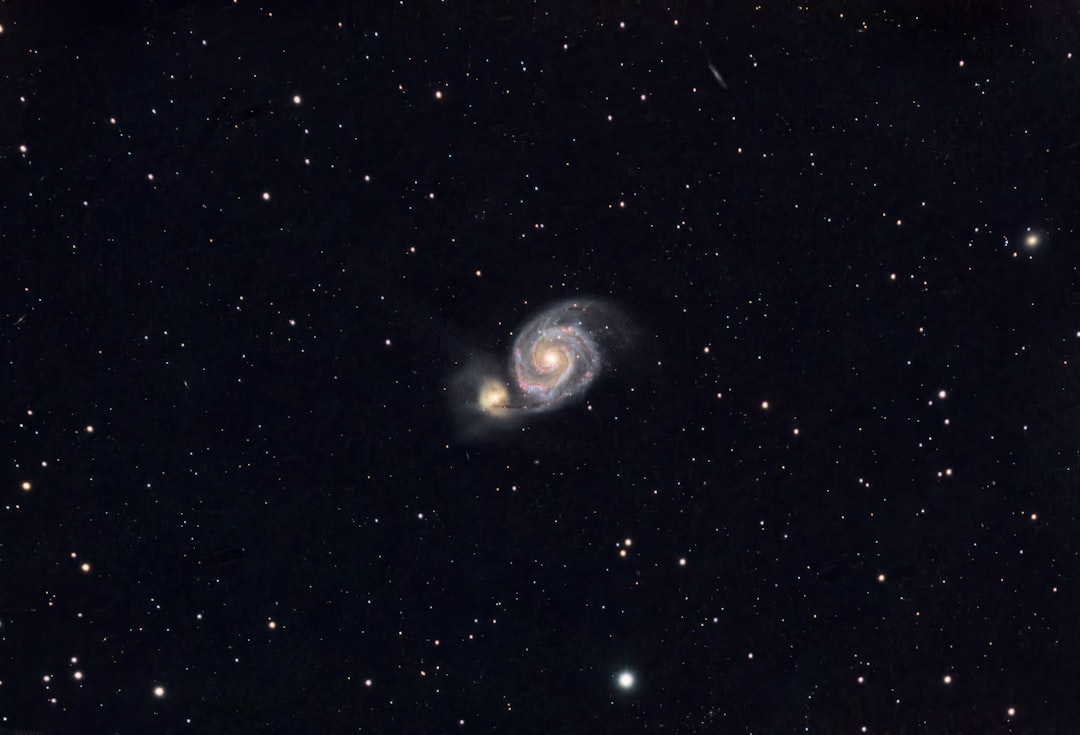
The galaxy in question is Messier 83 (M83), also catalogued as NGC 5236, a grand-design spiral galaxy located approximately 15 million light-years away in the southern constellation Hydra. M83 is one of the most actively star-forming galaxies in the nearby universe, earning it the nickname the Southern Pinwheel Galaxy. Its prodigious rate of stellar birth — and death — makes it a natural laboratory for studying the full life cycle of massive stars. In fact, astronomers have recorded at least six confirmed supernovae in M83 over the past century, more than almost any other galaxy in the sky.
Sifting through an extraordinary fourteen years of Chandra X-ray observations, a team led by Andrea Prestwich of the Harvard-Smithsonian Center for Astrophysics noticed something deeply anomalous. The X-ray glow emanating from objects long catalogued as supernova remnants — the wreckage left behind when a massive star detonates at the end of its life — was behaving in a manner wholly inconsistent with standard models. Remnants more than a century old are expected to dim gently and predictably as their expanding shock waves lose energy. Yet around half of the remnants studied were brightening and fading dramatically on timescales of years. Precisely 22 of them flickered in this way, and that was, by any measure, deeply unexpected.
One Star's Answer — And Twenty-One More Questions
For one of the 22 flickering sources, an explanation was relatively straightforward. SN 1957D, the debris cloud from a stellar explosion first witnessed nearly seventy years ago, is still actively slamming into the dense interstellar gas surrounding it. As the expanding shock front collides with that material, it generates powerful X-ray flares — a process known as circumstellar interaction that is well understood and expected in relatively young remnants. The energy released in these collisions is immense, briefly reheating the shock front to temperatures exceeding tens of millions of degrees Kelvin.
But there was no compelling reason to assume that the remaining 21 flickering remnants were all comparably young. Their apparent ages, derived from their size and expansion rates, suggested they should have long passed the phase where such collisions dominate their X-ray emission. Something stranger — something lurking inside the remnants themselves — had to be responsible.
The Hidden Engines: Binary Stars and Their Violent Aftermath
The leading explanation proposed by Prestwich's team is both elegant and dramatic. Each of these flaring sources, they suspect, began not as a single massive star, but as two massive stars locked in a tight mutual orbit — what astronomers call a binary system. In the universe, this is not unusual; a significant fraction of all massive stars are believed to live and die in pairs or even larger groupings.
In each of these systems, the story unfolded as follows:
- The more massive of the two stars exhausted its nuclear fuel first and underwent a core-collapse supernova, a catastrophic explosion that briefly outshines entire galaxies.
- The explosion left behind an incredibly compact stellar corpse — either a neutron star, a city-sized ball of matter so dense that a teaspoonful would weigh a billion tonnes, or a stellar-mass black hole, an object from which not even light can escape.
- The second star survived its partner's violent death, though likely battered and perturbed by the blast, and continued to evolve on its own evolutionary timeline.
- Now, still gravitationally bound to the corpse of its companion, the surviving star is being slowly but relentlessly devoured. Gas is peeled from its surface — or expelled in powerful stellar winds — and dragged inexorably toward the dead star.
- As that infalling material accelerates and compresses, it is heated to ferocious temperatures of millions of degrees, forming a swirling accretion disk that blazes brilliantly in X-rays. This is the flickering that Chandra has been detecting across the face of M83.
High-Mass X-ray Binaries: An Old Phenomenon, a New Context
Astronomers have a name for these systems: high-mass X-ray binaries (HMXBs). They have been known and studied for decades, and some of the most famous objects in X-ray astronomy — including Cygnus X-1, the first widely accepted stellar-mass black hole ever identified — belong to this class. In a typical HMXB, a compact object (neutron star or black hole) accretes material from a massive stellar companion, converting gravitational potential energy into X-ray luminosity with extraordinary efficiency. These systems can outshine the Sun by factors of millions to billions in X-ray energies alone.
What is genuinely new and scientifically significant about the M83 discovery is not the existence of HMXBs themselves, but the context in which they have been found. Finding so many of them spatially coincident with supernova remnants within a single galaxy is unprecedented. Until now, only a handful of HMXBs had ever been confidently linked with their parent supernova remnants across all the galaxies ever studied. M83 alone now offers more than 20 compelling candidates, clustered tellingly in the regions of the galaxy richest in massive young stars — precisely where one would expect the most recent supernovae to have occurred.
This association is not merely a statistical curiosity. It provides, for the first time, a statistically meaningful sample with which astronomers can begin to answer fundamental questions: How efficiently do massive binary systems survive the supernova of one member? How quickly does accretion begin after the explosion? And what does this tell us about the broader population of compact objects hiding inside galaxies across the cosmos? You can explore Chandra's multi-decade archive of X-ray observations at the Chandra X-ray Center.
Recycled Debris: Stars Feeding on Their Own Remnants
Even more intriguingly, the team has raised the possibility that in some cases, no living companion star is involved at all. Instead of feeding on a partner, the compact dead star at the center of a remnant may be recapturing the very debris its own explosion scattered outward — a remarkable form of cosmic recycling in which the shrapnel of a supernova eventually falls back onto the neutron star or black hole the blast created.
This process, sometimes called fallback accretion, has been theorized for years but is exceptionally difficult to observe directly. The idea is that not all of the material ejected in a supernova escapes to infinity; some fraction, moving too slowly to overcome the gravitational pull of the newborn compact object, gradually decelerates and rains back down. If confirmed observationally in multiple systems within M83, this would represent a significant validation of fallback models and add an important new chapter to our understanding of neutron star and black hole formation. The NASA Chandra mission page provides further details on the observatory's role in such discoveries.
The true situation across M83's 22 candidates is likely a mixture: some systems almost certainly harbor surviving binary companions being steadily consumed, while others may be powered by fallback accretion onto isolated compact remnants. Disentangling the two scenarios will require even longer baselines of observation and, ideally, multi-wavelength follow-up using optical and radio telescopes to search for — or rule out — companion stars.
M83 Is Not Alone
Perhaps the most tantalizing postscript to this story is that M83 is not unique. A sister galaxy — one similarly endowed with vigorous star formation and a correspondingly high rate of stellar deaths — has already revealed the same strange flickering in its supernova remnant population. This is a critical clue. It suggests that the phenomenon is not some idiosyncratic quirk of M83's particular history, but rather a universal feature of galaxies undergoing intense star formation. Wherever massive stars are being born in great numbers, and are dying in correspondingly dramatic fashion, the dead are quietly, persistently refusing to lie still.
This has broader implications for our understanding of galaxy evolution. If a significant fraction of supernova remnants in star-forming galaxies harbor active X-ray binary systems, then these systems may represent a non-trivial source of energetic feedback into the surrounding interstellar medium — heating gas, driving outflows, and potentially influencing the very star formation rates that created them in the first place. The ESA's XMM-Newton X-ray observatory and future missions like the proposed Lynx X-ray Observatory will be essential tools for expanding this census to more distant galaxies.
What Comes Next
The discovery opens a rich vein of future research. Astronomers will want to determine the precise nature of the compact objects in each of M83's flickering remnants — neutron stars tend to produce X-ray pulsations and have characteristic spectral signatures that differ from those of black holes. Deeper optical imaging could reveal whether luminous companion stars are present in each system. And population synthesis models — computational simulations of how binary star systems evolve through successive stages of mass transfer and explosive death — will need to be refined to account for what now appears to be a surprisingly high efficiency of HMXB formation in the immediate aftermath of supernovae.
For now, what M83 has given us is a remarkable and humbling reminder that the universe rarely conforms neatly to our expectations. The deaths of stars, it turns out, are not quiet endings but often the beginning of something stranger, brighter, and far more complicated. The stellar graveyard, it seems, is considerably more lively than we ever imagined. Read the original research announcement at NASA's Chandra press release archive.