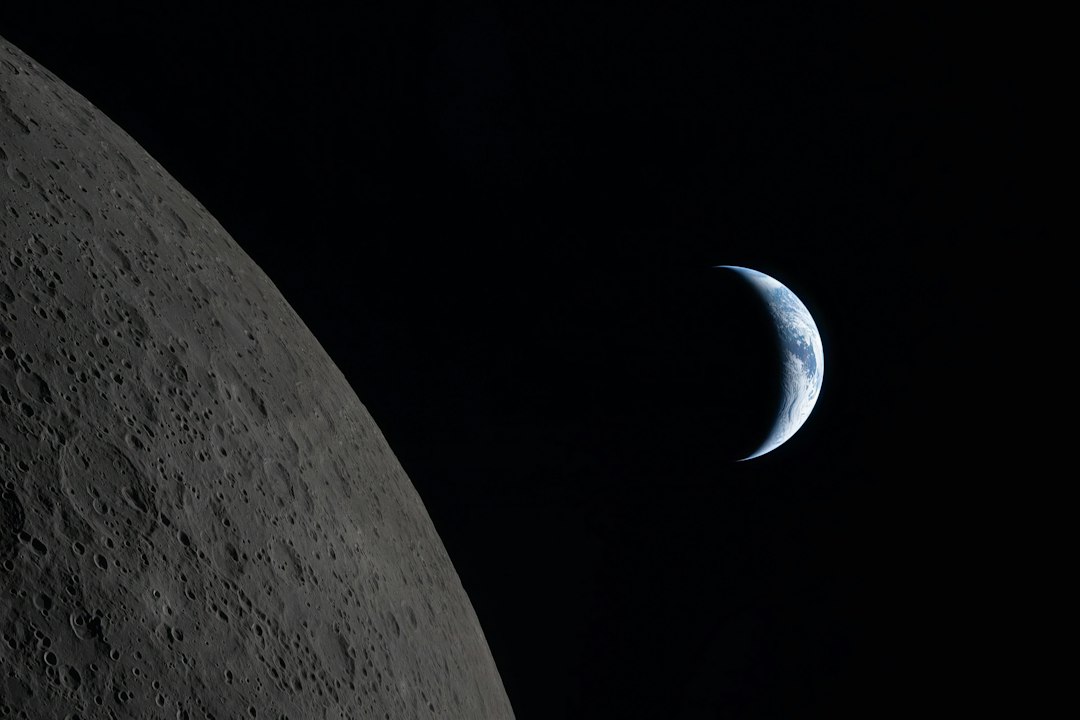
The Preliminary Lunar Science Report for Artemis II Is Out — And the Findings Are Extraordinary
On April 1st, 2026, the crew of the Artemis II mission lifted off from Kennedy Space Center, riding atop NASA's Space Launch System (SLS) — the most powerful rocket NASA has ever flown. Roughly three and a half hours after launch, the rocket's upper stage separated from the Orion spacecraft, christened Integrity, and four pioneering astronauts — Reid Wiseman, Victor Glover, Christina Koch, and Jeremy Hansen — began their nearly ten-day journey around the Moon. As the second crewed mission in NASA's ambitious Artemis Program, this circumlunar flight represented far more than a technical milestone. It was, in every meaningful sense, humanity's reintroduction to deep space exploration after more than half a century of absence.
The mission's trajectory took the crew on a free-return trajectory around the Moon — a path designed so that, in the event of a systems failure, the spacecraft would naturally loop back toward Earth without requiring a propulsive burn. This same orbital geometry was used during the Apollo 13 emergency in 1970, underscoring both the elegance and the resilience of the approach. But unlike Apollo 13, Integrity completed its journey flawlessly, giving its crew unprecedented time to observe, document, and experience our nearest celestial neighbor in ways no humans had since the final Apollo missions of the early 1970s.
Now, with mission data fully processed and analyzed, NASA has released "Artemis II: Sights & Sounds of Science" — an accessible field guide to the Artemis II Preliminary Lunar Science Report. The results are, by any measure, scientifically remarkable.
"Through photographs, spoken observations, drawings, and annotations, the Artemis II crew created a unique scientific record — one that is now available to the science community and the public for further study."
— Artemis II Preliminary Lunar Science Report
"Hello World": Earth as a Scientific Subject
On Day 2 of the mission, April 2nd, 2026, a crew member captured what would quickly become one of the most iconic images of the decade — a breathtaking photograph of Earth seen from cislunar space. For the general public, it was a profound reminder of our planet's fragile beauty. For scientists, it was a goldmine of observational data packed into a single frame.
The image captured an astonishing range of Earth science phenomena simultaneously: active weather systems, auroras at both poles, distinct atmospheric layers, a sprawling Saharan dust plume, the soft glow of zodiacal light, and the faint but unmistakable constellation of city lights tracing populated coastlines and river valleys. This kind of holistic, wide-field perspective is something that Earth-observing satellites — which image our planet in narrow sequential strips — simply cannot replicate. The ability to see Earth as a unified system in a single snapshot has enormous value for climate scientists, atmospheric researchers, and planetary scientists who study Earth as an analogue for other worlds.
What made the image especially intriguing from a scientific standpoint was its illumination source. The astronauts were not seeing Earth bathed in direct sunlight, but rather in Earthshine reflected via moonlight — a subtle, diffuse luminescence that fundamentally altered the visual characteristics of our planet's surface. Mission Specialist Christina Koch described the surreal experience with striking clarity:
"I feel like right now the Moon is a light sponge and the Earth is a light mirror. The Earth has not quite looked like the pictures. You really can't make out the deep royal blue. It's just a bright, bright, light blue. And then the continents are like a dark, dark bluish green. But overall, the whole thing is just like, electric blue."
— Christina Koch, Artemis II Mission Specialist
This description carries deeper scientific significance than it might initially appear. The albedo — or reflectivity — of Earth's surface as seen from different vantage points and under different lighting conditions is directly relevant to our understanding of planetary energy budgets and climate feedback loops. Observations of this kind, made by trained astronaut-scientists in real time, complement and contextualize data gathered by robotic instruments in ways that are difficult to quantify but undeniably valuable.
Total Solar Eclipse: A 54-Minute Window Into the Sun's Outer Atmosphere
As Integrity passed behind the Moon on April 6th, 2026, the crew witnessed an event that no human being had experienced in over 50 years: a total solar eclipse from cislunar space. From their uniquely advantageous orbital position, the Moon completely blocked the Sun's disc for an extraordinary 54 minutes — compared to the maximum of roughly 7.5 minutes that the most favorably situated observers on Earth's surface can ever experience.
This prolonged totality gave the crew an unprecedented, naked-eye view of the Sun's corona — the outermost layer of the solar atmosphere, extending millions of kilometers into space. Under normal circumstances, the corona's relatively faint light is completely overwhelmed by the Sun's photosphere, making it observable from Earth only during the fleeting moments of a total eclipse, and typically requiring specialized scientific instrumentation such as coronagraphs. The crew of Artemis II observed the corona's evolving structure — its streamers, plumes, and dynamic helmet structures — for nearly a full hour, generating a continuous observational record of unprecedented duration by human eyes.
The scientific importance of this cannot be overstated. The corona is the origin point of space weather — the streams of charged particles and magnetic disturbances that can disrupt satellites, power grids, and, critically, pose radiation hazards to astronauts on deep space missions. Understanding the corona's structure and behavior is one of the central challenges of modern solar physics, and the Artemis II observations provide a qualitative dataset that meaningfully complements the work of missions like NASA's Parker Solar Probe and the European Space Agency's Solar Orbiter.
The prolonged eclipse also created a window of deep darkness that enabled several other remarkable observations. The crew documented the zodiacal light around the Moon — a faint, diffuse glow caused by sunlight scattering off interplanetary dust particles concentrated along the plane of the solar system. They achieved pristine, unpolluted views of Mars, Saturn, distant galaxies, and the Milky Way's core in extraordinary detail. Canadian astronaut Jeremy Hansen described the transformative experience of viewing stars from cislunar space:
"And then the stars, when you're in space. You know, I only learned this in the last few days, but there's a depth to them that you don't see from Earth. And so they look closer [or] further based on their brightness. Their brightness probably has nothing to do with their distance, but with the brightness of the stars. And they really look to you, like you can see where they are in the galaxy."
— Jeremy Hansen, Artemis II Mission Specialist
Impact Flashes: Witnessing the Moon Being Bombarded in Real Time
The Moon's airless surface makes it one of the most geologically dynamic bodies accessible to human observation — not from volcanic or tectonic activity, but from the relentless bombardment of meteoroids. Without an atmosphere to ablate incoming space rocks, even centimeter-scale impactors strike the lunar surface at velocities between 10 and 70 kilometers per second, releasing enormous amounts of kinetic energy instantaneously. The results are craters, melted regolith, and brilliant flashes of light visible across vast distances.
From Earth, professional and amateur astronomers have sporadically captured these lunar impact flashes using sensitive cameras during the Moon's dark phases. During the Apollo missions, astronauts in orbit occasionally reported seeing these flashes from their orbital vantage point. The Artemis II crew was specifically tasked by the Lunar Science Team at NASA's Johnson Space Center with using the 54-minute eclipse window to systematically search for and document these events — making them the first humans to attempt this since the Apollo era.
Their results were remarkable. Using handheld cameras during the eclipse, the crew captured what scientists believe are the faintest lunar impact flashes ever recorded by the unaided human eye. Based on careful analysis of flash brightness and duration, scientists estimate the impacting meteoroids were no more than 5 centimeters (roughly 2 inches) in diameter. Yet the kinetic energy released upon impact was sufficient to produce visible luminosity detectable from hundreds of thousands of kilometers away in space.
- Impact velocity estimates: 10–70 km/s, depending on the meteoroid's origin
- Estimated impactor size: ≤5 cm (2 inches) in diameter
- Observation window: ~54 minutes of uninterrupted eclipse darkness
- Scientific value: Constraining impact flux rates critical for habitat safety planning
- Historical context: First systematic crewed observations since the Apollo program
These observations carry profound practical implications for the future of lunar exploration. Any permanent lunar habitat or surface infrastructure will need to withstand not only radiation and the hard vacuum of space, but also the constant rain of micrometeorite impacts and the resulting plumes of electrostatically charged regolith they eject. The Artemis II dataset provides mission planners with direct, human-acquired observational evidence to better constrain impact flux models — data that robotic missions alone cannot fully replicate.
Lunar Geology: Painting a Portrait of Two Worlds in One
Perhaps no area of Artemis II's scientific contribution is more immediately impactful for planetary science than its geological observations. NASA's Lunar Reconnaissance Orbiter (LRO), which has been mapping the Moon in extraordinary detail since 2009, has provided an invaluable orbital perspective. But orbital remote sensing has inherent limitations — particularly in resolving subtle color and texture variations that can indicate radically different rock types and mineralogical compositions.
The circumlunar trajectory of Integrity gave the Artemis II crew direct visual access to the Moon's far side — the hemisphere permanently facing away from Earth — which remains significantly less studied than the near side, despite dramatic advances from robotic missions. China's landmark Chang'e-6 mission recently returned the first samples ever retrieved from the far side's South Pole-Aitken Basin, revealing that the Moon's two hemispheres have distinct and divergent geological histories driven by asymmetries in internal heat flow, volcanism, and crustal thickness that scientists are still working to fully explain.
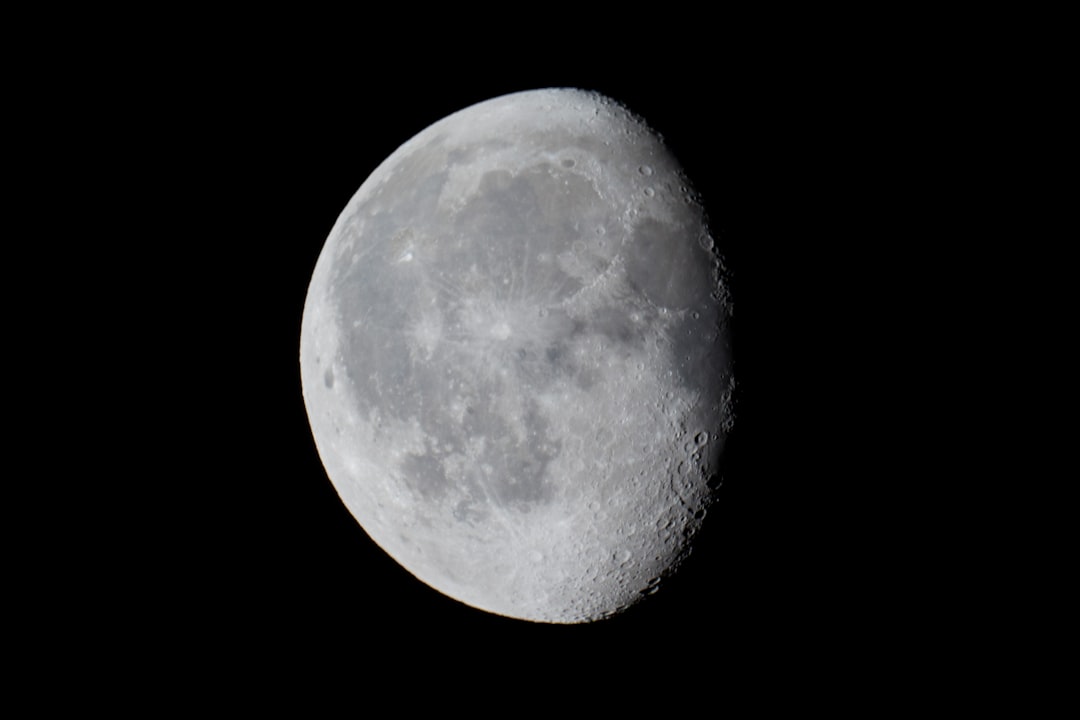
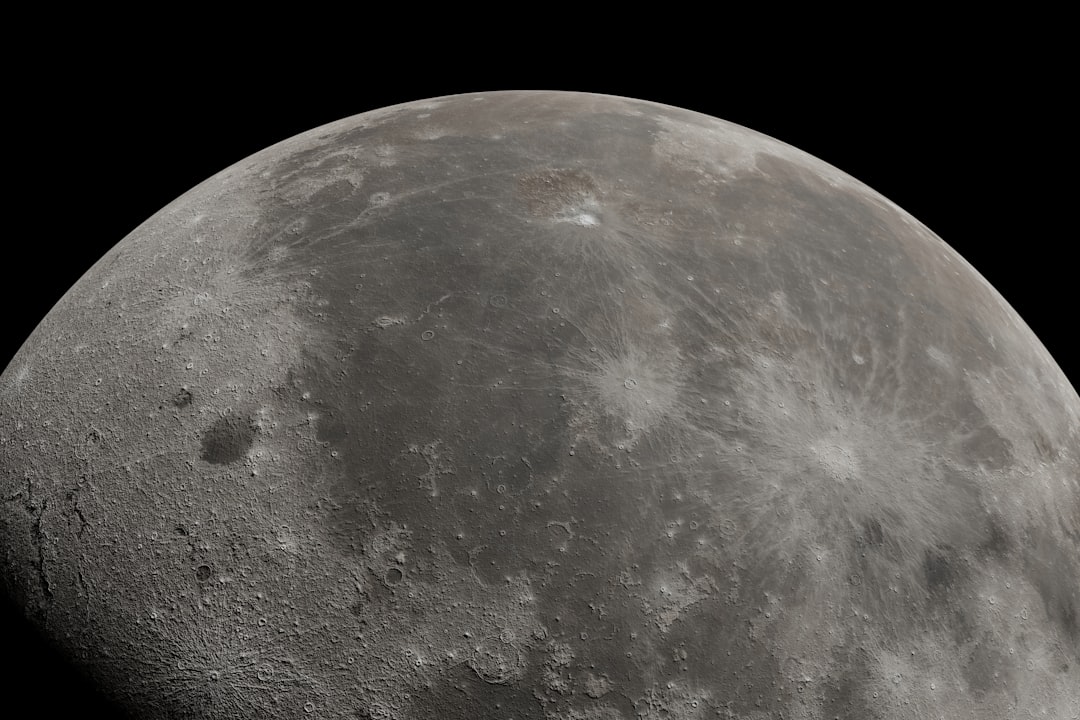
The Artemis II crew made meticulous naked-eye and photographic observations of color variations across the lunar surface — subtle hues detectable against the Moon's predominant grey palette that carry enormous scientific significance:
- Blue-grey tones: Indicative of titanium-rich volcanic basalts, found extensively in the lunar maria (ancient lava plains)
- Brown tones: Associated with iron-rich rock types, common in the highland terrains
- Green tones: Linked to volcanic glass beads or impact-melted regolith, potentially rich in volatile elements including water
- White patches: Often indicative of fresh impact ejecta or anorthosite-rich highland material
- Black regions: Consistent with pyroclastic deposits from ancient volcanic eruptions
Scientists are now cross-referencing these real-time crew observations against LRO's spectroscopic and imaging datasets, as well as data from India's Chandrayaan-3 mission. The combined analysis promises to refine mineralogical maps of the lunar surface in ways that will directly inform decisions about resource extraction sites for future crewed missions — particularly the identification of regions rich in ilmenite (a potential source of oxygen and titanium), volcanic glass (potentially harboring trapped volatiles), and impact melt sheets.
The Lunar Terminator: Rehearsing the South Pole Environment
One of the most tactically important scientific objectives assigned to the Artemis II crew was the systematic study of the lunar terminator — the constantly shifting boundary zone between the sunlit and shadowed hemispheres of the Moon. This region exists in a state of permanent, extreme low-angle illumination, where the Sun sits perpetually near the horizon, casting extraordinarily long shadows that dramatically accentuate topographic features invisible under higher sun angles.
This lighting geometry is not merely visually dramatic — it is scientifically and operationally critical. The lunar terminator closely replicates the conditions found near the Moon's South Pole, where NASA, ESA, JAXA, and other international partners plan to establish the first permanent human presence on the lunar surface. In polar regions, crater rims and mountain peaks receive near-continuous sunlight — invaluable for solar power generation — while the crater floors remain in permanent shadow, preserving billions of years' worth of water ice and other volatile compounds at cryogenic temperatures.
Understanding how surface features appear, cast shadows, and reveal their topographic character under terminator-like lighting is directly applicable to mission planning for Artemis III and beyond. Pilot Victor Glover captured the dramatic visual impact of terminator conditions with visceral clarity during the flyby:
"I wish I had more time to describe what I'm seeing, but the terminator right now is just fantastic. It's the most rugged that I've seen it. From a lighting perspective, there are little islands – there are islands of terrain out there that are completely surrounded by darkness, which indicates some real variation in the terrain. It's very, very interesting to see."
— Victor Glover, Artemis II Pilot
Glover's observation of "islands of terrain surrounded by darkness" is a beautifully intuitive description of peaks of eternal light — topographic high points near the lunar poles that remain sunlit nearly continuously due to the Moon's very slight axial tilt of just 1.5 degrees. These peaks have been identified by LRO as prime candidates for the placement of solar power arrays and surface habitats for future crewed missions, making the crew's first-hand characterization of similar terminator-zone topography a direct contribution to mission planning.
Looking Ahead: From Circumlunar Flight to Boots on the Moon
The scientific harvest of Artemis II is already feeding directly into planning for the program's next critical milestones. Artem