The Roman Space Telescope Will Find Ancient Black Holes By Watching How They Eat Stars
In the grand theater of the cosmos, few spectacles are as violent — or as scientifically illuminating — as a star being consumed by a supermassive black hole (SMBH). These cosmic behemoths, lurking at the centers of virtually every large galaxy, can be extraordinarily messy eaters. When a star ventures too close, the SMBH's overwhelming tidal force does not simply swallow it whole — it stretches, shreds, and tears the star apart in a cataclysmic process before consuming its remnants. Far from being merely destructive, this violent feast is a gift to astrophysicists: it makes otherwise invisible black holes suddenly, brilliantly detectable.
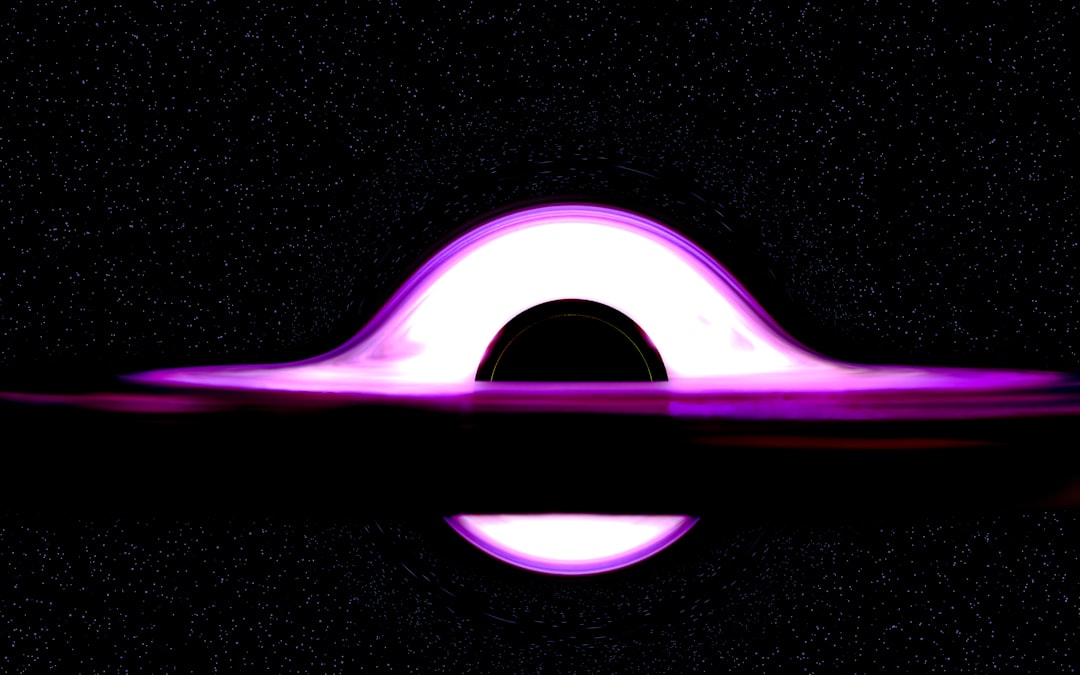
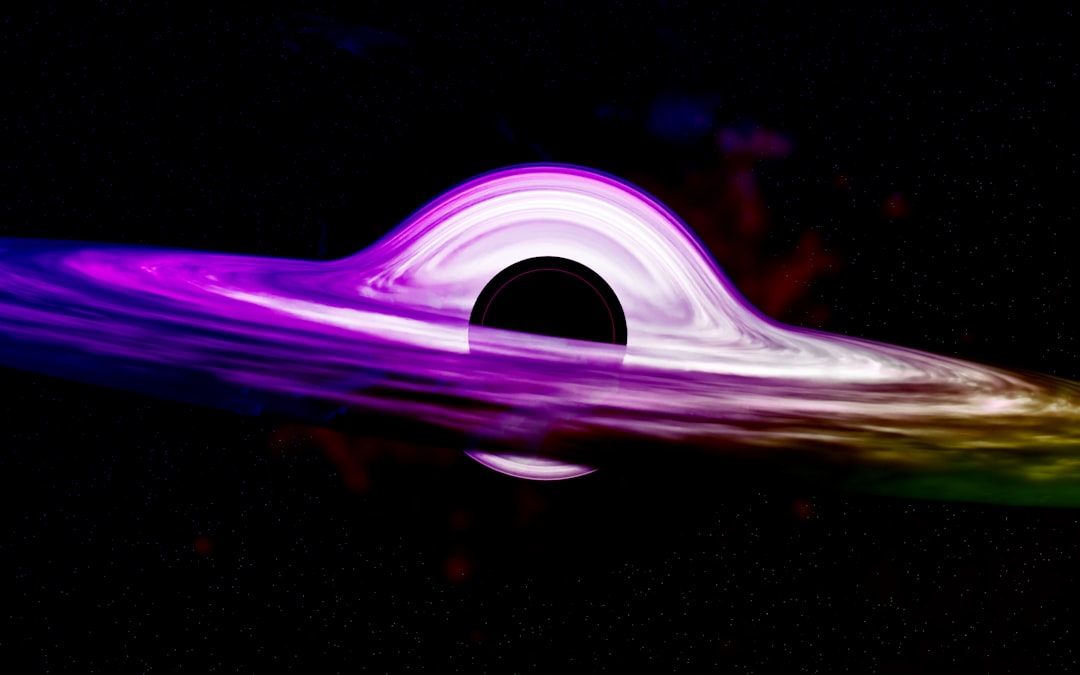
This phenomenon, known as a tidal disruption event (TDE), occurs when the tidal gravitational forces exerted by an SMBH exceed the self-gravitational forces holding a star together. The star is stretched radially — a process called spaghettification — and its material is flung into a debris stream that ultimately settles into an accretion disk surrounding the black hole. As this stellar material spirals inward, it heats to tens of millions of degrees, radiating enormous amounts of energy across the electromagnetic spectrum. The resulting flare can outshine the SMBH's entire host galaxy for weeks to months, alerting astronomers across cosmic distances to the presence of an otherwise-invisible black hole. To learn more about how black holes interact with their environments, visit NASA's Black Hole resource page.
Why Tidal Disruption Events Matter to Cosmology
The scientific stakes here extend well beyond cataloguing dramatic cosmic events. As researchers strive to understand how supermassive black holes — some weighing billions of times the mass of our Sun — came to be so extraordinarily massive, they require data spanning not just the local Universe but the full sweep of cosmic time. Understanding the growth history of SMBHs is one of the most pressing open questions in modern astrophysics, touching on the formation of the first galaxies, the seeding of early structure in the Universe, and the complex interplay between black holes and their host galaxies.
New research published in The Astrophysical Journal addresses this challenge head-on, predicting how many TDEs our most powerful upcoming telescopes are likely to detect — and what those detections will reveal. The study is titled "Tidal Disruption Event Rates across Cosmic Time: Forecasts for LSST, Roman, and JWST and Their Constraints on the Supermassive Black Hole Mass Function." The lead author is Mitchell Karmen, a graduate student at Johns Hopkins University, working alongside a team of leading astrophysicists.
"Measuring the mass distribution of supermassive black holes (SMBHs) over cosmic time remains particularly challenging for the low-mass population at z > 1. This population is also the most sensitive to SMBH seeding and early growth models." — Karmen et al., The Astrophysical Journal
The Mass Window Where TDEs Shine
Not all supermassive black holes produce observable tidal disruption events. TDEs occur preferentially around lower-mass SMBHs in the range of roughly 100 thousand to 100 million solar masses. Black holes above this mass threshold — the so-called Hills mass limit — are so gravitationally powerful that their event horizons are larger than the tidal radius of a typical star. In these cases, the star crosses the event horizon and is swallowed whole before it can be disrupted, producing no luminous flare. This makes TDEs uniquely valuable probes of the lower end of the SMBH mass spectrum.
It is precisely this lower-mass population of SMBHs that is the most poorly understood, and the most sensitive to theoretical models of black hole seeding and early growth. TDEs are among the only reliable observational tools for detecting and characterizing these objects, particularly at high redshifts where other detection methods, such as active galactic nucleus (AGN) surveys, become increasingly incomplete or biased.
A New Model for TDE Rates Across Cosmic Time
To make robust predictions, Karmen and his collaborators constructed a sophisticated semiempirical model for the redshift evolution of the TDE rate. Rather than relying on a single set of assumptions, they tested multiple prescriptions for the black hole mass function (BHMF) — the statistical distribution of SMBH masses at different epochs in cosmic history — and examined how sensitively the observed TDE rate depends on each.
The model incorporated a rich set of physical factors that evolve with redshift, including:
- Increasing stellar density in galactic nuclei at higher redshifts, which raises the rate at which stars are scattered onto loss-cone orbits that bring them into proximity with the central black hole.
- Higher rates of galaxy mergers in the early Universe, which can perturb stellar orbits and dramatically enhance TDE rates.
- Dust obscuration, which can hide TDE flares from optical telescopes, particularly at high redshifts where galaxy dust content was different.
- The evolving fraction of SMBHs in the mass range capable of producing observable TDEs.
By quantifying the combined effect of all these factors, the team produced the most comprehensive forecast to date of TDE detection rates for the next generation of major astronomical surveys.
"We find that including these effects generally results in a volumetric TDE rate that increases with redshift until a maximum near cosmic noon, before declining at higher redshift, where SMBHs that can disrupt stars become increasingly scarce." — Karmen et al.
This is a crucial finding. Cosmic noon — roughly 2 to 3 billion years after the Big Bang, corresponding to a redshift of approximately z ≈ 2–3 — was the epoch of peak star formation and galaxy assembly in the Universe. The prediction that TDE rates also peak near this era ties the disruption of stars intimately to the broader story of how galaxies and their central black holes co-evolved. For more background on cosmic noon and galaxy evolution, see the ESA/Hubble Deep Fields science page.
The Nancy Grace Roman Space Telescope: A Transformative Eye on Ancient Black Holes
Central to this research is the forthcoming Nancy Grace Roman Space Telescope, NASA's next flagship observatory, due to launch in the coming months. With a wide field of view approximately 100 times larger than that of the Hubble Space Telescope's infrared camera, Roman is uniquely suited for large-scale transient surveys. Its infrared capabilities allow it to peer through dust and detect light from the distant, redshifted Universe in ways that ground-based optical telescopes simply cannot match.
One of Roman's primary scientific programs is its High-Latitude Time Domain Survey (HLTDS), which will repeatedly and systematically observe the same large region of the sky over time. This survey strategy — sometimes called a time-domain or cadenced survey — is the gold standard for detecting astronomical transients such as supernovae, active galactic nuclei, and, crucially, tidal disruption events. By returning to the same fields over weeks and months, Roman can catch the characteristic rise and fall of a TDE's luminosity and distinguish it from other transient phenomena.
The researchers predict that Roman's HLTDS will detect approximately 100 TDEs per year. While this number may seem modest compared to ground-based surveys, the quality and scientific value of those detections will be extraordinary:
- Roman's TDE detections will probe much greater cosmic distances than any ground-based survey, reaching back to epochs when the Universe was only a few billion years old.
- The infrared sensitivity of Roman allows it to detect TDEs that would be completely hidden from optical surveys due to dust absorption.
- Roman's stable space-based observing environment and wide field will produce a sample that is exceptionally clean and well characterized, free from many of the systematic biases that affect ground-based detections.
- The shape and normalization of Roman's TDE redshift distribution will powerfully discriminate between competing theoretical models of SMBH growth.
"Just by counting the number of TDEs as a function of redshift, you can put meaningful constraints on the population of million-solar-mass black holes. Roman will be transformative in that it can probe tidal disruption events out to greater distances, so you can look at how the rate of TDEs evolves over time." — Suvi Gezari, Associate Professor of Astronomy, University of Maryland
Complementary Surveys: LSST and JWST
Roman does not operate in isolation. The researchers also modeled TDE detection rates for two other major upcoming or current observatories, each playing a distinct and complementary role.
The Vera C. Rubin Observatory and LSST
The Vera C. Rubin Observatory's Legacy Survey of Space and Time (LSST) will conduct the largest optical time-domain survey in history, scanning the entire southern sky repeatedly over a decade. The researchers predict that LSST will detect tens of thousands of TDEs per year — an almost incomprehensible haul. This unprecedented statistical sample will allow astrophysicists to characterize TDE populations in the local and intermediate-redshift Universe with exquisite precision, revealing trends in host galaxy properties, SMBH masses, and disruption rates across a wide range of cosmic environments. However, LSST is fundamentally limited by its optical wavelength coverage and its sensitivity to more distant, highly redshifted events. Roman's infrared space-based view will fill precisely the gap that LSST cannot reach.
The James Webb Space Telescope and COSMOS-Web
At the extreme frontier of cosmic distance, the James Webb Space Telescope (JWST) and its ambitious COSMOS-Web survey enter the picture. While JWST is not expected to detect large numbers of TDEs — its survey area is comparatively small — the TDEs it does find will be at the highest redshifts ever observed, probing the Universe when it was only a billion years old or less. JWST has already demonstrated its power to reveal unexpected massive black holes in the early Universe that challenge existing theoretical models. Its contribution to the TDE census, though numerically small, may prove scientifically pivotal.
Seeds of the Giants: Solving the Mystery of Early Supermassive Black Holes
The motivation for all of this observational effort traces back to a profound cosmological puzzle that JWST has brought into sharp focus: how did supermassive black holes become so massive so quickly? Observations of the distant Universe have revealed black holes weighing billions of solar masses when the Universe was less than a billion years old — far too early for them to have grown to such sizes through conventional accretion, given our standard models of black hole growth.
Two broad theoretical scenarios have emerged to explain this conundrum, each with dramatically different observational signatures:
Light Seeds
In the light seeds scenario, the first black holes formed from the collapse of massive Population III stars — the first generation of stars in the Universe, which were likely hundreds of times more massive than the Sun. These stellar collapses would produce black holes of roughly 100 solar masses. Over billions of years, these seed black holes would then grow by accreting surrounding gas and by merging with other black holes following galaxy collisions. In this scenario, virtually every young galaxy would harbor a central black hole, predicting a relatively abundant population of low-mass SMBHs in the early Universe.
Heavy Seeds
The heavy seeds scenario, by contrast, proposes that SMBHs can form directly from the collapse of massive primordial gas clouds, bypassing the stellar stage entirely. This process — known as direct collapse black hole (DCBH) formation — could produce black holes of up to one million solar masses in a single event. Because the conditions required for direct collapse are rare and stringent, this scenario predicts that early SMBHs would be far less common but individually much more massive.
These two models make very different predictions about the SMBH mass function at high redshifts — predictions that TDE rates can directly test. If light seeds are correct, the HLTDS should find a relatively high rate of TDEs at early cosmic times, reflecting an abundant population of lower-mass black holes. If heavy seeds dominate, TDE rates at high redshift should be lower, with individual events associated with more massive black holes.
"Tidal disruption events help us probe the population of light supermassive black holes, which can help us discriminate between these models." — Mitchell Karmen, Johns Hopkins University
Two Models for the Black Hole Mass Function
A key methodological innovation in this study is the use of two fundamentally different approaches to modeling the SMBH mass function, allowing the researchers to bracket the range of theoretical uncertainty.
Shankar's mass function is an empirical approach, anchored directly in observational data. It uses measurements of galaxy properties — such as stellar velocity dispersions and bulge luminosities — to infer the underlying distribution of SMBH masses at different epochs, using well-established scaling relations between galaxies and their central black holes.
IllustrisTNG, by contrast, is a state-of-the-art cosmological hydrodynamical simulation that models the co-evolution of dark matter, gas, stars, and black holes from the early Universe to the present day using supercomputers. Its SMBH mass function emerges from the simulated physics of accretion and feedback, rather than being inferred from observations.
The fact that Roman's HLTDS can discriminate between these two model families — simply by counting TDEs as a function of redshift — underscores the extraordinary scientific power of the survey. For more on the state of the art in cosmological simulations, visit the IllustrisTNG project website.
A New Era for Time-Domain Astrophysics
The convergence of Roman, LSST, and JWST represents a watershed moment for time-domain astrophysics — the study of how the Universe changes over time. Together, these observatories will survey the sky with an unprecedented combination of depth, area, cadence, and wavelength coverage, enabling discoveries that no single facility could achieve alone.
"Just like Webb has transformed our understanding of distant, high-redshift galaxies, Roman is poised to transform our understanding of high-redshift transients." — Suvi Gezari, University of Maryland
The implications extend well beyond TDE science. The SMBH mass