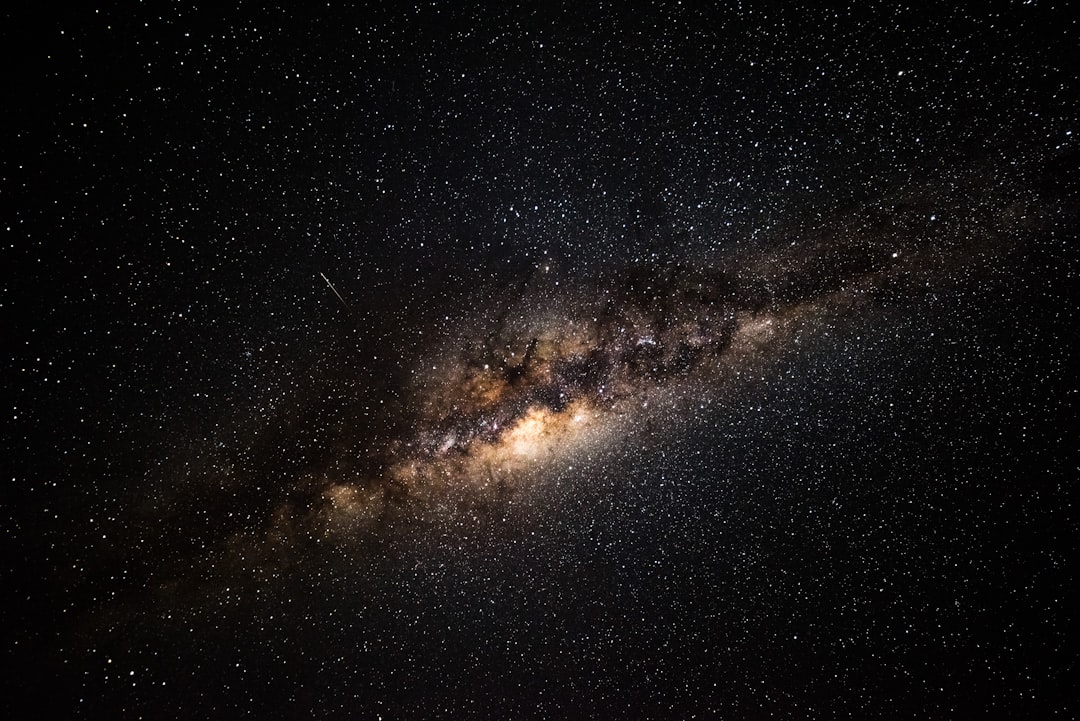
In a groundbreaking study that peers deep into our galaxy's ancient past, Canadian astronomers have reconstructed the Milky Way's dramatic evolutionary journey spanning over 13 billion years of cosmic history. Using the unprecedented capabilities of the James Webb Space Telescope, researchers have discovered that our home galaxy experienced a remarkably turbulent and chaotic youth before maturing into the majestic spiral structure we observe today. This comprehensive analysis of 877 "Milky Way twin" galaxies provides the most detailed timeline yet of how our galaxy transformed from a violent, merger-driven system into the stable cosmic island we inhabit.
The research, led by Dr. Vivian Tan of York University and published in The Astrophysical Journal, represents a significant milestone in understanding galactic archaeology—the science of reconstructing our galaxy's history by observing similar galaxies at various stages of cosmic evolution. By examining galaxies that existed when the Universe was between 1.5 and 10 billion years old, the team essentially created a cosmic photo album documenting the Milky Way's transformation from infancy through adolescence to its current mature state.
What makes this study particularly revolutionary is its use of resolved stellar-mass mapping combined with star-formation-rate analysis across unprecedented cosmic distances. The findings challenge some existing theoretical models while confirming others, revealing that the process of galaxy maturation is far more complex and dynamic than previously understood.
Unveiling the Milky Way's Cosmic Timeline Through Twin Galaxies
The concept of studying "Milky Way twins" represents an ingenious approach to understanding our own galaxy's past. Since we cannot travel back in time to observe the Milky Way directly, astronomers instead identify galaxies at various distances—and therefore various ages—that match what our galaxy would have looked like at those epochs. This technique, known as progenitor galaxy analysis, allows scientists to construct a developmental timeline by observing galaxies frozen at different evolutionary stages.
The research team utilized data from the Canadian NIRISS Unbiased Cluster Survey (CANUCS), a Canadian-led observing program that leverages Webb's Near-Infrared Imager and Slitless Spectrograph. This sophisticated instrument, built by the Canadian Space Agency in partnership with leading research institutions, was specifically designed to capture high-resolution infrared images of the early Universe. By combining JWST's infrared observations with visible-light data from the Hubble Space Telescope, the team created an unprecedented multi-wavelength view of galactic evolution.
The galaxies examined in this survey span a crucial period in cosmic history—from approximately 3.5 to 12.3 billion years ago. This epoch represents a transformational phase in galactic evolution, when the Universe's galaxies were transitioning from small, irregular collections of stars into the organized spiral and elliptical structures that dominate the modern cosmos. Understanding this transition is fundamental to comprehending how structure emerged from the relative chaos of the early Universe.
The Turbulent Youth: A Galaxy Forged in Chaos
Perhaps the most surprising revelation from this study is the extent of the Milky Way's violent early history. The observations reveal that during its first few billion years, our galaxy was engaged in a continuous series of mergers and collisions with neighboring galaxies. These cosmic encounters triggered intense bursts of star formation and created highly disturbed, asymmetric structures that bear little resemblance to the orderly spiral we see today.
The evidence for this turbulent past is written in the morphology of the early Milky Way twins. Researchers observed highly irregular shapes, asymmetric features, and concentrated regions of intense star formation—all telltale signs of recent galactic interactions. These features suggest that the early Milky Way was constantly accreting material from its surroundings, growing through a process of hierarchical merging where smaller galaxies were absorbed into progressively larger structures.
"Astronomers have been modeling the formation of the Milky Way and other spiral galaxies for decades. It's amazing that with the JWST, we can test their models and map out how Milky Way progenitors grow with the Universe itself," explained Dr. Vivian Tan, lead author of the study.
The stellar-mass maps created by the team reveal a clear pattern of inside-out growth occurring between 3 and 4 billion years after the Big Bang. This process began with the formation of dense central bulges, followed by the gradual accumulation of mass in outer regions through both mergers and in-situ star formation. Over billions of years, this process sculpted the extended spiral arms and disk structure characteristic of mature spiral galaxies like our Milky Way.
From Chaos to Order: The Great Galactic Calming
The transition from a chaotic, merger-driven system to a stable spiral galaxy represents one of the most significant transformations in galactic evolution. The research reveals that this stabilization process occurred gradually over several billion years, with Milky Way twins showing progressively smoother structures and more evenly distributed star formation as cosmic time advanced.
By the time the Universe reached approximately 6-7 billion years of age, the observed galaxies displayed markedly different characteristics. The violent asymmetries of youth had given way to more organized structures, with star formation becoming distributed throughout extended disk regions rather than concentrated in compact central areas. This shift indicates that the galaxies had accumulated sufficient angular momentum and settled into stable rotating disks—the hallmark of mature spiral galaxies.
Understanding this transition has profound implications for theories of galactic feedback mechanisms. Feedback refers to the processes by which energy from star formation and supermassive black holes regulates further star formation and shapes galactic structure. The observations suggest that these feedback processes became more efficient over time, helping to stabilize galaxies and prevent the runaway star formation that characterized earlier epochs.
Advanced Simulations Reveal Unexpected Complexities
To validate their observational findings, the research team ran state-of-the-art computer simulations tracking the evolution of Milky Way-like galaxies from the early Universe to the present day. These hydrodynamic simulations, which model the complex interplay of gravity, gas dynamics, star formation, and feedback processes, largely confirmed the inside-out growth pattern observed in the data.
However, the simulations also revealed important discrepancies that highlight gaps in our theoretical understanding. In particular, the models struggled to reproduce the extremely concentrated nature of the earliest galaxies and underestimated how rapidly mass accumulated in outer regions during certain epochs. These findings provide valuable constraints for theorists working to refine models of galaxy formation and evolution.
The discrepancies between observation and simulation are not failures but rather opportunities for advancing our understanding. They point to physical processes that may be inadequately represented in current models, such as the efficiency of stellar feedback at high redshift, the rate of minor mergers, or the mechanisms governing angular momentum transport within forming galaxies. Addressing these issues will require both improved simulations and additional observational data.
Revolutionary Technology Enabling Cosmic Archaeology
This study showcases the transformative capabilities of the James Webb Space Telescope, which has revolutionized our ability to study the distant Universe. Webb's infrared sensitivity is particularly crucial for this research, as light from distant galaxies is stretched to longer wavelengths by the expansion of the Universe—a phenomenon known as cosmological redshift. Objects that appear in visible light when nearby shift into the infrared when observed at great distances.
The CANUCS program employed an ingenious technique by observing galaxies behind massive galaxy clusters, which act as natural gravitational lenses. According to Einstein's theory of general relativity, massive objects warp the fabric of spacetime, bending the path of light passing nearby. Galaxy clusters, among the most massive structures in the Universe, create powerful lensing effects that magnify and brighten background galaxies, allowing astronomers to observe objects that would otherwise be too faint to detect even with Webb's sensitive instruments.
The combination of Webb's infrared capabilities with gravitational lensing and Hubble's visible-light observations creates a powerful multi-wavelength approach. Different wavelengths reveal different aspects of galactic structure: ultraviolet and visible light trace young, hot stars and active star formation, while infrared light penetrates dust to reveal older stellar populations and the total stellar mass distribution. This comprehensive view is essential for understanding the complete picture of galactic evolution.
Key Discoveries and Scientific Implications
The research yielded several crucial findings that advance our understanding of galactic evolution:
- Inside-Out Growth Pattern: Milky Way progenitors consistently showed growth from dense central regions outward, with stellar mass accumulating progressively in outer disk regions between 3-4 billion years after the Big Bang. This pattern supports hierarchical galaxy formation theories while providing precise timing for when this process occurred.
- Turbulent Early Phase: Young Milky Way twins exhibited highly disturbed morphologies with asymmetric features and concentrated star formation, indicating frequent mergers and violent gas accretion during the first few billion years of galactic evolution. This turbulent phase was more extreme and prolonged than many theoretical models predicted.
- Gradual Stabilization: The transition from chaotic to stable occurred over several billion years, with galaxies showing progressively smoother structures and more distributed star formation as they matured. This gradual evolution suggests that multiple physical processes contributed to stabilization rather than a single dramatic event.
- Model Discrepancies: State-of-the-art simulations successfully reproduced the overall inside-out growth pattern but struggled with specific details, particularly the extreme central concentration of early galaxies and the rapid mass accumulation in outer regions. These discrepancies provide valuable targets for improving theoretical models.
- Star Formation History: The resolved star-formation-rate maps revealed complex patterns of stellar birth across galactic disks, showing how star formation transitioned from concentrated bursts in compact regions to more distributed, steady processes in extended disks over cosmic time.
Implications for Understanding Cosmic Structure Formation
These findings have far-reaching implications extending beyond the Milky Way's history. They provide crucial insights into the broader processes of cosmic structure formation—how the relatively smooth Universe of the cosmic microwave background era evolved into the rich tapestry of galaxies, clusters, and large-scale structure we observe today.
The study confirms that galaxy formation is a fundamentally hierarchical process, with larger structures building up through the merger and accretion of smaller components. However, it also reveals that this process is more nuanced than simple hierarchical models suggest, with important roles for in-situ star formation, feedback regulation, and angular momentum evolution. Understanding these processes is essential for interpreting observations across the electromagnetic spectrum and for making predictions about galaxy populations at even earlier cosmic epochs.
Future Directions: Pushing Deeper into Cosmic Time
As co-author Professor Adam Muzzin of York University emphasized, this study represents just the beginning of what's possible with JWST's capabilities:
"This study is a significant step forward in understanding the earliest stages of the formation of our Galaxy. However, this is not the deepest we have pushed the telescope yet. In the coming years, with the combination of JWST and gravitational lensing we can move from observing Milky Way twins at 10 percent their current age to when they are a mere 3 percent of their current age, truly the embryonic stages of their formation."
The CANUCS collaboration is actively working to expand this research by incorporating additional high-resolution data and analyzing even larger samples of Milky Way progenitors. Future observations will push to even earlier cosmic epochs, potentially observing galaxies when the Universe was less than 500 million years old—a period when the first galaxies were just beginning to form from primordial gas clouds.
Key questions that future research will address include: When exactly did galaxies like the Milky Way settle into stable disk configurations? How long did the stabilization process take, and what physical mechanisms drove it? What role did dark matter halos play in shaping galactic evolution? And how do environmental factors—such as proximity to other galaxies or location within larger cosmic structures—influence the evolutionary pathway of individual galaxies?
Additionally, researchers hope to connect these observations with complementary data from other cutting-edge facilities. Ground-based telescopes like the European Southern Observatory's Very Large Telescope provide detailed spectroscopic data that reveals the chemical composition and kinematics of distant galaxies. Radio observations trace cold gas reservoirs—the raw material for future star formation. By combining multi-wavelength data across the electromagnetic spectrum, astronomers can build increasingly complete pictures of how galaxies evolve.
A New Era in Galactic Archaeology
This study marks a watershed moment in the field of galactic archaeology—the reconstruction of cosmic history through observations of distant objects. For the first time, astronomers can create detailed, resolved maps of stellar populations in galaxies as they existed billions of years ago, providing direct observational tests of theoretical models that were previously validated only through indirect evidence or simulations.
The implications extend to our understanding of our own place in the cosmos. The Milky Way, our cosmic home, is not a static structure but rather the product of billions of years of dynamic evolution. Every star in our night sky, including our Sun, formed as part of this grand evolutionary story. The heavy elements that make up planets and life itself were forged in earlier generations of stars during the Milky Way's turbulent youth and distributed through supernova explosions and stellar winds.
As Webb continues its mission and future observatories come online, our ability to trace this cosmic heritage will only improve. The next generation of extremely large telescopes—ground-based facilities with mirrors 30 meters or more in diameter—will provide complementary capabilities, enabling detailed spectroscopic studies of individual regions within distant galaxies. Together, these facilities will write increasingly detailed chapters in the story of how our galaxy, and galaxies throughout the Universe, came to be.
The research demonstrates the power of international collaboration in advancing human knowledge. The CANUCS program brings together scientists from institutions across Canada and around the world, combining expertise in observational astronomy, theoretical modeling, and data analysis. This collaborative approach, enabled by shared access to cutting-edge facilities like JWST, exemplifies how modern astronomy pushes the boundaries of our understanding through coordinated global effort.
For those interested in exploring this research further, the full study is available in The Astrophysical Journal, and additional information can be found through York University's press release and the Space Telescope Science Institute's JWST archive.