The World's First Spacefaring Commercial Cardiologist Has Lessons for Would-Be Astronauts
The commercial space revolution has fundamentally altered who gets to slip the surly bonds of Earth. Over the past two decades, the once-exclusive domain of government-trained astronauts has gradually opened its doors to a wider cohort of human beings — scientists, entrepreneurs, artists, and now, physicians. Among the most remarkable of these new spacefarers is Dr. Eiman Jahangir, a cardiologist who officially crossed the Kármán line aboard a Blue Origin New Shepard rocket in August 2024, becoming what is believed to be the world's first commercial astronaut with a background in cardiology. His new memoir, A Heart for Space, is part personal odyssey, part practical roadmap for the next generation of aspiring civilian astronauts.
From Tehran to the Thermosphere: An Unlikely Journey
Dr. Jahangir's story begins far from the polished corridors of Mission Control. Born in Iran during the Iran-Iraq War — one of the most devastating regional conflicts of the twentieth century, claiming upward of half a million lives between 1980 and 1988 — he came into a world already defined by resilience and uncertainty. When he was just four years old, his parents made the courageous decision to immigrate to Nashville, Tennessee, seeking stability and opportunity in the United States.
From an early age, Jahangir carried two seemingly incompatible ambitions: to become a physician and to travel to space. Medicine, demanding as it is, offered a clear, if grueling, pathway. He worked through the rigors of medical school and ultimately built a distinguished career as a cardiologist at Vanderbilt University Medical Center, one of the nation's premier academic health institutions. Cardiology itself is a field of profound complexity — encompassing the biomechanics of the human heart, the electrophysiology of cardiac rhythm, and the systemic effects of reduced gravity on the cardiovascular system. That last specialization, as it turns out, would prove unexpectedly relevant to his second dream.
"The path to space is no longer about government selection boards or having 'the right stuff.' It requires a systematic, repeatable process of consistently driving towards this ultimate dream of so many people." — Dr. Eiman Jahangir, A Heart for Space
The Kármán Line: Where Space Begins
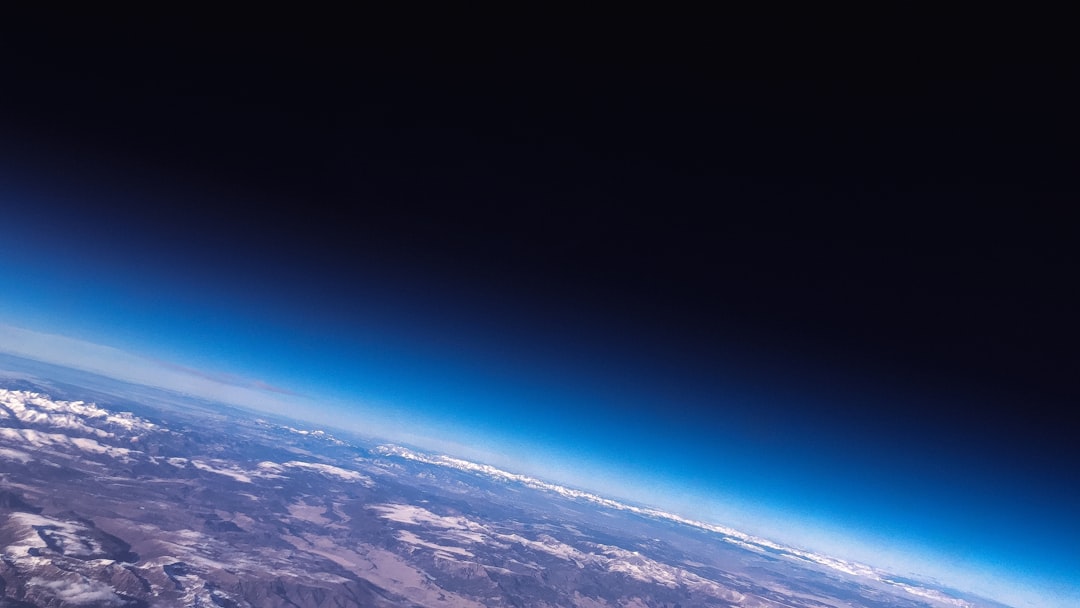
To understand the significance of Dr. Jahangir's achievement, it helps to appreciate what it means to cross the Kármán line — the internationally recognized boundary of space, set at 100 kilometers (approximately 62 miles) above sea level. Named after Hungarian-American physicist Theodore von Kármán, the line represents the altitude at which Earth's atmosphere becomes too thin for conventional aerodynamic lift, and where orbital mechanics begin to dominate over atmospheric forces. The Fédération Aéronautique Internationale (FAI) uses this threshold to officially define spaceflight. Blue Origin's New Shepard vehicle is specifically designed to carry passengers just beyond this boundary, offering a few minutes of microgravity and a dramatic view of Earth's curvature against the inky blackness of space.
The physiological effects of even brief spaceflight are well-documented and scientifically significant. Microgravity causes fluid shifts toward the upper body, changes in cardiac output, alterations in vestibular function, and transient effects on intraocular pressure. For a cardiologist like Dr. Jahangir, the experience of personally undergoing these changes — however briefly — represents a unique intersection of professional expertise and personal adventure. NASA's Human Research Program has spent decades studying these effects in the context of long-duration spaceflight, and the data being gathered from commercial suborbital passengers is increasingly contributing to that body of knowledge.
Five Rejections and a New Space Renaissance
Before the commercial space age made his dream achievable, Dr. Jahangir pursued the traditional route with extraordinary determination. He applied to NASA's astronaut selection program multiple times, reaching the final rounds of the notoriously competitive process on no fewer than five separate occasions — only to be passed over each time. NASA's astronaut corps remains one of the most selective professional groups on the planet; in recent application cycles, the agency has received over 18,000 applications for as few as a dozen slots, representing an acceptance rate well below 0.1%.
The repeated rejections, compounded by a series of personal hardships that the book addresses with candid emotional honesty, might have ended a lesser person's ambitions. Instead, they set the stage for an alternative path that would have been unimaginable a generation ago. The rise of the New Space industry — driven by companies like SpaceX, Blue Origin, Virgin Galactic, and a constellation of smaller ventures — has fundamentally decoupled access to space from government patronage. NASA's own Commercial Crew Program exemplifies this shift, leveraging private-sector innovation to reduce costs and broaden participation.
Along his journey, Dr. Jahangir crossed paths with a remarkable cast of characters that underscores just how dramatically the demography of space has changed. Among his fellow travelers were Jared Isaacman — the entrepreneur and aviator who would go on to become NASA's current Administrator — and Eytan Stibbe, an Israeli astronaut and entrepreneur who flew to the International Space Station aboard a SpaceX Crew Dragon in 2022 as part of the Rakia Mission. The relationship between Jahangir, an Iranian-American, and Stibbe, an Israeli national, is highlighted in the book as a quiet but powerful testament to the unifying potential of space exploration — a theme that has resonated since the earliest days of the Apollo-Soyuz mission in 1975.
Biosphere 2, MoonDAO, and the Unconventional Preparation for Space
Perhaps no detail in Dr. Jahangir's story better illustrates the idiosyncratic nature of the modern path to space than his time spent inside Biosphere 2, the iconic closed ecological system built in Oracle, Arizona in the late 1980s. Originally designed as an experiment in self-contained, Earth-independent life support — with direct relevance to the challenges of long-duration space habitation — Biosphere 2 has since been repurposed as a research facility managed by the University of Arizona. Jahangir's stint there speaks to the breadth of unconventional training he pursued in preparation for spaceflight.
Even more unexpected was the mechanism by which he ultimately secured his ticket to orbit. Dr. Jahangir obtained his Blue Origin seat through MoonDAO, a decentralized autonomous organization (DAO) built on blockchain technology, dedicated to decentralizing access to space and funding civilian astronaut experiences. MoonDAO's model — pooling community resources through cryptocurrency to purchase seats on commercial spaceflights — represents a genuinely novel approach to democratizing what remains an extraordinarily expensive endeavor. While the model is nascent and not without its critics, it offers a tantalizing glimpse of how collaborative, community-driven financing might eventually lower the barriers to space access in ways that neither governments nor wealthy entrepreneurs alone can achieve.
The Science of Cardiovascular Health in Space
Dr. Jahangir's professional background adds a layer of scientific richness to his spaceflight story that distinguishes it from many civilian astronaut memoirs. The cardiovascular system is among the most profoundly affected physiological systems during spaceflight. In microgravity, the heart — accustomed to pumping against Earth's gravitational gradient — must adapt to a radically altered fluid dynamic environment. Key documented effects include:
- Cephalad fluid shift: Without gravity pulling fluids downward, approximately one liter of blood redistributes from the lower extremities to the thorax and head, causing facial puffiness and nasal congestion experienced by virtually all astronauts.
- Cardiac remodeling: Studies of long-duration astronauts have shown measurable changes in the shape and function of the heart, including a shift toward a more spherical geometry — a phenomenon studied extensively through NASA's twin studies and summarized in the NASA Twins Study.
- Orthostatic intolerance upon return: Re-adaptation to Earth's gravity can cause dizziness and fainting as the cardiovascular system recalibrates — a particular concern for long-duration missions returning from the International Space Station.
- Arterial stiffness: Early research suggests that spaceflight may accelerate vascular aging, with implications for cardiovascular risk in future deep-space explorers.
- Elevated cosmic radiation exposure: Beyond the Van Allen belts, increased radiation poses additional cardiovascular risks that are still being actively quantified by researchers at ESA's Human Spaceflight research division.
While Dr. Jahangir's suborbital flight lasted only minutes — far too brief to trigger the more dramatic long-duration effects — the symbolic and scientific significance of having a cardiologist personally experience these transitions cannot be overstated. His unique vantage point may well contribute valuable qualitative insights to the growing field of commercial spaceflight medicine.
A Self-Help Manual for the Aspiring Commercial Astronaut
Beyond its value as memoir, A Heart for Space functions as a structured guide for those who harbor genuine ambitions of spaceflight in the commercial era. Dr. Jahangir's central thesis is both empowering and practical: in the age of Blue Origin, SpaceX, and their successors, the gates to space are no longer guarded solely by government panels assessing whether candidates possess the ineffable qualities of "the right stuff" — a phrase forever associated with Tom Wolfe's legendary 1979 chronicle of the Mercury astronauts. Instead, he argues, a systematic, repeatable, goal-oriented process — one rooted in defined intention, sustained discipline, and strategic networking — can carry a determined individual from dream to launch pad.
While some of the book's self-improvement tenets echo frameworks found in the broader personal development literature — techniques such as "Say It Out Loud" and "Define Your Dream" are familiar to readers of the genre — their application to the specific context of commercial astronaut candidacy is genuinely fresh. The book offers practical considerations around physical fitness preparation, financial planning for high-cost spaceflight opportunities, and the cultivation of the professional networks increasingly central to accessing private spaceflight programs.
Looking Forward: The Democratization of Space
For now, commercial spaceflight remains a privilege of the financially fortunate. A seat on a Blue Origin New Shepard suborbital flight has been estimated to cost in the range of $450,000 to $500,000, while orbital missions aboard SpaceX vehicles command prices in the tens of millions of dollars. These figures place direct spaceflight out of reach for the vast majority of humanity — at least for now.
Yet history offers reasons for cautious optimism. The cost per kilogram to low Earth orbit has plummeted by over 95% since the Space Shuttle era, driven almost entirely by private sector competition and reusability innovation. If similar economic trajectories apply to human spaceflight, the coming decades could see ticket prices fall to levels accessible to an exponentially larger pool of candidates. Organizations like MoonDAO represent early, imperfect experiments in collective access models that may mature into robust platforms as the industry scales.
Dr. Jahangir's story — from wartime Iran to a Vanderbilt operating theater to the edge of space — is not merely inspiring as a personal narrative. It is a data point in a larger, still-unfolding story about who gets to be an astronaut, and why. As A Heart for Space makes clear, the answer is changing — and changing fast.
"Five rejections from NASA, a stint in the Biosphere 2 habitat, and securing his ticket to space through a decentralized autonomous organization known as MoonDAO proves that the future of spaceflight is very different from its past."
For anyone who has ever looked up at the night sky and felt the stirring of an impossible dream, Dr. Eiman Jahangir's journey is required reading. The Kármán line is still a long way up — but it has never, in the entire history of human spaceflight, been more reachable than it is today.