Venus Isn't Dead After All: New Research Reveals an Actively Volcanic World
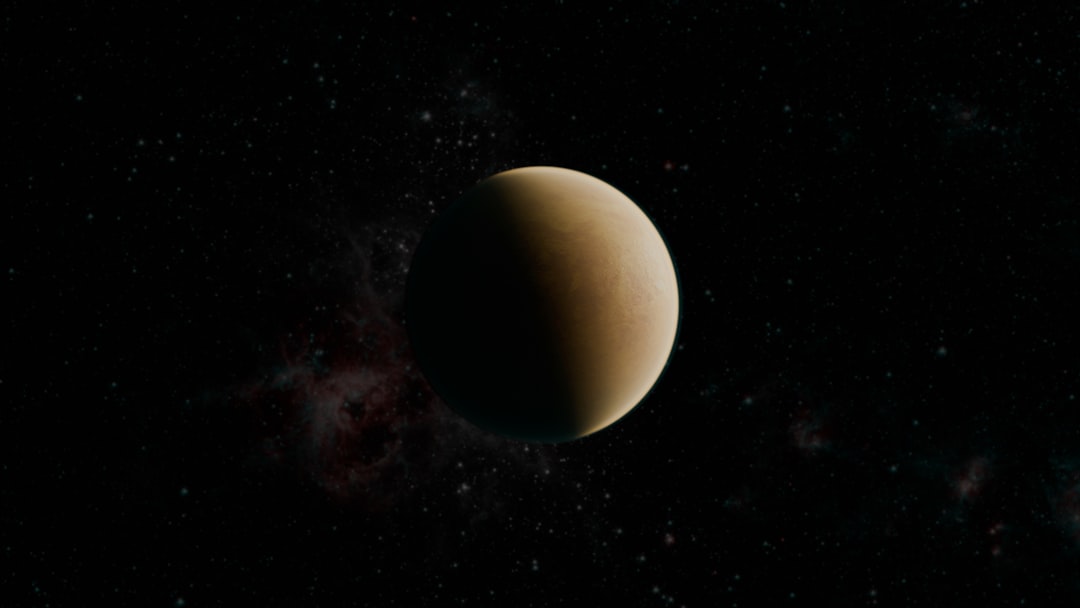
When it comes to literary allegories, Venus is about as close to Dante's description of hell as one can get. Its atmosphere is 93 times as dense as Earth's — equivalent to the crushing pressure found 900 meters (3,000 feet) underwater — more than enough to obliterate the human body in seconds. It is also the hottest planet in the Solar System, with surface temperatures reaching a scorching 467 °C (872 °F), hot enough to melt lead with ease. And unlike Earth, whose surface is fragmented into dynamic tectonic plates in constant motion, Venus appears to be covered by a single, unbroken crustal shell.
For decades, this seemingly static geology led scientists to conclude that Venus was a geologically dormant world — a planet that had burned bright in its youth and then quietly gone cold. But a landmark new study from researchers at ETH Zurich is fundamentally overturning that assumption. According to their findings, Venus is not only geologically alive, but may host a surprisingly large number of active volcanoes and dynamic interior processes that continue to reshape its surface to this day.
"The results help us to better assess the tectonic activity on Venus and indicate that the planet remains far more geologically dynamic than previously believed." — Professor Taras Gerya, ETH Zurich
A World Long Misunderstood
Venus and Earth are often called twin planets due to their similar size, mass, and bulk composition. Yet the two worlds have evolved in dramatically different ways. Earth's surface is governed by the well-understood theory of plate tectonics — the slow, grinding movement of crustal plates that drives earthquakes, builds mountain ranges, and continuously recycles material between the surface and the mantle. Venus, however, appears to lack this global plate system, leading many scientists to classify it as a "stagnant-lid" planet — one where a thick, immobile crust acts as an insulating blanket over a slowly cooling interior.
This stagnant-lid model suggested that Venus had largely ceased significant geological activity billions of years ago. But the new ETH Zurich study, published in the prestigious journal Nature Geoscience, presents compelling evidence that challenges this long-held view. The key evidence lies in Venus's dramatic rift valleys — enormous geological fractures that bear a striking resemblance to features seen on our own planet.
Rift Valleys: The Geological Fingerprint of an Active Planet
Rift valleys are lowland features that form when portions of a planet's crust are pulled apart by internal forces, creating elongated depressions flanked by elevated ridges. On Earth, the most famous example is the East African Rift Valley, a sprawling system stretching roughly 6,000 kilometers that is slowly splitting the African continent apart. These features are unambiguous indicators of active geological processes driven by heat from a planet's interior.
On Venus, rift valleys can be even more colossal, spanning up to 10,000 kilometers (6,200 miles) in length. The existence of these vast structures has been known since NASA's Magellan spacecraft mapped the Venusian surface with radar in the early 1990s. However, the precise age and formation mechanisms of these rifts have remained poorly understood — until now.
The ETH Zurich team, led by Taras Gerya, Professor of Geodynamics at the Department of Earth and Planetary Sciences, deployed a sophisticated new 3D computer model to simulate the formation and evolution of these rift structures with unprecedented resolution. The lead author, Xi Yang, conducted this groundbreaking research as part of his Master's studies under Gerya's supervision.
A New Generation of Computer Modeling
Previous models of Venusian rifting had significant limitations: they were largely two-dimensional and relied on oversimplified assumptions about the mechanical properties of planetary crust and mantle material. The ETH Zurich team's new approach overcame these constraints by simulating high-resolution, fully three-dimensional rift structures for the first time, allowing researchers to replicate observed surface features with far greater accuracy and physical realism.
The results of these simulations revealed several critical insights about how Venus's rift valleys form and evolve:
- Rift flanks as age indicators: The models show that broad, elevated ridges — known as rift flanks — form along the edges of rift valleys when the rifts are geologically young and either still actively spreading or have recently stopped moving. These high, steep flanks are a telltale sign of geologically recent activity.
- Rapid widening rates: The simulations suggest that Venusian rifts widen at a rate of 3 to 10 centimeters per year — significantly faster than previous models had indicated, implying a more vigorous and energetic internal dynamic than scientists had appreciated.
- Crustal relaxation, not erosion: On Earth, rift flanks are gradually worn down by wind, water, and other forms of erosion over millions of years. Venus, with its lack of liquid water and extremely slow winds near the surface, does not experience significant erosion. Instead, Venusian rift flanks subside through a process called crustal relaxation — the gradual settling and spreading of rock under its own weight over geological time.
- Estimated formation age: Based on the preserved steepness and height of observed rift flanks, the team's simulations suggest that some of Venus's most prominent rift valleys could have formed as recently as 100 million years ago — a geological eyeblink in the 4.5-billion-year history of the Solar System.
Critically, the wide and prominent rift flanks predicted by the computer models align remarkably well with actual radar imagery of the Venusian surface captured by the Magellan probe, lending strong observational support to the team's conclusions.
Implications for Understanding Rocky Planet Evolution
The findings carry significance far beyond Venus itself. Understanding how rocky planets store, transport, and release internal heat is one of the central questions of planetary science. Earth's plate tectonic system is extraordinarily efficient at cycling heat from the interior to the surface, but it remains unclear whether plate tectonics is a universal feature of rocky planets or a rare phenomenon unique to Earth. Venus, as our closest planetary neighbor with a similar bulk composition, represents a critical natural laboratory for testing theories of planetary evolution.
If Venus remains geologically active — even in the absence of full plate tectonics — it suggests that rocky planets may sustain geological dynamism through mechanisms other than the familiar plate tectonic cycle. This has profound implications for the study of rocky exoplanets, hundreds of which have been discovered orbiting distant stars. As Gerya and his colleagues note, their modeling approach could ultimately improve scientists' ability to detect and characterize geological activity on worlds orbiting other stars — worlds that are far too distant to visit but might be inferred from surface and atmospheric signatures.
The research also adds important context to the ongoing debate about Venus's volcanic history. In 2023, a separate analysis of archival Magellan data by researchers at the University of Alaska Fairbanks identified direct evidence of a volcanic vent that appeared to change shape between 1990 and 1992, suggesting active volcanism on Venus may be occurring even today. The ETH Zurich study provides a compelling geodynamic framework that helps explain how such activity could be sustained.
A New Era of Venus Exploration
The timing of this research is particularly fortuitous, as both NASA and the European Space Agency (ESA) are preparing ambitious new missions to our enigmatic neighbor — the first dedicated Venus exploration missions in over three decades.
- NASA's DAVINCI mission (Deep Atmosphere Venus Investigation of Noble gases, Chemistry, and Imaging) will send a probe plunging through Venus's thick atmosphere, sampling its chemical composition and imaging the ancient highland terrain known as tessera.
- NASA's VERITAS mission (Venus Emissivity, Radio Science, InSAR, Topography, and Spectroscopy) aims to produce high-resolution global maps of the Venusian surface, characterize its geological history, and determine whether active volcanism and tectonism are occurring today.
- ESA's EnVision mission, scheduled for launch in the early 2030s, will conduct a holistic investigation of Venus from its core to its uppermost atmosphere. ETH Zurich geophysics professors Paul Tackley and Taras Gerya, along with their collaborators, are directly participating in EnVision, developing instruments for the Venus orbiter to analyze the planet's surface geology and interior structure.
The results of the ETH Zurich team's modeling work are expected to play a direct role in guiding these missions. By identifying the regions of Venus most likely to host active rifting and volcanism, the researchers can help mission planners prioritize high-value targets for detailed observation — maximizing the scientific return of these costly and complex endeavors.
Looking Ahead
For a planet long dismissed as geologically inert, Venus is proving to be a world of remarkable complexity and enduring dynamism. The new ETH Zurich study fundamentally reshapes our understanding of what is happening beneath that thick, toxic atmosphere and that brilliant, featureless disk we see shining in the evening sky. Far from being a cold, dead relic of the early Solar System, Venus appears to be a living, breathing geological engine — one that has been hiding its secrets in plain sight, waiting for the right tools and the right questions to coax them into the light.
As upcoming missions prepare to pierce the Venusian clouds and reveal its surface in unprecedented detail, the findings from Gerya, Yang, and their colleagues at ETH Zurich will provide an essential theoretical foundation for interpreting what those spacecraft discover. The story of Venus, it turns out, is far from over — and in many ways, it is only just beginning.
The study, authored by Xi Yang and colleagues, was published in Nature Geoscience. Further details on Venus exploration can be found through NASA's Venus Science page and the ESA EnVision mission portal.