See the Perseid Meteors on a New Moon Year: 2026's Unmissable Sky Show
With the Moon effectively absent from the night sky, the August Perseids are poised to deliver one of the most spectacular celestial performances in years. Skywatchers and amateur astronomers, mark your calendars: the 2026 Perseid meteor shower is shaping up to be an extraordinary event, combining near-perfect lunar conditions with favorable peak timing for observers across the Northern Hemisphere. If skies are clear, this is one natural spectacle you simply cannot afford to miss.
Why 2026 Is an Exceptional Year for the Perseids
The Perseid meteor shower is consistently one of the most-watched annual astronomical events on Earth, beloved for its reliability, warm late-summer viewing conditions, and impressive rates of bright, fast-moving meteors. But not all years are created equal. The quality of a meteor shower display depends heavily on a trio of factors: the phase of the Moon, the timing of the peak, and the geometry of Earth's passage through the debris stream. In 2026, all three align in the shower's favor.
This year's Perseids are expected to peak at a Zenithal Hourly Rate (ZHR) of approximately 100 meteors per hour on Wednesday, August 13th at 03:00 Universal Time (UT) — equivalent to 11:00 PM Eastern Daylight Time on the night of August 12th. The Zenithal Hourly Rate represents the theoretical number of meteors a single observer would see under perfect dark-sky conditions with the shower's radiant positioned directly overhead. Real-world rates will vary based on light pollution, elevation, and atmospheric transparency, but even under suburban skies, dozens of meteors per hour are achievable near the peak.
Because the Perseids often exhibit a characteristically broad, double-peaked maximum lasting 24 to 48 hours, dedicated observers are encouraged to watch on the nights of August 11th–12th and August 13th–14th as well. Enhanced activity in the days surrounding the central peak is not unusual, and the shower's wide debris trail ensures a gradual ramp-up and slow decline rather than a sharp spike.
"The Perseids are one of the most dependable and visually rewarding meteor showers of the year — and in 2026, the near-perfect new Moon phase elevates this event to a truly once-in-a-generation opportunity for casual and dedicated observers alike."
The Moon's Convenient Disappearing Act
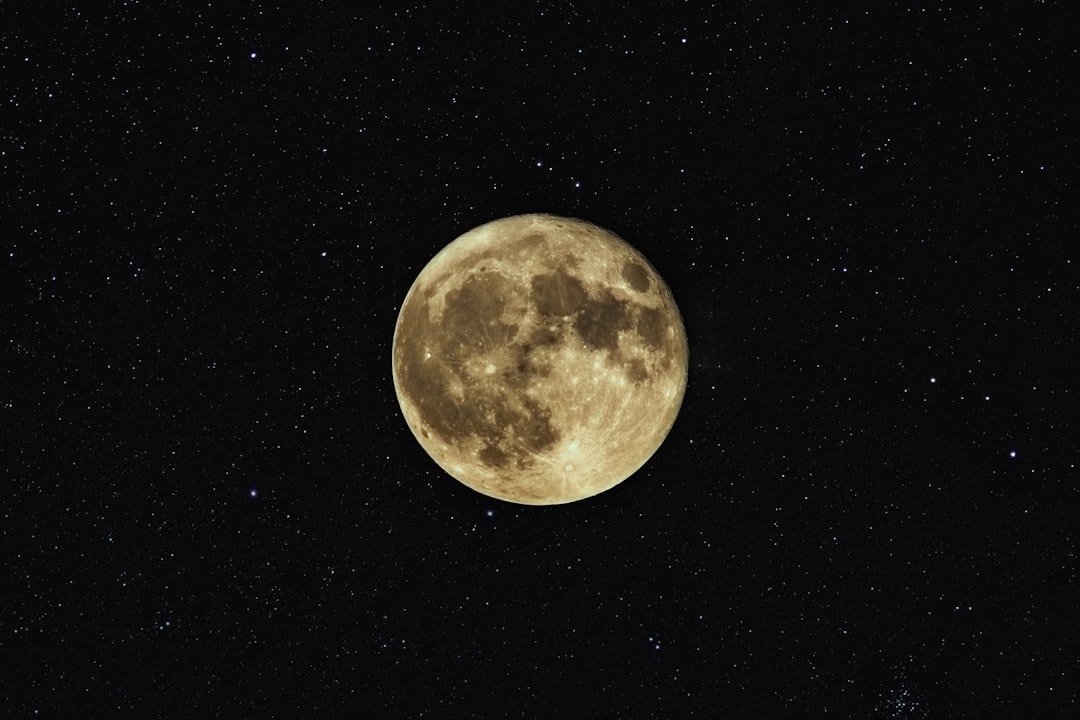
Perhaps the single greatest enemy of meteor shower observing is a bright Moon washing out the fainter meteors. In 2026, observers have nothing to fear. The Moon will be at New Moon phase on August 12th — and not just any new Moon. It will be engaged in a total solar eclipse, crossing directly between Earth and the Sun just seven hours before the Perseid peak. This means the Moon will be entirely absent from the nighttime sky, leaving observers with gloriously dark, uncompromised conditions.
This remarkable coincidence — a solar eclipse occurring on the same date as the Perseid peak — is extraordinarily rare. The last time a New Moon fell on August 12th coinciding with an eclipse was August 12th, 1942, and the next occurrence will not arrive until 2045. Ambitious observers in the path of totality on the 12th might even attempt to capture a Perseid meteor during the eclipse itself — an event that would make for a truly once-in-a-lifetime photograph.
This rarity is governed by the Metonic cycle, a period of approximately 19 years after which the phases of the Moon recur on the same calendar dates. Named after the Greek astronomer Meton of Athens (c. 432 BC), the cycle arises because 235 lunar months are nearly equal to 19 solar years. While New Moons repeat on a given calendar date every 19 years, the additional requirement of an eclipse makes the combination exponentially rarer.
Understanding the Perseid Radiant and Meteor Geometry
The radiant of the Perseid shower — the point in the sky from which meteors appear to originate — currently lies near the intersection of the northern constellations Perseus, Cassiopeia, and Camelopardalis. As Earth rotates, the radiant climbs higher in the northeastern sky through the late evening hours, becoming well-placed for Northern Hemisphere observers after midnight local time.
This has a direct and fascinating effect on the character of meteors seen at different times of night. In the early evening (PM hours), meteors approach from a shallower angle relative to Earth's atmosphere, producing slow-moving meteors with long, graceful trails. After midnight, as your local observing site rotates to directly face the incoming debris stream, the geometry shifts dramatically: meteors now plunge nearly head-on into the atmosphere, resulting in the characteristically swift, brilliant streaks the Perseids are famous for.
The Perseids are among the fastest meteor showers in the calendar year, with particles entering Earth's atmosphere at a blistering 59 kilometers per second (roughly 132,000 miles per hour). This high velocity, combined with the relatively large size of some Perseid meteoroids, produces an exceptional number of bright fireballs — meteors of magnitude –3 or brighter that can briefly cast shadows and leave glowing, persistent ionization trails in their wake.
- Radiant location: Near the border of Perseus, Cassiopeia, and Camelopardalis
- Peak ZHR: ~100 meteors per hour (2026)
- Entry velocity: 59 km/s (~132,000 mph)
- Parent body: Comet 109P/Swift-Tuttle
- Active dates: Approximately July 17 – August 24
- Best viewing: After midnight local time, in dark skies
- Meteors visible 45° or more away from the radiant, appearing in profile across wide swaths of sky
The Source: Comet 109P/Swift-Tuttle
Every Perseid meteor begins its cosmic journey as a fragment shed by Comet 109P/Swift-Tuttle, a massive periodic comet with a nucleus estimated at approximately 26 kilometers (16 miles) in diameter — making it one of the largest objects known to make repeated close approaches to the inner solar system. The comet was independently discovered by American astronomers Lewis Swift and Horace Parnell Tuttle in 1862, the same year Italian astronomer Giovanni Schiaparelli first calculated that the annual August shower was caused by debris from a cometary orbit — a foundational moment in the science of meteor astronomy.
Comet Swift-Tuttle last reached perihelion (its closest approach to the Sun) in December 1992, when it briefly became visible to the naked eye and triggered notably elevated Perseid activity in the years immediately following. Its next perihelion passage is not expected until 2126, though the vast debris trail it has deposited over millennia of solar orbits continues to intersect Earth's path every August with clockwork reliability.
The comet follows a steeply inclined retrograde orbit tilted at 113 degrees to the plane of the solar system, meaning it orbits the Sun in the opposite direction to the planets. This unusual geometry ensures it makes no close gravitational encounters with other planets, rendering its orbit dynamically stable over centuries and guaranteeing the longevity of the Perseid shower as an annual phenomenon. Its orbital period is approximately 133 years.
Despite the dramatic sky show they produce, even the most spectacular Perseids are remarkably modest in physical size. The largest Perseid meteoroids are typically no bigger than a pea, while the majority are mere dust grains — some as small as a grain of sand. The brilliant streaks of light result entirely from the energy of atmospheric entry, as the particle superheats the air column ahead of it, creating a glowing plasma trail visible from hundreds of kilometers away.
"Though they may appear as brilliant streaks of fire, the vast majority of Perseid meteors are smaller than a grape — it is their extraordinary velocity, not their size, that makes them so spectacular."
A Shower Steeped in History
The Perseid meteor shower boasts one of the longest observational records of any recurring astronomical event. The earliest known documented sighting dates to 36 AD, preserved in Chinese astronomical annals — though in that era, the shower's peak fell in July rather than August, owing to the slow precession of Earth's orbital path relative to the cometary debris stream over the intervening two millennia.
In European cultural tradition, the Perseids are sometimes called the "Tears of St. Lawrence", named in honor of the Christian martyr Saint Lawrence of Rome, who was executed on August 10th, 258 AD. According to legend, the meteors represent the tears shed at his martyrdom, and the name remains in use today, particularly in rural southern Spain, where the shower is embedded in regional folklore and summer festival traditions.
Scientific understanding of the shower advanced dramatically in the 19th century. In 1866, Italian astronomer Giovanni Schiaparelli — better known today for his later (and controversial) claims of Martian canali — established the link between meteor showers and cometary debris, using the Perseids as his primary evidence. This breakthrough laid the groundwork for the modern understanding of meteor stream dynamics and the relationship between comets and annual showers.
Systematic records of Perseid outbursts — years of dramatically elevated activity — extend back many centuries, and the shower has proven itself a reliable performer throughout the 20th and into the 21st century. NASA's meteor shower resources provide detailed annual forecasts and historical context for the shower.
Looking Ahead: A Potential Storm in 2028
While 2026 promises exceptional conditions, dedicated meteor enthusiasts may wish to look even further ahead. Finnish astronomer Esko Lyytinen, one of the world's leading experts in meteor stream modeling, has predicted that Earth may intersect the 1479 debris filament — an ancient, dense trail shed by Comet Swift-Tuttle during its 1479 perihelion passage — in 2028. If confirmed, this encounter could trigger a full-fledged meteor storm, with rates potentially exceeding 1,000 meteors per hour, a threshold that formally distinguishes a storm from even an exceptional outburst.
The caveat for 2028 is a Last Quarter Moon, which will introduce significant sky glow and reduce the visibility of fainter meteors. Nevertheless, a storm of that magnitude would produce so many bright fireballs that even compromised sky conditions would not prevent a memorable display. Observers are encouraged to monitor predictions from the International Meteor Organization (IMO) as 2028 approaches.
How to Observe the 2026 Perseids
One of the most appealing aspects of meteor shower observing is its accessibility. No telescope or binoculars are required — in fact, optical aids are counterproductive, as they restrict your field of view. The ideal setup is simply a reclining chair or sleeping bag, a dark location, and patience. Here are the key strategies for maximizing your experience:
- Choose the darkest site available. Even driving 30–60 minutes away from city lights can dramatically increase your meteor count. Use resources like Light Pollution Map to identify dark-sky zones near you.
- Allow 20–30 minutes for dark adaptation. Avoid looking at phone screens or other white lights; use a red flashlight if needed.
- Face away from the radiant. Meteors appear in profile roughly 45 degrees or more from the radiant point in Perseus, so scanning a broad swath of dark sky will yield the best results.
- Peak viewing is after midnight. While early evening meteors can be spectacular, the highest rates occur from around 2:00 AM to 4:00 AM local time on the morning of August 13th.
- Invite friends. Having multiple observers covering different sections of sky increases the chances of catching bright fireballs and comparing notes.
- Watch for rare phenomena: Be alert to persistent train meteors (glowing ionization trails lasting seconds to minutes), corkscrew-path meteors caused by spinning meteoroids, and the extremely rare phenomenon of audible meteors — electrophonic sounds accompanying very bright fireballs at the moment of their passage.
Photographing the Perseids
The 2026 new Moon phase makes this an ideal year for meteor photography. Dark skies and zero lunar interference mean even modest camera equipment can capture striking images. To photograph the shower effectively:
- Use a DSLR or mirrorless camera with a wide-angle lens (14–24mm focal length ideal) mounted on a sturdy tripod.
- Set your aperture to its widest setting (f/2.8 or lower) to maximize light collection.
- Use ISO 1600–3200 as a starting point, adjusting based on your sky's darkness and test shots.
- Set exposures of 15–25 seconds to balance meteor capture with sky glow and star trailing.
- Use an intervalometer to automate continuous shooting throughout the night, maximizing your chances of capturing a bright fireball.
- Take several test shots early in the session to fine-tune your settings before the peak hours arrive.
If you are unfortunately clouded out, all is not lost. Radio enthusiasts can sometimes "hear" Perseid meteors on the FM dial, as ionized meteor trails briefly reflect distant radio signals in a characteristic ping — a technique known as forward scatter meteor detection. The IMO's observation guides cover both visual and radio detection methods in detail.
Reporting Your Observations
Citizen science plays a genuinely important role in meteor astronomy. Professional researchers rely on