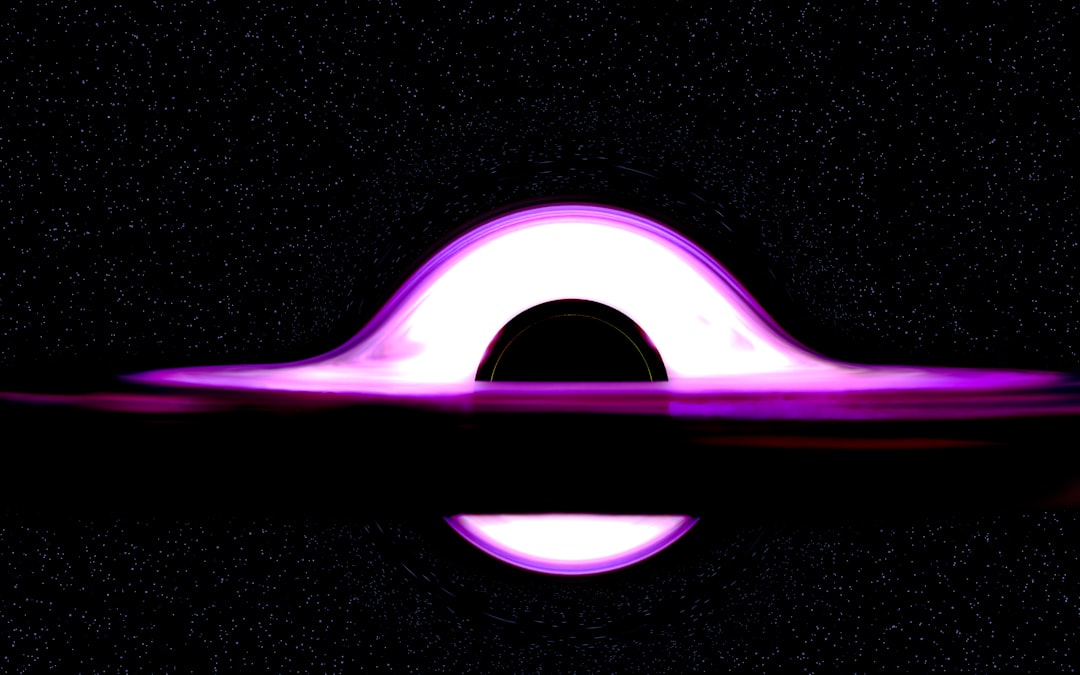
A recent study of the black hole merger GW230814 has provided the strongest evidence yet that black hole thermodynamics, a theory combining the laws of thermodynamics with the physics of black holes, is indeed correct. Published in the arXiv preprint repository, this research confirms the Area Theorem of black hole thermodynamics to an unprecedented 99.5% confidence level, shedding new light on the fundamental nature of these cosmic behemoths.
The Basics of Black Hole Thermodynamics
The concept of black hole thermodynamics arises from the idea of Hawking radiation, proposed by physicist Stephen Hawking in the 1970s. Although never directly observed, Hawking radiation suggests that black holes are not entirely "black" but instead slowly emit thermal radiation over time. This means the laws of thermodynamics that govern the behavior of heat and energy should also apply to black holes.
In this framework, the four laws of thermodynamics have black hole equivalents:
- Zeroth Law: A non-rotating black hole has uniform gravity at its event horizon.
- First Law: The temperature and entropy of a black hole are determined by the surface area of its event horizon.
- Second Law (Area Theorem): The surface area of a merged black hole must be no less than the combined surface areas of the original black holes.
- Third Law: You cannot remove a black hole's event horizon by spinning it up or giving it an electric charge.
Confirming the Area Theorem
The second law, known as the Area Theorem, is particularly powerful as it places constraints on the amount of gravitational wave energy that can be emitted when two black holes merge. The theorem states:
"Since entropy can never decrease, the surface area of a merged black hole must be no less than the surface area of the two original black holes."
To test this, the research team led by Shao-Peng Tang analyzed data from the LIGO gravitational wave observatory for the merger event GW230814. Using advanced statistical techniques, they compared the surface areas of the initial and final black holes. The results showed that the Area Theorem held true at a 99.5% confidence level, the highest confirmation to date.
Building on Previous Evidence
This study builds upon earlier work that tested the Area Theorem with the first-ever detected black hole merger, GW150914, in 2015. Published in the journal Physical Review Letters, that 2021 analysis by Maximiliano Isi and colleagues found a slightly lower 97% agreement with the theorem.
While neither study reaches the gold standard 5σ level of certainty used in particle physics (99.99994%), they nonetheless provide compelling evidence that black hole thermodynamics accurately describes the physics of these extreme cosmic events.
The Astonishing Implications
The confirmation that the same thermodynamic laws governing a hot cup of tea also apply to merging black holes is a profound realization. As Dr. Kip Thorne, Nobel laureate and black hole expert, explains:
"Black hole thermodynamics represents the intersection of general relativity, quantum mechanics, and thermodynamics - three pillars of modern physics. Its verification is an astonishing achievement with far-reaching implications for our understanding of the universe."
By further validating black hole thermodynamics, this research brings physicists one step closer to the elusive theory of quantum gravity that would unite all of physics under one cohesive framework. Future gravitational wave observations by LIGO, Virgo, and the upcoming LISA space-based observatory will enable even more stringent tests of these groundbreaking theories in the coming years.
As we continue to probe the astonishing physics of black holes, we inch ever closer to answering the deepest questions about the nature of gravity, quantum mechanics, and the universe itself. The elegant connection between something as familiar as a warm beverage and the most extreme objects in the cosmos highlights the profound beauty and unity of physics that drives us to explore further.