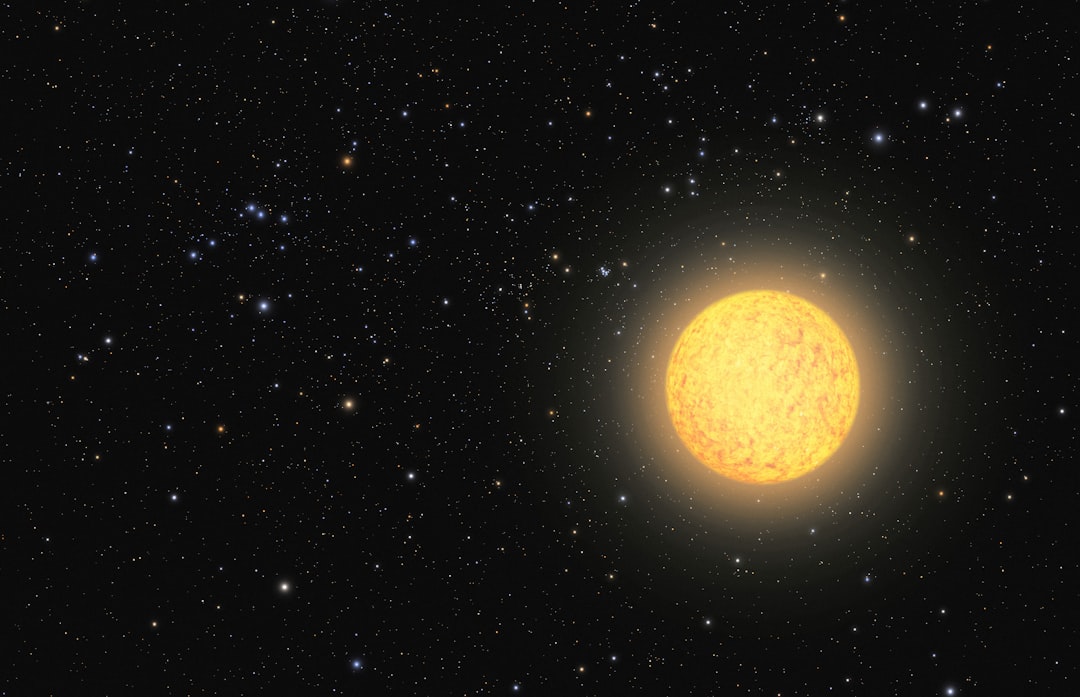
In the cosmic zoo of celestial objects, some of the most fascinating inhabitants are those that defy easy categorization. These boundary-straddling entities challenge our neat taxonomic boxes and force astronomers to reconsider fundamental questions about how the universe organizes itself. Among the most intriguing of these cosmic puzzles is the question that has vexed planetary scientists for decades: where exactly do we draw the line between a planet and a star?
Thanks to groundbreaking observations from the James Webb Space Telescope (JWST), researchers have now directly imaged an extraordinary object that sits precisely on this cosmic fence. Designated 29 Cygni b, this enigmatic world weighs in at approximately 15 times the mass of Jupiter—placing it squarely at the critical threshold where planetary physics meets stellar dynamics. What makes this discovery particularly revolutionary is that JWST's unprecedented sensitivity has revealed chemical signatures in the object's atmosphere that tell us not just what it is, but crucially, how it came to be.
The Cosmic Identity Crisis: Understanding Brown Dwarfs and the Deuterium Burning Limit
To appreciate why 29 Cygni b represents such a significant discovery, we need to understand the twilight zone it inhabits. In our own Solar System, the distinction seems straightforward: rocky worlds like Earth and Mars are clearly planets, as are the gas and ice giants Jupiter, Saturn, Uranus, and Neptune. But as we venture beyond our stellar neighborhood and discover increasingly exotic worlds, the boundaries become frustratingly blurred.
Enter brown dwarfs—objects that astronomers sometimes refer to as "failed stars." These substellar objects occupy a fascinating middle ground in the cosmic hierarchy. Unlike true stars, brown dwarfs never accumulate enough mass to sustain the fusion of hydrogen into helium, the nuclear reaction that powers main-sequence stars like our Sun. However, they can fuse deuterium, a heavier isotope of hydrogen, which requires lower temperatures and pressures to ignite.
The deuterium burning limit, occurring at approximately 13-15 Jupiter masses (with an uncertainty of about ±5 Jupiter masses), has traditionally served as a convenient dividing line. Objects above this threshold can fuse deuterium; those below cannot. Yet this mass-based criterion has always been somewhat arbitrary, as it tells us nothing about the object's origins—and in astrophysics, formation history often matters more than current state.
Two Paths Diverged in a Stellar Nursery: Formation Mechanisms
The fundamental question isn't really about mass or composition—after all, Jupiter itself is composed primarily of hydrogen and helium, just like a star. Instead, the crucial distinction lies in formation mechanisms. Planets and stars are born through fundamentally different processes, and understanding these pathways is key to proper classification.
Planets form through what astronomers call a "bottom-up" accretion process within protoplanetary disks—vast, rotating clouds of gas and dust that encircle newborn stars. The process begins modestly: microscopic dust grains collide and stick together through electrostatic forces, gradually building larger aggregates. These grow into pebbles, then boulders, then kilometer-sized planetesimals. Through countless collisions and gravitational interactions over millions of years, these planetesimals either merge to form rocky planets or serve as cores that gravitationally capture massive envelopes of hydrogen and helium, becoming gas giants.
Stars, by contrast, form through a "top-down" fragmentation and collapse process. Within giant molecular clouds—the stellar nurseries that can span hundreds of light-years—gravitational instabilities cause regions to fragment into denser clumps. These clumps continue to collapse under their own gravity, pulling in more and more material. When the core reaches sufficient temperature and density, nuclear fusion ignites, and a star is born. Interestingly, this same fragmentation process can theoretically occur within protoplanetary disks themselves, potentially creating massive planetary-mass objects through a star-like mechanism.
JWST's Revolutionary Observations: Peering Into 29 Cygni b's Atmosphere
The new research, published in The Astrophysical Journal Letters and led by William Balmer from Johns Hopkins University and the Space Telescope Science Institute, represents a quantum leap in our ability to characterize these boundary objects. Using JWST's sophisticated coronagraph—an instrument that blocks the overwhelming light from the parent star—the team successfully obtained direct images of 29 Cygni b, which orbits its host star at a distance of approximately 2.4 billion kilometers (roughly equivalent to the distance between our Sun and Uranus).
But the true breakthrough came from JWST's spectroscopic capabilities. The telescope detected carbon monoxide (CO) and carbon dioxide (CO₂) in the object's atmosphere—the first direct detection of CO₂ absorption in such a massive planetary-mass object. More significantly, detailed analysis revealed that 29 Cygni b possesses a substantially elevated metallicity compared to its parent star. In astronomical parlance, "metals" refers to all elements heavier than hydrogen and helium, including crucial planet-building materials like carbon, oxygen, silicon, and iron.
"In computer models, it's very easy for fragmentation in a disk to run away to much higher masses than 29 Cygni b. This is the lowest mass you could plausibly get. But at the same time, it's about the highest mass you could get from accretion," explained lead author William Balmer in describing the object's unique position at the boundary between formation mechanisms.
The implications of this enhanced metallicity are profound. The object contains heavy elements equivalent to approximately 150 Earth masses—an extraordinary enrichment that could only have been achieved by forming within a metal-rich protoplanetary disk, where it could accrete solid materials along with gas. If 29 Cygni b had formed through stellar-like fragmentation and collapse, its chemical composition should mirror that of its parent star, which it emphatically does not.
Orbital Dynamics: Additional Evidence for Disk Formation
The research team didn't stop with atmospheric analysis. Using the CHARA Array (Center for High Angular Resolution Astronomy)—an optical interferometer that combines light from multiple telescopes to achieve unprecedented angular resolution—they precisely measured 29 Cygni b's orbital characteristics. These observations revealed another crucial piece of evidence: the object's orbital plane is well-aligned with the rotational axis of its host star.
This alignment is exactly what we observe in our own Solar System, where all planets orbit in roughly the same plane as the Sun's equator—a natural consequence of their formation in a flat, rotating protoplanetary disk. If 29 Cygni b had formed through disk fragmentation or been captured from elsewhere, we would expect to see a more random orbital orientation.
As co-author Ash Messier, a graduate student at Johns Hopkins University, noted: "We were able to update the planet's orbit, and also observed the host star to determine its orientation with respect to that orbit. We showed that the inclination of the planet is well-aligned with the spin axis of the star, which is similar to what we see for the planets of our solar system."
Redefining Planetary Boundaries: Formation Over Mass
The comprehensive evidence from 29 Cygni b—its enhanced metallicity, atmospheric composition, and aligned orbit—collectively point to a clear conclusion: this object formed like a planet, not like a star. Despite its mass placing it at the deuterium burning limit, 29 Cygni b should be classified as an extremely massive planet rather than a "failed star."
This finding has significant implications for how we define and categorize celestial objects. Rather than relying solely on mass-based criteria or nuclear burning capabilities, the research suggests that formation mechanism should be the primary criterion for distinguishing planets from stars. This approach is more physically meaningful because it reflects the actual evolutionary history and environmental context of the object.
The discovery also demonstrates that massive gas giant planets can indeed form around A-type stars—hot, luminous stars that are significantly more massive and brighter than our Sun. The intense radiation and stellar winds from such stars were thought to potentially inhibit giant planet formation, but 29 Cygni b proves that nature finds a way.
Implications for Planetary Science and Future Research
The implications of this research extend far beyond a single object. Understanding how super-massive planets form helps us comprehend the full range of planetary system architectures possible in our galaxy. The NASA Exoplanet Archive currently catalogs over 5,000 confirmed exoplanets, many of which challenge our Solar System-centric understanding of planetary formation.
Balmer and his team are already expanding their investigation to include three additional objects with similar characteristics. By comparing the atmospheric compositions and metallicities across a sample of boundary objects with different masses, they hope to map out exactly how formation mechanisms transition from purely planetary accretion to stellar-like fragmentation.
Key questions that future observations will address include:
- Mass-metallicity relationships: How does atmospheric enrichment vary with object mass, and where is the transition point between formation mechanisms?
- Formation timescales: How quickly do these massive objects accumulate their mass, and does this differ from lower-mass gas giants?
- Deuterium abundance: Can we detect deuterium in these objects' atmospheres to determine whether they've actually undergone deuterium burning?
- Disk properties: What characteristics of protoplanetary disks enable the formation of such massive planetary objects?
The Broader Context: JWST's Revolutionary Impact on Exoplanet Science
The success of this research exemplifies the transformative capabilities of the James Webb Space Telescope for exoplanet characterization. Unlike previous facilities, JWST's infrared sensitivity and spectroscopic resolution allow astronomers to detect and analyze the atmospheric compositions of directly-imaged exoplanets with unprecedented detail. The detection of carbon dioxide in 29 Cygni b's atmosphere represents just the beginning of what promises to be a golden age of exoplanet atmospheric studies.
As ESA and NASA continue to develop next-generation space telescopes and instruments, our ability to probe the formation histories of distant worlds will only improve. Future missions may even be able to detect biosignatures in the atmospheres of potentially habitable exoplanets—though 29 Cygni b, with its extreme mass and likely scorching temperatures, certainly doesn't fall into that category.
Conclusion: Embracing Cosmic Complexity
The story of 29 Cygni b reminds us that nature rarely respects the neat categories we create. Rather than viewing boundary objects as problematic exceptions, we should recognize them as invaluable laboratories for testing and refining our theoretical understanding. Each object that straddles our definitional boundaries teaches us something new about the diverse pathways through which cosmic structures can form and evolve.
As Balmer and his colleagues conclude in their paper: "These observations can be used to revise our understanding of the formation mechanisms and timescales of giant planets," highlighting how individual discoveries contribute to our broader comprehension of planetary system formation and evolution.
In the end, whether we call 29 Cygni b a super-massive planet, a brown dwarf, or something else entirely matters less than what we learn from studying it. The universe is under no obligation to conform to our taxonomies—and that's precisely what makes it so endlessly fascinating to explore.