A New Catalog of Nearly 3,000 Supernovae Challenges Our Understanding of Dark Energy
In one of the most ambitious astronomical undertakings in recent memory, an international team of researchers has assembled the largest-ever dataset of Type Ia supernovae, cataloging an extraordinary 2,884 of these cosmic explosions. Led by scientists at the University of Queensland's School of Mathematics and Physics (UQ-SMP), the effort synthesizes three decades of painstaking observations into a single, unified framework — and the findings are already shaking the foundations of modern cosmology. Most provocatively, the dataset provides fresh evidence that dark energy, the mysterious force thought to be driving the accelerating expansion of the Universe, may not be the fixed, unchanging constant that scientists have long assumed.
Why Type Ia Supernovae Are Cosmology's Most Powerful Tool
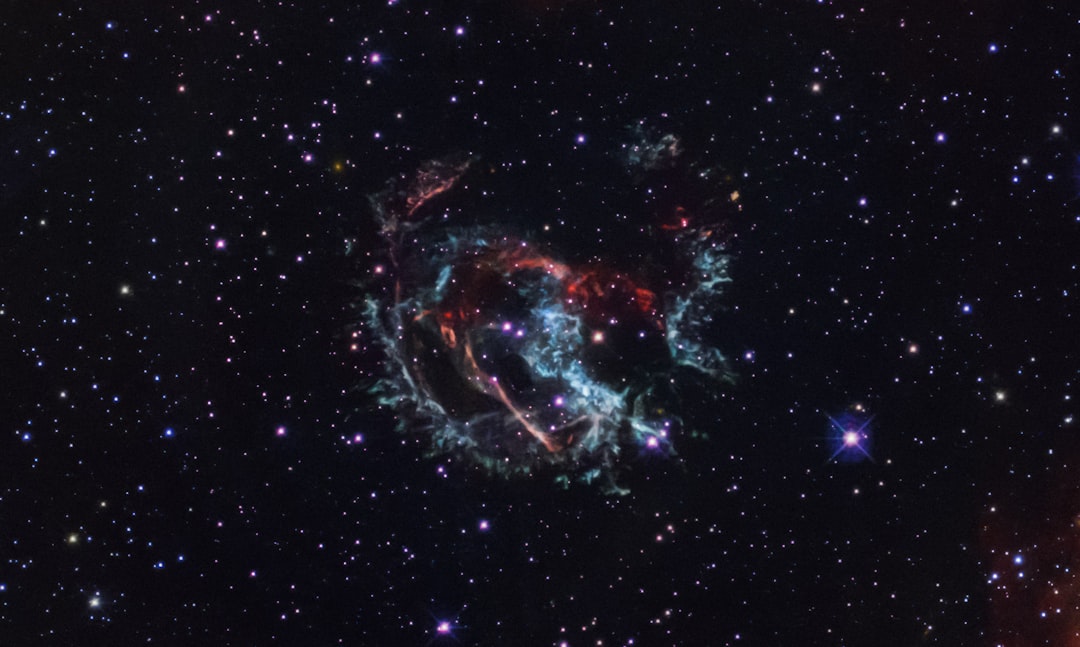
Not all supernovae are created equal. Type Ia supernovae occupy a uniquely privileged role in astrophysics because of their remarkable consistency. These cataclysmic explosions occur in binary star systems, typically when a white dwarf — the dense, Earth-sized remnant of a Sun-like star — siphons too much material from a stellar companion, pushing it beyond a critical mass threshold known as the Chandrasekhar limit (approximately 1.4 times the mass of the Sun). Alternatively, two white dwarfs in a binary system may spiral inward and merge, triggering a similarly violent detonation. In either scenario, the result is a thermonuclear explosion of extraordinary and remarkably predictable luminosity.
Because Type Ia supernovae consistently reach near-identical peak brightnesses, astronomers can use them as standard candles — cosmic distance markers of exceptional reliability. By comparing how bright a supernova appears from Earth against how bright it actually is, scientists can calculate its distance with a precision unmatched by almost any other method. These explosions are rare — occurring roughly once every 500 years in a galaxy the size of the Milky Way — which makes the accumulation of nearly 3,000 of them in a single dataset a truly monumental achievement.
"We've rebuilt 3 decades of astronomical observations into a single, consistent framework. We combined our data with other cosmic measurements including relic light from the Big Bang and maps of how galaxies are distributed through space." — Ryan Camilleri, PhD Candidate, University of Queensland
Assembling Three Decades of Cosmic History
The new catalog was spearheaded by Ryan Camilleri, a PhD candidate at UQ-SMP, alongside an expansive international collaboration drawing researchers from the United States, United Kingdom, Australia, South Africa, Spain, and France. The dataset weaves together 30 years of historical supernova measurements with cutting-edge data from the Dark Energy Survey (DES), published in 2024, as well as a suite of complementary cosmological datasets.
One of the team's most significant contributions was the reanalysis of older supernova observations using modern astrophysical techniques. Astronomers have learned a great deal over the past three decades about the subtle ways supernovae behave — how their light curves evolve, how their spectra relate to their intrinsic brightness, and how local stellar environments can affect their properties. By retroactively applying this evolved understanding to historical data, the researchers could bring older observations into a consistent, modern interpretive framework.
The team also undertook the painstaking work of cross-calibrating data from multiple telescopes operating across different wavelengths of the electromagnetic spectrum. This required accounting for a range of physical phenomena that can distort or alter the light reaching us from distant supernovae, including:
- Cosmic dust — interstellar and intergalactic dust grains that absorb and scatter supernova light, making explosions appear dimmer and redder than they truly are.
- Gravitational lensing — the bending and magnification of light as it passes near massive objects such as galaxy clusters, which can make a supernova appear either brighter or dimmer depending on the alignment.
- Host galaxy properties — the mass and star-formation history of the galaxy in which a supernova occurs, which has been shown to correlate with the intrinsic properties of the explosion.
- Peculiar velocities — the individual motions of galaxies relative to the overall cosmic expansion, which must be carefully subtracted to isolate true cosmological signals.
What Is Dark Energy — and Why Does It Matter?
To appreciate why these results are so significant, it helps to understand the cosmological framework they are testing. In 1998, two independent teams of astronomers made the Nobel Prize-winning discovery that the expansion of the Universe is not slowing down due to gravity, as many had expected — it is actually accelerating. The agent responsible for this acceleration was dubbed dark energy, and it currently accounts for approximately 68% of the total energy content of the observable Universe.
The leading theoretical description of dark energy is encapsulated in the Lambda Cold Dark Matter (ΛCDM) model — often called the Standard Model of Cosmology. In this framework, Lambda (Λ) represents the cosmological constant, a term originally introduced by Albert Einstein and later associated with the energy density of empty space itself. Crucially, ΛCDM assumes that this value is fixed and immutable — dark energy exerts a steady, unchanging pressure that drives cosmic expansion at a constant rate.
If, however, dark energy is not constant — if it evolves over time, growing stronger or weaker as the Universe ages — then the ΛCDM model is incomplete, and a more sophisticated theory of cosmic evolution is required. The implications would ripple far beyond cosmology, potentially reshaping our understanding of fundamental physics, including the long-sought reconciliation between general relativity and quantum mechanics.
Learn more about the nature of dark energy from NASA's Dark Energy overview.
The Findings: Hints of an Evolving Cosmos
The results produced by Camilleri and his colleagues are striking. Rather than confirming the predictions of the ΛCDM model, the unified dataset reveals statistically significant deviations suggesting that dark energy's influence has changed over cosmic time. This does not constitute a definitive overthrow of the standard model — the scientific community rightly demands extraordinary evidence before abandoning well-tested frameworks — but it represents a compelling accumulation of tension that is increasingly difficult to dismiss.
"Instead of confirming the standard model of cosmology, which assumes dark energy is fixed and unchanging, we have more evidence that dark energy may change over time." — Ryan Camilleri
These findings align with and reinforce a growing body of independent evidence from other major observational programs. Most notably:
- The Dark Energy Survey (DES) 5-Year results published in 2024 first showed tantalizing hints of time-varying dark energy in supernova data.
- The Dark Energy Spectroscopic Instrument (DESI) has identified anomalies in the pattern of baryon acoustic oscillations — relic sound waves imprinted in the early Universe — that similarly suggest dark energy may not be constant.
- New observations from the James Webb Space Telescope (JWST) have added further complexity to the picture, including contributions to the ongoing Hubble tension — a persistent disagreement between different methods of measuring the Universe's current expansion rate.
As Professor Tamara Davis, a leading astrophysicist on the team, explained:
"Our supernova data from DES in 2024 first showed hints that dark energy may be time-varying, and this new compilation also sees a deviation from the standard model, although in a slightly different direction. Similarly, results from the Dark Energy Spectroscopic Instrument (DESI) found hints of variations in dark energy in its surveys of relic sound waves from the early universe." — Professor Tamara Davis
Broader Implications: Unifying the Laws of Physics
The potential consequences of a time-varying dark energy extend well beyond cosmology. One of the deepest unsolved problems in all of theoretical physics is the incompatibility between general relativity — Einstein's geometric description of gravity on large scales — and quantum mechanics, which governs the behavior of matter and energy at subatomic scales. Despite each theory's extraordinary predictive success in its own domain, the two frameworks are mathematically irreconcilable as currently formulated.
Some theoretical physicists have long speculated that the true nature of dark energy — if it deviates from a simple cosmological constant — could provide the missing clue needed to bridge this gap. Dynamical dark energy models, such as those involving a hypothetical field called quintessence, naturally emerge from some attempts to construct a quantum theory of gravity. Evidence that dark energy evolves over time could therefore serve as an observational beacon guiding theorists toward the correct unified framework.
"All of this research may also hold the clue to explain how gravity and quantum physics fit together. We know these two theories are each immensely successful in their own realms, so if we can figure out how to put them together, that would be a huge step in theoretical physics." — Professor Tamara Davis
Looking Ahead: The Next Generation of Cosmic Surveys
The timing of this catalog's release is particularly fortuitous. A new generation of wide-field survey instruments is coming online that will dramatically expand the available sample of Type Ia supernovae. The Vera C. Rubin Observatory's Legacy Survey of Space and Time (LSST), for example, is expected to discover hundreds of thousands of supernovae over its ten-year mission, dwarfing even the impressive catalog assembled here. Combined with data from the Euclid space telescope and continued observations by DESI and JWST, the coming decade promises an unprecedented flood of cosmological data.
The methodological framework developed by Camilleri and his colleagues — the careful cross-calibration of heterogeneous datasets, the modern reanalysis of archival observations, and the rigorous accounting for subtle systematic effects — will serve as an invaluable template for making sense of this incoming data deluge. Understanding whether dark energy truly varies, and if so how, ranks among the most pressing questions in all of science. The answer may not only reshape cosmology but could fundamentally alter our understanding of the nature of space, time, and energy itself.
Publication Details
The primary paper detailing the new supernova catalog and its cosmological implications was published in the Publications of the Astronomical Society of Australia. A companion paper presenting host galaxy mass measurements has been made available alongside the main study. The research was supported by an international consortium of institutions spanning six countries.
For more information, visit the University of Queensland or explore the HubbleSite Dark Energy resource for additional scientific context.