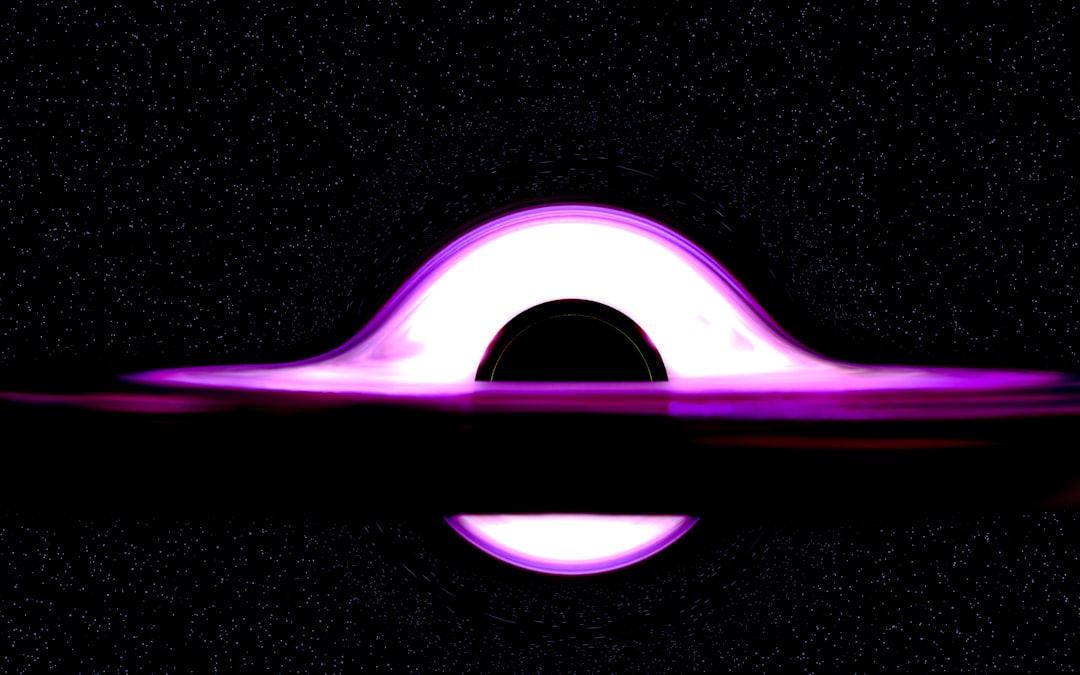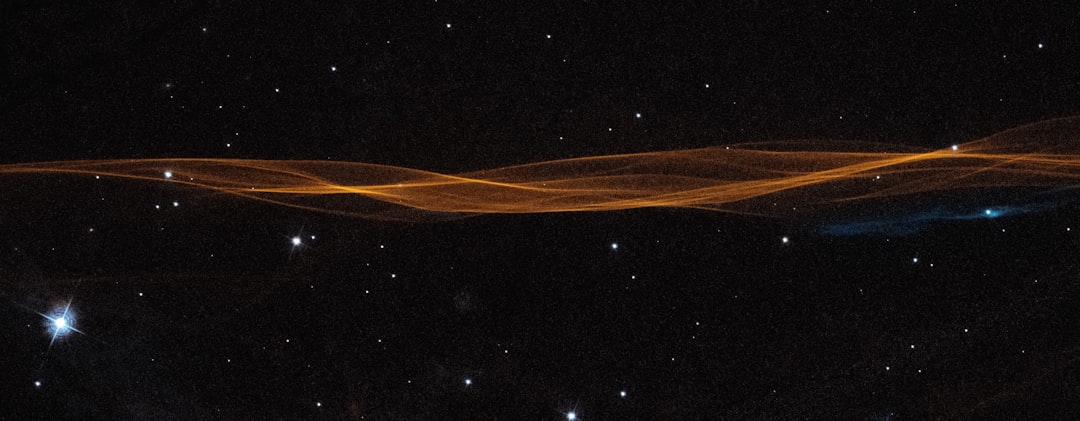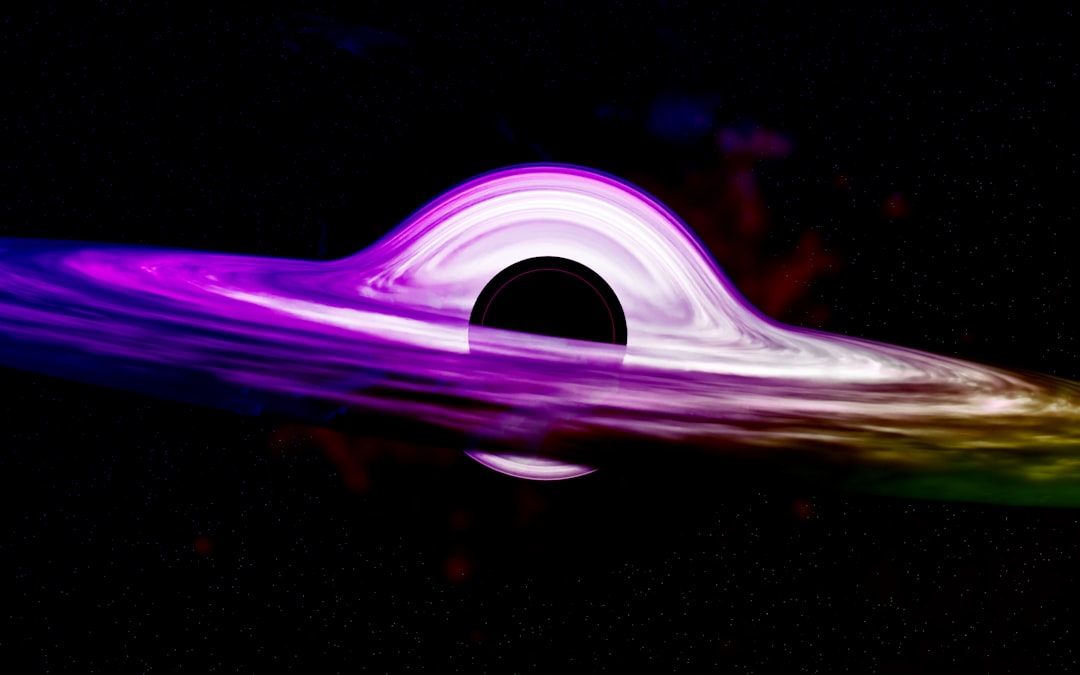
In a groundbreaking astronomical discovery that challenges our understanding of stellar death, researchers have documented what appears to be the direct collapse of a massive star into a black hole without the spectacular fireworks of a supernova explosion. This rare cosmic event, observed in our neighboring Andromeda Galaxy, represents only the second confirmed case of such a phenomenon and opens new windows into understanding how the universe's most enigmatic objects form.
The discovery, published in the prestigious journal Science, emerged from careful analysis of archival data collected by NASA's NEOWISE space telescope. What makes this finding particularly remarkable is that the evidence sat hidden in publicly available data for nearly a decade before astronomers recognized its significance—a sobering reminder that cosmic mysteries may be lurking in plain sight within our vast astronomical archives.
Lead researcher Kishalay De, an astronomy professor at Columbia University, described the moment of realization with palpable excitement. The star, designated M31-2014-DS1, exhibited behavior that defied conventional expectations: instead of exploding in a brilliant supernova, it simply faded away, leaving behind what researchers believe is a stellar-mass black hole of approximately 5 solar masses.
The Invisible Death of Giant Stars
Theoretical astrophysics has long predicted that some massive stars should undergo failed supernovae, collapsing directly into black holes without the characteristic explosive display. However, observational evidence for this process has remained frustratingly elusive—until now. The challenge lies in the very nature of these events: while supernovae announce their presence by outshining entire galaxies for weeks or months, direct-collapse events are cosmic whispers that can easily go unnoticed.
The physics underlying this phenomenon centers on the crucial role of neutrinos in stellar death. When a massive star exhausts its nuclear fuel, the outward pressure from radiation can no longer support the star's immense gravitational weight. The core undergoes catastrophic collapse, releasing a tremendous burst of neutrinos—ghostly particles that barely interact with matter yet carry away enormous amounts of energy.
In a successful supernova, these neutrinos drive a powerful shock wave through the star's outer layers, or stellar envelope, ejecting it into space in a brilliant explosion. However, if this shock wave fails to gain sufficient strength, gravity wins the cosmic tug-of-war. The envelope falls back onto the collapsing core, and the star vanishes from view as it crosses the event horizon of a newly formed black hole.
A Decade-Long Detective Story in Infrared Light
The discovery of M31-2014-DS1 resulted from the most comprehensive survey of variable infrared sources ever conducted. De and his team meticulously examined sequential images of the Andromeda Galaxy taken every six months between 2009 and 2022, searching for the telltale signatures of unusual stellar behavior. Their persistence paid off when they identified a supergiant star exhibiting extraordinary variability in the mid-infrared spectrum.
Beginning in 2014, the star's mid-infrared brightness increased by 50 percent over a two-year period—a dramatic change that caught the researchers' attention. This brightening phase was followed by an even more intriguing decline: the star's luminosity dropped below its initial levels within a year and continued fading until it became virtually undetectable by 2022.
"This has probably been the most surprising discovery of my life. The evidence of the disappearance of the star was lying in public archival data and nobody noticed for years until we picked it out," De explained, highlighting both the excitement of discovery and the vast untapped potential of astronomical archives.
The research team didn't stop with infrared observations. They cross-referenced their findings with data from multiple ground-based and space telescopes, including the Hubble Space Telescope and the powerful Keck Observatory in Hawaii. Between 2016 and 2019, optical observations revealed an even more dramatic decline—the star's visible light output plummeted by a factor of approximately 100. By 2023, ground-based optical telescopes could no longer detect the object at all.
Multi-Wavelength Confirmation
The power of modern astronomy lies in its ability to observe cosmic phenomena across the entire electromagnetic spectrum. When Hubble imaged the location of M31-2014-DS1 in 2022, it found no optical signal whatsoever—only a faint source in the near-infrared. Follow-up spectroscopic observations with the W.M. Keck Observatory in 2023 confirmed this faint near-infrared remnant, providing crucial data about the object's final state.
This multi-wavelength approach allowed researchers to construct a comprehensive picture of the star's demise. The initial infrared brightening likely resulted from dust formation in the star's outer layers as it began its death throes. The subsequent fading across all wavelengths suggested that matter was being consumed by a growing black hole rather than being expelled in a supernova explosion.
The Mass Mystery and Stellar Evolution
One of the most intriguing aspects of M31-2014-DS1 concerns its mass. Astronomers estimate that the star began its life with approximately 13 solar masses—well within the range typically associated with supernova explosions. However, by the time of its collapse, the star had shed most of this mass through powerful stellar winds, retaining only about 5 solar masses.
This mass loss complicates our understanding of stellar evolution and death. Traditional models suggested that stars in this mass range should reliably explode as supernovae, but M31-2014-DS1 clearly didn't follow the script. As De noted, this finding implies that stars with similar masses may follow divergent evolutionary paths, with some exploding and others collapsing directly into black holes.
The determining factors likely involve the complex interplay of gravity, gas pressure, and shock wave dynamics within the dying star's interior. These processes operate in a chaotic, nonlinear fashion that makes predicting individual outcomes extremely challenging. Small differences in initial conditions or evolutionary history could push otherwise similar stars toward dramatically different fates.
A Cosmic Companion: The Case of N6946-BH1
M31-2014-DS1 isn't entirely alone in the astronomical record. Researchers identified a similar event in 2010 in the galaxy NGC 6946, located approximately 25 million light-years from Earth—about ten times more distant than Andromeda. This candidate, designated N6946-BH1, exhibited remarkably similar behavior: a supergiant star brightened briefly before fading into obscurity.
The discovery of M31-2014-DS1 has renewed interest in N6946-BH1 and strengthened the case for both objects representing genuine failed supernovae. While N6946-BH1's greater distance means the observational data is less detailed, the parallel behavior of these two objects provides compelling evidence that direct collapse into black holes represents a real—if rare—mode of stellar death.
"We've known that black holes must come from stars. With these two new events, we're getting to watch it happen, and are learning a huge amount about how that process works along the way," said Morgan MacLeod, a lecturer on astronomy at Harvard University and co-author of the research.
Statistical Significance and Survey Challenges
The rarity of confirmed direct-collapse events raises important questions about their true frequency in the universe. De's team conducted the largest survey of variable infrared sources ever attempted, examining stellar populations across the Milky Way and nearby galaxies. Despite this comprehensive effort, they identified only a single clear example of a failed supernova.
However, this scarcity may reflect observational limitations rather than true cosmic rarity. Unlike supernovae, which are impossible to miss when they occur in nearby galaxies, failed supernovae require careful monitoring over years or decades to detect their subtle signatures. Many such events may be occurring unnoticed, their evidence buried in astronomical archives awaiting discovery.
Implications for Stellar Evolution Theory
The confirmation of direct black hole formation without supernova explosions has profound implications for our understanding of stellar evolution and the cosmic lifecycle of matter. Current models of massive star death may need revision to account for the apparently stochastic nature of core-collapse outcomes.
This discovery also affects our understanding of the black hole mass distribution in the universe. If a significant fraction of massive stars collapse directly rather than exploding, this could help explain discrepancies between theoretical predictions and observed populations of stellar-mass black holes. The process may also influence our understanding of gravitational wave sources, as black holes formed through direct collapse might have different properties than those formed through supernova explosions.
Furthermore, failed supernovae have implications for cosmic chemical evolution. Supernovae are the primary factories for heavy elements in the universe, dispersing iron, gold, and other metals throughout space. Stars that collapse directly into black holes retain these elements, potentially affecting the chemical enrichment history of galaxies.
Future Prospects and the Search Continues
The discovery of M31-2014-DS1 opens a new chapter in observational astronomy, but it also raises as many questions as it answers. How common are failed supernovae? What determines whether a given star will explode or collapse quietly? Can we predict which massive stars will follow which path?
Answering these questions will require larger samples and more sophisticated observations. The upcoming Vera Rubin Observatory, with its unprecedented ability to survey the entire visible sky every few nights, promises to revolutionize the search for rare transient events. Its decade-long Legacy Survey of Space and Time (LSST) should detect many more candidates for direct black hole formation, allowing astronomers to study these events statistically rather than as isolated curiosities.
Advanced space telescopes, including the James Webb Space Telescope and future missions, will provide the infrared sensitivity needed to study these faint, cool objects in detail. Combined with improved theoretical models of stellar collapse, these observations should clarify the physics governing the life and death of massive stars.
"It comes as a shock to know that a massive star basically disappeared (and died) without an explosion and nobody noticed it for more than five years. It really impacts our understanding of the inventory of massive stellar deaths in the universe. It says that these things may be quietly happening out there and easily going unnoticed," De reflected.
Key Takeaways from This Discovery
- Direct Collapse Confirmed: M31-2014-DS1 represents only the second well-documented case of a massive star collapsing directly into a black hole without a supernova explosion, confirming long-standing theoretical predictions
- Archival Data Mining: The discovery emerged from systematic analysis of decade-old telescope data, demonstrating the untapped scientific potential of astronomical archives
- Mass Range Surprise: Stars with approximately 13 solar masses—previously thought to reliably explode—can apparently collapse directly, suggesting that stellar fate is less deterministic than previously believed
- Multi-Wavelength Evidence: The combination of infrared, optical, and near-infrared observations across multiple telescopes provided compelling evidence for the direct collapse scenario
- Future Survey Potential: Next-generation facilities like the Vera Rubin Observatory should detect many more examples, enabling statistical studies of this rare phenomenon
As astronomers continue to probe the mysteries of stellar death, discoveries like M31-2014-DS1 remind us that the universe still holds surprises. The quiet disappearance of massive stars into black holes—events that occur without fanfare yet fundamentally shape the cosmic landscape—demonstrates that some of the most important astronomical phenomena are also the most easily overlooked. Only through patient, systematic observation and careful analysis of accumulated data can we hope to witness these cosmic transformations and understand the full diversity of pathways through which stars end their lives and black holes are born.