A New Test Looks for a Subtle Twist in Ancient Light
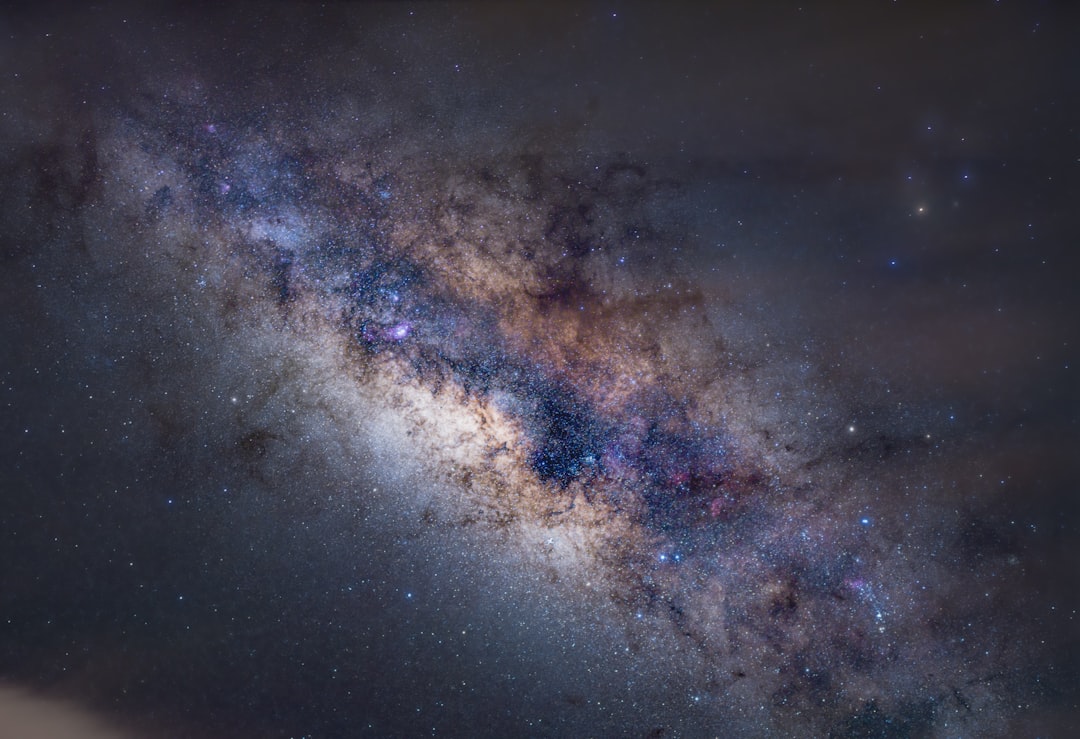
We are bathed in light from the ancient cosmos. It began its journey when the Universe finally cooled enough to become transparent, and it has traveled for more than 13 billion years to reach us. We call it the cosmic microwave background (CMB), and it remains one of the most information-rich messengers in all of science — a ghostly afterglow that carries within it the fingerprints of the Universe's earliest moments. Now, a new statistical technique is helping scientists decode one of its most elusive signals: a subtle, mysterious twist in the polarization of that ancient light.
The Cosmic Microwave Background: A Snapshot of the Infant Universe
In the first few hundred thousand years after the Big Bang, the Universe was an opaque, roiling plasma of charged particles. Photons — particles of light — could not travel freely; they were constantly scattered by free electrons in the hot, dense soup. Then, approximately 380,000 years after the Big Bang, the Universe cooled to a temperature of around 3,000 Kelvin — cool enough for protons and electrons to combine and form neutral hydrogen atoms in a pivotal event known as recombination. Almost overnight on cosmic timescales, the Universe became transparent, and photons were finally free to stream across space.
Those photons — now redshifted by the expansion of the Universe into the microwave portion of the electromagnetic spectrum — are what we detect today as the CMB. First accidentally discovered by Arno Penzias and Robert Wilson in 1965, and later mapped with extraordinary precision by satellites such as NASA's COBE, WMAP, and the ESA's Planck spacecraft, the CMB has become the cornerstone of modern cosmology. But beyond its temperature fluctuations, the CMB encodes something even subtler and more revealing: its polarization.
Polarization: The Hidden Language of Ancient Photons
Light is an electromagnetic wave, and its electric field can oscillate in different directions perpendicular to its direction of travel. When a photon undergoes its final scattering off a hydrogen atom at the moment of recombination — an event cosmologists call the "last scattering surface" — the geometry of the surrounding radiation field imprints a preferred direction onto that photon's oscillation. This is polarization, and it encodes detailed information about the physical conditions at the moment the CMB was released.
Initially, the polarization of CMB photons was essentially random, with no large-scale preferred orientation. But the Universe is not perfectly uniform, and temperature variations in the primordial plasma left their mark. Over 13 billion years of cosmic travel, that polarization signal has been shaped and twisted by intervening structures, gravitational effects, and — possibly — more exotic physical phenomena.
E-modes and B-modes: Two Faces of CMB Polarization
Cosmologists decompose CMB polarization into two distinct mathematical patterns, each with its own physical origin:
- E-mode polarization — Named by analogy with the curl-free electric field in electromagnetism, E-modes produce polarization patterns that appear to radiate outward from or converge toward a point. They are the dominant polarization signal in the CMB, generated by the same density fluctuations — acoustic oscillations — that produce the temperature variations we observe. E-mode polarization was first detected in 2002 by the DASI interferometer, confirming a key prediction of the standard cosmological model.
- B-mode polarization — Named by analogy with the divergence-free magnetic field, B-modes produce swirling, curl-like polarization patterns. They cannot be generated by density fluctuations alone, making them especially valuable as probes of exotic physical processes. B-modes have two primary sources: gravitational lensing of E-modes by large-scale structure, and primordial gravitational waves produced during cosmic inflation.
The detection of B-mode polarization has been one of the most hotly contested frontiers in observational cosmology. In 2014, the BICEP2 experiment announced what appeared to be a detection of primordial B-modes — which would have been a groundbreaking confirmation of cosmic inflation — but subsequent analysis revealed that the signal was largely contaminated by polarized dust emission from within our own galaxy. The episode underscored how extraordinarily difficult it is to extract genuine cosmological signals from noisy, foreground-contaminated data.
"The polarization of the CMB is one of the most powerful tools we have for probing the physics of the early Universe — but it is also one of the most technically demanding measurements in all of science."
Cosmic Birefringence: When the Universe Has a Preferred Direction
According to the standard model of cosmology — known as ΛCDM (Lambda Cold Dark Matter) — the large-scale Universe is both homogeneous (the same in every location) and isotropic (the same in every direction). One consequence of this symmetry is that the CMB's polarization should average out across the sky: there should be no net, large-scale rotation or twist of the polarization angle. Any mixing of E-modes into B-modes (or vice versa) should cancel out globally.
But what if the Universe does have a subtle preferred direction? This scenario is captured by the concept of cosmic birefringence — a uniform rotation of the CMB's polarization angle as light propagates across the cosmos. The term is borrowed from optics: in birefringent materials, different polarization states of light travel at different speeds, causing a rotation of the polarization plane. On a cosmic scale, such an effect would imply the existence of new physics beyond the standard model.
The most compelling theoretical candidate for producing cosmic birefringence is a hypothetical ultra-light scalar field called an axion or axion-like particle (ALP). Axions were originally proposed to solve a longstanding puzzle in particle physics — the strong CP problem — but they are also compelling dark matter candidates. Crucially, axions can couple to photons through a process called the Chern-Simons coupling, which would cause the polarization angle of photons to rotate as they propagate through a background axion field. If cosmic birefringence is real, it could be a direct observational signature of axion dark matter — a remarkable connection between the largest scales in the Universe and the smallest constituents of matter.
The 2020 Detection and Its Controversy
In 2020, physicists Yuto Minami and Eiichiro Komatsu published a landmark analysis of Planck satellite polarization data, reporting a non-zero birefringence angle of approximately 0.35 degrees — a tiny but potentially significant rotation of the CMB's polarization. The result carried a statistical significance of roughly 2.4 sigma, tantalizingly above the threshold of noise but well short of the 5-sigma standard required to claim a discovery in physics.
The central challenge in such measurements is distinguishing a true cosmological signal from systematic errors — particularly miscalibration of the detectors' polarization angles. Minami and Komatsu developed an innovative technique to separate cosmic birefringence from instrumental miscalibration by leveraging the known properties of Galactic dust polarization as an independent calibration source. Their approach represented a significant methodological advance, but questions remained about whether residual systematics could mimic a genuine birefringence signal.
"A confirmed detection of cosmic birefringence would prove that the standard model of cosmology is either wrong or incomplete — and potentially open a new observational window onto the nature of dark matter itself."
A New Test: Differential Polarization Calibration
Now, a new study by Anto I. Lonappan, Brian Keating, and Kam Arnold, published in The Astrophysical Journal Letters, presents a powerful new method to test whether the birefringence signal is genuine or an artifact of systematic bias. Their approach, called Differential Polarization Calibration, is elegantly simple in concept: rather than analyzing the full Planck polarization dataset as a monolithic whole, the team divided the data into eight independent polarization maps — each representing a different observational subset — and compared the birefringence signal across all of them.
The logic is compelling: a true cosmic birefringence signal, being a property of the Universe itself, should appear with the same magnitude and direction in every independent dataset. An instrumental artifact or systematic error, by contrast, would likely vary between different observations, detectors, or scanning strategies. By performing a rigorous statistical comparison of birefringence measurements across the eight maps, the team could assess whether the observed signal is consistent with a common cosmic origin or betrays the fingerprints of instrumental contamination.
The results are encouraging. Applying their differential calibration framework to the Planck data, Lonappan and colleagues found that the small polarization rotation previously reported in 2020 appears to be consistent across independent observational subsets — suggesting that it is cosmic in origin rather than an observational artifact. The consistency of the signal across multiple independent data slices significantly strengthens the case for genuine cosmic birefringence.
What Would Cosmic Birefringence Mean for Our Understanding of the Universe?
If cosmic birefringence is ultimately confirmed at high statistical significance, the implications would be profound. Several possibilities have been proposed by theorists:
- Axion or axion-like particle dark matter: As described above, an ultralight axion field pervading the cosmos could rotate photon polarization as they travel across intergalactic distances. A confirmed birefringence detection would constrain the axion's mass and coupling strength with extraordinary precision.
- Violation of Lorentz invariance or CPT symmetry: Some extensions of quantum gravity predict that the fundamental symmetries of spacetime — particularly Lorentz invariance and CPT symmetry — may be broken at very high energies. Cosmic birefringence would be a direct signature of such symmetry violations.
- Dark energy dynamics: Certain models of dark energy involve scalar fields that evolve over cosmic time and can couple to photons, producing a polarization rotation that builds up as light travels across the observable Universe.
- A challenge to cosmic isotropy: A confirmed detection would mean that the Universe is not perfectly isotropic — that it has, in some sense, a preferred direction or handedness. This would require a fundamental revision of the standard cosmological model.
It is worth emphasizing, however, that the current results — while intriguing — remain below the threshold of a definitive discovery. The statistical significance of the birefringence signal is still modest, and future experiments will be essential to either confirm or rule it out conclusively. Next-generation CMB observatories, including the CMB-S4 experiment and the LiteBIRD satellite, are specifically designed to measure CMB polarization with dramatically improved sensitivity and control of systematic errors. They may finally provide the decisive answer.
Looking Ahead: More Data, More Answers
The search for cosmic birefringence exemplifies the frontier of modern precision cosmology — a field in which scientists strive to extract ever-finer signals from the faint whispers of the early Universe. Each methodological innovation, such as the differential polarization calibration introduced by Lonappan and colleagues, brings us closer to distinguishing the genuine fingerprints of new physics from the inevitable imperfections of our instruments.
As with so many of the most tantalizing puzzles in contemporary astrophysics, the mystery of cosmic birefringence will not be resolved by a single observation. It demands a convergence of independent measurements, refined theoretical models, and ever more capable instruments. Whether the subtle twist in ancient light turns out to be a revolutionary discovery — perhaps our first glimpse of axion dark matter — or a cautionary tale about the subtlety of systematic errors, the pursuit itself is pushing the boundaries of what humanity can know about the cosmos.
For now, the ancient photons of the CMB continue their patient vigil across our sky, encoding within their polarization the secrets of a Universe that may be stranger — and richer — than our standard models suppose. NASA's ongoing research into dark energy and dark matter continues to provide essential context for interpreting these remarkable findings.
Key References
- Minami, Yuto, and Eiichiro Komatsu. "New Extraction of the Cosmic Birefringence from the Planck 2018 Polarization Data." Physical Review Letters 125.22 (2020): 221301.
- Lonappan, Anto I., Brian Keating, and Kam Arnold. "Differential Polarization Calibration: A Consistency Test for Cosmic Birefringence." The Astrophysical Journal Letters 1009.1 (2026): L12.