A Star Orbiting Our Galaxy's Supermassive Black Hole Tests the Limits of Relativity
Albert Einstein's general theory of relativity is one of the most successful and elegant frameworks ever devised to describe the cosmos. Yet for all its power, we rarely need to invoke it in everyday gravitational calculations. For most interactions — navigating a spacecraft through the solar system, modeling the tides, or even tracking most stars in the Milky Way — Newton's law of universal gravitation remains a perfectly adequate approximation. The differences between the two theories only become meaningfully apparent in regions of extreme gravity or at velocities approaching the speed of light. Now, a newly discovered star orbiting the supermassive black hole at the center of our galaxy is poised to push our tests of relativity into previously uncharted territory.
The Galactic Center: A Natural Laboratory for Extreme Physics
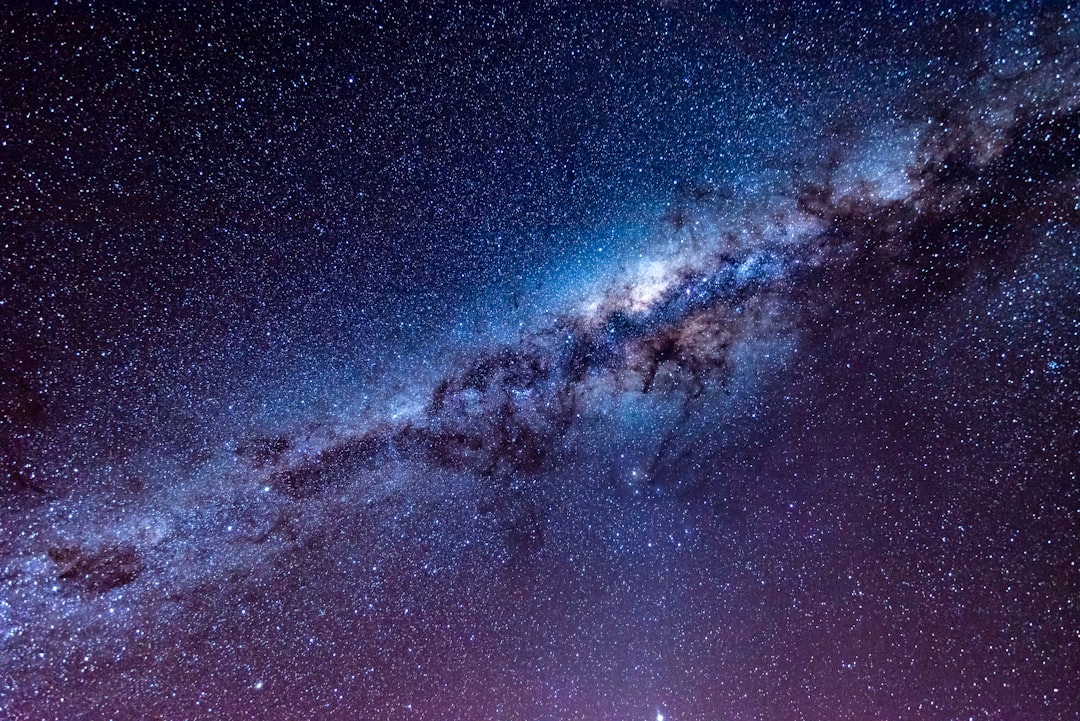
At the heart of the Milky Way, roughly 26,000 light-years from Earth, lies Sagittarius A* (Sgr A*), a supermassive black hole with a mass approximately four million times that of our Sun. For decades, astronomers have tracked a remarkable population of stars — known collectively as S-stars — that orbit Sgr A* in tight, high-velocity trajectories. These stars have become invaluable probes of the extreme physics near a supermassive black hole, and observations of their orbits have already provided some of the most compelling evidence for general relativity in action.
The most famous of these is S2 (also called S-02), whose orbit around Sgr A* has been tracked for more than two decades by teams using the Very Large Telescope (VLT) in Chile and the Keck Observatory in Hawaii. Observations of S2 confirmed the phenomenon of gravitational redshift — the stretching of light to longer wavelengths as it climbs out of a deep gravitational well — as well as Schwarzschild precession, the slow rotation of an orbit's closest approach point predicted by Einstein but not by Newton. Yet S2, for all its value, orbits Sgr A* over a period of about 16 years and never ventures close enough for the most subtle relativistic effects to become detectable.
That is where the newly discovered S301 changes everything.
Meet S301: The Most Relativistic Star Ever Observed
Catalogued as the 301st recognized member of the S-star family, S301 is a star slightly more massive than our own Sun, yet it inhabits one of the most extreme dynamical environments in the observable universe. According to the discovery paper by Dayem et al. (2026), S301 completes a full orbit around Sgr A* in just 8.7 years — the shortest orbital period of any known S-star. Its orbit is also dramatically elliptical, carrying it on a path of extraordinary contrast between its farthest and nearest points to the black hole.
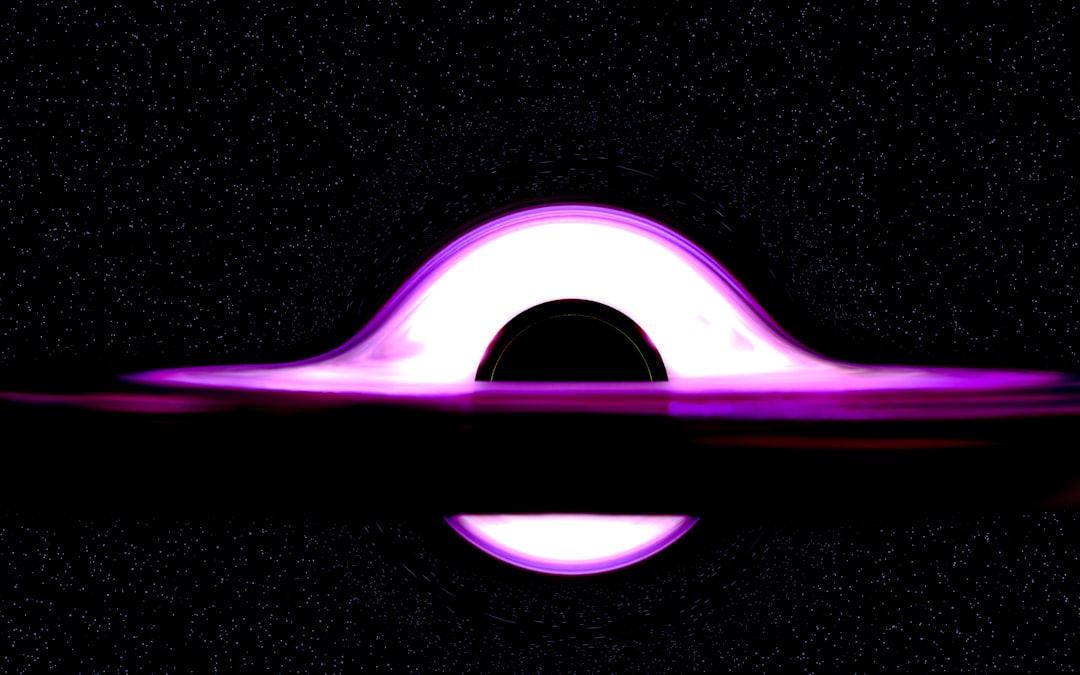
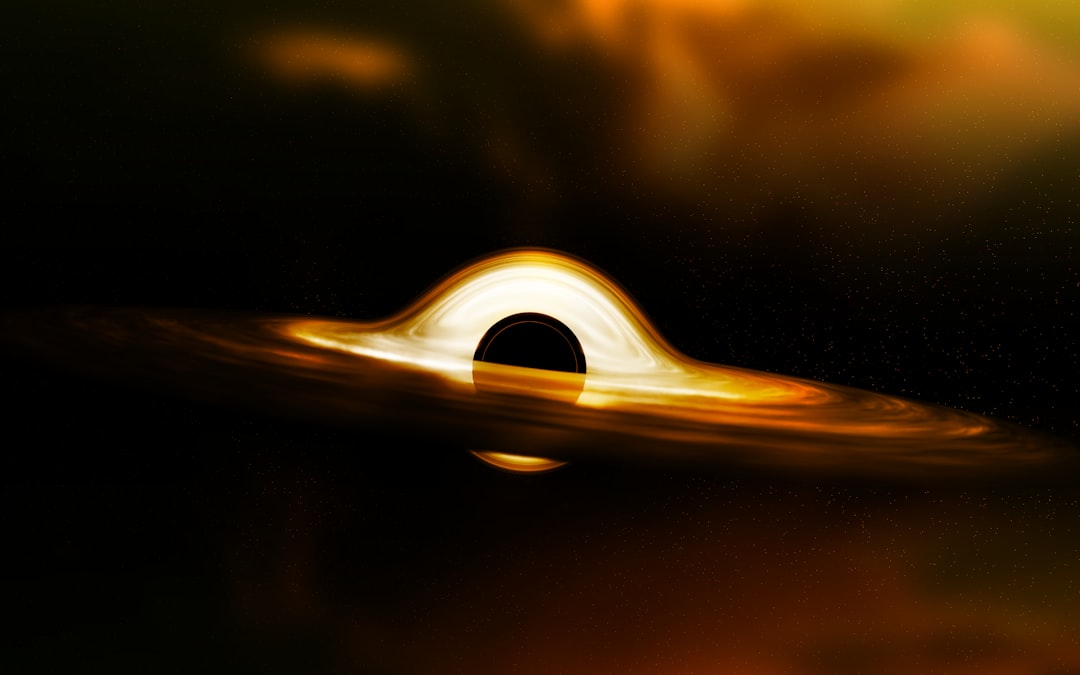
At periapsis — its closest approach to Sgr A* — S301 passes within approximately 140 Schwarzschild radii of the black hole, a distance of roughly 24 astronomical units (AU). To put that in perspective: if Sgr A* were placed at the center of our own solar system, its event horizon — the point of no return beyond which not even light can escape — would sit just inside the orbit of Mercury. At that same scale, S301's closest approach would carry it sweeping through the region between the orbits of Uranus and Neptune, while traveling at more than 8% of the speed of light (approximately 24,000 kilometers per second).
"S301 is the most relativistic star we have observed. Its extreme orbit brings it close enough to Sgr A* that second- and third-order relativistic effects — previously beyond our reach — may finally become measurable." — Dayem et al., arXiv:2607.12664 (2026)
These numbers are not merely impressive statistics. They translate directly into measurable physical phenomena that can distinguish Einstein's theory from competing frameworks.
Orbital Precession: A Classic Test Pushed to New Extremes
One of the earliest and most celebrated confirmations of general relativity was its successful explanation of the anomalous precession of Mercury's perihelion. Mercury's elliptical orbit slowly rotates around the Sun over time — a phenomenon partially explained by the gravitational tugs of other planets, but with a small residual that Newtonian mechanics could not account for. Einstein's theory predicted exactly the observed excess precession of approximately 43 arcseconds per century, a triumph that helped establish GR as the superior theory of gravity. For reference, that tiny precession is so subtle that the difference between Newton's and Einstein's predictions accumulates to less than the angular span of a human heartbeat's duration in a lifetime of orbits.
For S301, the situation is dramatically more vivid. Its perihelion advances by approximately 2 degrees per orbit — a shift so large it is directly measurable with current technology. This enormous precession rate reflects both the star's extraordinary proximity to Sgr A* and its extreme orbital velocity. Where Mercury's precession required decades of painstaking measurement and mathematical analysis to detect, S301's orbital evolution is bold enough to be tracked in real time over years of observation.
Secondary Relativistic Effects: Gravitational Redshift and the Transverse Doppler Effect
Beyond orbital precession, S301's extreme velocity and proximity to Sgr A* bring a suite of more subtle secondary relativistic effects into play. Two of particular interest are gravitational redshift and the transverse Doppler effect.
- Gravitational redshift: As light emitted by S301 climbs out of the deep gravitational potential well surrounding Sgr A*, it loses energy, causing its wavelengths to stretch toward the red end of the spectrum. This effect has been confirmed in laboratory experiments and previously detected — with difficulty — in the spectrum of S2. For S301, given its closer approach, the magnitude of this shift will be significantly larger and more readily measured.
- Transverse Doppler effect: A purely relativistic phenomenon with no Newtonian equivalent, this refers to the time dilation experienced by a rapidly moving object. Even when S301 is moving perpendicular to our line of sight — so that classical Doppler shifts are zero — the star's enormous velocity means time passes more slowly for it than for a stationary observer. This manifests as an additional redshift in the star's spectral lines, directly encoding information about its speed.
- Frame-dragging (Lense-Thirring precession): If Sgr A* is rotating — as most black holes are expected to be — its rotation drags spacetime along with it, subtly altering the orbital paths of nearby objects. S301's tight orbit makes it uniquely sensitive to this effect, potentially allowing astronomers to measure the spin of Sgr A* for the first time through stellar orbital dynamics.
- Gravitational lensing: At extreme proximity, the bending of light by Sgr A*'s gravity may cause measurable distortions in the apparent position of S301 as it passes behind or near the black hole, offering yet another observational handle on relativistic effects.
A Window Into Theories Beyond Einstein
Perhaps the most profound scientific opportunity offered by S301 lies not in confirming what we already believe, but in probing the boundaries of our knowledge. General relativity, for all its success, is known to be incomplete. It describes gravity as a smooth curvature of spacetime, but this picture is fundamentally incompatible with quantum mechanics, the equally successful theory governing the behavior of particles at the smallest scales. Reconciling the two remains one of the deepest unsolved problems in physics, and it is widely believed that a complete theory of quantum gravity would differ from GR in subtle but detectable ways.
Several theoretical frameworks — including scalar-tensor theories, Brans-Dicke gravity, and various post-Einsteinian metric theories — predict deviations from GR that become significant only in regimes of extreme gravitational fields or relativistic velocities. These deviations are typically of order (v/c)² or (v/c)³, where v is the velocity of the test body and c is the speed of light. At S301's peak velocity of roughly 8% the speed of light, these higher-order terms are no longer negligibly small — they may, for the first time in stellar astronomy, rise above the threshold of detectability.
The interaction between the spin of Sgr A* and the rotation of S301 itself also enters at these orders of magnitude, producing effects that encode the black hole's angular momentum in the star's orbital evolution. Different theories of gravity predict subtly different coupling between spin and orbital motion, making S301 a potential discriminator between competing frameworks.
For more on the theoretical landscape of alternative gravity theories and their observational tests, see the resources compiled by the LIGO Scientific Collaboration and the European Space Agency's gravity science portal.
The Observational Challenge: Seeing Through the Galactic Veil
Despite its enormous scientific potential, observing S301 in detail is a formidable technical challenge. The center of the Milky Way is shrouded in vast clouds of interstellar gas and dust that absorb virtually all visible (optical) light emanating from that region, rendering it completely opaque to conventional telescopes. Astronomers must instead observe in infrared and radio wavelengths, which can penetrate the dust more effectively. This is the same technique that has been used for decades to track the S-star population using instruments like the GRAVITY interferometer at ESO's Very Large Telescope Interferometer.
However, because S301 is a Sun-like star rather than an intrinsically luminous giant, it is relatively faint even in the infrared. Current facilities can precisely track its astrometric position — mapping the path it traces across the sky — but obtaining high-resolution spectral data sufficient to measure the subtle Doppler shifts and spectral line distortions associated with second- and third-order relativistic effects remains beyond present capabilities.
The next generation of ground-based observatories is expected to change this. The Giant Magellan Telescope (GMT), currently under construction at Las Campanas Observatory in Chile, will feature a primary mirror spanning 25 meters — roughly ten times the light-collecting area of current large telescopes. Its extraordinary sensitivity and spectral resolution will enable astronomers to dissect the light from faint stars like S301 in unprecedented detail, revealing the relativistic fingerprints encoded in their spectra. Similarly, the Extremely Large Telescope (ELT), being developed by the European Southern Observatory, will offer comparable and complementary capabilities.
Why S301 Matters: The Broader Scientific Significance
The discovery and characterization of S301 represents a significant milestone in what might be called extreme gravity astrophysics — the use of naturally occurring cosmic systems to test fundamental physics under conditions impossible to replicate in any terrestrial laboratory. Previous landmarks in this field include the detection of gravitational waves from merging black holes by LIGO and Virgo, the first imaging of a black hole's shadow by the Event Horizon Telescope, and the long-term monitoring of the S-star cluster that earned Reinhard Genzel and Andrea Ghez the Nobel Prize in Physics in 2020.
S301 adds a new and uniquely powerful tool to this arsenal. Unlike gravitational wave detections, which capture transient events lasting fractions of a second, or black hole imaging, which provides a single snapshot of an accretion structure, S301 is a persistent, repeating laboratory. Every 8.7 years, it completes another orbit, each pass providing a fresh opportunity to measure relativistic effects with improving instrumentation. Over the coming decades, as telescope technology advances and the baseline of observations grows, the cumulative dataset from S301 has the potential to place constraints on theories of gravity that would otherwise be inaccessible.
"The galactic center is nature's ultimate physics laboratory. Stars like S301 give us a front-row seat to gravity at its most extreme — and perhaps a glimpse of physics beyond Einstein."
The universe, it turns out, has constructed precisely the experiment physicists have long dreamed of running. All we need to do is watch — and build the instruments capable of listening closely enough to hear what S301 has to tell us.
Key Facts About S301
- Designation: S301 (301st recognized S-star orbiting Sgr A*)
- Mass: Slightly greater than one solar mass
- Orbital period: ~8.7 years (shortest known among S-stars)
- Closest approach (periapsis): ~140 Schwarzschild radii (~24 AU from Sgr A*)
- Peak velocity: Greater than 8% of the speed of light (~24,000 km/s)
- Orbital precession: ~2 degrees per orbit
- Primary scientific value: Testing second- and third-order relativistic effects, including sensitivity to the spin of Sgr A*
- Discovery reference: Dayem et al., arXiv:2607.12664 (2026)
Reference
Dayem, K., et al. "Discovery of a star sensitive to the spin of Sgr A*." arXiv preprint arXiv:2607.12664 (2026).