The boundaries of planetary science are being rewritten as astronomers discover increasingly massive worlds that challenge our fundamental understanding of how planets form and grow. Recent observations using the James Webb Space Telescope (JWST) have revealed that gas giant planets can achieve sizes far exceeding anything found in our own solar system, raising profound questions about the upper limits of planetary formation and the distinction between planets and failed stars known as brown dwarfs.
A groundbreaking study published in Nature Astronomy by researchers from the University of California, San Diego, along with collaborators from across the United States and Canada, has provided unprecedented insights into the atmospheric composition of super-Jupiter exoplanets. By analyzing three massive gas giants in the HR 8799 system—each weighing between 5 and 10 times Jupiter's mass—the team has uncovered crucial evidence about the formation mechanisms that create these colossal worlds, suggesting that current planetary formation models may need significant revision.
The discovery carries implications far beyond simple planetary classification. Understanding how these massive gas giants form and evolve helps astronomers refine their search for potentially habitable worlds and provides critical context for interpreting the diverse array of planetary systems discovered throughout our galaxy. With nearly 5,500 confirmed exoplanets discovered to date, according to NASA's Exoplanet Archive, the question of planetary size limits has become increasingly urgent for understanding the full spectrum of planetary diversity in the universe.
The HR 8799 System: A Natural Laboratory for Giant Planet Research
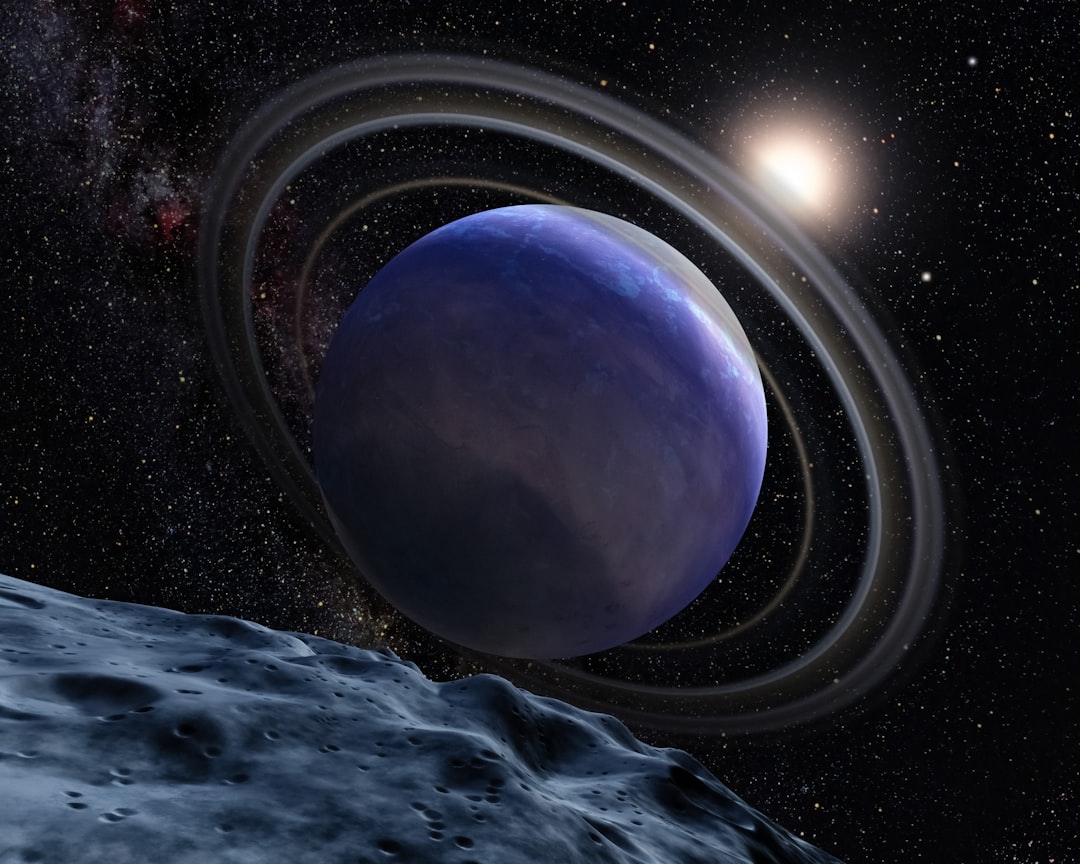
Located approximately 133 light-years from Earth in the constellation Pegasus, the HR 8799 system represents one of the most remarkable planetary systems ever discovered. The system hosts four confirmed gas giant exoplanets, all of which orbit their host star at distances far exceeding those of Jupiter in our solar system. The three planets studied in this research—designated HR 8799 b, c, and d—orbit their parent star at distances ranging from 15 to 70 astronomical units (AU), placing them in the outer reaches of their planetary system.
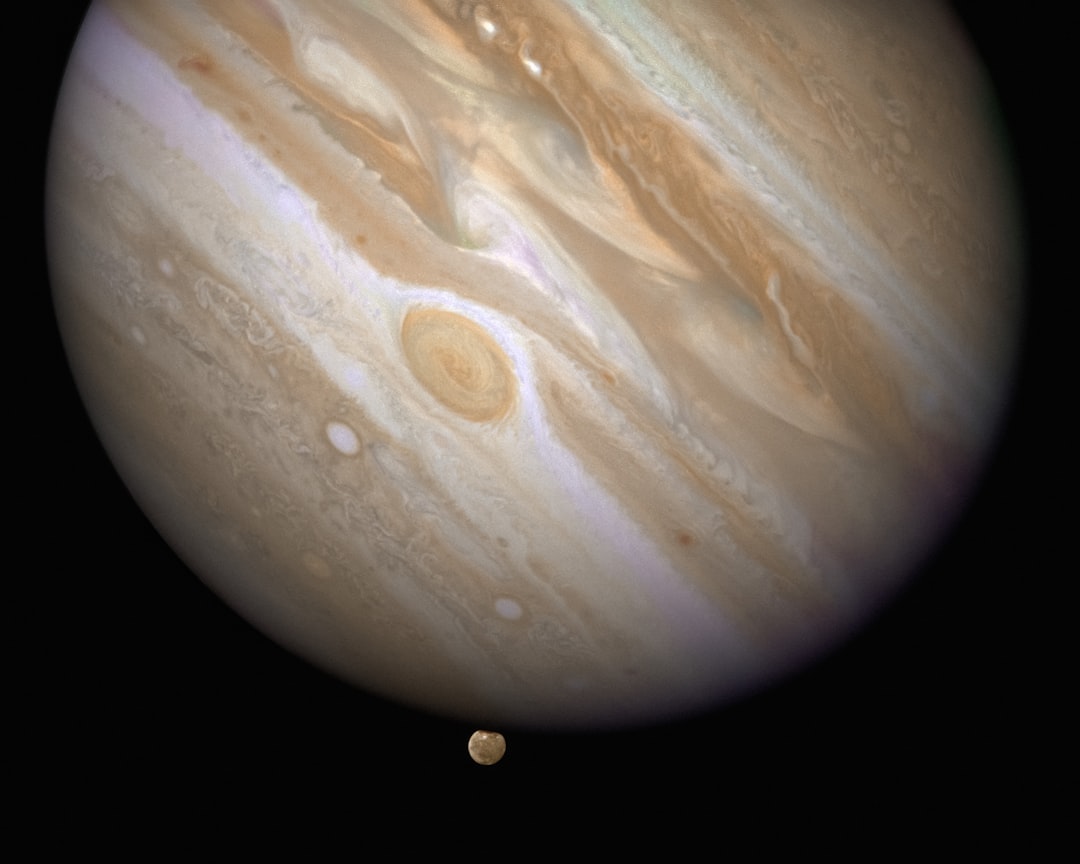
To put this in perspective, Jupiter orbits our Sun at just over 5 AU, while Neptune, the most distant planet in our solar system, orbits at approximately 30 AU. The HR 8799 planets therefore occupy orbital positions more analogous to the space between Jupiter and the theoretical Oort Cloud in our own solar system. This extreme distance from their host star makes the HR 8799 system particularly valuable for studying planet formation in the outer regions of planetary systems, where temperatures are frigid and the available building materials differ significantly from the inner system.
The HR 8799 system was first discovered in 2008 through direct imaging—a technique that captures actual photons from the planets themselves rather than inferring their presence through indirect methods like the transit or radial velocity techniques. This direct observation capability makes the system ideal for detailed atmospheric studies using advanced instruments like those aboard JWST.
Revolutionary Atmospheric Analysis Using JWST
The research team leveraged the unprecedented capabilities of the James Webb Space Telescope, particularly its Near-Infrared Spectrograph (NIRSpec) and Mid-Infrared Instrument (MIRI), to conduct detailed spectroscopic analysis of the three gas giant atmospheres. These instruments can detect the unique spectral signatures of different molecules by analyzing how the planets' atmospheres absorb and emit light at specific wavelengths.
The observations revealed a surprisingly complex atmospheric chemistry. The team confirmed detections of water vapor (H₂O), carbon monoxide (CO), carbon dioxide (CO₂), and methane (CH₄)—molecules that have been detected in other gas giant atmospheres. However, the breakthrough came with the detection of sulfur-bearing molecules and additional oxygen and carbon compounds that provided crucial clues about the planets' formation history.
The presence of these heavier elements in abundances exceeding those found in the host star represents a critical piece of evidence. In stellar and planetary science, elements heavier than hydrogen and helium are collectively termed "metals," and their distribution provides vital information about formation processes. The enhanced metallicity observed in these super-Jupiters indicates that they accumulated significant amounts of solid material—ice and rock—during their formation, supporting models where massive cores form first and then gravitationally capture enormous envelopes of hydrogen and helium gas.
The Historic Sulfur Detection
The detection of sulfur in exoplanetary atmospheres marked a significant milestone in the field. As reported in related findings from this same study, this represented the first confirmed detection of sulfur in gas giant exoplanet atmospheres. Sulfur is an important element in planetary chemistry, playing roles in atmospheric dynamics, cloud formation, and potentially even prebiotic chemistry on rocky worlds.
More importantly for this research, the sulfur detection helped astronomers definitively classify the HR 8799 objects as bona fide planets rather than brown dwarfs. Brown dwarfs, sometimes called "failed stars," form through the direct collapse of gas clouds similar to stars but lack sufficient mass to sustain hydrogen fusion in their cores. They typically exhibit different chemical signatures and formation mechanisms compared to planets, making the distinction crucial for understanding the formation pathway of these massive objects.
Challenging Conventional Planet Formation Models
The findings from HR 8799 have profound implications for our understanding of how gas giant planets form. The traditional core accretion model—which has successfully explained the formation of Jupiter and Saturn in our solar system—posits that planets form when solid particles in a protoplanetary disk gradually accumulate into increasingly larger bodies. Once a solid core reaches approximately 10 Earth masses, it can begin rapidly capturing gas from the surrounding disk, eventually forming a gas giant.
"There are many models of planet formation to consider. I think this shows that older core accretion models are outdated. And of the newer models, we are looking at ones where gas giants can form solid cores really far away from their star. I think the question is, how big can a planet be? Can a planet be 15, 20, 30 times the mass of Jupiter and still have formed like a planet? Where is the transition between planet formation and brown dwarf formation?" said Dr. Quinn Konopacky, UC San Diego Professor of Astronomy and Astrophysics and co-author on the study.
The challenge posed by the HR 8799 planets lies in their extreme masses and distant orbits. At 5 to 10 Jupiter masses and orbiting at such great distances from their star, these planets push the boundaries of what traditional core accretion models can explain. At such distances, the protoplanetary disk would have been less dense, and the timescales for core formation would have been extremely long—potentially longer than the typical lifetime of protoplanetary disks, which dissipate within a few million years.
Alternative formation mechanisms, such as gravitational instability, have been proposed for these massive, distant gas giants. In this scenario, dense regions of the protoplanetary disk become gravitationally unstable and collapse directly into giant planets without first forming solid cores. However, the enhanced metallicity detected by JWST suggests that solid material accumulation did play a significant role, pointing toward a hybrid or modified formation process that current models struggle to fully explain.
Implications for the Planet-Brown Dwarf Boundary
One of the most intriguing questions raised by this research concerns the upper mass limit for planetary formation. The deuterium-burning limit—approximately 13 Jupiter masses—has traditionally been used as a rough dividing line between planets and brown dwarfs. Objects above this mass can fuse deuterium (heavy hydrogen) in their cores, a capability that planets lack. However, mass alone may not be the most meaningful criterion for distinguishing planets from brown dwarfs.
The research team's findings suggest that formation mechanism may be a more fundamental distinguishing characteristic than mass. Planets form in protoplanetary disks around young stars through processes involving solid material accumulation, while brown dwarfs form through the direct gravitational collapse of gas clouds, similar to stars. The atmospheric compositions revealed by JWST provide evidence for the formation pathway, potentially allowing astronomers to classify objects based on their origin rather than arbitrary mass cutoffs.
This distinction has important implications for exoplanet surveys and statistics. According to the European Southern Observatory, ground-based direct imaging surveys have discovered dozens of massive companions to stars, and determining which are planets and which are brown dwarfs has been challenging. The atmospheric analysis techniques demonstrated in this study provide a path forward for making these classifications more definitive.
The Broader Context of Exoplanetary Diversity
The discovery of super-Jupiters fits into a broader pattern of exoplanetary diversity that has surprised astronomers since the first exoplanet orbiting a Sun-like star was discovered in 1995. Our solar system, with its orderly arrangement of small rocky planets close to the Sun and gas giants in the outer system, turns out to be just one possible configuration among many.
Exoplanet discoveries have revealed:
- Hot Jupiters: Gas giants orbiting extremely close to their host stars, completing orbits in just days, challenging the idea that gas giants must form far from their stars
- Super-Earths and Mini-Neptunes: Planets with masses between Earth and Neptune that have no analogue in our solar system but appear to be the most common type of exoplanet
- Eccentric Giants: Gas giants in highly elliptical orbits, unlike the near-circular orbits of Jupiter and Saturn
- Free-floating Planets: Planetary-mass objects drifting through space without orbiting any star, possibly ejected from their birth systems
- Super-Jupiters: Massive gas giants like those in HR 8799, pushing the boundaries of planetary formation and challenging our definitions
This diversity suggests that planetary system formation is a more variable and complex process than early theories anticipated. Understanding the full range of possible planetary outcomes requires studying systems across this entire spectrum, from the smallest rocky worlds to the most massive gas giants.
Future Research Directions and Technological Advances
The success of JWST in characterizing the atmospheres of the HR 8799 planets demonstrates the power of next-generation space telescopes for exoplanetary science. Future observations will likely focus on several key areas:
Extended atmospheric surveys: Applying similar techniques to other super-Jupiter systems will help determine whether the atmospheric patterns observed in HR 8799 are typical or exceptional. The ESA's PLATO mission, scheduled for launch in 2026, will discover thousands of new exoplanets that can be followed up with detailed atmospheric studies.
Cloud and weather patterns: JWST's long-term monitoring capabilities will allow astronomers to observe how these massive atmospheres change over time, revealing information about atmospheric circulation, storm systems, and cloud formation in extreme environments.
Isotopic ratios: More detailed spectroscopic analysis could reveal the ratios of different isotopes (such as carbon-12 versus carbon-13), providing additional constraints on formation locations and processes. Isotopic ratios can indicate whether planets formed in the cold outer regions of protoplanetary disks or migrated from elsewhere.
Comparative planetology: By studying gas giants across a range of masses, orbital distances, and host star types, astronomers can develop more comprehensive formation models that account for the full diversity of observed systems.
Connections to Habitability and Life Beyond Earth
While super-Jupiters themselves are unlikely to host life as we know it, understanding their formation and evolution has important implications for the search for habitable worlds. Gas giant planets play several important roles in planetary systems that can affect the potential for life:
System architecture: The presence and positions of gas giants influence the distribution of smaller, potentially rocky planets. Jupiter's gravitational influence, for example, may have shaped the orbits of the terrestrial planets in our solar system and potentially protected Earth from excessive comet impacts.
Migration history: If massive planets migrate inward after formation, they can disrupt the orbits of inner planets or even eject them from the system entirely. Understanding when and how gas giants move helps astronomers predict where stable, habitable zones might exist.
Delivery of volatiles: Gas giants forming in the outer system can gravitationally scatter icy bodies inward, potentially delivering water and organic compounds to inner rocky planets. The composition of gas giants provides clues about the inventory of these life-essential materials in different parts of planetary systems.
The Nancy Grace Roman Space Telescope, scheduled to launch in the mid-2020s, will conduct extensive surveys of exoplanets using gravitational microlensing and direct imaging, potentially discovering many more super-Jupiter systems and helping astronomers understand their role in the broader context of planetary system evolution.
Conclusion: Redefining Planetary Boundaries
The study of super-Jupiters in the HR 8799 system represents a pivotal moment in our understanding of planetary formation. By revealing that planets can form with masses approaching or exceeding 10 times that of Jupiter, while still showing chemical signatures consistent with planet formation processes, this research challenges us to reconsider fundamental assumptions about planetary size limits and formation mechanisms.
The question posed by Dr. Konopacky—"Where is the transition between planet formation and brown dwarf formation?"—remains open, but the tools and techniques demonstrated in this study provide a path toward answering it. As JWST continues its mission and future observatories come online, astronomers will be able to study an ever-larger sample of these massive worlds, refining our understanding of the processes that create them and the role they play in the cosmic ecosystem of planetary systems.
The detection of sulfur and other heavy elements in these distant giant planets not only helps classify them definitively as planets rather than brown dwarfs but also provides crucial constraints on where and how they formed. This information feeds into broader efforts to understand planetary system formation and evolution, ultimately helping us understand our own solar system's history and the potential for life elsewhere in the universe.
As we continue to push the boundaries of observational astronomy and theoretical modeling, each new discovery reminds us that the universe is far more diverse and surprising than we imagined. The super-Jupiters of HR 8799, massive worlds orbiting in the cold darkness far from their star, stand as testament to the remarkable variety of planetary outcomes possible in our galaxy—and as an invitation to continue exploring the fundamental question: how big can a planet really be?