An Extended Barrage of Asteroid Impacts Made Earth Too Hot to Form Continents
The formation of continents represents one of the most pivotal chapters in Earth's 4.6-billion-year history. Continental crust and plate tectonics are not merely geological curiosities — they are intimately connected to a planet's long-term habitability, governing climate stability, nutrient cycling, and the very conditions that allow life to emerge and flourish. Understanding precisely when and how continents formed, and what factors controlled that process, stands as one of planetary science's most fundamental and enduring challenges.
Now, groundbreaking new research published in the journal Science offers a compelling answer to a question that has puzzled geologists for decades: why is there virtually no surviving rock record from Earth's earliest era? The answer, it turns out, may lie not deep within the planet, but raining down from the sky.
Why Continents Matter: Tectonics, Climate, and the Conditions for Life
Before diving into the findings, it is worth appreciating just how critical continental crust is to life as we know it. Plate tectonics — the slow, grinding movement of Earth's crustal plates — serves as the planet's primary long-term thermostat. Through the subduction of oceanic crust into the mantle, carbon dioxide is removed from the atmosphere and locked away, preventing runaway greenhouse warming over geological timescales. Without this mechanism, Earth's climate would be far less stable, potentially rendering the planet uninhabitable.
Tectonics also maintains the nutrient cycles essential for biology. Critical elements like phosphorus, which is indispensable for DNA and cellular energy transfer, would otherwise become permanently locked within deep rock formations, unavailable to surface life. While scientists cannot yet be entirely certain that plate tectonics is a universal prerequisite for life, the evidence strongly suggests it is a critical enabler — and plate tectonics can only operate once stable, thick continental crust has formed.
This connection between geology and habitability extends beyond Earth. As astronomers discover increasing numbers of rocky exoplanets in the habitable zones of their host stars, understanding the geological conditions that support life becomes ever more urgent. Whether those distant worlds have developed continental crust and plate tectonics may be a key determinant of whether they could host life at all.
Earth's Earliest Chapter: The Hadean Eon
The story begins approximately 4.6 billion years ago, when Earth coalesced from the swirling disk of gas and dust surrounding our young Sun. In its infancy, Earth was a hellish world — a roiling magma ocean with no solid surface, kept molten by the immense energy of accretion and the decay of short-lived radioactive isotopes. This primordial era is known as the Hadean eon, named after Hades, the Greek underworld, a fitting tribute to conditions of almost unimaginable violence and heat.
Radiogenic heating — the warmth generated by the decay of radioactive elements such as uranium, thorium, and potassium within Earth's interior — was long considered the dominant factor keeping early Earth's crust weak and unstable. But the new research challenges this assumption decisively, revealing that an entirely different heat source dwarfed anything coming from within the planet itself.
"The nature of Earth's crust during the Hadean eon [≥4.03 billion years ago] is uncertain. Models of the early Earth account for heat coming from inside the planet, in spite of evidence of intense bombardment by impactors and the heat they delivered." — Johnson et al., Science, 2025
The New Research: Impact Heat as the Dominant Force
The study, titled "Impact heating and the hidden Hadean," is published in Science and led by Professor Tim Johnson, a geologist at Curtin University's School of Earth and Planetary Sciences and its Curtin Frontier Institute for Geoscience Solutions. Johnson and his colleagues constructed sophisticated models of impactor heat flux during the Hadean — the rate at which kinetic energy from asteroid collisions was converted into heat and deposited into Earth's crust and mantle.
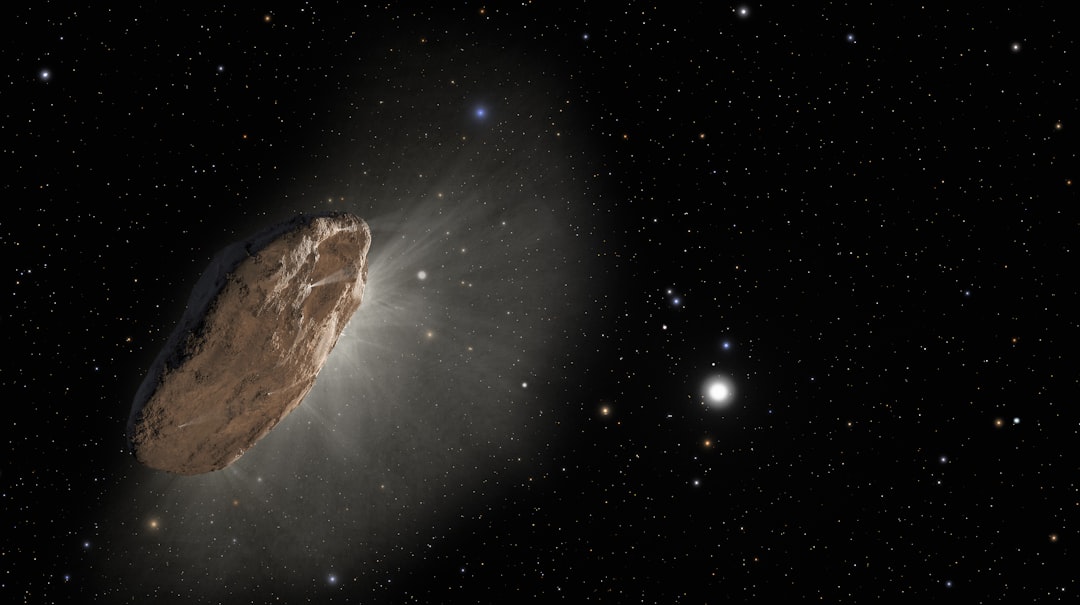
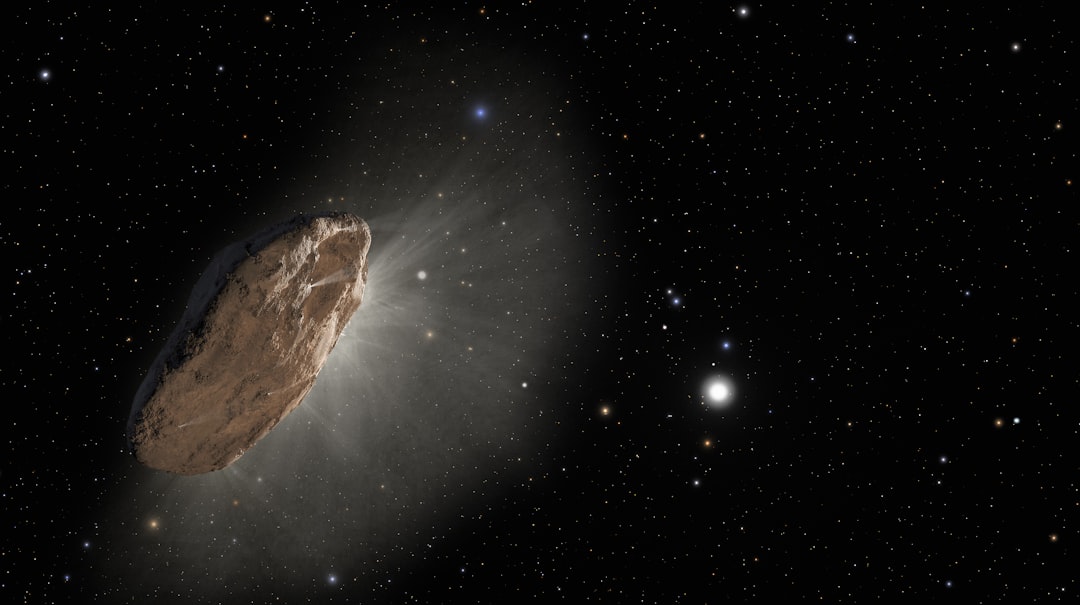
Their results were striking. The heat delivered by asteroid impacts during the Hadean was not merely significant — it dwarfed the planet's internal heat budget for the entirety of that eon. According to the researchers, this torrent of impact-generated heat would have kept Earth's crust extensively molten at depths below just a few kilometers, preventing the thick, stable crustal formations necessary for plate tectonics from ever getting started.
Importantly, the team emphasizes that their estimates are conservative. Even under the most restrained assumptions about the frequency and scale of Hadean impacts, the thermal energy delivered from space overwhelmed what the planet's radioactive interior could generate.
Differentiation and the Birth of Felsic Crust
The impact heating did not merely destroy — paradoxically, it also helped build the very crust that would eventually become continents. To understand how, it helps to consider the process of planetary differentiation.
Differentiation is the gravitational separation of a planet's materials by density within a magma ocean. On early Earth, dense iron and nickel sank toward the core, where they generate our planet's vital magnetic shield — itself a key requirement for surface habitability, as it deflects harmful solar wind particles. Lighter elements rose toward the surface, dominating the crust we stand on today.
Within the crust itself, differentiation produces two broad rock categories of enormous geological importance:
- Felsic rock: Light-colored, lower-density rock rich in silicon, oxygen, aluminum, and potassium. Felsic rock forms the bulk of continental crust and includes granite and related rock types.
- Mafic rock: Darker, denser rock dominated by magnesium and iron. Mafic rock forms oceanic crust and includes basalt, the most abundant rock type on Earth's surface.
The models show that sustained impact heating drove intense gravitational segregation within the early crust — repeatedly melting rock, allowing denser mafic material to sink while driving the progressive enrichment of silica-rich, felsic material toward the surface. In essence, the asteroid bombardment was refining and concentrating the raw ingredients of future continental crust, even as it simultaneously prevented that crust from stabilizing. The violence of the Hadean was, in a very real sense, the forge in which the continents were being prepared.
The Late Heavy Bombardment and Its Geological Signature
The Hadean eon ended approximately 4.0 billion years ago, coinciding with the onset of the hypothesized Late Heavy Bombardment (LHB) — a proposed period of dramatically intensified asteroid and comet impacts across the inner Solar System. The LHB is thought to have been triggered by the gravitational migration of the giant planets — Jupiter, Saturn, Uranus, and Neptune — which destabilized the orbits of countless small bodies in the outer Solar System, sending a cascade of projectiles hurtling inward toward the rocky planets.
It is worth noting that while the LHB is a widely discussed concept supported by evidence from lunar crater chronology, it remains a hypothesis subject to ongoing scientific debate. A number of researchers argue that the lunar cratering record, which underpins much of the LHB evidence, may reflect a more gradual decline in impact rates rather than a discrete intense pulse. Nevertheless, the geologic record of Earth's earliest history is broadly consistent with a prolonged era of heavy bombardment ending roughly 3.9 billion years ago.
The new research's timeline aligns precisely with this transition. According to Johnson and colleagues, impact-generated heating would have diminished significantly by approximately 3.9 billion years ago — and it is exactly at this point that the geological record begins to reveal the first enduring fragments of thick continental crust. This temporal coincidence is deeply suggestive of a causal relationship.
"That enduring continental crust appeared around this time is likely not a coincidence." — Johnson et al., Science, 2025
The Acasta Gneiss: Earth's Oldest Surviving Rock
The research draws powerful support from one of geology's most celebrated specimens: the Acasta Gneiss, located in the remote Northwest Territories of northern Canada. Dating to approximately 4.02 billion years ago, the Acasta Gneiss represents the oldest known intact fragment of Earth's continental crust — a battered but surviving witness to the transition from the Hadean inferno to the more geologically stable world that followed.
The timing is remarkable. The Acasta Gneiss formed almost precisely when the models predict that impact heating would have subsided sufficiently to allow thick, stable crust to persist. Geological Survey of Canada researchers and others have studied these ancient rocks extensively, and their age and composition are consistent with the silica-rich felsic material that Johnson's models predict should have accumulated during the Hadean, waiting for the bombardment to cease before it could solidify and survive.
A World Kept Hot, Weak, and Mobile
Professor Johnson vividly captures the counterintuitive nature of impact dynamics across geological time:
"There is a temptation to think of large impacts as short-lived events that scar a planet's surface and then pass. But the early Solar System was full of collisions, and the Moon preserves that history in plain sight. Those impacts carried enormous amounts of energy, and that energy had to go somewhere." — Professor Tim Johnson
When a large asteroid strikes a planet, the kinetic energy of the collision is converted almost instantaneously into an enormous pulse of heat. On the modern Earth, individual impacts are separated by vast spans of time, allowing the planet to recover thermally between events. But during the Hadean, impacts were so frequent and so energetic that the planet never had a chance to recover. The heat accumulated, keeping the crust in a perpetual state of partial melting.
Co-author Professor Craig O'Neill from the Queensland University of Technology elaborates on the mantle-scale consequences of this relentless bombardment:
"On the early Earth, much of that energy would have been transferred into Earth's mantle as heat. That would have caused mantle beneath and around the impact site to rise and melt, producing large volumes of magma. Our results suggest the early crust was thin and unstable for much of the Hadean, not a world with strong plates behaving in a familiar modern way. Instead, impacts would have helped keep the crust hot, weak and mobile, while driving melting and recycling on a planetary scale for tens to hundreds of millions of years after the initial collision." — Professor Craig O'Neill
This portrait of the Hadean Earth is profoundly alien compared to the planet we inhabit today. Rather than rigid tectonic plates grinding slowly across a solid surface, the early Earth featured a dynamic, churning crust that was continuously melted, recycled, and remade — a geological purgatory that left almost no surviving rock record.
Explaining the Missing Hadean Rock Record
One of the most striking aspects of the Hadean eon is precisely how little physical evidence of it survives. With the exception of rare zircon mineral grains — microscopic crystals that can survive even when the rocks that originally contained them are destroyed — and a handful of ancient rock formations like the Acasta Gneiss, the Hadean has left almost no direct geological record on Earth.
This absence has long puzzled scientists. The new research provides a clear and physically grounded explanation: the relentless impact heating kept the crust so hot and partially molten that rocks simply could not survive. Any solid crust that briefly formed would be re-melted, overturned, or subducted back into the mantle by the next wave of impacts. The geological record was effectively being erased as fast as it was being written.
As the researchers state in their paper: "Our findings show that such a behavior is untenable in the Hadean and earliest Archean. Notably, our results provide a clear explanation for the almost complete absence of a Hadean rock record."
For geologists and planetary scientists, this is a significant result. It suggests that the apparent emptiness of the Hadean record is not simply a product of erosion or metamorphism over billions of years — it reflects a genuine absence of stable crust during that era, a direct consequence of the relentless asteroid barrage.
Implications for Plate Tectonics and the Origin of Life
The research also sheds important light on when plate tectonics — and thus the conditions for complex life — could have first emerged on Earth. Subduction, the process by which one tectonic plate dives beneath another and is recycled into the mantle, requires the crust to behave as a "semi-coherent slab," as the authors describe it. This is only possible when the crust has cooled, thickened, and gained sufficient mechanical strength.
The models suggest this threshold was not reached until after approximately 3.9 billion years ago, when the crust cooled and solidified to a depth of roughly 30 kilometers. Only then could the familiar machinery of plate tectonics begin to operate, setting in motion the geological processes that would eventually stabilize Earth's climate, recycle nutrients, and create the conditions in which life could thrive and diversify over the following billions of years.
This timeline has profound implications not just for Earth, but for our understanding of habitability across the cosmos. NASA's Exoplanet Exploration program is actively searching for rocky worlds that might harbor life. The lesson from Earth's Hadean is that even on a planet orbiting in the right zone around its star, the development of habitable conditions may be delayed — or even permanently prevented — by the intensity and duration of early bombardment. Planets that experience prolonged heavy bombardment may take far longer to develop stable continents, or may never develop them at all.
Broader Significance: A New View of Early Earth
The research by Johnson, O'Neill, and their colleagues represents a significant shift in how planetary scientists model the thermal evolution of early Earth. By incorporating impact heat flux as a dominant variable — rather than treating impacts as secondary perturbations on top of radiogenic heating — the models produce a much more coherent picture of the Hadean that explains multiple puzzling observations simultaneously:
- The near-complete absence of Hadean rocks in the geological record
- The sudden appearance of thick, felsic continental crust around 3.9–4.0 billion years ago
- The silica-rich composition of ancient continental cores (cratons)
- The timing of the onset of plate tectonics
- The preservation of ancient zircon grains