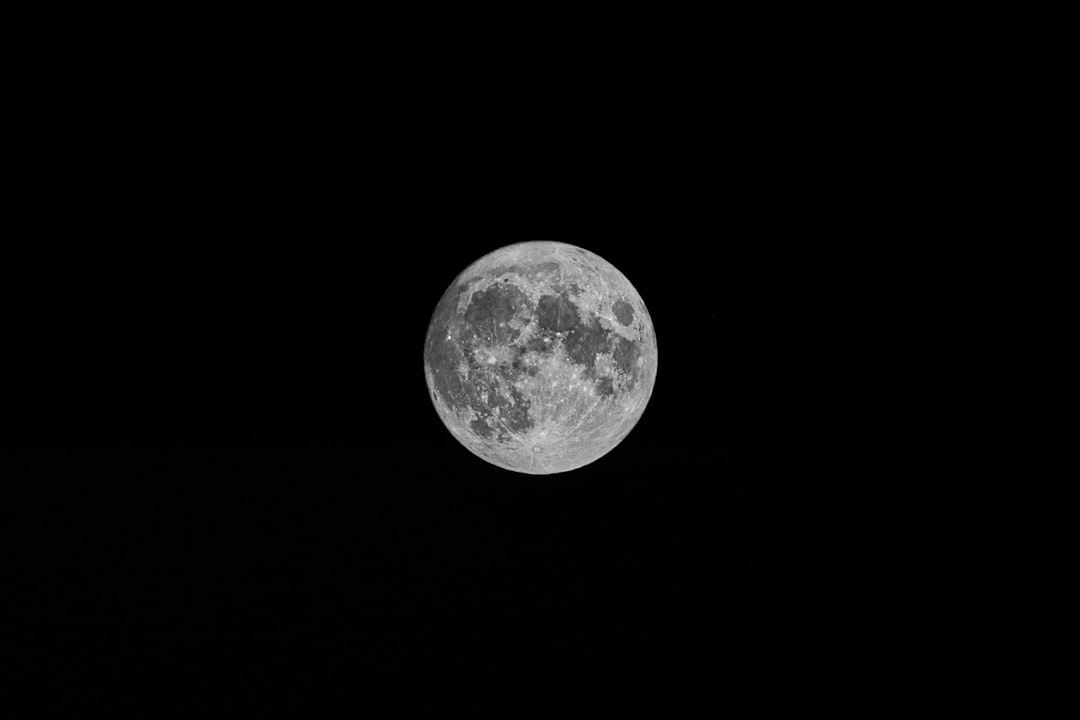
In a reassuring update for lunar observers and astronomers worldwide, NASA's Center for Near-Earth Object Studies has definitively eliminated the possibility of an asteroid collision with the Moon in 2032. The space rock in question, designated 2024 YR4, had previously carried a small but notable probability of lunar impact, creating intrigue among scientists and space enthusiasts alike. Thanks to precise observations from the James Webb Space Telescope, researchers can now confidently predict the asteroid's trajectory will safely bypass our celestial companion.
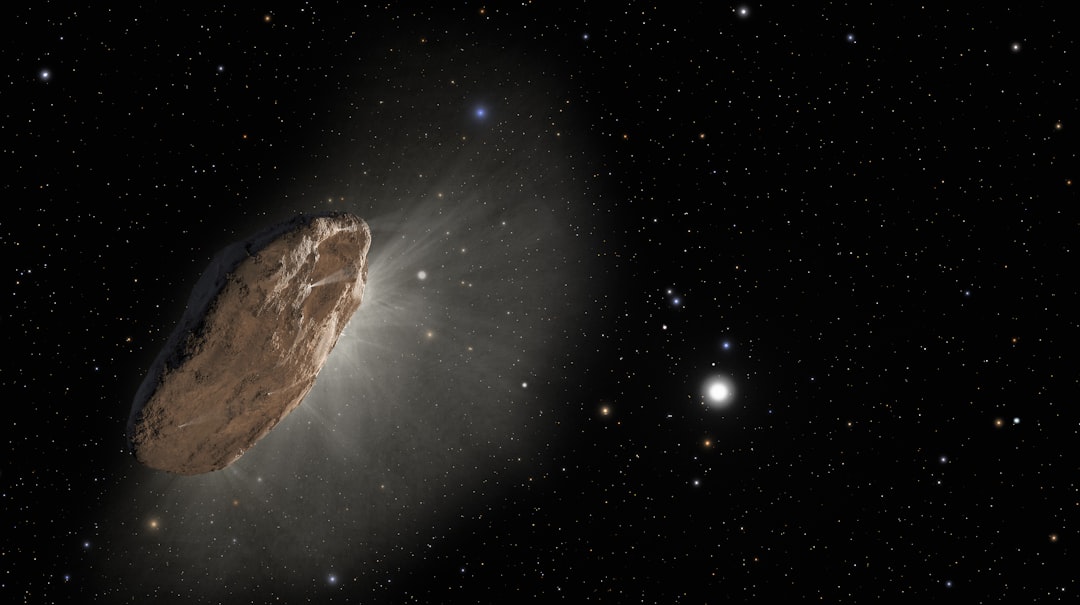
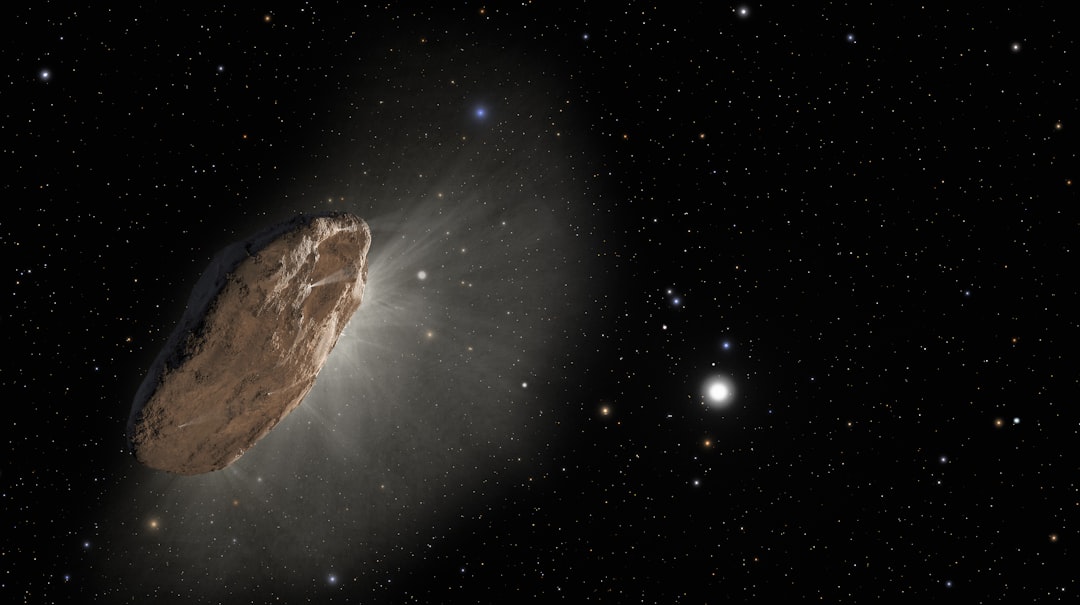
This latest determination represents a significant milestone in planetary defense monitoring and demonstrates the crucial role that advanced space-based observatories play in tracking potentially hazardous objects. The asteroid, approximately 200 feet in diameter—comparable to a 15-story building—will pass within 13,200 miles of the lunar surface on December 22, 2032, a comfortable margin that eliminates any collision concerns.
The Evolution of Asteroid 2024 YR4's Threat Assessment
The journey to this conclusive determination has been anything but straightforward. Asteroid 2024 YR4 was first detected in late 2024 by the Asteroid Terrestrial-Impact Last Alert System (ATLAS) in Chile, a critical component of humanity's planetary defense network. Initial observations in early 2025 revealed significant uncertainty in the object's orbital parameters, leading astronomers to briefly consider a remote possibility of Earth impact before quickly ruling out that scenario.
However, the lunar impact scenario proved more persistent. Previous orbital calculations suggested a 4.3% probability of the asteroid striking the Moon—a relatively high percentage in the world of near-Earth object tracking. This uncertainty stemmed from the limited observational data available during the asteroid's initial detection period. As 2024 YR4 continued its journey through the solar system, its position and brightness made ground-based observations increasingly challenging, leaving astronomers in a state of calculated uncertainty for several months.
The breakthrough came when the asteroid emerged from its observationally unfavorable position in spring 2025. NASA's James Webb Space Telescope, with its unprecedented sensitivity in the near-infrared spectrum, captured critical observations on February 18 and 26, 2025. These high-precision measurements provided the data necessary for experts at the Jet Propulsion Laboratory to refine their calculations and definitively rule out any collision risk.
Understanding Near-Earth Object Uncertainty and Refinement
The case of 2024 YR4 exemplifies a common pattern in asteroid threat assessment. When astronomers first discover a near-Earth object, they typically have only a limited arc of observations—essentially a small slice of the asteroid's orbital path. This initial data set often contains enough uncertainty that impact probabilities can appear concerning, even when the actual risk is minimal.
"The uncertainty in early asteroid observations is like trying to predict where a car will be in an hour after watching it for only three seconds. You know the general direction, but the precise destination requires more data," explains Dr. Paul Chodas, director of NASA's Center for Near-Earth Object Studies.
This phenomenon has historical precedent. Perhaps the most famous example is asteroid Apophis, discovered in 2004. Initial calculations gave this 1,100-foot space rock a concerning 2.7% chance of impacting Earth in 2029, sparking widespread attention and concern. Subsequent observations in 2013 completely eliminated the threat, and astronomers now know that Apophis will pass safely by Earth, even during its close approach in 2029 when it will come within just 19,000 miles of our planet's surface.
The Role of Advanced Observatories in Planetary Defense
The successful refinement of 2024 YR4's orbital parameters highlights the critical importance of advanced space-based observatories in our planetary defense infrastructure. The James Webb Space Telescope, while primarily designed for deep-space astronomical observations, has proven invaluable for tracking solar system objects that become too faint for ground-based telescopes to observe effectively.
JWST's near-infrared camera (NIRCam) can detect objects with unprecedented sensitivity, allowing astronomers to track asteroids even when they're in unfavorable positions relative to Earth and the Sun. This capability fills a crucial gap in our observational network, ensuring that potentially hazardous objects don't slip through the cracks during periods when they're difficult to observe from ground-based facilities.
What Would a Lunar Impact Have Meant?
While the impact scenario has been ruled out, it's worth examining what such an event would have entailed. Ed Lu, a former NASA astronaut and executive director of the B612 Foundation's Asteroid Institute, provided detailed projections last year about the potential consequences of a 2024 YR4 lunar impact.
An asteroid of this size—approximately 60 meters in diameter—would release energy equivalent to several megatons of TNT upon impact. The collision would excavate a crater approximately 1.2 miles wide, ejecting massive amounts of lunar regolith into space. This material would create a spectacular debris cloud, with some particles achieving sufficient velocity to enter orbit around the Moon while others might escape the lunar gravity well entirely.
The impact would have been visible from Earth with the naked eye, appearing as a bright flash on the lunar surface. The event would have created temporary meteor showers as ejected material intersected Earth's atmosphere, potentially lasting for days or even weeks following the impact. For scientists, such an event would have provided an unprecedented natural experiment in impact dynamics and lunar geology, offering insights into the Moon's subsurface composition and structure.
Scientific Value of Impact Events
While the averted impact means we won't witness this spectacular event, it's worth noting that lunar impacts continue to occur regularly, albeit on much smaller scales. NASA's Lunar Reconnaissance Orbiter has documented hundreds of new impact craters formed since its mission began in 2009, providing valuable data about the ongoing bombardment rate in the Earth-Moon system.
These observations help scientists understand the impact flux throughout the inner solar system, which has implications for spacecraft design, mission planning, and our understanding of how planetary surfaces evolve over time. Each impact event, whether observed in real-time or discovered after the fact, contributes to our knowledge of solar system dynamics and the distribution of small bodies throughout near-Earth space.
The Broader Context of Planetary Defense
The successful resolution of the 2024 YR4 uncertainty represents just one success story in humanity's growing planetary defense capabilities. Over the past two decades, international space agencies and research institutions have dramatically improved their ability to detect, track, and characterize potentially hazardous asteroids.
Key developments in this field include:
- Enhanced Detection Networks: Ground-based survey telescopes like ATLAS, Pan-STARRS, and the Catalina Sky Survey continuously scan the skies for new near-Earth objects, discovering thousands of asteroids each year
- Improved Computational Models: Advanced orbital dynamics software allows astronomers to project asteroid trajectories decades or even centuries into the future with increasing precision
- Space-Based Observations: Missions like JWST and the upcoming NEO Surveyor will provide complementary observations that ground-based telescopes cannot achieve
- Active Defense Demonstrations: NASA's successful DART mission in 2022 proved that humanity can alter an asteroid's trajectory if necessary, providing a practical defense option should a genuine threat emerge
The international coordination of planetary defense efforts has also improved significantly. Organizations like the International Asteroid Warning Network (IAWN) and the Space Mission Planning Advisory Group (SMPAG) facilitate information sharing and coordinate response planning among space agencies worldwide. This collaborative approach ensures that humanity can mount an effective response to any future asteroid threat, regardless of which nation first detects the hazard.
Looking Forward: Continuous Vigilance in Space
While 2024 YR4 no longer poses any threat to the Moon or Earth, its discovery and subsequent tracking underscore the importance of maintaining and enhancing our near-Earth object surveillance capabilities. Astronomers estimate that we've discovered approximately 95% of near-Earth asteroids larger than one kilometer in diameter—the size that could cause global catastrophic effects—but smaller objects like 2024 YR4 remain more challenging to detect and track comprehensively.
The next generation of survey telescopes, including the upcoming Vera C. Rubin Observatory in Chile, will dramatically accelerate the discovery rate of smaller near-Earth asteroids. This facility, expected to begin operations soon, will scan the entire visible sky every few nights, potentially discovering tens of thousands of new asteroids and providing the regular observations necessary to quickly refine their orbital parameters.
As Corey S. Powell, co-editor in chief of OpenMind Magazine, humorously noted in response to the latest findings, "Sorry, fans of big lunar explosions." While the spectacle of a lunar impact would have been scientifically fascinating, the absence of such an event is ultimately good news for lunar science missions, future exploration plans, and anyone who prefers their Moon crater-free and predictable.
The story of asteroid 2024 YR4 serves as a reminder that space is dynamic and that our understanding of celestial mechanics continues to evolve with each new observation. It demonstrates both the challenges inherent in tracking small solar system bodies and the remarkable capabilities we've developed to meet those challenges. As our detection networks grow more sensitive and our observational techniques more sophisticated, we can face the future with greater confidence in our ability to identify and respond to any genuine cosmic threats that may emerge from the depths of space.