For millennia, humans have gazed skyward in wonder at the shimmering curtains of light dancing across polar skies. The aurora borealis in the north and aurora australis in the south have inspired countless myths, legends, and scientific inquiries throughout human history. While we've long understood that these spectacular light shows result from charged solar particles colliding with Earth's magnetic field, the precise mechanisms powering these celestial displays have remained one of atmospheric science's most persistent mysteries—until now.
A groundbreaking international collaboration between researchers at The University of Hong Kong and the University of California, Los Angeles has finally cracked the code. Their research, published in the prestigious journal Nature Communications, reveals that Alfvén waves—plasma waves that ripple along Earth's magnetic field lines—serve as nature's own particle accelerator, driving the energetic processes that paint our skies with ethereal colors.
The Century-Old Aurora Mystery
Since the early 20th century, scientists have understood the basic framework of auroral formation: the Sun continuously emits a stream of charged particles known as the solar wind, which travels through space at speeds exceeding one million miles per hour. When these particles encounter Earth's protective magnetosphere, they become trapped and channeled along magnetic field lines toward the polar regions. Upon entering the upper atmosphere, they collide with oxygen and nitrogen molecules, exciting them to higher energy states. As these molecules return to their ground state, they release photons—creating the magnificent light displays we observe as aurorae.
However, this general understanding left critical questions unanswered. The NASA Heliophysics Division has long recognized that explaining how these particles gain sufficient energy to create the intense auroral displays observed during geomagnetic storms remained elusive. The electric fields required to accelerate particles to the necessary velocities should theoretically dissipate rapidly—yet aurorae can persist for hours or even days during major solar events.
Breakthrough Methodology: Multi-Satellite Analysis
The research team employed an innovative approach, combining data from multiple spacecraft to create a comprehensive picture of the auroral acceleration process. Their analysis drew upon observations from NASA's Van Allen Probes, twin spacecraft that operated in Earth's radiation belts from 2012 to 2019, and the THEMIS mission (Time History of Events and Macroscale Interactions during Substorms), a constellation of five satellites designed specifically to study the physics of auroral substorms.
By synchronizing observations across different regions of Earth's magnetosphere simultaneously, the team could track how energy flows from the outer magnetosphere down to the ionosphere. This multi-point analysis revealed something remarkable: Alfvén waves—named after Swedish physicist Hannes Alfvén, who predicted their existence in 1942—were continuously replenishing the electric fields in the auroral acceleration region.
Understanding Alfvén Waves as Cosmic Accelerators
Alfvén waves are a unique type of magnetohydrodynamic wave that can travel through plasma along magnetic field lines. Think of them as ripples on a cosmic string, where the "string" is Earth's magnetic field and the "medium" is the electrically charged plasma filling space. These waves can carry enormous amounts of energy across vast distances with minimal dissipation—making them ideal candidates for sustaining the auroral acceleration mechanism.
The research demonstrated that these waves don't just deliver energy once and disappear. Instead, they create a continuous energy transfer system, maintaining the electric fields that accelerate particles even as those fields would normally decay. This process works similar to how pushing a child on a swing at just the right moments maintains their motion—the Alfvén waves provide perfectly timed "pushes" of energy to keep particles accelerating toward Earth's atmosphere.
"This discovery not only provides a definitive answer to the physics of Earth's aurora, but also offers a universal model applicable to other planets in our solar system and beyond. Our team at HKU has long focused on the auroral processes of giant planets. By applying this knowledge to the high-resolution data available near Earth, we have bridged the gap between Earth science and planetary exploration."
Professor Zhonghua Yao, who leads the space and planetary science team at HKU, emphasized the broader implications of this discovery in a university press release. His team's expertise in studying the massive auroral displays of Jupiter and Saturn proved instrumental in recognizing similar patterns in Earth's own auroral processes.
Key Scientific Findings and Implications
The research yielded several crucial insights that advance our understanding of space plasma physics:
- Energy Sustainability: Alfvén waves can maintain auroral electric fields indefinitely by continuously transferring energy from the outer magnetosphere to the acceleration region, solving the long-standing puzzle of why aurorae can persist for extended periods during geomagnetic storms.
- Universal Mechanism: The same physical process operates across different planetary magnetospheres, from Earth's relatively modest magnetic field to the enormous magnetospheres of gas giants like Jupiter and Saturn, suggesting a fundamental principle of planetary physics.
- Particle Acceleration Efficiency: The wave-particle interaction creates a remarkably efficient acceleration mechanism, capable of energizing particles to tens of thousands of electron volts—sufficient to penetrate deep into Earth's atmosphere and create the brilliant displays we observe.
- Predictive Capability: Understanding this mechanism opens new possibilities for predicting auroral intensity and location based on solar wind conditions and magnetospheric wave activity, potentially improving space weather forecasting.
Cross-Planetary Applications and Future Research
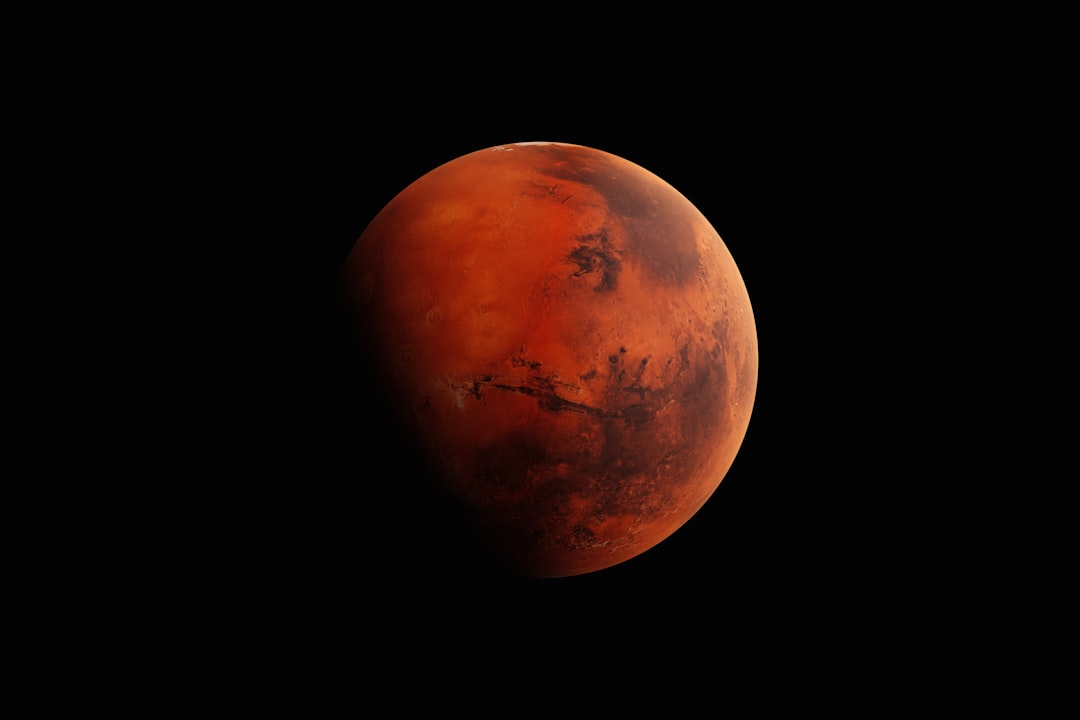
One of the most exciting aspects of this discovery is its applicability beyond Earth. NASA's Juno mission has observed spectacular aurorae at Jupiter that are hundreds of times more powerful than Earth's most intense displays. Saturn, Uranus, and Neptune all exhibit their own unique auroral phenomena. Even Mars, despite lacking a global magnetic field, displays localized auroral activity in regions of crustal magnetization.
Dr. Sheng Tian, who led the UCLA component of the research, brings extensive expertise in Earth's auroral physics to the collaboration. The synergy between his team's deep knowledge of terrestrial magnetospheric processes and Professor Yao's planetary science background created a powerful interdisciplinary approach that neither group could have achieved independently.
Technological and Scientific Benefits
Beyond pure scientific curiosity, understanding auroral acceleration mechanisms has practical implications for space weather prediction and satellite operations. During intense geomagnetic storms, auroral activity expands to lower latitudes and can interfere with power grids, satellite communications, and GPS navigation. The energetic particles associated with enhanced auroral activity can damage spacecraft electronics and pose radiation hazards to astronauts.
The NOAA Space Weather Prediction Center continuously monitors conditions that lead to auroral activity as part of their mission to forecast space weather impacts on Earth-based technologies. This new understanding of Alfvén wave-driven acceleration could significantly improve forecast models, providing earlier and more accurate warnings of potentially disruptive space weather events.
The Road Ahead: Next-Generation Observations
While this research provides a definitive answer to the auroral acceleration question, it also opens new avenues for investigation. Future missions will build upon these findings to explore related phenomena in greater detail. The upcoming SMILE mission (Solar wind Magnetosphere Ionosphere Link Explorer), a joint effort between the European Space Agency and the Chinese Academy of Sciences, will provide unprecedented simultaneous imaging of the magnetosphere and auroral regions, allowing scientists to observe Alfvén wave dynamics in real-time.
Additionally, the research team's methodology demonstrates the power of combining Earth-orbiting observations with comparative planetology. As we continue to explore our solar system with missions like NASA's Europa Clipper and future outer planet missions, understanding universal principles like Alfvén wave acceleration will help us interpret observations from worlds vastly different from our own.
This breakthrough represents more than just solving a long-standing scientific puzzle—it exemplifies how international collaboration and interdisciplinary approaches can unlock nature's deepest secrets. As we continue to unravel the mysteries of our cosmic environment, each discovery reminds us that even the most familiar celestial phenomena still hold surprises waiting to be revealed through careful observation, innovative analysis, and the persistent curiosity that drives scientific exploration forward.