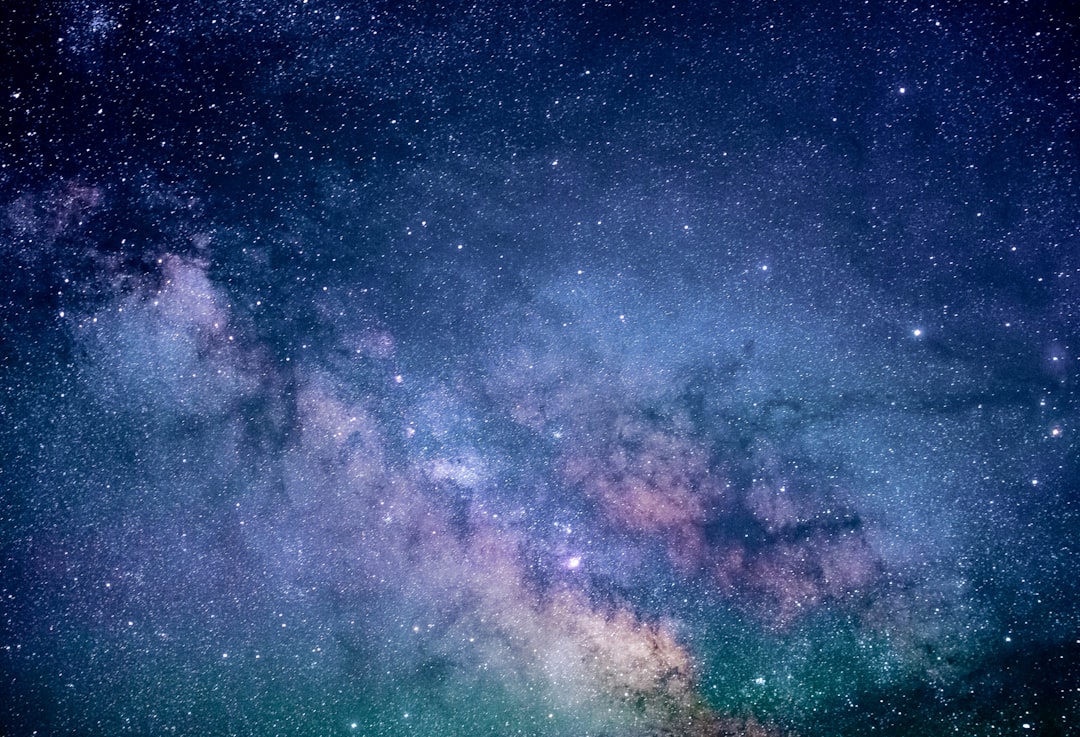
In the tumultuous first billion years following the Big Bang, the cosmos underwent dramatic transformations that would shape the universe we observe today. Recent groundbreaking research led by University of Barcelona astrophysicist Mark Gieles has unveiled a fascinating chapter in this cosmic story: the pivotal role that extremely massive stars (EMSs)—behemoths exceeding 1,000 solar masses—played in sculpting the chemical composition of the universe's oldest star clusters while simultaneously seeding the cosmos with its first generation of black holes.
This revolutionary study, which introduces an innovative "inertial-flow" model of stellar formation, bridges a long-standing gap in our understanding of how globular clusters acquired their peculiar chemical signatures. These ancient stellar cities, some of which predate even the galaxies they now inhabit, have puzzled astronomers for decades with their unexpected abundance of heavy elements—substances that theoretically shouldn't have existed in significant quantities during the universe's infancy.
The implications of this research extend far beyond explaining ancient star clusters. It provides crucial insights into the mechanisms that drove early galaxy formation, offers new interpretations of observations from the James Webb Space Telescope, and suggests that gravitational wave detectors might one day capture echoes from the collisions of primordial black holes formed during this extraordinary epoch.
The Architecture of Ancient Stellar Cities
Globular clusters represent some of the most spectacular structures in the cosmos—densely packed, spherical congregations containing anywhere from hundreds of thousands to several million stars bound together by their mutual gravitational attraction. These stellar metropolises orbit the cores of most large galaxies, including our own Milky Way, which hosts at least 150 confirmed globular clusters with possibly 50 or more awaiting discovery in regions obscured by galactic dust.
What makes these clusters particularly fascinating to astronomers is their extreme antiquity. The stars within globular clusters are among the oldest objects in the universe, with ages frequently exceeding 13 billion years—older, in many cases, than the galaxies they orbit. This temporal paradox suggests that globular clusters formed during the universe's earliest epochs, possibly even before the assembly of mature galaxies was complete. Research conducted using the Hubble Space Telescope has revealed that these ancient stellar populations exist in virtually all large galaxies, making them crucial laboratories for understanding cosmic history.
The traditional understanding of globular cluster formation involves the collapse of massive gas clouds in the early universe. As gravity compressed these primordial clouds of predominantly hydrogen and helium, they fragmented into countless individual stars that remained gravitationally bound. However, this straightforward picture fails to explain a perplexing observation: many globular clusters exhibit chemical abundance anomalies—unexpected variations in the concentrations of elements like helium, nitrogen, oxygen, sodium, magnesium, and aluminum between different stellar populations within the same cluster.
The Puzzle of Chemical Enrichment in a Primordial Universe
The chemical composition mystery at the heart of Gieles' research stems from a fundamental principle of stellar astrophysics: the universe began with almost exclusively hydrogen and helium. All heavier elements—what astronomers collectively term "metals" regardless of their chemical properties—were forged inside stars through nuclear fusion processes. This means the first generation of stars should have been chemically pristine, composed almost entirely of primordial hydrogen and helium.
Yet observations of ancient globular clusters reveal a more complex story. While these clusters do contain predominantly old, metal-poor stars consistent with early formation, many exhibit distinct stellar populations with surprisingly elevated concentrations of processed elements. This chemical diversity within a single cluster suggests that some mechanism enriched the cluster's gas reservoir with fusion products before all of its stars had finished forming.
"Our model shows that just a few extremely massive stars can leave a lasting chemical imprint on an entire cluster. It finally links the physics of globular cluster formation with the chemical signatures we observe today," explained Mark Gieles, emphasizing how this research resolves a long-standing astronomical puzzle.
Previous theories struggled to explain this enrichment pattern. Standard stellar evolution models suggested that only after the first generation of stars died—either through supernova explosions or by shedding their outer layers as planetary nebulae—would processed elements become available to contaminate subsequent star formation. However, the timescales and quantities didn't match observations, particularly the specific pattern of element abundances seen in globular clusters.
The Inertial-Flow Model: A New Framework for Understanding Stellar Giants
Gieles and his international team, including collaborators from Dartmouth College and the Institute of Cosmos Sciences at the University of Barcelona (ICCUB-IEEC), developed an innovative computational model to address these inconsistencies. Their "inertial-flow" model describes how supersonic turbulence in early universe gas clouds created converging flows that accumulated material with extraordinary efficiency, enabling the formation of stars far more massive than anything observed in the modern cosmos.
The model reveals that within the chaotic, turbulent environments of forming globular clusters, conditions occasionally permitted the birth of extremely massive stars with masses ranging from 1,000 to an astonishing 10,000 times that of our Sun. For comparison, the most massive stars forming in today's universe rarely exceed 150-200 solar masses, making these ancient giants truly exceptional objects.
These stellar behemoths, though short-lived by astronomical standards, profoundly influenced their surroundings through several mechanisms:
- Intense Stellar Winds: EMSs generated extraordinarily powerful stellar winds—streams of charged particles blown off their surfaces at velocities reaching thousands of kilometers per second. These winds carried fusion products from the stars' cores directly into the surrounding gas clouds.
- Rapid Nuclear Processing: The extreme temperatures and pressures in EMS cores facilitated rapid nuclear fusion, quickly converting hydrogen into helium and producing what astronomers call "high-temperature hydrogen combustion products"—including nitrogen, oxygen, and other elements through the CNO (carbon-nitrogen-oxygen) cycle.
- Efficient Mixing: Turbulence driven by supernova explosions from earlier stellar generations created a churning environment that thoroughly mixed the EMS wind material with pristine hydrogen gas, creating a chemically enriched reservoir for subsequent star formation.
- Multiple Stellar Generations: This enrichment process enabled the formation of second and even third generations of stars within the same cluster, each inheriting the chemical legacy of their massive predecessors.
The research, published in a leading astrophysical journal, demonstrates that just a small population of these extremely massive stars—perhaps only a few dozen in a cluster containing millions of stars—could account for the observed chemical abundance patterns that have puzzled astronomers for generations.
From Stellar Giants to Cosmic Monsters: The Birth of Primordial Black Holes
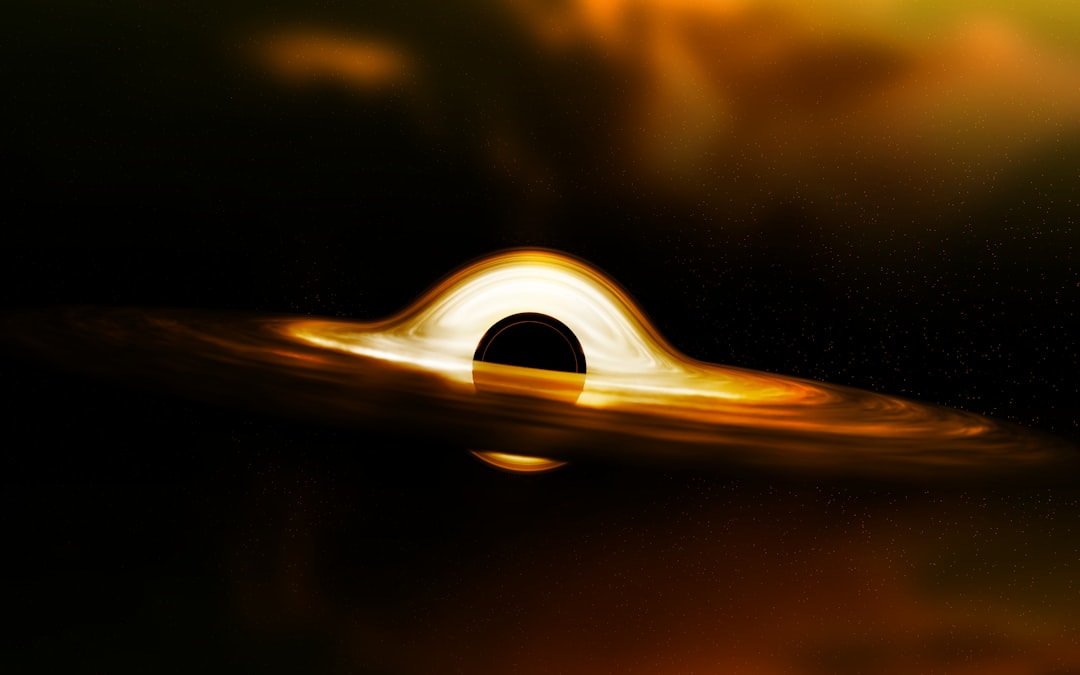
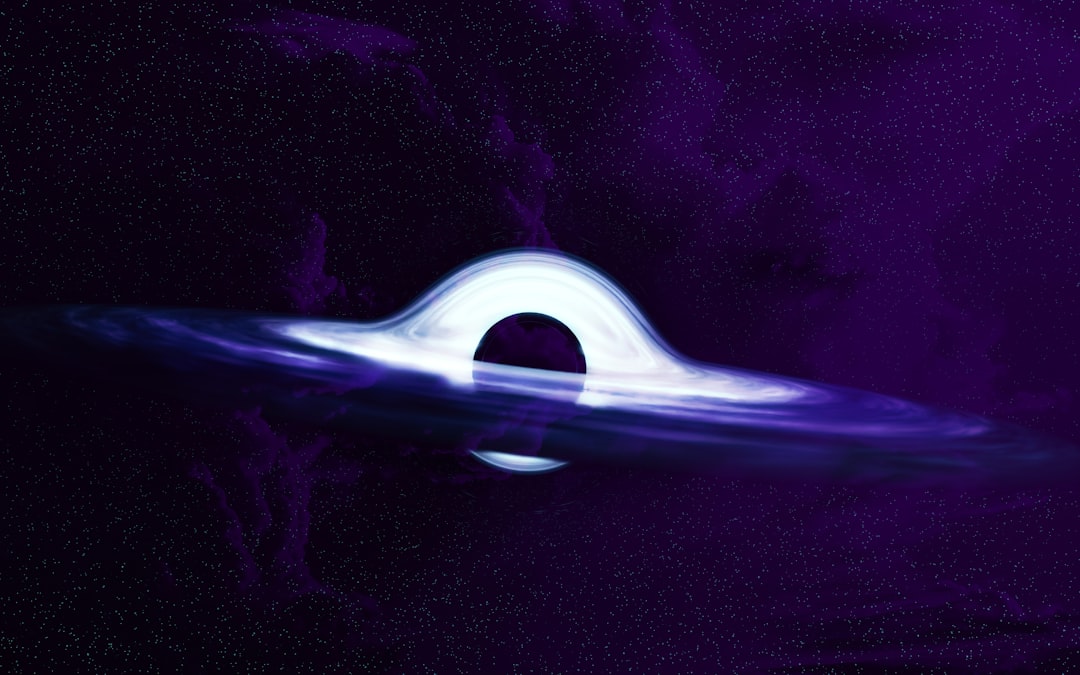
The story of extremely massive stars doesn't end with chemical enrichment. These stellar titans met spectacular ends that had equally profound consequences for cosmic evolution. Unlike moderate-mass stars that can shed their outer layers relatively gently or even stars up to about 25 solar masses that explode as supernovae leaving behind neutron stars, EMSs likely collapsed directly into black holes—and not just any black holes, but intermediate-mass black holes (IMBHs) with masses exceeding 100 times that of the Sun.
This process of direct collapse represents a crucial pathway for forming the universe's first black holes. According to the model, when an EMS exhausted its nuclear fuel, its core—already containing dozens or hundreds of solar masses of processed material—would catastrophically collapse under its own gravity. The implosion would be so rapid and complete that much of the star's mass would be swallowed by the forming black hole, creating an IMBH far more massive than the stellar-mass black holes produced by ordinary supernovae.
The implications for modern astronomy are profound. Gravitational wave observatories like LIGO and Virgo have detected numerous black hole mergers, but the origins of some of these systems—particularly those involving surprisingly massive black holes—remain mysterious. The primordial IMBHs predicted by Gieles' model could represent a population of black holes formed through an entirely different mechanism than those we observe forming today.
Furthermore, if these primordial black holes occasionally collided and merged in the dense environments of early globular clusters, they would have generated gravitational wave signals that might still be detectable today, albeit redshifted and weakened by cosmic expansion. Future gravitational wave detectors with enhanced sensitivity to lower frequencies, such as the planned space-based LISA mission, might detect these ancient merger events, providing direct observational evidence for the EMS formation pathway.
Connecting Ancient Clusters to Modern Observations
One of the most compelling aspects of this research is how it connects observations across vast cosmic distances and timescales. The model's predictions align remarkably well with recent discoveries from the James Webb Space Telescope (JWST), which has identified numerous nitrogen-rich galaxies in the distant universe—galaxies we observe as they appeared less than a billion years after the Big Bang.
These nitrogen-enriched galaxies had previously been difficult to explain within standard models of galaxy evolution. Nitrogen production typically requires specific stellar processes and sufficient time for stars to evolve, making its early abundance puzzling. However, Gieles' model provides a natural explanation: these galaxies likely hosted their own populations of extremely massive stars within forming globular clusters, rapidly enriching their interstellar medium with nitrogen and other processed elements.
"Extremely massive stars may have played a key role in the formation of the first galaxies," noted Paolo Padoan of Dartmouth College and ICCUB-IEEC. "Their luminosity and chemical production naturally explain the nitrogen-enriched proto-galaxies that we now observe in the early universe with the JWST."
This connection between local globular cluster chemistry and distant galaxy observations demonstrates the power of the inertial-flow model to unify seemingly disparate astronomical phenomena. It suggests that the processes shaping globular clusters were not isolated events but integral components of early galaxy formation and evolution.
Implications for Galactic Archaeology and Future Research
The research team's findings have profound implications for our understanding of the Milky Way's own history. By studying the chemical compositions of stars in our galaxy's globular clusters—objects like the ancient cluster M92 or the metal-poor Djorgovski 1 located near the galactic center—astronomers can now interpret these chemical signatures as direct evidence of extremely massive star activity in our galaxy's youth.
This opens new avenues for galactic archaeology—the practice of reconstructing a galaxy's formation history by studying its oldest stellar populations. Each globular cluster becomes a time capsule, preserving chemical records of the conditions and processes that operated during the universe's first billion years. By comparing the abundance patterns across different clusters, astronomers can map out the spatial and temporal variations in early star formation, potentially revealing how our galaxy assembled from smaller proto-galactic fragments.
Future research directions emerging from this work include:
- High-Resolution Spectroscopy: Detailed chemical analysis of individual stars in ancient globular clusters using next-generation telescopes like the European Extremely Large Telescope could reveal subtle abundance patterns that further constrain EMS properties and evolution.
- Gravitational Wave Searches: Targeted searches for gravitational wave signals from primordial black hole mergers could provide direct evidence for the IMBH population predicted by the model.
- JWST Follow-up Studies: Systematic surveys of nitrogen and other element abundances in high-redshift galaxies could test whether EMS-driven enrichment was a universal feature of early galaxy formation.
- Refined Stellar Evolution Models: Incorporating the inertial-flow mechanism into broader simulations of galaxy formation could reveal how EMSs influenced not just chemistry but also the structural evolution of early galaxies.
The research also raises intriguing questions about whether extremely massive stars could still form under exceptional circumstances in the modern universe, perhaps in the densest star-forming regions of interacting galaxies or in the cores of young, massive star clusters.
A New Chapter in Cosmic History
Mark Gieles and his team's work represents a significant advance in our understanding of the universe's formative years. By demonstrating that extremely massive stars served as both chemical factories and black hole progenitors, the research provides a unified framework for understanding multiple puzzling observations—from globular cluster abundance anomalies to nitrogen-rich distant galaxies to the possible origins of intermediate-mass black holes.
This study exemplifies how modern astrophysics increasingly relies on sophisticated computational models to bridge the gap between fundamental physics and complex astronomical observations. The inertial-flow model succeeds because it connects microscopic processes—the nuclear reactions occurring in stellar cores—with macroscopic phenomena—the chemical evolution of entire star clusters and galaxies.
As our observational capabilities continue to advance, particularly with facilities like JWST pushing back the observational frontier to ever-earlier cosmic epochs, the insights provided by this research will become increasingly valuable. Understanding how the first generations of stars shaped their environments is crucial for interpreting observations of the early universe and for reconstructing the complete story of how the cosmos evolved from its simple post-Big Bang state to the chemically rich, structurally complex universe we inhabit today.
The ancient globular clusters orbiting our galaxy are no longer just beautiful stellar collections—they are archives of cosmic history, their chemical signatures preserving evidence of the extraordinary stellar giants that once dominated the early universe, enriching their surroundings before collapsing into the black holes that may still lurk in cluster cores or drift through intergalactic space, awaiting discovery by future generations of astronomers.