Ancient Swedish Goths Possessed Surprisingly Precise Astronomical Calendars
On a mostly flat plain an hour north of Stockholm, Sweden, lies one of Scandinavia's most enigmatic archaeological landscapes: a collection of large burial mounds dating from an ancient culture at least 2,500 years old. These people were not the Vikings of popular imagination; they were northern Germanic Goths — pagan polytheists worshipping the precursors of the Norse gods Odin, Freyr, and Thor. What modern researchers have uncovered about their relationship with the night sky is as remarkable as it is unexpected.
In truth, this ancient subgroup of Goths could probably have cared little about astronomy as we understand it today. Yet, inexplicably, they were driven to make extraordinarily precise measurements of the Sun and Moon. Their motivation was deeply spiritual: they were obsessed with precisely timing nine days of gruesome midwinter human and animal sacrifices. Despite such barbarism by modern standards, they apparently believed that if they failed to perform these great midwinter sacrifices every eight years, the following eight years might bring catastrophe upon their communities.
The Great Midwinter Sacrifice
The sacrifices typically began at the height of winter, between February 6 and February 8. Archaeological and historical evidence paints a vivid — and disturbing — picture of these rituals. For a period of nine days, one man and seven male domestic animals were sacrificed. When the ceremonies were complete, as many as 72 bodies hung upside down from branches of a sacred tree — a grim tableau that reflected the culture's profound belief in the power of sacrifice to maintain cosmic order.
At least one contemporary Swedish astrophysicist now claims to have identified the precise astronomical calendar that governed these sacrificial rites — and the physical structures used to track it.
"I have discovered the calendar that regulates the dates for the Great Midwinter Sacrifice that took place every eight years." — Göran Henriksson, astrophysicist and former lecturer, Uppsala University, Sweden
Göran Henriksson, an astrophysicist and former lecturer at Uppsala University in Sweden, told me during a visit to Uppsala that the discovery is rooted in a remarkable confluence of archaeological fieldwork and astronomical calculation. In 2013 and 2014, archaeologists excavating the site discovered two long rows of postholes that marked the northern limit for the rising of the full Moon and the direction of the rising Sun at the precise moment it was time to initiate a new sacrificial cycle.
Archaeological Evidence: The Postholes of Old Uppsala
The site at Old Uppsala — Gamla Uppsala — has long been recognized as one of the most important religious and political centers of ancient Scandinavia. Three so-called "royal" burial mounds have been dated to approximately 450–550 A.D. and oriented in such a way that they may have functioned as key reference points within the sacrificial calendar system. But the discovery of the postholes added a crucial new dimension to our understanding of the site's astronomical sophistication.
- An 850-meter-long row of postholes was oriented toward the northern limit for the rising of the midwinter full Moon on its earliest possible date.
- An approximately 600-meter-long row was oriented toward the rising Sun on February 6 through 8 — the traditional start of the sacrificial period.
- Both alignments functioned together as a unified calendrical instrument of remarkable precision.
- Fifteen boat-graves dated from 550–1100 A.D. were found oriented toward the rising full Moon of the Great Midwinter Sacrifice in the eight-year cycle.
Henriksson presented these findings in a paper delivered at the 2014 meeting of the European Society for Astronomy in Culture (SEAC), an organization dedicated to the interdisciplinary study of the relationship between human cultures and the sky throughout history. His analysis draws on both archaeological data and meticulous astronomical back-calculations of full Moon dates across centuries.
The Eight-Year Lunisolar Cycle
At the heart of this calendrical system lies one of antiquity's most elegant astronomical relationships: the octaeteris, or eight-year lunisolar cycle. This cycle — independently discovered by ancient Greeks, Babylonians, and, it now appears, the Goths of Scandinavia — is based on the near-perfect mathematical coincidence that 99 lunar months are almost exactly equal to 8 solar years (differing by only about 1.5 days). This relationship means that after eight years, the phases of the Moon recur on approximately the same calendar dates, making it an ideal basis for long-range ritual planning.
According to Henriksson's research, the sacrifice at Old Uppsala commenced on the first full Moon occurring between January 28 and February 26 in the Gregorian calendar. By combining historical records — including the vivid account of the sacrifices written by the German cleric Adam of Bremen in the 11th century — with astronomical calculations, Henriksson has established the exact years of the eight-year sacrificial cycle, with one such cycle definitively beginning in 852 A.D.
Remarkably, these Goths are believed to have measured the phases of the Moon to six digits of accuracy — a level of precision that rivals that of many later medieval astronomical instruments. This challenges long-held assumptions about the sophistication of pre-literate northern European cultures and their engagement with the natural world.
"They had a very sophisticated calendar here. The poles determined very accurately when it was full Moon and when the Sun was rising along this 600-meter-long row of poles, and when they should start the next great sacrifice." — Göran Henriksson
A Landscape Transformed by Time
To fully appreciate the ingenuity of this ancient astronomical observatory, one must also consider the dramatically different landscape that existed at the time of its construction. Incredibly, the burial mounds — today surrounded by at least a hundred square miles of flat plain — were, at the time of their use, less than half a mile from what is now the Baltic Sea. Isostatic rebound, the gradual rising of Scandinavian landmasses following the retreat of the last great ice sheets, means that local sea level was approximately 19.5 meters higher than it is today.
This has profound implications for understanding the site's astronomical function. As Henriksson describes it, the rays of the rising Sun would have been reflected in the sea on both sides of the posts, while the shadows from the poles aligned precisely with the row's orientation. In this now-vanished coastal setting, the instrument would have been not only functionally precise but also visually spectacular — a shimmering alignment of sunlight, shadow, sea, and stone that must have carried immense ritual power.
This kind of deliberate use of natural phenomena to enhance astronomical observation is well-documented at other prehistoric sites. The alignment of Stonehenge with the summer solstice sunrise, for instance, similarly exploits the interplay of light and landscape to achieve both practical and ceremonial effect. The Old Uppsala site may represent a Scandinavian counterpart to such traditions, independent in origin yet convergent in method.
Surpassing the Church: A Calendar Ahead of Its Time
One of the most striking claims to emerge from Henriksson's research is that the Goths' calendrical system was, in certain respects, more precise than that of the medieval Catholic Church centuries later. This is less surprising when one considers the Church's well-documented struggles with calendar reform. The Julian calendar, adopted throughout Christendom, accumulated an error of roughly one day every 128 years relative to the solar year — an error that by the 16th century had grown to approximately 10 days and necessitated the sweeping reforms of the Gregorian calendar in 1582, introduced by Pope Gregory XIII.
The Goths' use of the lunisolar octaeteris cycle, anchored to precise naked-eye observations of both the Sun and Moon, would have self-corrected over time in a way the purely solar Julian calendar could not. Their reliance on direct celestial observation rather than a fixed mathematical formula gave their system a robustness that institutionalized calendars often lacked.
The Moon as a Sacred Entity
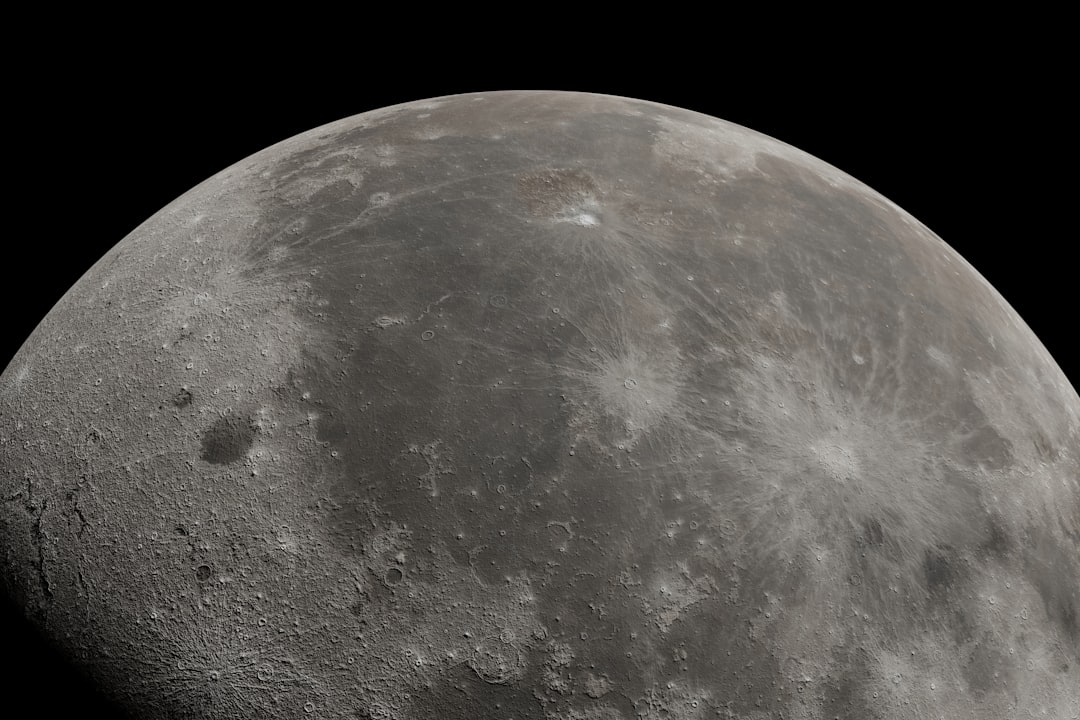
Understanding why the Moon held such central importance to Gothic astronomical practice requires an appreciation of its role in their theology. For these people, the Moon was not merely a navigational or agricultural tool — it was a deity.
"The Moon was very important to them; it was a Goth god." — Göran Henriksson
This lunar theology finds echoes across many ancient cultures. The Mesopotamians venerated Sin, the Moon god; the Greeks worshipped Selene; and the Norse traditions that descended from Gothic religion retained the lunar figure of Máni. For cultures dependent on agriculture and the sea, the Moon's reliable regulation of tides, seasons, and biological cycles made it a natural focus of religious devotion. The great posthole rows at Old Uppsala, aligned to the rising full Moon, were thus simultaneously a scientific instrument and a temple — a place where the sacred and the empirical were inseparable.
This integration of religious belief and astronomical observation is a hallmark of what scholars of archaeoastronomy — the study of how past peoples understood and used the sky — call a cosmovision: a unified worldview in which celestial cycles and human destiny are inextricably intertwined. For further reading on this discipline, the work catalogued by NASA's archaeoastronomy resources provides an excellent starting point.
Boat Graves and the Afterlife
The astronomical orientation of the site extended beyond calendrical function into the realm of funerary practice. Fifteen boat-graves dated from 550 to 1100 A.D. have been investigated at the site, and a preliminary analysis indicates that these graves are oriented toward the rising full Moon of the Great Midwinter Sacrifice in the eight-year cycle. The association of death, burial, and lunar alignment speaks powerfully to the Goths' belief that the Moon governed not only the timing of sacrifice but also the journey of the soul into the afterlife.
The most remarkable type of grave found at the site contains the remains of a warrior with full military equipment, including a horse, buried in a boat. This reflects a belief in an afterlife richly furnished with everything a chieftain would need — horses, dogs, and even what Henriksson describes as "a complete kitchen."
- Boat-graves are oriented toward the rising full Moon of the sacrificial cycle.
- Warriors were buried with horses, weapons, and household goods.
- The practice reflects belief in a fully equipped, materially rich afterlife.
- Similar boat-burial traditions are found across Scandinavia and the British Isles, most famously at Sutton Hoo in England.
Old Uppsala Today: A Living Archaeological Landscape
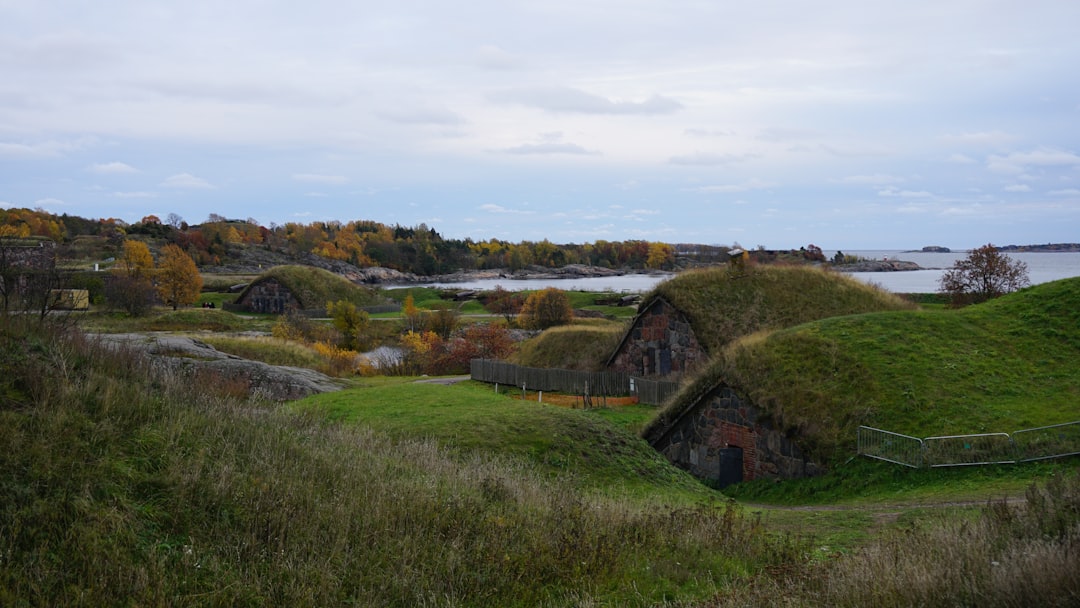
Uppsala is today a vibrant contemporary Swedish city, home to one of Scandinavia's oldest and most prestigious universities, only a short distance from Arlanda International Airport. Walking through the ancient burial hills on a windy July afternoon, one is struck by the silence that now envelops a place that was once the beating heart of a civilization. The three great royal mounds rise from the flat plain with quiet authority, their original coastal setting now transformed beyond recognition by millennia of geological change.
These people clearly possessed a sophisticated appreciation of the natural world — including the celestial sphere — that is easy to overlook or underestimate from our modern vantage point. Their astronomical achievements were not incidental byproducts of ritual; they were the result of sustained, multigenerational observation and intellectual effort, applied to questions of cosmic order and human survival. In this sense, the ancient Goths of Old Uppsala were, in their own way, scientists — as driven by curiosity and the need for precision as any modern astronomer.
For those wishing to explore the broader context of ancient astronomical practices in Europe and beyond, the resources of the European Space Agency's Space Science division and the rich archive of archaeoastronomical studies offer invaluable perspective on humanity's enduring relationship with the cosmos.
Key Findings at a Glance
- The site at Old Uppsala contains burial mounds dated to 450–550 A.D. with demonstrable astronomical alignments.
- Two rows of postholes — 850 meters and 600 meters long — are aligned to the midwinter full Moon and the rising February Sun, respectively.
- The Goths used an eight-year lunisolar cycle (octaeteris) to regulate their sacrificial calendar.
- Their lunar measurements achieved six-digit accuracy, surpassing many later medieval calendrical systems.
- At the time of use, the site was within half a mile of the Baltic Sea, which played an active role in the astronomical observations.
- Fifteen boat-graves are astronomically oriented, linking funerary practice to the lunar sacrificial calendar.
- The research was presented by Göran Henriksson at the 2014 SEAC conference and continues to inform our understanding of prehistoric European astronomy.