Astrobiologist Uses Apollo Lunar Samples As a Mirror Onto Early Earth
Push back the tape of Earth's history far enough, and both geologists and astrobiologists find themselves confronting a profound and humbling silence. The environmental conditions of our earliest planet — the chemistry of its oceans, the composition of its primordial atmosphere, the very crucible in which life first sparked into existence — remain stubbornly elusive. Conventional pathways for reconstructing Earth's deep past have been largely erased by our planet's own relentless geological activity: tectonic recycling, volcanic resurfacing, and billions of years of atmospheric weathering have conspired to destroy the very rock record that scientists most desperately need.
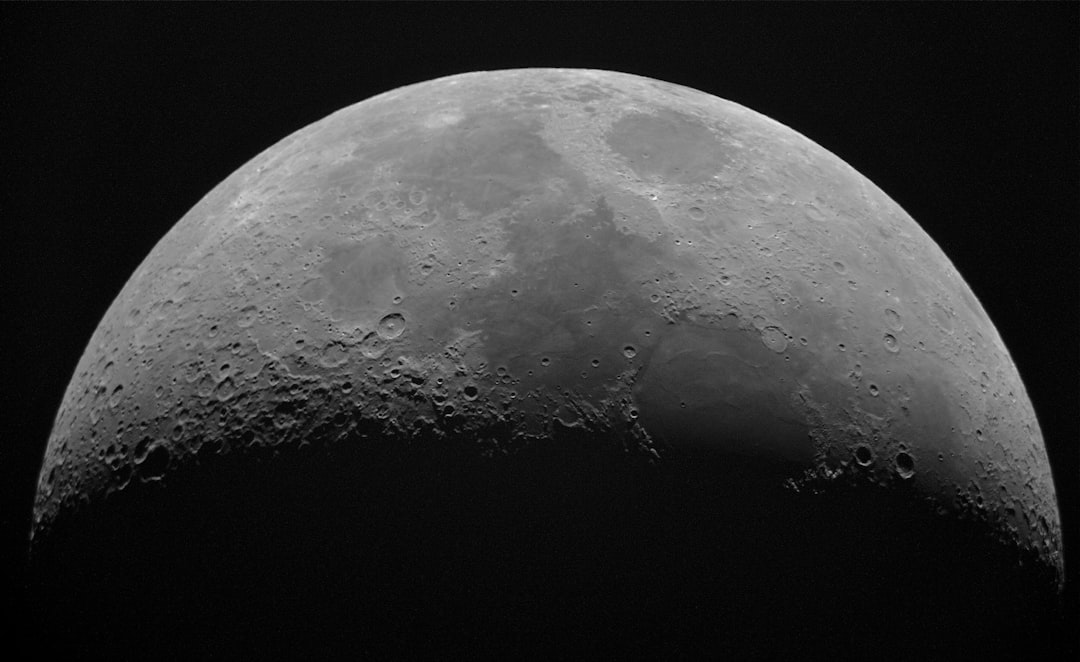
But in an ingenious and counterintuitive new approach, Jared Landry, an astrobiology PhD student at the Earth-Life Science Institute (ELSI) in Tokyo, Japan, has begun marshaling an analysis of nearside Apollo lunar surface samples — not to study the Moon itself, but to use our nearest celestial neighbor as a kind of time capsule and geological mirror, one that has been faithfully recording the atmospheric fingerprints of early Earth for billions of years. Landry presented this innovative research at the recent Origins 2026 conference in Paris, drawing considerable interest from the astrobiology and planetary science communities.
The Moon as Earth's Geological Archive
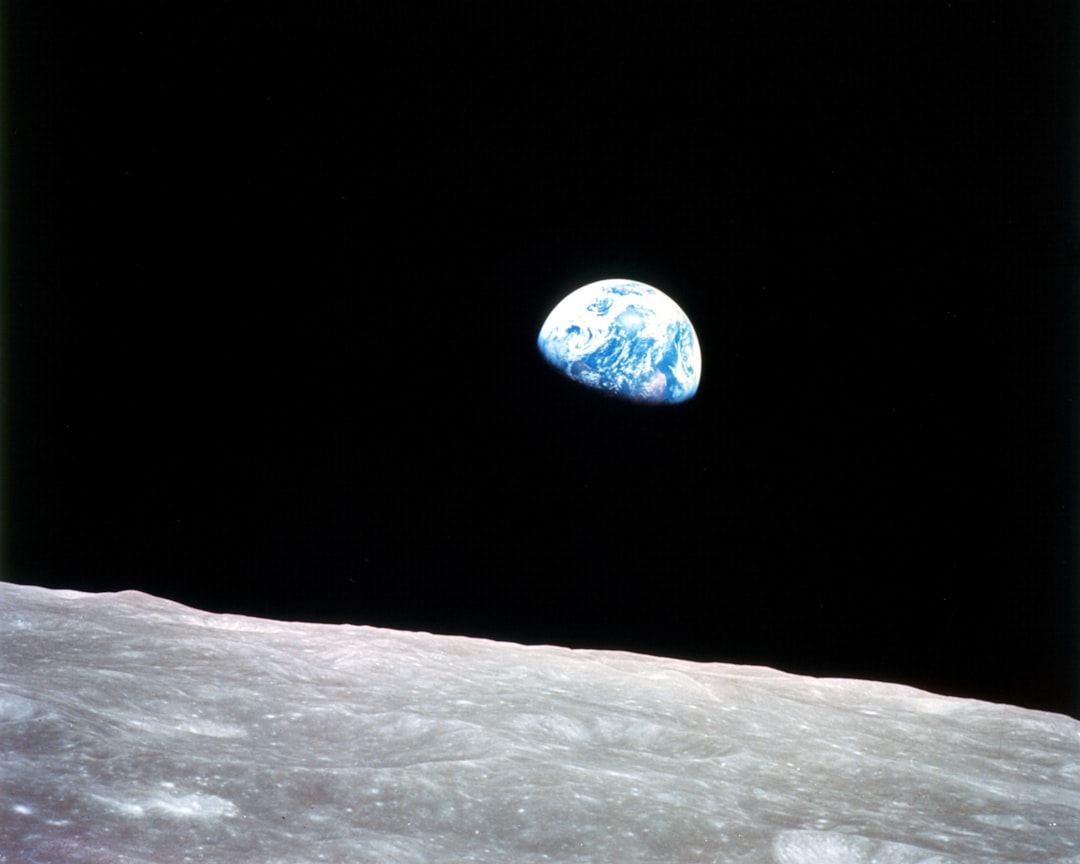
The key insight driving Landry's research rests on a remarkable geophysical mechanism. Previous studies have established that gases from Earth's upper atmosphere have been continuously deposited onto the Moon's surface over geological timescales spanning billions of years. The process works as follows: chemical species escape from the top of Earth's atmosphere through a unique outflowing channel — a magnetospheric tail region through which the Moon passes during a portion of each orbit. Once in space, these atmospheric molecules are subsequently ionized — stripped of electrons and rendered electrically charged — before being swept up and transported by our Sun's magnetized solar wind, ultimately embedding themselves into the lunar regolith, the loose granular surface material blanketing the Moon.
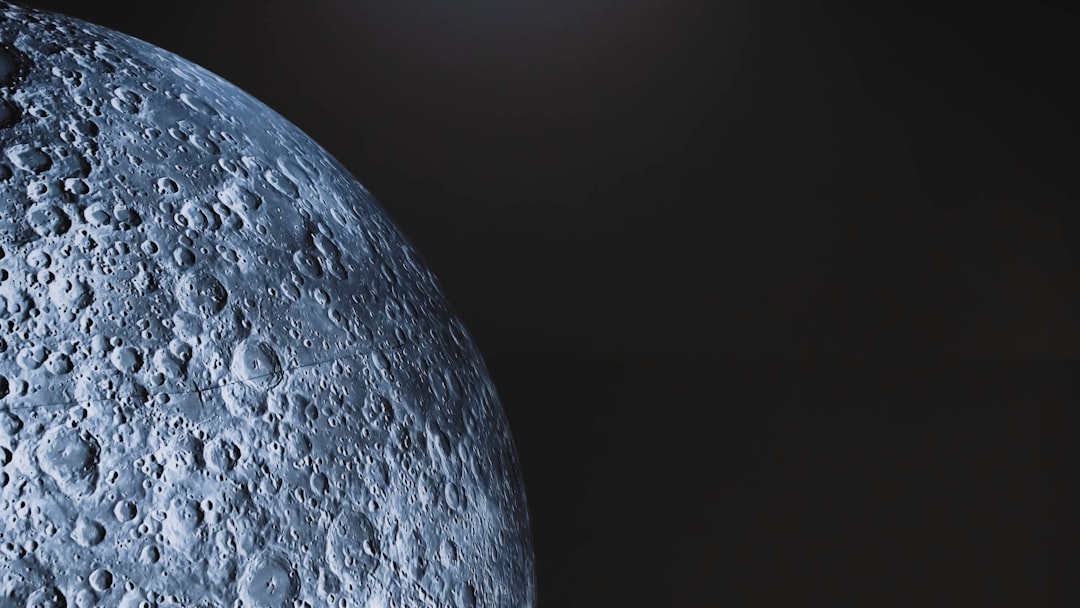
The Moon's geological inertness is precisely what makes it such a valuable scientific instrument. Unlike Earth, the Moon lacks plate tectonics, a significant atmosphere, and a hydrological cycle — the very processes that have scrubbed Earth's ancient surface record clean. Ancient lunar soils, therefore, preserve a chemical ledger of inputs stretching back across deep time, including, crucially, atoms and molecules that originated in Earth's primordial atmosphere.
"The Archean is one of the biggest unknowns, especially in atmospheric chemistry." — Jared Landry, ELSI, Origins 2026 Conference, Paris
Landry is specifically focused on a particularly tantalizing chapter of Earth's history: the Archean Eon, a geological epoch spanning approximately 2.5 to 4.0 billion years ago. It is during the middle Archean, roughly 3.5 billion years ago, that the earliest unambiguous evidence of life on Earth — microbial stromatolites and isotopic biosignatures — begins to appear in the geological record. Understanding what Earth's atmosphere looked like at this pivotal moment is therefore a central question not just for geology, but for astrobiology as a whole.
Why Atmospheric Chemistry Matters for the Origin of Life
The composition of Earth's early atmosphere is not merely an academic curiosity. As Landry emphasized in his conference paper, surface processes, molecular concentrations, and global climate are all fundamentally controlled by atmospheric composition. The concentration of greenhouse gases determines surface temperature and, consequently, whether liquid water — the universal solvent for life as we know it — could exist on the planet's surface. The abundance of reactive chemical species such as sulfur compounds, nitrogen oxides, and carbon-bearing molecules directly dictates what kinds of prebiotic chemistry are possible: which organic molecules can form, which energy sources are available, and which biochemical pathways might spontaneously emerge.
In short, if we want to understand how life began on Earth — and by extension, how it might begin elsewhere in the cosmos — we need a far more precise picture of the Archean atmosphere than we currently possess. This is exactly the scientific gap that Landry's lunar sample methodology is designed to address.
For additional context on the origin of life and prebiotic chemistry, the NASA Astrobiology Program maintains an extensive library of research and resources on this foundational topic.
Accounting for the Orbital Geometry
One of the most technically demanding aspects of Landry's work involves accounting for the fact that the Moon only passes through Earth's atmospheric outflow channel for a fraction of its roughly 27-day orbital period. This geometric constraint means that only a specific proportion of the Moon's orbital time is spent in a position where it can receive and record atmospheric flux from Earth. Landry had to precisely model this orbital geometry and integrate it over geological timescales to determine how much atmospheric material from the Archean Earth would have struck and been retained within the lunar surface during this epoch.
This calculation is further complicated by the need to disentangle Earth-sourced material from other inputs to the lunar regolith. The lunar surface receives contributions from multiple sources simultaneously, including the ancient solar wind itself, which carries its own chemical cargo from the Sun, as well as a steady rain of micrometeorites and meteoritic dust from across the solar system. Landry's modeling framework accounts for all of these competing sources, essentially performing a chemical source apportionment for a single Apollo lunar surface sample — and attributing the residual, unexplained chemical signal to Earth's ancient atmosphere.
"Landry's model calculates for a single Apollo lunar surface sample from all these different sources, and it says the extra source must be from the Earth, and it must be this much."
A Sulfur-Rich Archean Atmosphere
The results of Landry's analysis paint a striking portrait of early Earth's atmospheric chemistry. The primary and most consequential finding is that lunar samples support the hypothesis that the Archean atmosphere was significantly richer in sulfur than the atmosphere of modern Earth. Specifically, elevated concentrations of sulfur-bearing gaseous species appear to be imprinted in the Apollo sample record, consistent with a geochemical environment very different from our own.
This sulfur enrichment carries profound implications for prebiotic chemistry. A sulfur-rich atmosphere would have supplied the Archean oceans with significant quantities of dissolved sulfur compounds, creating chemical conditions highly favorable for the abiotic synthesis of complex organic molecules — the building blocks from which life could have assembled itself. Sulfur is a highly reactive element capable of forming a dazzling array of chemical bonds, and its role in the emergence of life may have been far greater than most origin-of-life models have historically appreciated.
- Sulfur abundance: The Archean atmosphere appears to have contained substantially elevated levels of sulfur-bearing gases compared to today's atmosphere.
- Carbon dioxide: Landry's model points to a Archean atmosphere containing approximately one hundred times more carbon dioxide (CO₂) than the present-day atmosphere.
- Methane: Significant methane (CH₄) abundance is also indicated, consistent with a strongly reducing, greenhouse-warmed early atmosphere.
- Ocean chemistry: The Archean ocean was likely supplied with substantial sulfur levels, creating conditions favorable for complex organic chemistry and potentially the emergence of early metabolisms.
- Prebiotic pathways: The combination of sulfur, CO₂, and methane would have enabled a wide range of relevant prebiotic and biotic chemical pathways to operate in an aqueous environment.
The Lunar and Planetary Institute (LPI) in Houston maintains extensive archives on Apollo mission samples and their scientific significance, providing valuable context for research such as Landry's.
Overcoming the Faint Young Sun Paradox
One of the most celebrated conundrums in planetary science is the so-called Faint Young Sun Paradox, first articulated by astronomers Carl Sagan and George Mullen in 1972. The paradox arises from the well-established astrophysical fact that the Sun was approximately 70–75% as luminous as it is today during the Archean Eon, 3.5 billion years ago. Under these conditions, straightforward climate modeling predicts that early Earth's surface should have been entirely frozen — yet the geological and biological record clearly demonstrates the presence of liquid water and, indeed, life. Something must have compensated for the Sun's reduced output.
The leading solution to this paradox invokes elevated concentrations of greenhouse gases. Previous theoretical studies have estimated that to compensate for the faint young Sun and maintain a liquid ocean, Earth would have required approximately one-tenth of an atmosphere of carbon dioxide — a partial pressure roughly 100 times greater than the present atmospheric level of CO₂. Remarkably, Landry's model predicts that Earth had just under this threshold amount of CO₂ during the Archean, providing a beautifully self-consistent picture in which a CO₂- and methane-rich greenhouse atmosphere kept the planet warm enough to sustain liquid water despite a dimmer Sun.
"The samples suggest a high carbon dioxide and methane abundance, strong enough to overcome the faint young Sun and sustain a liquid ocean." — Jared Landry, Origins 2026
This finding is significant because it represents an independent, observational line of evidence for a greenhouse-warmed Archean Earth — one derived not from theoretical modeling alone, but from the physical chemistry preserved within actual lunar samples returned by the Apollo missions. More information about the Apollo Program and its enduring scientific legacy is available through NASA.
The Sulfur Retention Problem
If the Archean atmosphere was indeed so sulfur-rich, a natural follow-up question arises: why didn't all that sulfur simply dissolve into the oceans and disappear from the atmosphere? As Landry acknowledges, sustaining elevated atmospheric sulfur concentrations over geological timescales is geochemically challenging. Today, sulfur gases emitted by volcanoes are rapidly oxidized and washed out of the atmosphere by precipitation, ultimately settling into ocean sediments. For the Archean atmosphere to have maintained its sulfur richness, something must have been operating differently.
"It's difficult to sustain all that sulfur, so there must have been some process happening that isn't happening today to not have sulfur dissolve into the oceans. You either need to have low hydrological activity or a cool environment, and we don't have that today." — Jared Landry
This constraint hints at a subtly different early Earth: one with perhaps a less vigorous water cycle, different ocean chemistry, or fundamentally different volcanic outgassing dynamics. The resolution of this sulfur retention puzzle will likely require interdisciplinary collaboration between atmospheric chemists, oceanographers, and geologists — and it represents one of the most intriguing open questions that Landry's research brings into sharp focus.
The Apollo Samples: Geography Doesn't Matter
A practical strength of Landry's approach is its applicability across the full suite of Apollo lunar samples. All samples retrieved by the six successful Apollo landing missions — Apollo 11, 12, 14, 15, 16, and 17 — came from the lunar nearside, the hemisphere of the Moon that permanently faces Earth due to tidal locking. This nearside orientation is scientifically fortuitous: it means that every Apollo sample collected was, during its billions of years on the lunar surface, exposed to the flux of Earth-derived atmospheric material carried by the solar wind.
As Landry points out, the specific geographic location on the nearside from which a sample was collected is largely irrelevant to his analysis. What matters is that the sample has a well-constrained age — determined through established radiometric dating techniques — so that its exposure history can be properly modeled and its Archean-era chemical record isolated and interpreted.
The NASA Astromaterials Curation Office at Johnson Space Center curates the Apollo lunar sample collection, which continues to yield new scientific discoveries more than five decades after the samples were collected.
Broader Implications: Beyond Earth
Perhaps one of the most exciting aspects of Landry's methodological framework is its potential universality. The principle of using a geologically inert body as a chemical recorder of its neighboring planet's atmospheric history is not unique to the Earth-Moon system. As Landry notes in his conference paper, this analytical approach could, in principle, be applied to any terrestrial body system in the solar system.
The most immediate candidate is Mars and its small moon Phobos. Just as Earth's atmospheric gases have been deposited on the Moon, Martian atmospheric gases may have been recorded in the surface material of Phobos over billions of years. Analyzing Phobos samples could therefore provide an independent window into the evolution of Mars's atmosphere — including the poorly understood period when Mars is believed to have had a denser atmosphere, liquid water, and potentially habitable conditions. Japan's JAXA Martian Moons eXploration (MMX) mission, currently in development, aims to return samples from Phobos, potentially enabling exactly this kind of analysis in the coming decade.
Landry also envisions extending the approach to the icy moons of the outer solar system — bodies such as Europa, Enceladus, and Titan, where the interplay between subsurface oceans, atmospheric chemistry, and surface material may encode rich records of astrobiological relevance. As sample-return missions to these distant targets remain a long-term aspiration of planetary science, the methodological groundwork that Landry is laying now could prove invaluable for interpreting future discoveries.
What Comes Next?
Landry is candid about the work that remains to be done. The immediate scientific priorities include determining precisely how warm the Archean Earth must have been to be consistent with the lunar sample record, and constructing a more detailed picture of what the Archean ocean would have looked like in terms of temperature, salinity, and chemical composition. From there, the goal is to identify which specific chemical species would have been present in sufficient abundance to drive meaningful prebiotic chemistry — and to map out the particular molecular pathways that this environment would have favored or foreclosed.
Ultimately, Landry's research may contribute to a significant reappraisal of sulfur's role in the origin of life. While nitrogen, phosphorus, and carbon have traditionally occupied center stage in origin-of-life research, sulfur's chemical versatility — its ability to participate in redox reactions, form high-energy thioester bonds, and stabilize certain nucleotide analogs — has increasingly attracted scientific attention. Sulfur-based metabolisms are among the oldest on Earth, and some theorists have argued that sulfur chemistry may have been central to the emergence of the first self-replicating molecular systems.
"Sulfur is probably underappreciated, and lots of people are working to figure out the role it played in the onset and development of life here on Earth." — Jared Landry