Samples of Lunar Rock Are Leading Scientists to Rethink the Moon's History
Lunar samples have long been among the most scientifically valuable materials available to researchers on Earth, and the latest returns are proving to be no exception. The samples retrieved by China's Chang'e-6 mission from the Moon's far side — the first of their kind in the history of space exploration — are already catalyzing a wave of scientific breakthroughs that researchers say are only just beginning. These extraordinary specimens are reshaping our understanding of the Moon's geological past, the delivery of water and volatile compounds to the Earth-Moon system, and the Moon's complex, billion-year-long interaction with the solar wind. Most strikingly, they are now rewriting the bombardment history of the lunar far side in ways that challenge decades of accepted scientific thinking.
By comparing the Chang'e-6 samples with analyses of Apollo lunar samples and other specimens returned from the near side of the Moon, scientists are — for the first time in history — able to examine how the Moon's two hemispheres evolved differently over geological timescales. A recent analysis has opened a new window into the bombardment history of the Moon, challenging long-held assumptions about the timing and intensity of ancient asteroid impacts. The findings carry profound implications not only for lunar science, but for our understanding of the conditions that governed the evolution of both Earth and the Moon during the formative era of the early Solar System.
An International Effort Rooted in Rare Science
The study was led by researchers at the State Key Laboratory of Deep Earth Processes and Resources and the Center for Advanced Planetary Science (CAPS) at the Guangzhou Institute of Geochemistry, Chinese Academy of Sciences. Additional critical contributions came from researchers affiliated with the NWU-HKU Joint Center of Earth and Planetary Sciences, the Beijing Research Institute of Uranium Geology, and the John de Laeter Centre & School of Earth and Planetary Sciences (JDLC) at Curtin University in Australia. The breadth of the collaboration underscores the global scientific appetite for understanding what these unprecedented samples can tell us.
The Chang'e-6 mission, which successfully landed in the South Pole-Aitken (SPA) Basin in June 2024 and returned approximately 1.9 kilograms of material, represents a monumental leap forward in planetary science. The SPA Basin is one of the largest and oldest impact craters in the entire Solar System, stretching roughly 2,500 kilometers in diameter and plunging as deep as 8 kilometers below the surrounding terrain. Material excavated from such depths offers a rare cross-section of the Moon's ancient geological layers, making it an extraordinary natural archive of early Solar System events.
The Moon as a Time Capsule
Unlike Earth, where relentless volcanic activity, shifting tectonic plates, weathering, and erosion continuously erase evidence of ancient impacts, the Moon's geologically quiet surface acts as a perfectly preserved record of Solar System history. This is particularly true of the lunar far side, which has experienced far less contamination from later geological events than the near side. The study of lunar rocks and regolith (the fragmented surface layer of rock and dust) therefore allows scientists to investigate events that occurred shortly after the planets formed, approximately 4.5 billion years ago.
"The Moon is like a time capsule — it has preserved a record of events that have been erased from Earth by erosion, plate tectonics, and other geological processes. Samples collected from the Moon's far side are particularly significant because they allow us to compare two very different parts of the Moon for the first time. Until now, almost everything we knew came from the side facing Earth."
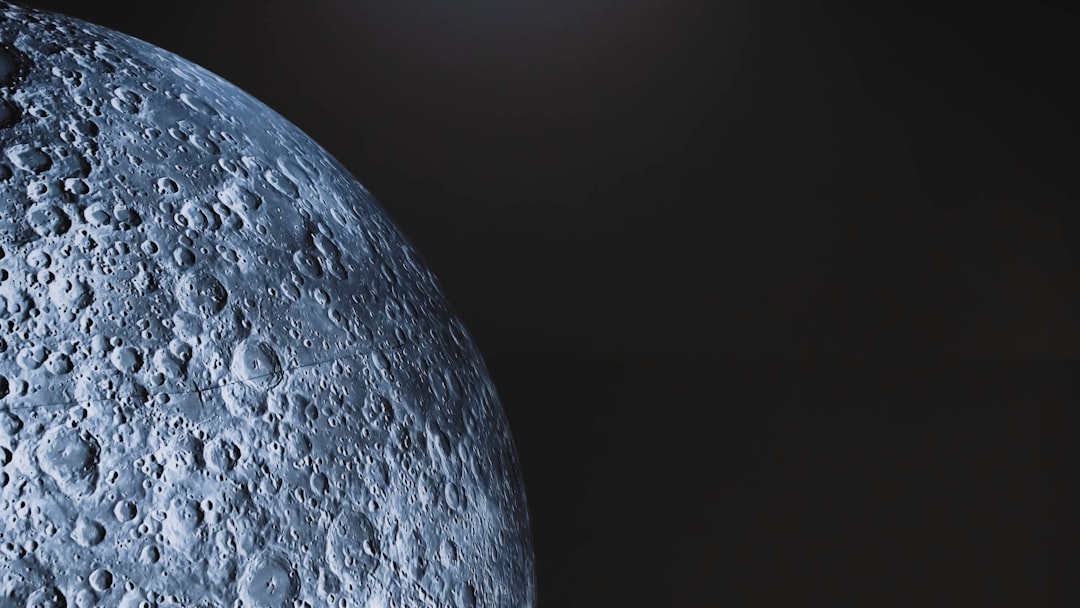
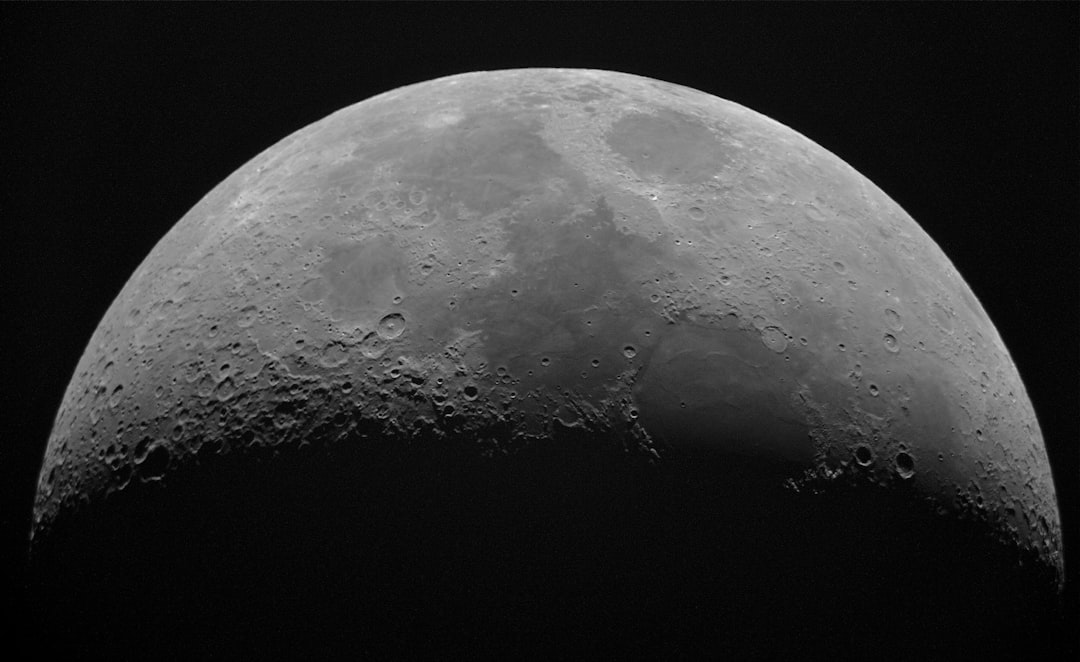
The stark difference between the two lunar hemispheres — a phenomenon known as the lunar dichotomy — has puzzled scientists for decades. The near side is dominated by vast, dark volcanic plains called maria, formed by ancient lava flows, while the far side is more heavily cratered and topographically rugged. Understanding how this dichotomy arose, and how both hemispheres experienced the early Solar System's bombardment period, is one of the central questions that the Chang'e-6 samples are now helping to answer.
Rethinking the Late Heavy Bombardment
For decades, the dominant theory in planetary science held that the Earth and Moon experienced a sudden, cataclysmic period of intense bombardment by asteroids and comets known as the Late Heavy Bombardment (LHB), estimated to have occurred between approximately 4.1 and 3.8 billion years ago. This dramatic spike in impacts is widely believed to have been triggered by gravitational instabilities caused by the migrations of the giant planets — Jupiter, Saturn, Uranus, and Neptune — in the early Solar System, a sequence of events described by the influential Nice Model of planetary dynamics. As these massive planets shifted their orbits, their gravitational influence is thought to have destabilized vast reservoirs of smaller bodies, flinging them inward and triggering a surge in collisions throughout the inner Solar System.
Scientists also believed that this bombardment period was geologically brief, lasting between 20 and 200 million years before declining sharply and abruptly. However, the new findings published in Science Advances challenge this picture in a fundamental way.
"By analyzing these ancient rocks, we can better understand when major asteroid impacts occurred and how the early Solar System evolved. The far side preserves a cleaner record of those earliest impacts because it was much less affected by later geological events than the side facing Earth. These samples are helping us rewrite parts of the Moon's history and suggest the early Solar System experienced a long decline in asteroid impacts rather than a single catastrophic bombardment."
This revised interpretation aligns more closely with a competing hypothesis — sometimes called the Accretion Tail Model — which proposes that the flux of impactors in the early Solar System declined gradually and continuously following the formation of the planets, rather than spiking dramatically in a distinct Late Heavy Bombardment event. The Chang'e-6 samples are now providing some of the most compelling physical evidence yet to support this view.
The Science Behind the Discovery: Single-Clast ⁴⁰Ar/³⁹Ar Dating
To extract this deep-time impact history from the lunar samples, the research team employed a sophisticated geochronological technique known as single-clast 40Ar/39Ar dating. This method is among the most powerful tools available for dating ancient geological events, and its application to lunar materials has been refined significantly since the Apollo era.
The technique works by exposing small fragments of rock — individual clasts — to neutron irradiation inside a nuclear reactor, which converts a stable isotope of potassium (39K) into a proxy isotope of argon (39Ar). Researchers then use noble gas mass spectrometry to precisely measure the ratio of radiogenic argon-40 (produced by the natural decay of potassium-40) to the newly created argon-39. Because the decay rate of potassium-40 is well-known, this ratio yields a highly accurate age for when the rock was last melted — in this case, by a major impact event.
By analyzing individual clasts rather than bulk rock samples, the team could isolate distinct impact events that might otherwise blur together in a mixed sample. This approach revealed a remarkable record of impact events spanning from approximately 4.33 to 1.13 billion years ago — a window of more than three billion years of lunar impact history preserved in a single collection of far-side rocks.
Key Findings at a Glance
- Impact events were identified spanning from ~4.33 billion years ago to as recently as ~1.13 billion years ago, representing over three billion years of bombardment history.
- The data suggest the Late Heavy Bombardment declined gradually, not abruptly as previously theorized.
- The far side samples provide a less contaminated record of early impacts than near-side specimens, due to reduced later volcanic and geological activity.
- The findings reinforce complementary research using radiometric dating that has revised the ages of many impacts originally attributed to the Late Heavy Bombardment period.
- Results have direct implications for understanding the habitability conditions of early Earth, including the potential role of impacts in delivering water and organic materials.
Broader Implications for Earth and the Search for Life's Origins
The significance of these findings extends far beyond the Moon itself. Because the Earth and Moon formed together from the same primordial disk of material — following the colossal Giant Impact in which a Mars-sized body collided with the proto-Earth roughly 4.5 billion years ago — every major impact event recorded in the lunar geological record is, by extension, a record of events experienced by the young Earth as well. On our own planet, those records have been almost entirely erased by billions of years of geological activity. The Moon, in effect, has been keeping Earth's ancient diary.
Understanding the true nature and timeline of the early bombardment period has profound implications for the emergence of life on Earth. A sudden, catastrophic LHB could have sterilized the early Earth repeatedly, while a more gradual decline might have allowed life to take hold earlier and more persistently than previously thought. Some scientists have proposed that impacting asteroids and comets may have actually contributed to life's emergence by delivering water, carbon compounds, and other prebiotic molecules to the early Earth's surface — a process known as exogenous delivery.
The new findings also reinforce complementary research published earlier this year by researchers at the Key Laboratory of Planetary Science and Frontier Technology at the Institute of Geology and Geophysics, which used radiometric analysis to revise the ages of many impacts originally dated to the Late Heavy Bombardment period. Together, these studies paint a consistent picture of a Solar System that transitioned from its violent youth to a more stable state through a long, gradual process rather than a single dramatic episode.
"The Moon and Earth share a common history, but the evidence of early impacts has largely disappeared from our planet. Because the Earth and Moon formed together, every major impact recorded on the Moon tells us something about the conditions experienced by the young Earth. Studying lunar rocks allows us to look back billions of years and better understand the events that shaped the environments of both worlds, and helps us understand the role asteroid impacts played in planetary evolution and the conditions that may have influenced the emergence of life on Earth."
A New Era of Comparative Lunar Science
The Chang'e-6 mission marks the dawn of a genuinely new era in comparative lunar science. For the first time, researchers have physical specimens from both hemispheres of the Moon, enabling direct compositional and chronological comparisons that were simply impossible during the Apollo era. Future analyses of the Chang'e-6 material — including geochemical studies of volatile content, isotopic analyses of hydrogen and other elements, and detailed mineralogical mapping — are expected to yield further transformative insights in the coming years.
Looking ahead, planned missions such as NASA's Artemis program, which aims to return humans to the lunar surface, and future robotic sample return missions from both the far side and the lunar poles, promise to build on this momentum. The European Space Agency's lunar exploration initiatives similarly aim to contribute to a growing global effort to decode the Moon's geological history in unprecedented detail.
As the analysis of these extraordinary Chang'e-6 samples continues to deepen, one thing is already clear: the Moon has more secrets to yield, and the scientific community is only just beginning to unlock them. What began as a geological record of a distant world is revealing itself to be an indispensable key to understanding the origins and evolution of our own.