NASA Wants to Toss 10,000 Tiny Probes Directly Into Saturn's Rings
Cassini, NASA's last major mission to Saturn, famously plunged to its fiery death in the gas giant's atmosphere in September 2017, marking the end of a 13-year orbital campaign that revolutionized our understanding of the Saturnian system. The spacecraft had captured more accurate in-situ data of the ringed planet and its moons than any mission before or since, revealing hidden oceans beneath the icy crust of Enceladus, unraveling the complex atmospheric dynamics of Titan, and mapping the planet's powerful magnetosphere with unprecedented precision. Yet for all its achievements, there was one spectacular feature Cassini could never directly approach: Saturn's iconic ring system. Now, NASA is funding a radical new concept to fill that gap — a swarm of 10,000 highly expendable "femtosatellites" designed to plunge directly into the most spectacular planetary ring system in our solar system.
The concept has been awarded a NASA Institute for Advanced Concepts (NIAC) Phase I grant — one of 18 early-stage concept awards announced in July 2026, totaling $3.2 million in combined funding. Each Phase I award provides up to $175,000 for an initial nine-month feasibility investigation into what NASA hopes will become genuinely transformative technologies for space exploration.
Saturn's Rings: A Scientific Mystery Hiding in Plain Sight
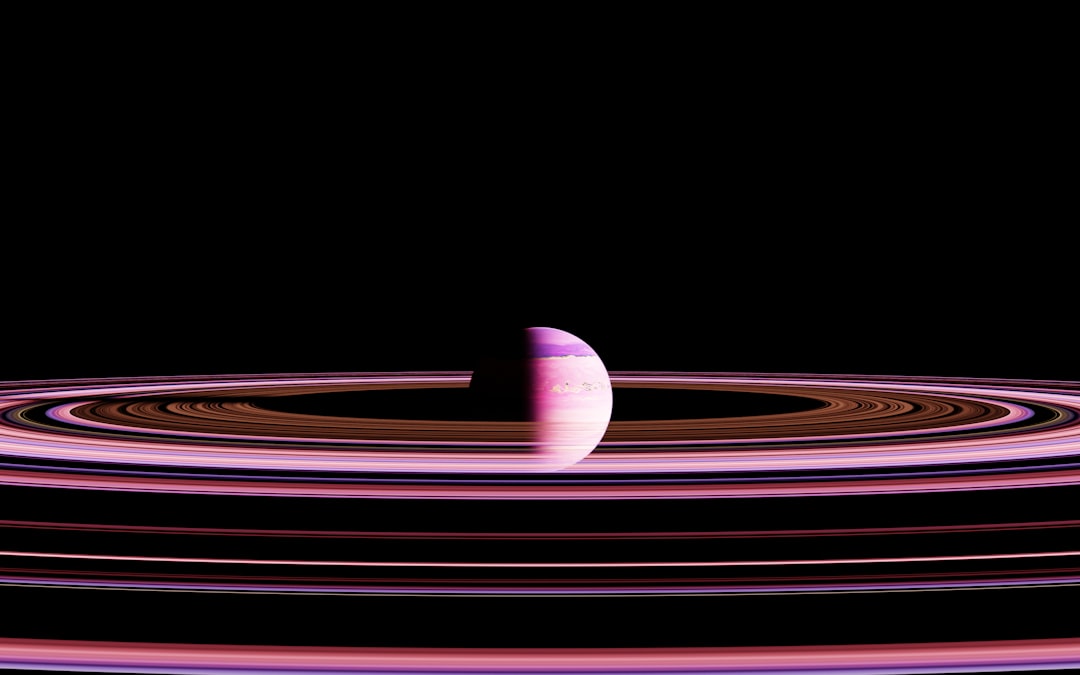
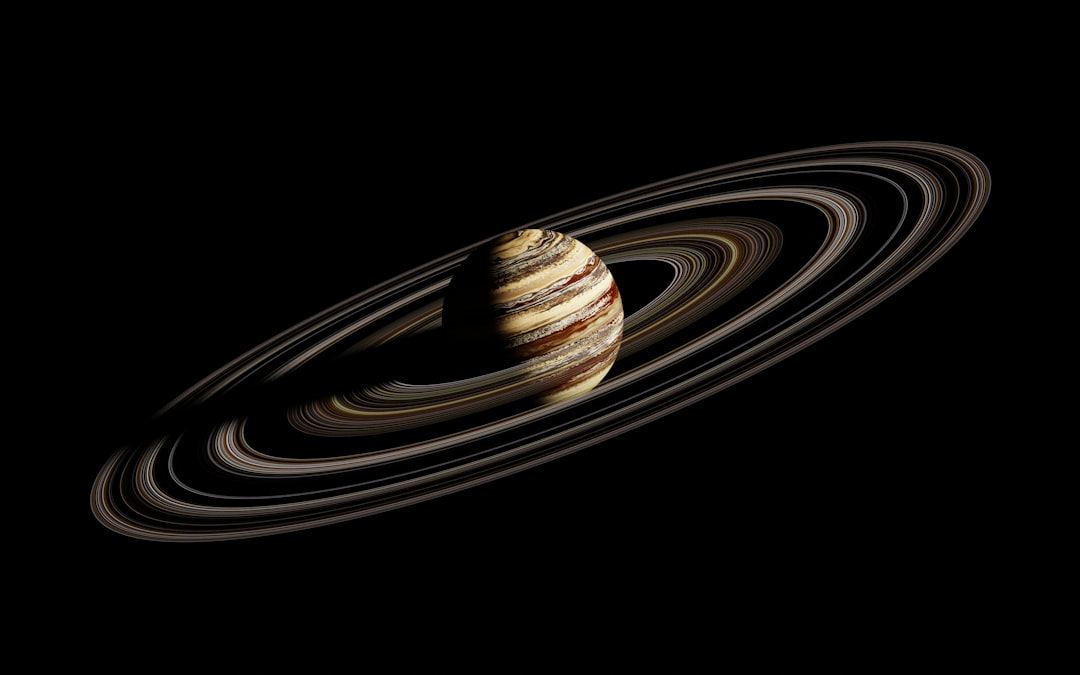
To the naked eye, Saturn's rings appear as a serene and majestic feature, one of the most recognizable sights in the solar system. But to planetary scientists, they represent one of astronomy's most enduring puzzles. The rings are largely composed of water ice mixed with silicate rocky material and trace organic compounds, with particles ranging from microscopic dust grains just micrometers across to massive chunks of ice the size of houses. The system extends up to 282,000 kilometers from Saturn's center — roughly 75% of the distance from Earth to the Moon — yet its main rings are in most places astonishingly thin, measuring only about 10 to 100 meters in depth.
Despite the staggering success of the Cassini-Huygens mission, scientists still lack definitive answers to some of the most fundamental questions about the rings. Chief among these mysteries are:
- Age of the rings: Are they a relatively young feature, perhaps only 10 to 100 million years old — making them a geological newcomer in a 4.5-billion-year-old solar system — or are they primordial remnants dating back to Saturn's formation?
- Ring dynamics: What are the precise mechanics by which ice particles collide, merge, fragment, and redistribute angular momentum within the ring plane?
- Ring mass and composition: While Cassini's Grand Finale orbits provided improved mass estimates, the exact compositional variation across different ring regions remains poorly constrained.
- Ring origin: Did the rings form from the tidal disruption of a moon, a captured comet, or some other cataclysmic event in Saturn's early history?
- Ring evolution: How quickly are the rings losing material to Saturn through a process called ring rain, and what does that tell us about their future lifespan?
Answering these questions requires something no spacecraft has ever achieved: genuine in-situ measurements from within the ring plane itself. And that is precisely the problem.
Why Is It So Hard to Visit the Rings?
The danger of venturing into Saturn's rings is best illustrated by Cassini's own fate. During the spacecraft's breathtaking Grand Finale phase, mission planners did something extraordinarily daring — they threaded the probe through the narrow gap between the innermost D Ring and Saturn's cloud tops, a region roughly 2,000 kilometers wide. Even in this relatively clear corridor, scientists were genuinely uncertain whether the spacecraft would survive, as they lacked precise knowledge of the particle density in that region.
"The area between the rings and Saturn had never been explored. We weren't 100 percent sure the spacecraft would make it through safely." — Earl Maize, Cassini Program Manager at JPL
Had Cassini ventured directly into the main ring system — the A, B, or C rings — the outcome would almost certainly have been catastrophic. At orbital velocities exceeding 30 kilometers per second, even a centimeter-sized chunk of ring ice carries enough kinetic energy to instantly destroy a spacecraft the size of a school bus. A multi-billion dollar instrument platform cannot be risked against those odds. No rational mission planner, regardless of the scientific reward, would authorize such a maneuver for a singular, irreplaceable spacecraft.
The solution, then, is to fundamentally change the economics of risk — and that is exactly what a swarm of thousands of cheap, expendable probes achieves.
The Femtosat Swarm: Safety in Numbers
The logic behind the proposal is elegantly simple: if you have 10,000 identical satellites, losing even several thousand of them to ring collisions is not a mission failure — it is a mission operating as designed. The surviving probes continue collecting data, the lost ones provide one final measurement upon impact, and the overall scientific return remains enormous. This statistical resilience is the core innovation of the concept formally titled "Actively Steerable Femtosat Constellations for In-Situ Exploration of Saturn's Rings, Atmosphere, and Magnetosphere."
The project's Principal Investigator, Dr. Michael Rubenstein of Northwestern University, is a world-renowned expert in swarm robotics. His most celebrated prior work is the Kilobot project — a demonstration involving over 1,000 tiny, low-cost robots that could autonomously communicate with one another and collectively self-organize into complex shapes without any centralized control. The Kilobot system proved that coherent, purposeful collective behavior can emerge from thousands of individually simple units — a principle that translates powerfully to a space exploration context. Rubenstein's expertise positions him uniquely at the intersection of miniaturized robotics and deep space science.
What Exactly Is a Femtosat?
A femtosat — sometimes called a chipsat or a Sprite — is, in its most basic form, an extraordinarily small satellite. While the CubeSat standard has formalized small satellite design around 10×10×10 centimeter units, femtosats represent an even more extreme miniaturization. A typical femtosat weighs only a few grams and measures only a few centimeters across, packing sensors, a radio transceiver, a power system, and basic computing capability onto what is essentially a single printed circuit board.
This radical miniaturization is made possible by the same relentless advances in consumer electronics — particularly the smartphone industry — that have packed extraordinary computational power, radio systems, solar cells, and sensors into ever-smaller and cheaper packages. The mass production economics of consumer electronics also mean that femtosats can potentially be manufactured in the thousands for a total cost comparable to a single conventional scientific instrument.
Critically, these are not merely theoretical devices. In 2019, the KickSat-2 mission — a collaboration involving NASA and Cornell University — successfully deployed 105 Sprite femtosats into Low Earth Orbit, where they demonstrated the ability to actively communicate with ground controllers. While that demonstration mission lacked active propulsion, leaving the Sprites at the mercy of atmospheric drag, it nonetheless validated the fundamental concept of deploying operational femtosats from a larger carrier spacecraft.
Active Steering: The Key Enabling Technology
The KickSat-2 Sprites drifted passively. Rubenstein's proposed Saturn mission requires something fundamentally more capable: active steering. The mission's very name emphasizes this — the femtosats must be actively steerable to navigate within and around the ring system, avoid catastrophic collisions where possible, and position themselves for targeted scientific measurements.
As of the current Phase I investigation, the precise propulsion mechanism remains an open design question, and deliberately so. Potential approaches include:
- Microthrusters: Miniaturized chemical or cold-gas thrusters capable of providing small velocity changes to adjust orbital trajectories.
- Electrospray thrusters: Highly efficient ion-emission systems that can be miniaturized to chipsat scale, offering precise thrust with minimal propellant mass.
- Electromagnetic tethers: Devices that interact with Saturn's powerful and chaotic magnetic field to generate drag or thrust without any propellant, exploiting the planet's own magnetosphere as a propulsion medium.
- Solar radiation pressure: Tiny deployable sails that use photon pressure from sunlight to make gradual trajectory adjustments.
Active propulsion transforms the swarm from a passive cloud of sensors into a dynamic, reconfigurable scientific instrument capable of collectively executing complex observational strategies — something no single spacecraft could replicate.
A Three-in-One Science Mission
The simultaneous deployment of thousands of probes across an entire planetary system opens scientific possibilities that are genuinely without precedent. The femtosat constellation would effectively function as a distributed sensor network spanning the entire Saturnian system, conducting three separate major investigations simultaneously:
Inside the Rings
Thousands of femtosats would dive directly into the ring plane, providing the first-ever true in-situ measurements of ring particle dynamics. By recording the forces acting on them as they navigate through the particle-laden environment, measuring particle impacts, and characterizing the local electromagnetic environment, the probes would answer fundamental questions about collision mechanics, particle size distribution, and ring age that remote observations from Cassini could never fully resolve. Even probes that are destroyed upon impacting large ring particles would transmit data up to the moment of impact, turning each collision into a scientific event.
Into Saturn's Atmosphere
Simultaneously, thousands of other femtosats would plunge into different latitudes of Saturn's upper atmosphere, acting as a distributed network of atmospheric probes. Unlike a single entry probe — which samples only one location, one altitude profile, and one moment in time — a swarm of hundreds or thousands of atmospheric femtosats would capture global atmospheric dynamics in real time. This would dramatically improve our understanding of Saturn's powerful jet streams, storm systems, temperature gradients, and compositional variations across latitudes, providing a dataset of extraordinary scientific richness.
Mapping the Magnetosphere
Saturn's magnetosphere is one of the largest structures in the solar system, extending millions of kilometers into space and interacting dynamically with the solar wind, the ring system, and the planet's moons. Simultaneously deploying thousands of femtosats across a range of orbital altitudes and inclinations would create an unprecedented three-dimensional map of the magnetospheric structure, capturing spatial variations that a single spacecraft — which can only sample one point at a time — fundamentally cannot resolve. This kind of global, simultaneous magnetospheric measurement has never been achieved at any planet.
PRAXIS: NASA's Parallel Approach
The femtosat swarm is not the only innovative concept NASA is funding to explore Saturn's rings up close. In a parallel NIAC award, Dr. Marco Quadrelli of NASA's Jet Propulsion Laboratory has proposed a strikingly different approach under the name PRAXIS — the Planetary Rings Autonomous EXploration with In-Situ Sampling mission. Rather than deploying a massive swarm of expendable probes, PRAXIS envisions a single mothership that hovers above the ring system and extends an AI-guided boom to perform precise "touch-and-go" sampling contacts with ring material — analogous to a sport fisherman carefully dipping a line into the water. The AI guidance system would be responsible for rapidly analyzing the ring environment and directing the boom to collect representative samples while keeping the mothership safely above the ring plane.
The fact that NASA's NIAC program is simultaneously funding two very different approaches to the same scientific goal — in-situ exploration of Saturn's rings — speaks volumes about how high a scientific priority ring exploration has become. The two concepts are complementary rather than competing: a swarm provides statistical breadth and distributed measurements, while a precision sampling mission provides chemical depth and sample fidelity.
The Long Road to Saturn
It is important to be clear-eyed about the timeline involved. NIAC Phase I awards are explicitly early-stage investments, designed to determine whether a concept is scientifically sound and technically feasible enough to merit further development. A Phase I award of up to $175,000 over nine months is followed, for the most promising concepts, by a multi-year Phase II investigation with significantly more resources. Even then, progression from a NIAC concept to an actual funded NASA mission requires years of additional technology development, competitive proposal processes, and budgetary approvals.
Accounting for all these steps, plus the multi-year journey that any spacecraft must make to reach Saturn — Cassini itself took nearly seven years to arrive — any mission derived from this concept would be unlikely to begin science operations before the 2040s at the earliest. That is not a criticism of the concept; it is simply the reality of how transformative space science gets done.
"NIAC lets us dream big and take long-shot bets — the kind of ideas that seem impractical today but could become the cornerstone missions of tomorrow." — NASA NIAC Program Philosophy
And that is precisely the point of the NIAC program. Established to invest in visionary, high-risk, high-reward concepts that are beyond the horizon of current NASA missions, NIAC has a track record of funding ideas that eventually matured into real technologies — from aerocapture systems to soft robotics for planetary exploration. The femtosat swarm concept fits squarely within this tradition.
Why This Matters Beyond Saturn
The scientific and technological implications of the femtosat swarm concept extend well beyond Saturn's rings. If Rubenstein's team can solve the core engineering challenges — miniaturized active propulsion, reliable inter-swarm communication at interplanetary distances, autonomous swarm coordination without real-time ground control, and radiation hard