The quest to discover life beyond Earth stands at a critical crossroads, facing a profound statistical challenge that could undermine decades of astronomical research and billions of dollars in space telescope investments. A groundbreaking analysis by Dr. David Kipping of Columbia University reveals that our current methodologies for detecting extraterrestrial biosignatures may be fundamentally flawed, requiring sample sizes that dwarf our current capabilities by orders of magnitude. This sobering reality check, detailed in a pre-print paper on arXiv, forces the astrobiology community to confront an uncomfortable truth: proving the existence of alien life may be statistically impossible with our current frameworks.
The challenge extends far beyond simple data collection. While modern space telescopes represent extraordinary achievements in aerospace engineering—from the James Webb Space Telescope to the planned Habitable Worlds Observatory—they must also contend with the intricate mathematics of statistical inference. The fundamental problem lies in distinguishing genuine biological signals from the countless abiotic processes that can mimic life's signatures, all while accounting for phenomena we haven't even discovered yet.
Dr. Kipping, also known for his popular Cool Worlds YouTube channel where he makes complex astrophysics accessible to millions, has quantified exactly how severe this statistical crisis has become. His analysis suggests that conclusively proving the existence of life on another world may require examining anywhere from 12,366 to 44 trillion planets—a range so vast it highlights the profound uncertainty embedded in our current detection methods. With humanity having confirmed only approximately 6,200 exoplanets to date, the gap between what we need and what we have is staggering.
The Specter of Unknown Unknowns in Astrobiology
The core of this statistical nightmare lies in what former U.S. Secretary of Defense Donald Rumsfeld famously termed "unknown unknowns"—factors we don't even know we should be accounting for. In the context of searching for extraterrestrial life, these unknowns manifest as potential confounders or false positives that could lead researchers to incorrectly conclude they've detected biological activity when they've actually observed some exotic but entirely non-biological phenomenon.
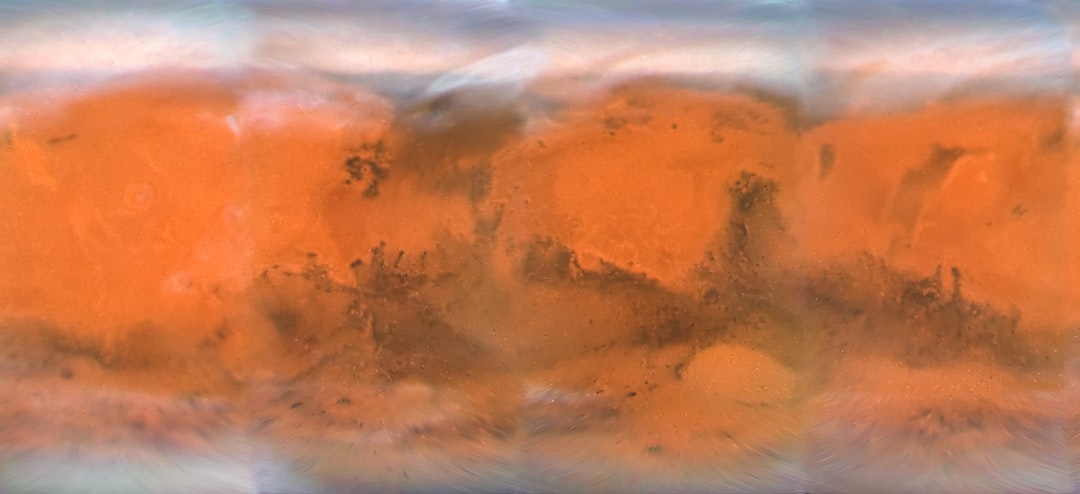
History has taught astrobiology painful lessons about premature conclusions. The infamous Martian "canals" observed by astronomers in the late 19th and early 20th centuries turned out to be optical illusions rather than evidence of an advanced alien civilization. More recently, the 2020 detection of phosphine in Venus's atmosphere—initially heralded as a potential biosignature—faced intense scrutiny and alternative explanations involving abiotic chemical processes. These episodes underscore a troubling pattern: our eagerness to find life can sometimes outpace our ability to rigorously prove its existence.
The challenge becomes even more daunting when we consider the myriad ways that non-biological processes could generate signals that perfectly mimic what we expect from life. A lightning storm cascading through methane-rich clouds on a distant exoplanet might produce chemical byproducts indistinguishable from metabolic waste. Photochemical reactions driven by a planet's host star could create molecular oxygen without any photosynthetic organisms. Volcanic outgassing might release gases that, on Earth, would be considered definitive proof of biological activity.
Bayesian Statistics and the Mathematics of Uncertainty
To understand why this problem is so mathematically intractable, we must examine the statistical framework that astronomers typically employ. Bayesian statistics, the preferred approach in modern observational astronomy, requires researchers to incorporate prior knowledge—or the lack thereof—into their calculations. When astronomers don't know how likely something is to occur, they use what's called a diffuse prior, essentially telling the mathematical models: "I have no preconceptions about how common this phenomenon might be."
This approach works well for many astronomical phenomena where we have substantial background knowledge. However, when applied to the search for life, it creates a statistical quagmire. Dr. Kipping's analysis demonstrates that when researchers must simultaneously account for both the unknown prevalence of life in the universe and the unknown likelihood of confounding non-biological processes, the mathematical requirements spiral out of control.
"The agnostic analysis of any near-term biosignature search will hinge upon this point. Until we develop a robust framework for handling these unknown confounders, all of our observational work serves as suggestive evidence rather than definitive discovery."
To achieve a Bayesian factor of 10—meaning the evidence for life is ten times stronger than the evidence against it, which is generally considered the minimum threshold for a compelling scientific claim—researchers would need to examine thousands or even trillions of planets exhibiting the same potential biosignature. This isn't merely a matter of building bigger telescopes or developing more sensitive instruments; it's a fundamental constraint imposed by the mathematics of statistical inference under conditions of profound uncertainty.
The A/B Testing Solution: Promise and Pitfalls
In his paper, Dr. Kipping proposes an innovative solution borrowed from the world of technology and product development: A/B testing. This approach, commonly used by companies to compare different versions of websites or applications, involves splitting a population into two groups and comparing their responses to different treatments while holding all other variables constant.
Applied to exoplanet research, this methodology would involve dividing planets with similar biosignature candidates into two groups with a crucial requirement: both groups must have identical false positive rates for confounding processes. Mathematically, this elegant approach would allow the unknown confounder to cancel out, enabling more direct comparisons between groups and potentially reducing the sample size requirements dramatically.
However, implementing this solution in practice faces formidable obstacles. The central challenge lies in identifying two populations of planets where genuine biological processes behave differently—perhaps due to variations in planetary conditions, stellar radiation, or evolutionary history—while the unknown abiotic chemistry that could masquerade as life behaves identically across all worlds in both groups.
Practical Implementation Challenges
- Characterization Limitations: We currently lack the observational capabilities to characterize exoplanet atmospheres with sufficient precision to ensure matched false positive rates across large planetary populations
- Sample Size Requirements: Even with A/B testing, the number of well-characterized planets needed would far exceed current and near-term detection capabilities
- Assumption Validation: The method assumes we can identify and control for all relevant variables affecting false positive rates, which contradicts the fundamental problem of unknown unknowns
- Temporal Stability: Planetary atmospheres may change over time, potentially invalidating careful group assignments made during initial observations
Current Missions in Context: The Habitable Worlds Observatory
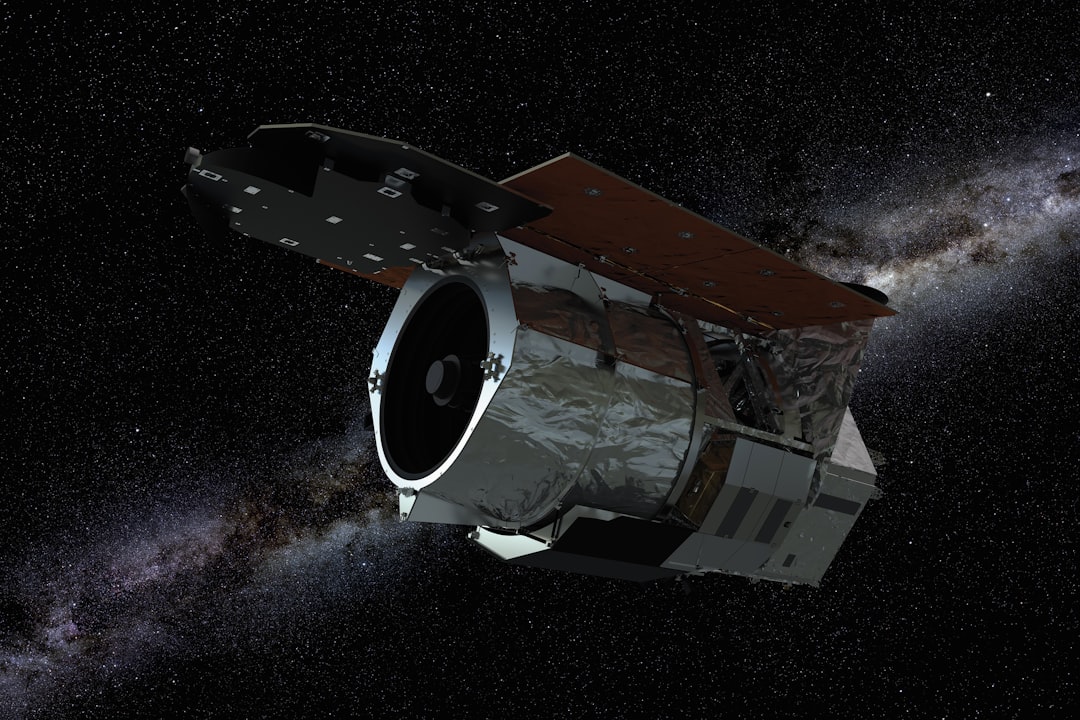
The implications of Dr. Kipping's analysis cast a sobering light on upcoming missions. The Habitable Worlds Observatory (HWO), planned for launch in the coming years, aims to directly image and characterize approximately 25 Earth-like exoplanets in their stars' habitable zones. This mission, representing a multi-billion dollar investment and the culmination of decades of technological development, would be capable of detecting potential biosignatures such as oxygen, methane, and water vapor in exoplanetary atmospheres.
However, viewed through the lens of Kipping's statistical framework, these 25 planets represent merely a tiny fraction—a statistical drop in the bucket—of what would be required to make definitive claims about extraterrestrial life. According to research from NASA's Astrobiology Program, even if HWO detects promising biosignature combinations on multiple worlds, the statistical uncertainty surrounding potential confounders would prevent researchers from conclusively ruling out abiotic explanations.
This doesn't mean missions like HWO are futile. Rather, it suggests we must recalibrate our expectations and communicate more honestly about what these observations can and cannot tell us. Each detection of a potential biosignature adds to our cumulative knowledge, constraining the parameter space for where and how life might exist. But absent a revolutionary new statistical framework, these observations will remain tantalizing hints rather than definitive proof.
Historical Context and the Evolution of Biosignature Science
The search for biosignatures has evolved dramatically over the past several decades. Early efforts focused on simple indicators like the presence of oxygen or methane—gases that, on Earth, are primarily produced by biological processes. However, as our understanding of planetary science has deepened, we've recognized that both gases can be produced through various abiotic mechanisms.
Research published in the journal Astrobiology has documented numerous scenarios where non-biological processes could generate false biosignatures. Photolysis of water vapor in upper atmospheres can produce oxygen without photosynthesis. Serpentinization—a geological process involving water and certain rock types—can generate methane and hydrogen in quantities that might be mistaken for biological production. Even more exotic processes, such as photochemical reactions driven by stellar flares or impacts from comets rich in organic compounds, could create molecular signatures that mimic life.
The field has responded by developing increasingly sophisticated frameworks for evaluating potential biosignatures. Rather than relying on single molecules, researchers now look for biosignature combinations—sets of molecules whose simultaneous presence would be difficult to explain through abiotic means alone. For instance, detecting oxygen alongside methane in a planet's atmosphere, along with evidence of liquid water and appropriate surface temperatures, would strengthen the case for biological activity far more than detecting any single component alone.
Pathways Forward: Statistical Innovation and Technological Advancement
Despite the daunting challenges outlined in Dr. Kipping's analysis, the astrobiology community isn't without options for moving forward. Several promising approaches could help address the statistical crisis, though each comes with its own set of challenges and limitations.
Developing Context-Dependent Priors
Rather than using completely diffuse priors that assume total ignorance, researchers could develop context-dependent prior distributions based on our growing understanding of planetary formation, atmospheric chemistry, and the conditions necessary for life as we know it. By incorporating knowledge from fields such as geochemistry, atmospheric science, and comparative planetology, statisticians might construct more informative priors that reduce—though not eliminate—the sample size requirements for definitive detection.
Leveraging Solar System Analogs
Our own solar system provides a natural laboratory for studying potential false positives. Missions to Europa, Enceladus, and Titan—worlds that may harbor subsurface oceans or exotic chemistry—could help us catalog the range of abiotic processes that might mimic biosignatures. This empirical data could inform our statistical models and help us better distinguish between biological and non-biological signals on exoplanets.
Multi-Wavelength and Time-Series Analysis
Rather than relying on single observations, researchers could employ time-series analysis to look for temporal patterns that might distinguish biological from abiotic processes. Seasonal variations in atmospheric composition, for instance, might provide stronger evidence for biological activity than static measurements. Similarly, observations across multiple wavelengths could reveal subtle signatures that help differentiate between competing explanations for observed molecular abundances.
The Role of Laboratory Experiments and Theoretical Models
Complementing observational efforts, laboratory experiments and theoretical modeling play crucial roles in addressing the statistical crisis. By systematically exploring the parameter space of possible planetary conditions and chemical processes, researchers can better understand which combinations of molecules and environmental factors truly require biological explanations.
Facilities like NASA's Planetary Atmosphere and Surface Chamber (PASC) allow scientists to simulate exotic atmospheric conditions and test whether proposed biosignatures could be produced abiotically. These experiments help constrain the false positive rate for various biosignature candidates, potentially enabling more informative prior distributions in statistical analyses.
Theoretical models of planetary atmospheres, informed by quantum chemistry and atmospheric physics, can predict which molecular combinations are thermodynamically stable under various conditions. When observations reveal molecular combinations that violate these predictions—such as gases that should react and disappear on geological timescales but persist in high concentrations—it strengthens the case for ongoing replenishment by biological processes.
Implications for Mission Design and Funding Priorities
Dr. Kipping's analysis carries profound implications for how space agencies should design future missions and allocate their limited resources. If definitive detection of extraterrestrial life requires sample sizes far beyond what individual missions can provide, then the optimal strategy might involve:
- Survey Breadth Over Depth: Prioritizing missions that can characterize many planets at moderate detail rather than a few planets in extreme detail
- Statistical Collaboration: Establishing international frameworks for combining data across multiple missions and telescopes to build larger statistical samples
- Methodological Innovation: Investing substantially in statistical and analytical method development, not just hardware and observations
- Realistic Communication: Setting appropriate public expectations about what near-term missions can achieve, emphasizing incremental progress rather than definitive discovery
The Path Forward: Optimism Tempered by Realism
Despite the sobering nature of his analysis, Dr. Kipping maintains an optimistic outlook for the field. He believes the astrobiology community will rise to this statistical challenge, developing innovative frameworks that can extract definitive conclusions from limited datasets. This optimism isn't unfounded—the history of science is replete with examples of seemingly insurmountable methodological challenges being overcome through creative thinking and interdisciplinary collaboration.
The key may lie in approaches we haven't yet conceived, perhaps drawing on advances in machine learning, information theory, or entirely new statistical paradigms. Just as the development of Bayesian statistics revolutionized how astronomers analyze data in the 20th century, a new statistical framework tailored specifically for biosignature detection could transform the field in the 21st century.
What's certain is that the current moment represents a critical juncture for astrobiology. The field must acknowledge the statistical limitations of current approaches while simultaneously working to develop better methodologies. This requires bringing together expertise from diverse fields—statistics, atmospheric chemistry, planetary science, and biology—to tackle a problem that no single discipline can solve alone.
The search for life beyond Earth remains one of humanity's most profound scientific endeavors. Dr. Kipping's analysis doesn't diminish the importance of this quest; rather, it provides a roadmap for conducting it more rigorously. By confronting the statistical challenges head-on and working to develop robust frameworks for handling uncertainty, the astrobiology community can ensure that when we finally do detect life on another world—if such life exists—the claim will rest on unshakeable statistical foundations rather than wishful thinking.
As we continue to launch ever-more sophisticated telescopes and analyze ever-more-detailed observations of distant worlds, the statisticians must step up alongside the engineers and astronomers. The future of astrobiology may depend as much on mathematical innovation as on technological advancement—a reality that demands new forms of collaboration and new ways of thinking about one of science's oldest questions: Are we alone in the universe?