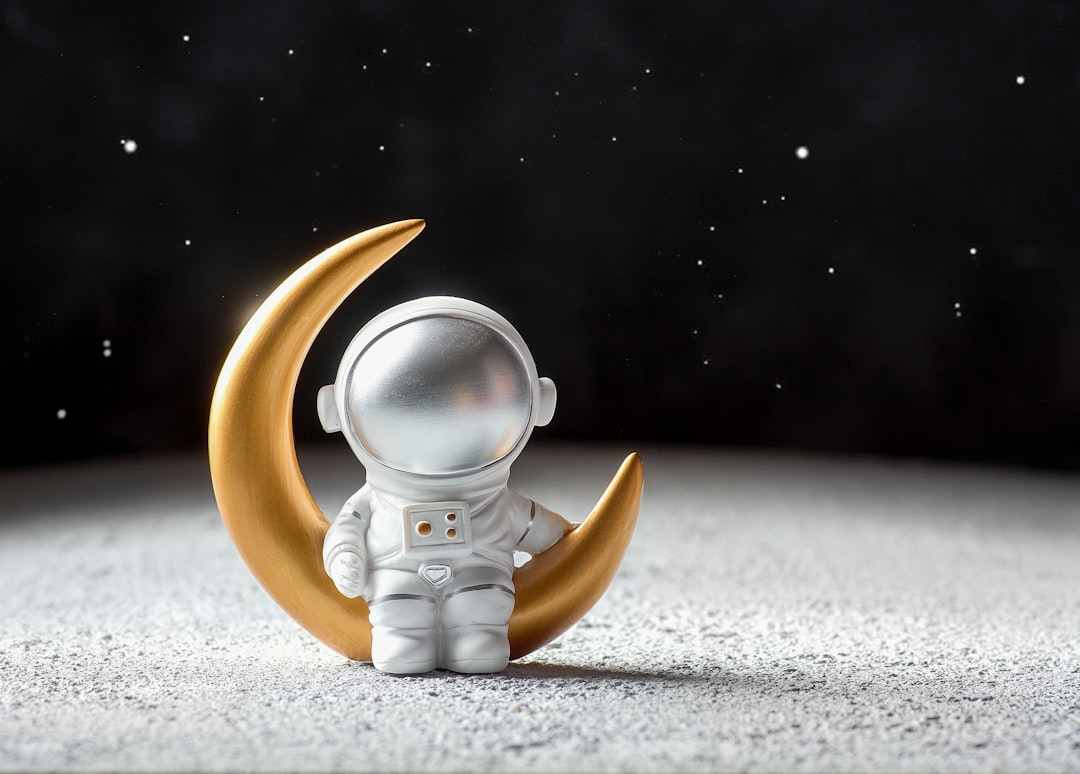
Astronaut Microbes Might Survive at the Moon's South Pole, NASA Warns
Among the many extraordinary challenges of deep space exploration, one of the most critically important — yet frequently overlooked — is the painstaking effort to ensure that Earth microbes do not contaminate other planetary bodies, a concern formally known as forward contamination. As humanity prepares to return to the Moon and eventually venture to Mars, this issue has taken on renewed urgency. A landmark new study from NASA researchers now suggests that certain hardy terrestrial microorganisms could potentially survive in the unique environmental conditions found at the lunar south pole — a finding with profound implications for planetary science, astrobiology, and the future of human spaceflight.
The study, conducted by a team of researchers from the NASA Goddard Space Flight Center and the NASA Johnson Space Center, was recently published in the peer-reviewed journal Science Advances. Its findings could fundamentally reshape how scientists, mission planners, and future astronauts approach microbial contamination protocols during long-duration missions to the Moon and beyond.
The Challenge of Planetary Protection
Since the very dawn of the Space Age, scientists have recognized that launching spacecraft — and eventually humans — beyond Earth carries an inherent biological risk. Planetary protection is the discipline dedicated to preventing the biological contamination of both other worlds and our own planet. The rationale is twofold: to safeguard any potential extraterrestrial life that might exist on other bodies, and to prevent false-positive discoveries of life that are actually the result of contamination by Earth organisms.
Historically, the harsh realities of space have provided a natural sterilizing effect. The vacuum of space, intense cosmic radiation, extreme temperature fluctuations, and the absence of liquid water create an environment that is almost universally lethal to known life forms. These factors typically eliminate microbial stowaways that might cling to the exteriors of spacecraft. However, a significant and longstanding knowledge gap has persisted regarding the lunar polar regions, where the topography and environmental conditions are dramatically different from the rest of the Moon's surface.
"When we think of the Moon, we don't typically think of biology. But the Moon is a place where a cell can survive, so our first exploration of these sites should pay extra attention to our microbial hitchhikers and work hard to characterize lunar chemistry before our visits change what we will find." — Dr. Heather Graham, Organic Chemist, NASA Goddard Space Flight Center
Planetary protection at NASA is formally managed by the agency's Office of Safety and Mission Assurance, which classifies contamination risk into Mission Categories I through V. These categories are assigned based on the mission type and the target body's potential for hosting life, ranging from Category I (lowest risk, such as missions to the Sun) to Category V (highest risk, involving sample-return missions from bodies with high life-hosting potential). Lunar missions currently fall into lower-risk categories, but this new research may prompt a reassessment of that classification for missions targeting the south pole specifically.
Why the Lunar South Pole Is Different
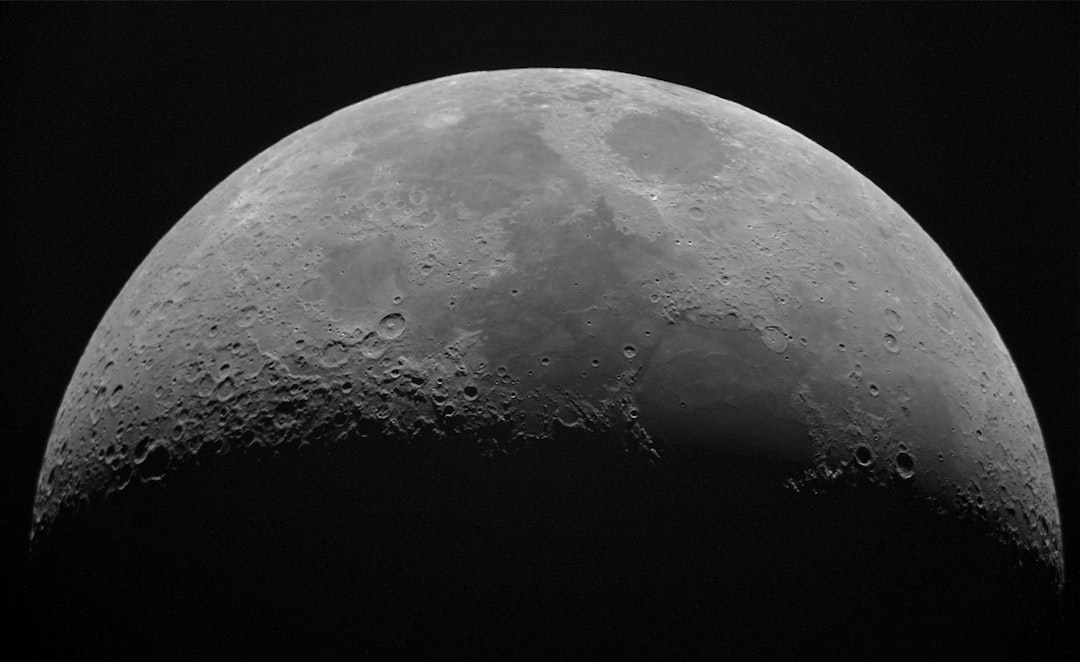
The lunar poles represent one of the most scientifically fascinating and environmentally distinct regions of the Moon. Unlike the equatorial regions, which are bathed in direct sunlight for two weeks at a time and experience temperature swings ranging from approximately 127°C (261°F) in sunlight to -173°C (-279°F) in darkness, the polar regions are characterized by deep, ancient craters whose floors have never been touched by direct sunlight.
These so-called Permanently Shadowed Regions (PSRs) are among the coldest known locations in the entire solar system, with temperatures potentially dropping to -250°C (-418°F). Yet paradoxically, the rims and elevated terrain surrounding these craters experience a very different environment — one characterized by relatively stable, moderate temperatures and reduced, though not absent, radiation exposure. It is precisely this varied topography that creates niches where terrestrial microbes might theoretically find refuge.
- Reduced solar radiation: Crater walls and elevated ridges can shield certain surface areas from direct UV and solar wind bombardment.
- Temperature stability: Elevated rim regions near the south pole can maintain more consistent temperatures compared to equatorial zones.
- Potential water ice: Evidence from missions like NASA's LCROSS confirms the presence of water ice in PSRs, a resource potentially exploitable by resilient microorganisms.
- Reduced meteorite gardening: The physical shielding offered by crater walls may reduce the frequency of microbe-disrupting micrometeorite impacts at certain locations.
The Organisms Under Study
To determine which microbes might survive these conditions, the research team analyzed several organisms with known resilience to extreme environments — drawing from both Earth-based studies and data collected from the International Space Station (ISS). The organisms examined included:
- Aspergillus niger: A common black mold that has been sampled aboard the ISS and is known to survive in space. It thrives across a temperature range of 6°C to 47°C (43°F to 117°F), with optimal growth between 35°C and 37°C, and has demonstrated notable resistance to UV radiation.
- Bacillus subtilis: A spore-forming bacterium that is one of the most well-studied models for microbial resistance to extreme conditions, including radiation and desiccation. It is frequently used as a benchmark organism in planetary protection research.
- Staphylococcus aureus: A common human-associated bacterium regularly found on astronaut skin and in spacecraft environments, making it a highly realistic contamination candidate.
- Deinococcus radiodurans: Often described as one of the most radiation-resistant organisms on Earth, this bacterium can withstand ionizing radiation doses thousands of times higher than those lethal to humans, making it a critical organism for any study of space survivability.
- Several species of Fusarium: A genus of filamentous fungi also detected aboard the ISS, known for their resilience and adaptability to varied environmental conditions.
The selection of these organisms was deliberate. They represent the spectrum of microbes most likely to be present on human explorers and their equipment — from common skin bacteria to resilient fungal spores that routinely colonize spacecraft environments despite rigorous pre-launch sterilization efforts.
Methodology: Simulating the Lunar Polar Environment
The research team employed a sophisticated, multi-layered methodology to assess microbial survivability. The organisms were subjected to laboratory conditions specifically engineered to replicate the environmental parameters of three key lunar south polar locations: Nobile Rim, Connecting Ridge, and De Gerlache Rim. These sites were selected because they represent some of the highest-priority landing targets for future NASA Artemis missions, being located near the lunar south pole where both elevated terrain and permanently shadowed craters exist in close proximity.
This experimental data was then combined with high-resolution topographic models derived from orbital observations, which map the distribution and intensity of solar radiation, UV flux, and temperature variation across the lunar surface. By integrating biological resilience data with environmental modeling, the team was able to identify specific surface locations where the conditions might be permissive enough for microbial survival.
Key Findings and Their Implications
The results were striking. The researchers identified several locations at the lunar south pole where conditions could be sufficiently mild to permit microbial survival, particularly for organisms like Aspergillus niger, which demonstrated the most compelling combination of UV resistance and temperature tolerance relevant to the identified sites. The complex topography of the south polar region creates an intricate patchwork of radiation environments, meaning that even relatively small areas in the partial shadow of crater walls or ridgelines could represent viable refugia for contaminating microbes.
These findings carry significant weight for several reasons. First, they underscore the fact that the Moon cannot be treated as a biologically inert environment for contamination purposes — at least not in its entirety. Second, they highlight the critical importance of characterizing the baseline chemical and biological environment of these sites before human explorers arrive, as any contamination introduced by a crewed mission could permanently compromise the scientific integrity of the location. Third, they have direct implications for crew health, as the persistence of pathogenic organisms like Staphylococcus aureus in a lunar environment could pose risks to astronauts during extended surface operations.
The Artemis Program and the Race Against Contamination
The timing of this research is particularly critical. NASA's Artemis program aims to return astronauts to the lunar surface within the coming years, with a long-term goal of establishing a permanent human presence at the lunar south pole. This is not merely a repeat of the Apollo program; it is the foundation for a sustained infrastructure that will eventually support missions to Mars. The south pole is the prime candidate for a lunar base precisely because of the resources found there — particularly water ice — making it the very location identified in this study as the region of highest microbial survivability concern.
As the European Space Agency's planetary protection guidelines and NASA's own frameworks acknowledge, the challenge of planetary protection becomes exponentially more complex when human beings are introduced into the equation. Humans are, by nature, prolific sources of microbial contamination. An astronaut exhales, sheds skin cells, and carries a microbiome of trillions of organisms. No spacesuit or airlock system can achieve perfect biological containment, which makes the identification of survivable microbial niches on the Moon an urgent practical matter, not merely a theoretical one.
Dr. Heather Graham, an organic chemist at NASA Goddard whose research centers on identifying "agnostic biosignatures" — biological markers that do not necessarily resemble known Earth life — emphasized the need for proactive characterization. Her perspective reflects a broader scientific consensus that the window for conducting uncontaminated baseline science at the lunar south pole is closing as crewed missions approach.
Forward and Backward Contamination: A Two-Way Street
It is worth noting that planetary protection is not a one-directional concern. While forward contamination describes the risk of Earth microbes reaching and potentially surviving on another planetary body, backward contamination refers to the risk of extraterrestrial material — potentially including unknown biological agents — being returned to Earth and causing harm. As lunar sample-return missions become more sophisticated and as future missions to Mars and ocean worlds like Europa are planned, both vectors of contamination demand rigorous scientific attention.
The research published in Science Advances contributes meaningfully to the forward contamination side of this equation, but its implications cascade into mission design philosophy more broadly. Understanding where microbes can survive on the Moon informs not only how we protect the Moon from us, but how we design the environments in which future astronauts will live and work — and what biological risks they may face during long-duration surface operations far from Earth's medical facilities.
Looking Ahead: The Future of Lunar Microbiology
This study represents an important early step in what is likely to become a rich and rapidly expanding field of lunar astrobiology and contamination science. As robotic precursor missions return more detailed environmental data from the south polar region, and as the Artemis program progresses, researchers will have increasingly refined datasets with which to model microbial survivability. Future experiments aboard the ISS and in specialized ground-based laboratories will likely test a wider range of organisms under more precisely characterized lunar conditions.
Ultimately, this research serves as a timely reminder that the Moon is not a sterile, lifeless rock in all of its complexity. Its poles harbor some of the most scientifically precious and environmentally nuanced terrain in the inner solar system. Approaching these locations with the same rigor and humility we would apply to the search for life on Mars is not an overreaction — it is a scientific imperative. The decisions made now about how to manage microbial contamination will shape the quality of lunar science for generations to come.
- The study was published in Science Advances, a peer-reviewed open-access journal from the American Association for the Advancement of Science.
- NASA's planetary protection policies are overseen by the Office of Safety and Mission Assurance.
- The Artemis program's lunar south pole objectives are detailed on the NASA Artemis program page.
- Water ice confirmation at the lunar south pole is documented through missions described by NASA's LCROSS mission.
- ESA's complementary planetary protection framework is outlined on the European Space Agency's planetary protection page.